In an era defined by rapid information processing and constant social interaction, the human cognitive system, while remarkably efficient, frequently diverts thinking from conscious intentions of open-mindedness, respect, and inclusion. This often occurs due to the vast majority of our mental operations, termed System 1 thinking, functioning on auto-pilot. This automatic processing, driven by feelings, snap observations, past experiences, ingrained stereotypes, societal norms, and deeply held beliefs from upbringing, can lead to faulty judgments that perpetuate exclusion. Behavioral science offers a powerful countermeasure: reframing. By consciously altering what we perceive and how we articulate those perceptions, individuals and organizations can actively reshape inherent mental shortcuts, aligning them more accurately with desired inclusive behaviors and personal values.
The Pervasive Influence of Normative Patterns on Perception
Throughout life, individuals are constantly and often unconsciously internalizing messages that delineate normative patterns of desired traits. These pervasive societal constructs dictate who is perceived as "good," "attractive," "smart," "trustworthy," "a leader," "friendly," "caring," "strong," or "talented," among countless other attributes. These instantaneous mental associations are not benign; they are powerfully reinforced through a myriad of channels including family dynamics, peer groups, social media influencers, traditional media outlets, educational systems, reward structures within organizations, and broader societal narratives. The relentless exposure to these archetypes profoundly shapes our views and interactions with others, as well as influencing the design and implementation of the systems we create and utilize.
The societal impact of such pervasive, often unexamined, normative patterns is substantial and frequently discriminatory. It results in the systemic exclusion of countless individuals who do not conform to the dominant archetype. Research consistently demonstrates the tangible costs of this exclusion. For instance, a 2018 study by the Centre for Global Development highlighted that reducing gender inequality could boost global GDP by $160 trillion. Similarly, diverse teams are repeatedly shown to outperform homogeneous ones in innovation, problem-solving, and financial returns, yet unconscious biases often impede their formation. The motivation to dismantle these exclusionary frameworks, both at a societal and individual level, forms the bedrock of initiatives focused on diversity, equity, and inclusion (DEI).
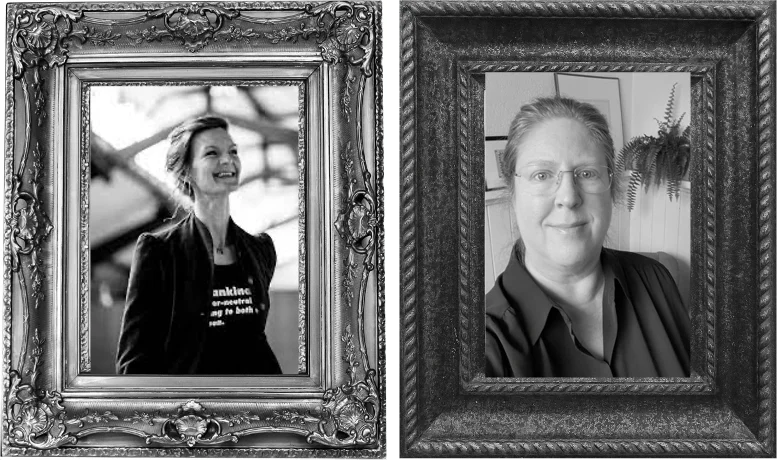
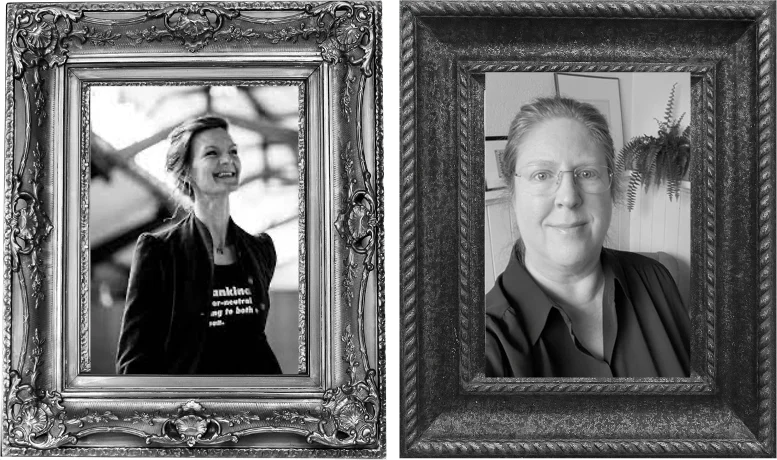
Beyond the societal macrocosm, these normative patterns inflict a significant personal toll. Individuals frequently internalize negative associations about themselves, creating a personal normative pattern that undermines self-worth and confidence. A contemporary manifestation of this phenomenon is "Zoom dysmorphia," a term that emerged prominently during the COVID-19 pandemic. With nearly two years of widespread video-based online work, many individuals found themselves critically fixated on their appearance, scrutinizing facial features and body language in real-time video feeds. This heightened self-awareness often led to negative self-judgments, even when these assessments contradicted rationally held positive self-beliefs. Behavioral change designers Lisa and Tinna, pioneers in applying behavioral insights to DEI challenges, have openly shared their own experiences of feeling like "outliers" who did not fit societal norms at various points in their lives, underscoring the universal nature of this internal struggle.
The Genesis of Behavioral Interventions: A Personal and Systemic Imperative
The recognition that unconscious biases are not merely moral failings but rather deeply ingrained cognitive mechanisms has propelled the field of behavioral science into the forefront of DEI efforts. As behavioral change designers, Lisa and Tinna frequently apply their expertise to themselves, experimenting with methods to interrupt and reshape internalized negative messages, biases, and exclusionary behaviors. Their work is rooted in the understanding that while bias cannot be entirely eradicated, its influence can be significantly mitigated through intentional design.
One such intervention, dubbed "That’s a human…," emerged from their personal experimentation. This technique, designed to reframe perceptions, particularly those related to self-image and judgments of others, draws inspiration from successful community-level initiatives. A notable precursor is the "Re-Frame ‘Migrant’ to ‘Human’" Inclusion Nudge detailed in The Inclusion Nudges Guidebook. This design originated from the South African non-profit organization PASSOP (People Against Suffering, Oppression and Poverty). Confronted with dehumanizing language in public discourse surrounding refugees and migrants, PASSOP members actively intervened on social media. They commented on posts using terms like "refugee crisis" or "migrant problem" by reframing them as a "human crisis," thereby shifting the focus back to the inherent humanity of the individuals involved. This deliberate linguistic intervention aimed to foster empathy and counter prevailing stereotypes, demonstrating that changing the words we use can fundamentally alter the perspectives we hold and the way we treat people.
Lisa’s personal journey with this reframing technique began during the extensive lockdowns of the past one and a half years. She sought to actively counter negative thoughts about her appearance, which often crept in during even brief glances in the mirror. Instead of engaging in internal arguments between critical and confident self-perceptions, she aimed to redirect that energy by consciously altering her internal monologue. Inspired by the PASSOP initiative, Lisa adopted a similar reframing strategy. When observing her reflection, instead of allowing critical thoughts to form, she would consciously state, "That’s a human face" or "That’s a human body." This seemingly simple verbal intervention created a pause, interrupting the automatic negative judgment and allowing for a more neutral, foundational perception. This practice, initially focused on self-perception, quickly became a regular habit and extended to her observations of other people. Lisa noted that applying the technique to others often felt less effortful, a testament to the common phenomenon of individuals being most critical of themselves. The conscious thought, "That’s a human face" or "That’s a human body," served as a prompt for introspection, allowing her to recall previous, often biased, automatic thoughts. This dissonance between her inclusive intentions and unconscious biases served as a powerful motivator to continue practicing the reframing technique, reinforcing the understanding that while bias may never be fully "cured," systematic interventions can significantly interrupt its influence.
Tinna, equally inspired by Lisa’s experiment, adopted a similar approach, internalizing the phrase "There’s a human being" when observing people in public spaces. She recognized her own tendency to make quick, judgmental assessments based on appearance – "she is skinny," "he is overweight," "ugly shoes." This self-awareness, coupled with a desire to change, led her to embrace the reframing technique. By consciously acknowledging "there is a human being," Tinna found that the judgmental thoughts dissipated quickly, replaced by a more positive internal energy. This practice also helped her overcome her own feelings of being an "outlier" due to her height, reinforcing the idea that she, too, was simply a human being among others, fostering a sense of shared humanity.
Framing Perceptions: A Core Tenet of Inclusion Nudges
The experiences of Lisa and Tinna underscore the potency of "Framing Perceptions Inclusion Nudges" – a cornerstone of behavioral design for DEI. These nudges are strategic interventions designed to alter perceptions by influencing the automatic, stereotyped, and unconscious mind. The challenge with mitigating bias lies in its insidious nature; it cannot simply be wished away. It requires leveraging insights from behavioral science to design concrete ways to reshape harmful mental messages.
As defined in The Inclusion Nudges Guidebook by Kepinski & Nielsen, "Framing Perceptions Inclusion Nudges are designs that alter perceptions to help the brain perceive issues related to inclusion, diversity, equality in a resource discourse. The designs also prime specific associations and counter stereotypes. Altering the framing of an issue or message and changing the anchor of a thought process helps to promote inclusive behaviour because it influences the reactions in the automatic, stereotyped, and unconscious mind."
The effectiveness of these nudges stems from several key psychological principles:
- Cognitive Load Reduction: System 1 thinking is fast and automatic, requiring minimal cognitive effort. Nudges are designed to work with, rather than against, this system, making inclusive choices easier and more intuitive.
- Priming: By introducing a specific stimulus (like the word "human"), the nudge primes the brain to access related positive associations, thereby influencing subsequent thoughts and behaviors.
- Interrupting Automaticity: The conscious act of reframing creates a momentary pause, disrupting the automatic cascade of biased thoughts and allowing for a more deliberate, System 2-like reflection.
- Reducing Cognitive Dissonance: When an individual holds an explicit intention (e.g., "I want to be inclusive") but implicitly acts or thinks otherwise, dissonance arises. Reframing techniques help to resolve this by aligning implicit thoughts with explicit intentions.
Beyond the "That’s a human…" technique, other Framing Perceptions designs have demonstrated significant impact. One widely adopted example is "Ask Flip Questions to Change Your Perceptions in the Moment." This design, detailed across The Inclusion Nudges Guidebook and Action Guides, encourages individuals to challenge their initial assumptions by consciously asking questions that flip the perspective. For instance, if a decision-maker is evaluating a candidate for a role and finds themselves thinking, "Does this candidate fit our culture?" a flip question might be, "What unique perspectives would this candidate bring to our culture, and how might our culture benefit from adapting to them?" This technique actively broadens thinking, encourages more comprehensive information gathering, and leads to more inclusive decision-making in both professional and personal contexts. The widespread positive feedback on this design underscores the power of simple, actionable behavioral interventions.
Broader Implications and the Path Forward for Inclusive Design
The principles of reframing extend far beyond individual self-talk. They represent a fundamental shift in how organizations and societies can approach diversity, equity, and inclusion. By understanding how perceptions are framed, leaders can design policies, communication strategies, and cultural norms that proactively counter bias rather than merely reacting to its negative consequences.
For instance, in corporate settings, reframing can be applied to job descriptions, performance reviews, and promotion criteria. Instead of focusing on "cultural fit," which often perpetuates homogeneity, language can be reframed to emphasize "cultural contribution" or "additive value." In public discourse, media organizations can adopt guidelines that consciously reframe narratives around marginalized groups, moving away from deficit-based language towards asset-based or human-centric descriptions. The "Images Framing Immigrants as One of Us" Inclusion Nudge, for example, encourages the use of imagery that portrays immigrants not as ‘others’ but as integral members of society, fostering a sense of shared identity and belonging. Similarly, "Interrupt Gender Caregiver Stereotypes with Images" promotes visual representations that challenge traditional gender roles in caregiving, thereby countering ingrained biases that often limit career progression for women.
The strategic application of behavioral science, as demonstrated by the work on Inclusion Nudges, offers a scalable and sustainable pathway to fostering truly inclusive environments. It acknowledges that bias is a persistent challenge, not a problem that can be "cured" once and for all. Instead, it advocates for the continuous implementation of "designs" – small, intentional interventions – that interrupt automatic biases, create space for more deliberate thought, and ultimately reshape perceptions to align with our highest intentions for equity and respect.
Organizations and individuals committed to DEI are increasingly recognizing the value of these nuanced behavioral approaches. Rather than relying solely on awareness training, which often has limited long-term impact on behavior, the focus is shifting towards actionable, design-based solutions. This proactive stance, informed by rigorous behavioral research, represents a significant evolution in the field of DEI. It emphasizes that while the journey towards true inclusion is ongoing, equipping ourselves with tools like cognitive reframing empowers us to actively participate in shaping a more equitable future, one perception at a time.
The insights from Inclusion Nudges continue to inspire practitioners globally. The organization actively encourages dialogue and sharing of experiences regarding reframing techniques. Readers interested in exploring these methodologies further or sharing their own experiences with lessening the influence of negative biases and stereotypes are invited to connect at [email protected]. Additional resources, including blog articles such as "Reframe Language on How We Work Today," "Diversity Is About People, Not Flowers, Candy, or Pencils," and "Don’t Set Targets for Women – But for Max 70% of the Same Gender," offer further inspiration and practical guidance on implementing these powerful behavioral designs for inclusivity.