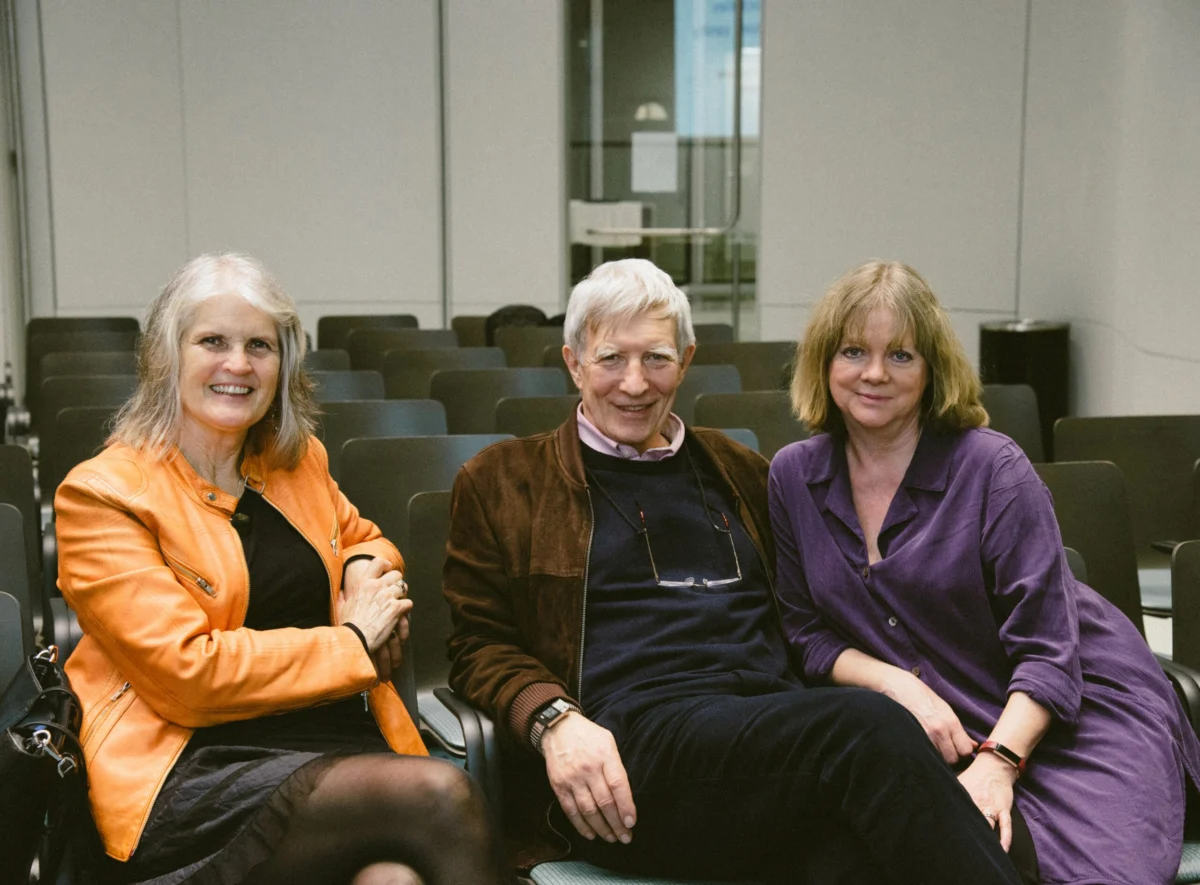
The release of Professor Kate Pickett’s latest work, The Good Society, marks a significant milestone in the ongoing global discourse surrounding social stratification and its systemic consequences. Scheduled for a high-profile digital launch on Wednesday, February 4, 2026, the book arrives at a critical juncture for domestic and international policy. Professor Pickett, a renowned social epidemiologist, argues that the most pressing crises of the modern era—ranging from deteriorating public health and failing social care to educational disparities and environmental degradation—are not isolated phenomena but are instead deeply interconnected symptoms of a single underlying cause: structural inequality.
The upcoming launch event, set for 6:00 pm, will feature a panel of some of the most influential voices in contemporary social and environmental advocacy. Joining Professor Pickett are George Monbiot, an investigative journalist and environmental campaigner; Caroline Lucas, the former leader of the Green Party and a prominent advocate for systemic political reform; and Baroness Ruth Lister of Burtersett, a leading academic and member of the House of Lords known for her extensive work on poverty and social citizenship. Together, these speakers will dissect the barriers preventing the realization of a "good society" and explore the pragmatic political choices required to shift toward a more equitable future.
The Evolution of Inequality Research: From The Spirit Level to The Good Society
Professor Kate Pickett’s work has long been foundational to the understanding of how social hierarchy affects human well-being. Alongside Richard Wilkinson, her 2009 book The Spirit Level: Why More Equal Societies Almost Always Do Better transformed the field of social science by providing empirical evidence that income inequality correlates with a wide range of social ills, including higher rates of incarceration, lower levels of trust, and decreased life expectancy.
In The Good Society, Pickett expands upon this thesis, moving from the diagnosis of societal problems to the prescription of structural solutions. The book posits that building a fairer society is not a "utopian dream" but a tangible political choice. It draws on a decade of new research and real-world case studies to demonstrate that societies with narrower wealth gaps are not only more socially cohesive but also more economically resilient and environmentally sustainable.
The timing of this publication is particularly relevant. As of early 2026, many developed nations continue to grapple with the long-term effects of the "cost-of-living" crises of the early 2020s, which exacerbated existing disparities in wealth and opportunity. By framing inequality as the "common root" of diverse societal failures, Pickett provides a unified framework for policy reformers who have historically operated in silos.
A Multi-Disciplinary Panel of Experts
The inclusion of George Monbiot, Caroline Lucas, and Baroness Ruth Lister in the launch event underscores the multi-dimensional nature of Pickett’s arguments. Each speaker brings a specific lens to the discussion of inequality:
- George Monbiot: Known for his critiques of neoliberalism and his advocacy for "private sufficiency and public luxury," Monbiot is expected to address the intersection of wealth concentration and environmental collapse. His participation highlights Pickett’s argument that environmental protection is inextricably linked to social justice.
- Caroline Lucas: As a veteran politician, Lucas provides the legislative perspective. Her career has been defined by the pursuit of a "Green New Deal," a policy framework that seeks to address climate change while simultaneously reducing economic inequality. She will likely discuss the political mechanisms necessary to turn the book’s vision into law.
- Baroness Ruth Lister: A Professor Emerita of Social Policy, Baroness Lister’s expertise in poverty and social security aligns with the book’s focus on the "wider determinants of health." Her role in the House of Lords provides insight into how these ideas are received within the upper echelons of the British parliamentary system.
The synergy between these figures suggests a growing consensus among academics, activists, and policymakers that incremental reform may no longer be sufficient to address the compounding crises of the 21st century.
The Core Thesis: Inequality as a Systemic Barrier
In The Good Society, Pickett identifies five primary areas where inequality acts as a preventative barrier to progress: health outcomes, care systems, education, crime, and the environment.
Public Health and the Prevention Model
Pickett argues for a paradigm shift in healthcare, moving away from a system that primarily treats illness toward one that prioritizes prevention. Data consistently shows that in highly unequal societies, the "social gradient" in health is steeper; individuals at the bottom of the socio-economic ladder experience significantly higher rates of chronic illness and shorter life expectancies. Pickett asserts that by leveling out health inequalities through the "wider determinants of health"—such as housing quality, nutrition, and job security—the public health system can become more sustainable and effective.
The Crisis of Care
The book addresses the "financial stress" inherent in current social care models. Whether regarding childcare, disability support, or elderly care, Pickett advocates for settings where emotional and social well-being are weighted equally with physical needs. This reflects a broader movement toward "wellbeing economics," where the success of a society is measured by the quality of life of its most vulnerable members rather than by Gross Domestic Product (GDP) alone.
Educational Equity and Creativity
Pickett’s vision for education focuses on engagement and imagination. She critiques education systems that prioritize standardized testing over skill-building and creativity, arguing that such systems often leave behind those from disadvantaged backgrounds. A "good society," according to Pickett, is one where the education system engages all young people, regardless of their starting point in life.
Crime and Rehabilitation
On the issue of justice, The Good Society advocates for a shift from punitive measures to rehabilitation. Pickett cites evidence that more equal societies have lower rates of violent crime and imprisonment. By focusing on the root causes of criminal behavior—often linked to poverty and lack of opportunity—the book suggests that societies can reduce the economic and social burden of the penal system.
The Climate Emergency
One of the more innovative aspects of Pickett’s recent work is the link between social equity and climate action. She argues that high levels of inequality drive competitive consumption, which in turn accelerates environmental damage. Furthermore, the transition to a green economy requires public "buy-in" that is difficult to achieve if large segments of the population feel economically insecure or marginalized.
Supporting Data and Societal Implications
The arguments presented in The Good Society are supported by a vast body of international data. According to the Gini coefficient—a standard measure of income distribution—countries with lower levels of inequality, such as the Nordic nations, consistently outperform more unequal nations like the United Kingdom and the United States across various social indicators.
For instance, data from the World Bank and the World Health Organization (WHO) indicates that countries with more robust social safety nets and narrower income gaps tend to have higher levels of social trust. Social trust is a key component of a functioning democracy; without it, implementing large-scale changes to combat climate change or reform the tax system becomes politically fraught.
Furthermore, economic analysis suggests that extreme inequality can actually stifle growth. When wealth is concentrated at the very top, the broader population has less purchasing power, and social mobility is curtailed. By addressing these gaps, Pickett argues that a "Good Society" becomes more prosperous in a holistic sense, fostering a "well-being economy" that serves future generations.
Chronology of the Launch and Public Response
The announcement of the book launch on January 15, 2026, has already generated significant interest among policy think tanks and social advocacy groups. The Equality Trust, an organization co-founded by Pickett and Wilkinson, has been instrumental in promoting the event and the book’s core message.
The timeline leading up to the February 4 launch includes a series of promotional briefings and digital previews. Following the launch, a series of regional discussions and academic seminars are expected to take place throughout the spring of 2026. Political analysts suggest that the themes of The Good Society may influence the manifestos of various political parties as they prepare for upcoming electoral cycles, particularly those seeking to offer a coherent alternative to traditional neoliberal policies.
Analysis: A Political Choice, Not a Utopian Dream
The central takeaway from Professor Pickett’s work is the assertion that the current state of society is the result of specific political and economic choices. By extension, a "good society" is equally achievable through a different set of choices. This perspective challenges the fatalism often found in contemporary political discourse, which suggests that issues like the climate crisis or the decline of the welfare state are inevitable.
Critics of Pickett’s work often point to the high costs associated with the social programs she advocates. However, Pickett’s counter-argument—and the core of The Good Society—is that the cost of inequality is far higher. The economic burden of crime, the lost productivity due to poor health, and the astronomical costs of responding to climate-driven disasters far outweigh the investment required to build a more equitable social structure.
Conclusion
As the February 4 launch event approaches, the conversation surrounding The Good Society is expected to intensify. With the backing of figures like George Monbiot, Caroline Lucas, and Baroness Ruth Lister, Professor Kate Pickett is positioning her work not just as a scholarly contribution, but as a roadmap for systemic change.
The book serves as a reminder that the health of a nation is not merely reflected in its balance sheets, but in the physical and mental well-being of its citizens, the quality of its education, and its ability to protect the environment for those yet to be born. By identifying inequality as the common thread of modern social failure, The Good Society provides a compelling argument for a new political direction—one that prioritizes human flourishing over the accumulation of wealth. In an era of profound uncertainty, Pickett’s vision offers a structured, evidence-based path toward a more resilient and just future.