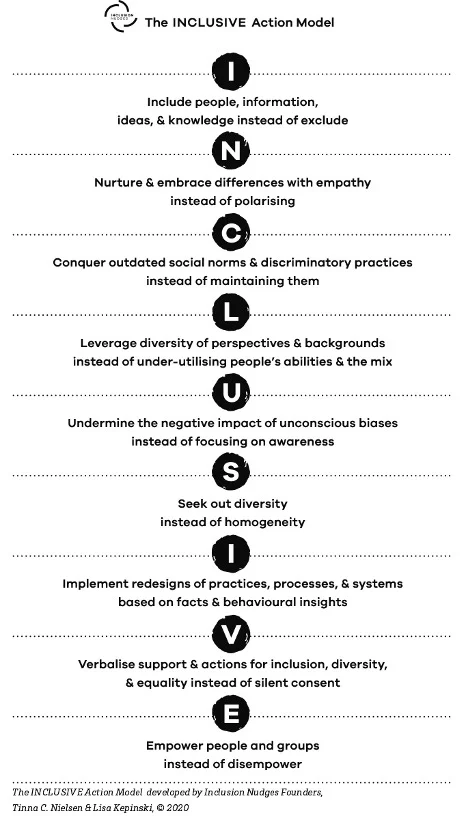
The proliferation of unconscious bias awareness training (UBT) has marked it as the most widely adopted intervention in the global effort to combat discrimination and inequality, often hailed as a swift solution to achieve equity and inclusion within organizations. This approach has blossomed into a multi-billion-dollar industry, reflecting a widespread belief in its efficacy. However, a growing body of research and real-world outcomes increasingly points to a troubling paradox: at best, UBT is largely ineffective, and at worst, it can actively backfire, exacerbating the very issues it aims to resolve. This critical examination underscores the urgent need for a fundamental shift in strategy, moving away from awareness-centric models towards systemic design for a more just and equitable world.
The Ubiquitous Rise of Unconscious Bias Training
The past decade has seen an unprecedented surge in demand for diversity, equity, and inclusion (DEI) initiatives, largely catalyzed by powerful social movements and a growing global consciousness around issues of systemic injustice. From the #MeToo movement exposing rampant gender-based discrimination to #BlackLivesMatter galvanizing action against racial inequality, organizations worldwide have faced immense pressure to address internal disparities and foster more inclusive environments. In response, UBT emerged as a seemingly palatable and actionable solution.
For many corporate leaders, offering UBT to their workforce became a tangible demonstration of commitment to DEI. It offered a clear, often one-off, program that could be rolled out across departments, signaling to employees, stakeholders, and the public that "something is being done." This reactive adoption frequently followed specific incidents—an employee grievance, a public relations crisis related to discrimination, or a general call for greater diversity. The pattern became predictable: a problematic incident or a major social reckoning would lead to a mandate for "more unconscious bias training." This approach positioned training not merely as an educational tool but often as a defensive shield, an easily deployed tactic to show responsiveness without necessarily engaging in deeper, more complex structural reforms. The prevailing mindset was that awareness would inherently lead to behavioral change, thus "fixing" the underlying issues of exclusion and disrespect.
Deconstructing the Flaws: Why Awareness Alone Falls Short
Despite the significant financial investment and widespread implementation—with estimates suggesting the global DEI market size reached over $8 billion in 2023, a substantial portion of which is dedicated to training—the empirical evidence supporting UBT’s long-term effectiveness remains scant. Organizational psychologists and behavioral scientists have increasingly highlighted fundamental reasons why a purely awareness-based approach struggles to deliver lasting change.
At the core of this challenge lies the intricate nature of human cognition, often conceptualized through two distinct systems: System 1 and System 2 thinking. System 1 operates unconsciously, intuitively, and automatically, governing the vast majority of our daily decisions and interactions, including the manifestation of biases and stereotypes. System 2 is our conscious, rational, effortful thinking system, responsible for logical reasoning and deliberate decision-making. The critical flaw of most UBT programs is their primary appeal to System 2. While such training can successfully make individuals aware of their biases and the dynamics of group psychology in their rational, conscious minds, this knowledge often fails to penetrate or alter the deeply ingrained patterns of System 1. Lasting behavioral change requires influencing the unconscious mechanisms that drive automatic responses, a task that mere knowledge dissemination rarely achieves.
Moreover, the very act of attempting to consciously monitor unconscious biases can lead to what psychologists term "mental overload." Our cognitive resources are finite, and trying to override automatic System 1 processes with conscious System 2 effort is mentally taxing. This cognitive strain can, paradoxically, deplete self-control resources, making individuals more prone to relying on default, often biased, heuristics and stereotypes when faced with complex social situations. This creates a vicious cycle where the effort to combat bias inadvertently strengthens its influence.
Empirical Evidence of Backfire Effects
Beyond mere ineffectiveness, several studies have documented instances where UBT can actively backfire, producing outcomes antithetical to its stated goals:
- Enhanced Bias and Stereotypes: Research, including studies published in journals like Psychological Science, has indicated that informing individuals about the "naturalness" of biases and stereotypes can, for some, unintentionally reinforce these patterns. If bias is framed as an inherent, unavoidable aspect of human cognition, individuals may feel less personal responsibility or motivation to actively mitigate its impact.
- Strengthening Misconceptions of Inequality: A 2020 study highlighted a particularly concerning backfire effect: making individuals in privileged positions aware of racial prejudice and societal inequality did not necessarily shift their perception of society as fundamentally fair. Instead, for some, it reinforced this belief and even led to a more optimistic (and inaccurate) view of historical inequalities. Awareness, in this context, solidified existing biases rather than dismantling them.
- Moral Licensing: Perhaps one of the most insidious unintended consequences is "moral licensing." This psychological phenomenon occurs when an individual’s positive self-perception, often gained from an initial "good deed" (such as attending bias training), unconsciously grants them permission to subsequently behave in ways that contradict their stated values or intentions. For example, studies have shown that individuals who publicly express strong disagreement with sexist statements might later be more likely to hire a man for a job where a woman is equally or more qualified, or even make sexist comments, because their "non-sexist" self-image provides an unconscious license for such behavior. Similar effects have been observed concerning racial discrimination.
- Activating Shame and Fear: The very terminology of "Unconscious Bias Awareness Training" or "Inclusion & Diversity Training" can trigger counterproductive emotional responses. These terms can implicitly suggest that participants are "broken" and need "fixing," leading to anxiety, defensiveness, or resentment. The unconscious mind may interpret the training as a threat to status, power, or privilege, activating "loss-aversion" responses. This can manifest as resistance, cynicism, or even a desire for "revenge" against perceived accusers, further hindering genuine engagement and open-mindedness.
Industry Perspectives and the Search for Efficacy
The critiques of UBT are not universally accepted, and the DEI consulting industry itself is grappling with these findings. Many practitioners continue to advocate for awareness training, arguing that while it may not be a complete solution, it is a necessary first step in raising consciousness and providing a shared vocabulary for discussing complex issues. Proponents often point to anecdotal successes, moments of "aha!" where participants gain new insights into their own prejudices. These moments can indeed foster self-reflection and initiate conversations about systemic issues. However, studies repeatedly show that even when positive results are observed, they are often transient, lasting only a few days without subsequent reinforcement or structural change.
The financial implications are substantial. With billions invested annually, the persistent ineffectiveness of UBT represents a significant misallocation of resources. Organizations risk not only financial waste but also fostering cynicism among employees who witness repeated training sessions yielding no tangible improvements in workplace culture or equity outcomes. This can erode trust in leadership and undermine the broader DEI agenda.
Designing for Inclusion: The Power of Systemic Nudges
Given the limitations of awareness-based approaches, a paradigm shift is critically needed. Instead of attempting to "fix" individual minds, the focus must move towards redesigning the environments and processes within which decisions are made. This is where the concept of "Inclusion Nudges" emerges as a powerful, evidence-based alternative.
An Inclusion Nudge is a deliberate action or design intervention engineered to influence the unconscious mind, making inclusive behaviors easy, automatic, and the default choice in daily interactions and decision-making processes. Drawing insights from behavioral and social sciences, nudge theory, and a deep understanding of the hidden barriers to inclusion, these interventions circumvent the conscious mind, effectively minimizing the impact of cognitive biases without relying on rational arguments or willpower. They work by subtly steering behavior, aligning actions with stated values and intentions, usually at minimal cost and without resorting to threats or punishment, while respecting individual freedom of choice.
A Landmark Example: Anonymous Orchestra Auditions
One of the most compelling and enduring examples of an Inclusion Nudge is the implementation of anonymous auditions by symphony orchestras. Starting in the 1970s and gaining widespread adoption through the 1980s and 1990s, this practice was introduced in response to internal questioning about the overwhelming predominance of white male musicians in orchestras.
The design is elegantly simple yet profoundly effective: musicians audition behind a screen, preventing the selection committee from seeing the candidates. The initial pilot programs yielded astonishing results. The number of women selected for orchestras, which had historically been severely underrepresented, increased by approximately 50%. Concurrently, the ethnic diversity of selected candidates also saw a radical shift. This dramatic, measurable impact led to the widespread adoption of anonymous auditions as a permanent design feature in most major symphony orchestras globally.
The brilliance of this nudge lies in its ability to strip away visual cues that could trigger unconscious biases related to gender, race, age, or appearance. Some orchestras have even refined this further by placing a carpet behind the screen to muffle the sound of shoes, recognizing that even subtle auditory cues could inadvertently prime gender bias in the unconscious minds of committee members, subtly influencing their perception of musical performance. This meticulous attention to detail illustrates the power of environmental design in neutralizing bias at critical decision points.
The success of anonymous auditions provides irrefutable evidence that rather than trying to make evaluators aware of their biases and hoping they consciously override them, removing the opportunity for bias through structural design is far more effective. This principle is now slowly spreading to other sectors, with the adoption of anonymized CVs, structured interview processes, and diverse hiring panels with pre-defined objective criteria. Technological platforms are increasingly facilitating these design-based interventions, making them easier to implement at scale.
The Imperative for Systemic Design
The evidence is clear: awareness, while a foundational element, is insufficient to drive profound and lasting change in the fight against discrimination and inequality. The human mind’s inherent cognitive architecture, with its reliance on unconscious shortcuts, means that simply knowing about biases will not automatically disarm their influence.
The path forward demands a strategic pivot from individual-focused "fixing" to systemic "designing." Organizations must embrace the principles of behavioral science to craft environments and processes where inclusivity is the default, where unbiased decision-making is engineered into the system, and where equity becomes an automatic outcome rather than a constant, effortful struggle against unconscious inclinations. This involves:
- Redesigning Hiring Processes: Implementing anonymized applications, structured interviews with standardized questions and scoring, and diverse hiring panels.
- Structuring Performance Evaluations: Focusing on objective, measurable criteria and minimizing subjective assessments that are vulnerable to bias.
- Promoting Equitable Collaboration: Designing meeting structures and communication protocols that ensure all voices are heard and valued.
- Creating Inclusive Workflows: Embedding nudges into daily tasks and interactions to foster fairness and belonging.
This proactive, architectural approach holds the key to moving beyond the limitations of traditional bias training. By understanding and working with our cognitive systems, rather than against them, we can transform barriers into strengths, making inclusion the norm for everyone, everywhere. It is a pragmatic, cost-effective, and ultimately far more impactful strategy for building truly just and equitable organizations and societies.