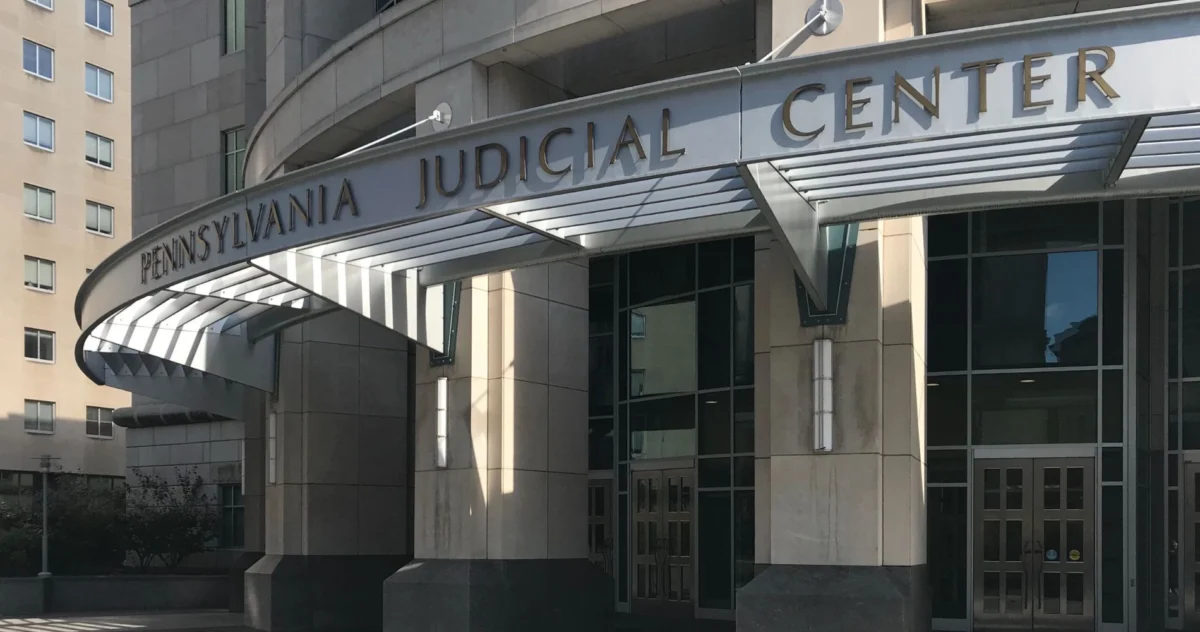
The Pennsylvania Supreme Court has delivered a landmark ruling, declaring that mandatory life-without-parole sentences for individuals convicted of felony murder are unconstitutional under the state’s organic charter. This decision, a significant victory for criminal justice reform advocates, mandates a shift towards individualized sentencing that considers a defendant’s specific culpability rather than imposing an automatic, lifelong prison term. The court’s majority opinion asserts that the state’s previous mandatory sentencing scheme for second-degree murder runs afoul of the "cruel punishments" clause enshrined within the Pennsylvania Constitution, which demands proportionality between the offense and the offender.
Chief Justice Debra Todd, writing for the majority in Commonwealth v. Lee, articulated the court’s rationale: "We determine that a mandatory life without parole sentence for all felony murder convictions, absent an assessment of culpability, is inconsistent with the protections bestowed upon our citizens under the ‘cruel punishments’ clause of our Commonwealth’s organic charter." This pronouncement signals a pivotal reinterpretation of constitutional safeguards within the state, establishing that Pennsylvania’s constitutional protections can, in certain contexts, exceed those offered by the Eighth Amendment of the U.S. Constitution. The ruling immediately affects the case of Derek Lee, the petitioner, whose sentence has been remanded for reconsideration, and casts a long shadow over the future of hundreds of other inmates currently serving similar sentences.
The Contours of Felony Murder in Pennsylvania
Understanding the nuances of Pennsylvania’s felony murder law is crucial to grasping the impact of this ruling. Under state law, a person can be convicted of second-degree murder if a death occurs during the commission of certain enumerated felonies, such as robbery, rape, kidnapping, or arson. Crucially, this conviction does not require the individual to have directly caused the death, nor to have intended to kill anyone. The mere involvement in the underlying felony during which a fatality occurs is sufficient for a second-degree murder charge.
Historically, the law mandated that every person convicted of second-degree murder, regardless of their specific role or level of involvement—whether they were the actual perpetrator who pulled the trigger or merely an accomplice like a getaway driver or lookout—must be sentenced to life imprisonment without the possibility of parole. This "one-size-fits-all" approach to such a severe punishment has been a point of contention for years, criticized by legal scholars and reform advocates for its potential to yield disproportionate and unjust outcomes.
Globally, the felony murder rule itself is a contentious legal doctrine. While many states in the U.S. have some form of felony murder statutes, the strict application of mandatory life-without-parole sentences without any exceptions is remarkably rare. The Pennsylvania Supreme Court highlighted this rarity, noting that only four other states—Iowa, Louisiana, Mississippi, and North Carolina—previously maintained such inflexible mandatory life-without-parole sentences for felony murder. This comparative analysis underscored Pennsylvania’s outlier status in its severity, further bolstering the argument for reform.
A Deeper Dive into Constitutional Proportionality
The core of the Supreme Court’s decision rests on its interpretation of the "cruel punishments" clause of the Pennsylvania Constitution, specifically its demand for proportionality in sentencing. This clause, while sharing thematic similarities with the Eighth Amendment of the U.S. Constitution, was determined by the state court to provide broader and more robust protections for Pennsylvania citizens. This assertion of "independent state grounds" is a powerful legal declaration, allowing state courts to interpret their own constitutions to provide greater rights than those guaranteed by the federal constitution.
The principle of proportionality, as emphasized by Chief Justice Todd, is deeply rooted in a "longstanding notion of justice that ‘punishment for [a] crime should be graduated and proportioned to both the offender and the offense.’" This means that the severity of a sentence should not only reflect the gravity of the crime committed but also the individual’s role, intent, and overall culpability. The court stressed that "individuals who have lessened culpability are less deserving of the most severe punishments."
The mandatory life-without-parole scheme for second-degree murder fundamentally failed this test of proportionality. It treated all participants in a felony that resulted in death as equally culpable, erasing crucial distinctions between, for instance, "the lookout and the killer who pulls the trigger." This blanket application meant that everyone convicted faced the same "harshest imprisonment sanction permitted under the law," regardless of their individual characteristics, mental state, or degree of involvement. Such an approach, the court concluded, "runs afoul of notions of individualized sentencing for defendants facing the second most severe punishment after death." The ruling thus underscores a judicial preference for tailored justice, where a person’s sentence reflects their specific role and responsibility in a criminal act, rather than a rigid statutory mandate.
The Case of Derek Lee: A Chronology of Challenge
The journey to this landmark ruling began with the personal challenge of Derek Lee. In 2014, Lee was involved in an armed robbery in Allegheny County. During the commission of the crime, while Lee was reportedly upstairs, his accomplice shot and killed the victim in the basement during a scuffle. Both men were subsequently convicted of second-degree murder and, under the then-mandatory sentencing scheme, were sentenced to life imprisonment without parole.
Lee, recognizing the disparity between his actual role in the killing and the severity of his mandated sentence, challenged his conviction and sentence. His appeal argued that the mandatory life-without-parole sentence violated both the state and federal constitutions, contending that such a punishment was disproportionate to his culpability. The case made its way through the appellate system, eventually reaching the Pennsylvania Supreme Court, which seized the opportunity to scrutinize the foundational principles of justice inherent in its state constitution.
The Supreme Court’s decision to remand Lee’s case back to the sentencing court for reconsideration marks a direct application of its ruling. The lower court is now tasked with assessing Lee’s individual culpability—his specific actions, intent, and involvement in the death—before determining whether he should be resentenced to life without parole or to life with the possibility of parole. This step ensures that Lee, and by extension others similarly situated, will receive a sentence that is proportioned to his individual role in the crime, aligning with the newly clarified constitutional standard.
Broader Implications and The Road Ahead
The Pennsylvania Supreme Court’s ruling carries profound implications, not only for future felony murder cases but also for the more than 1,000 individuals currently serving life without parole for second-degree murder in the state. One of the most pressing questions left unanswered by the ruling is its retroactivity: does it apply to those already convicted and incarcerated under the old mandatory sentencing scheme? The court did not expressly decide this critical point, leaving a significant legal void that will likely be addressed through subsequent litigation or legislative action.
If the ruling is eventually applied retroactively, it could open the door for hundreds of inmates to seek resentencing hearings, where their individual culpability would finally be assessed. This would necessitate a massive undertaking for the state’s judicial system, potentially leading to a wave of new appeals and reviews. For these individuals, many of whom have spent decades in prison, the possibility of parole offers a glimmer of hope and a chance for a future outside prison walls, a prospect previously denied to them.
Legislative and Executive Responses
The ruling has already spurred calls for action from Pennsylvania’s political leadership. Governor Josh Shapiro, who has previously advocated for striking down mandatory life without parole for felony murder, lauded the court’s decision. He promptly called upon lawmakers to "come up with a thoughtful, just process to address those who are serving life sentences for second degree murder." This statement signals the Governor’s commitment to addressing the implications of the ruling comprehensively, likely pushing for legislative solutions to ensure an equitable process for current inmates.
Indeed, legislative efforts were already underway even before the Supreme Court’s decision. State Senator Sharif Street (D., Philadelphia) has been a vocal proponent of reform in this area. He sponsored a bipartisan bill, SB387, which aims to allow parole consideration for people convicted of felony murder after serving 25 years. The bill is currently pending in the state Senate and now gains significant momentum and urgency in the wake of the court’s ruling. Senator Street articulated the core injustice his bill seeks to remedy, stating, "I’ve been advocating that we do this because the result of our legal system is there are people who were not the actual shooter who end up serving life in prison when the actual shooter did not. It’s inconsistent with people’s understanding of how justice should work." This highlights a perceived inequity where principal actors in a homicide sometimes receive lesser sentences through plea deals or other mechanisms, while accomplices are locked away for life.
Potential Challenges and Perspectives
While the ruling is celebrated by justice reform advocates, it is not without its potential complexities and criticisms. Victim advocacy groups and some law enforcement officials may express concerns about public safety and the need for stringent accountability for crimes resulting in death. There could be arguments that any leniency, even for accomplices, diminishes the gravity of the crime and the suffering of victims’ families. The legislative process for SB387 or any new framework will undoubtedly involve balancing these competing interests, ensuring justice for victims while upholding constitutional principles of proportionality for defendants.
Legal scholars generally view this ruling as a progressive step, aligning Pennsylvania with a more contemporary understanding of criminal culpability and punishment. It reflects a growing national trend away from overly harsh mandatory minimum sentences, which have often been criticized for contributing to mass incarceration and disproportionately impacting marginalized communities. The assertion of independent state constitutional grounds is particularly noteworthy, potentially serving as a precedent for other states to re-evaluate their own mandatory sentencing laws through the lens of their unique constitutional provisions.
This decision could also stimulate further legal discourse on what constitutes "individual culpability" in complex felony murder scenarios. Courts will need to develop clear guidelines for assessing roles, intent, and the degree of involvement of each defendant in a crime where a death occurs, ensuring consistent and fair application of the new standard. This process will involve careful consideration of evidence, mitigating factors, and the specific circumstances of each case, moving away from the previous automatic imposition of the most severe sentence.
In conclusion, the Pennsylvania Supreme Court’s ruling marks a monumental shift in the state’s criminal justice landscape. By striking down mandatory life without parole for felony murder, the court has reaffirmed the fundamental principle that punishment must be proportionate to the offender’s culpability. The challenge now lies with the legislature and the judiciary to implement this decision effectively, ensuring a thoughtful and just process for all individuals affected, past and present, while upholding the integrity of the justice system and addressing the concerns of all stakeholders.