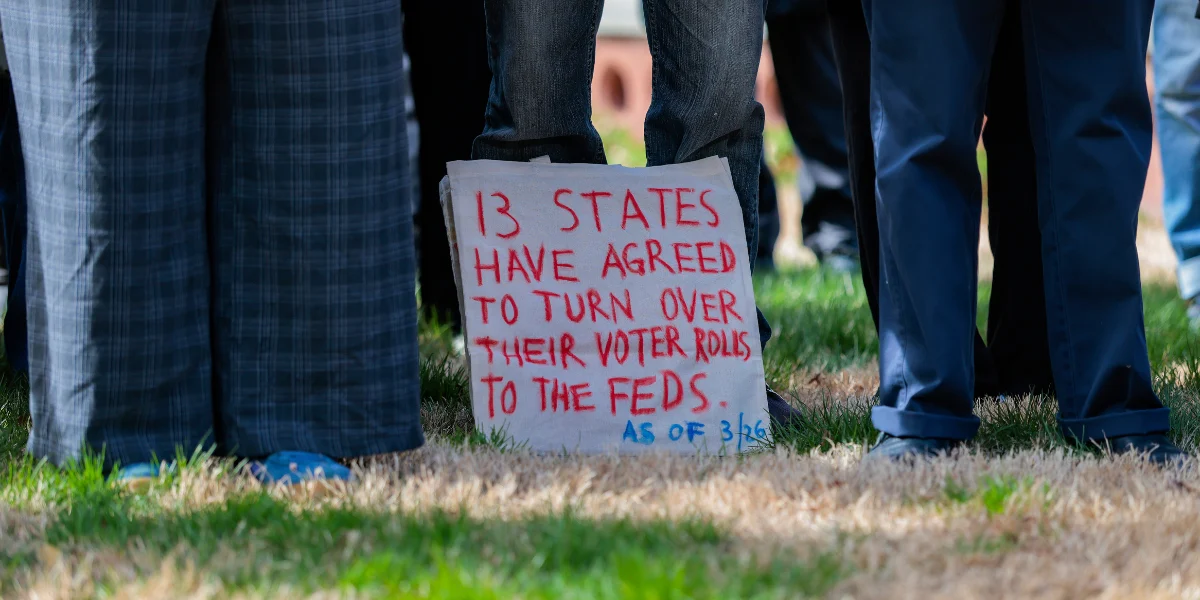
The United States Senate narrowly defeated a high-profile voter identification bill last week, signaling a significant moment in the ongoing legislative struggle over election integrity and civil liberties. The Safeguard American Voter Eligibility (SAVE) America Act, which sought to implement some of the most stringent identification requirements in modern history, failed to pass in a 48-50 vote. The defeat came as a surprise to many political observers, as the bill had initially appeared to possess enough bipartisan momentum to clear the upper chamber. However, a small but decisive group of Republican senators—Lisa Murkowski of Alaska, Mitch McConnell of Kentucky, Susan Collins of Maine, and Thom Tillis of North Carolina—joined a unified Democratic caucus to block the measure.
The SAVE America Act was designed to overhaul the verification processes for both local and national elections. Its primary provisions included rigid restrictions on the types of identification acceptable for voter registration and polling place entry. Furthermore, the bill contained language that would have significantly curtailed the availability of absentee and mail-in voting, methods that have become increasingly common since the 2020 election cycle. Proponents of the bill argued that these measures were essential to ensuring the security of the democratic process, while opponents contended that the bill was a calculated effort to disenfranchise specific demographics, including low-income voters, students, and the transgender community.
Chronology of the SAVE America Act
The legislative journey of the SAVE America Act was marked by significant revisions and intense committee debate. In its initial drafting stages, Republican sponsors included several riders that targeted transgender rights specifically. These early versions sought to restrict access to gender-affirming care and prohibit transgender individuals from participating in athletic programs that receive federal or local funding. These provisions were modeled after similar legislation passed in several conservative-leaning states over the previous two years.
However, as the bill moved toward the Senate floor, leadership opted to remove the more overt anti-transgender riders to secure a broader base of support. Despite these removals, the core of the bill remained focused on documentation requirements that critics argued would still disproportionately affect transgender citizens. Following several days of heated debate regarding the constitutional implications of federalizing voter ID standards, the bill was brought to a vote last week, where it ultimately met its demise due to the four Republican defections.
Impact on Transgender Voting Access
The defeat of the SAVE America Act is particularly significant for the transgender community, which has faced a shifting landscape of legal requirements regarding identification. Since the commencement of the current presidential administration, several executive actions and state-level laws have complicated the ability of transgender individuals to maintain accurate documentation. In states such as Indiana and Mississippi, new regulations have restricted gender marker changes on birth certificates and driver’s licenses, while some federal agencies have moved to revoke previously issued identification that does not align with an individual’s sex assigned at birth.
For many transgender voters, the SAVE America Act would have created a "documentation gap." If the bill had passed, the requirement to produce specific, non-expired forms of identification that match birth records would have effectively barred those whose documents are in flux or have been voided by recent state laws. According to data from the Williams Institute, approximately 450,000 transgender people across the U.S. lack identification that reflects their correct name or gender, a factor that advocacy groups say serves as a modern-day poll tax when combined with restrictive voting laws.
Judicial Developments in State and Federal Courts
While the SAVE America Act failed at the federal level, the judicial system has become the primary battleground for these issues. Several recent court rulings have provided a patchwork of legal precedents across the country.
Montana Supreme Court Upholds Document Updates
In a landmark decision, the Montana Supreme Court struck down Senate Bill 458, a state law that sought to define "sex" in a way that would have prevented transgender residents from updating their state-issued identification. In a 5-2 split decision, the court ruled that the law infringed upon the privacy and equal protection rights of Montana citizens. The ruling allows transgender individuals in the state to continue utilizing established processes for updating gender markers on birth certificates and driver’s licenses.
Federal Court Rules on Athletics and Executive Authority
In Minnesota, a federal appeals court issued a significant ruling regarding transgender participation in sports. The court struck down a state-level ban on transgender girls participating in female athletic programs. Notably, the court’s opinion addressed the current administration’s executive orders, asserting that these orders do not constitute "settled law." This distinction reinforces the role of the judiciary in interpreting Title IX and other federal protections, independent of executive branch directives.
Supreme Court Declines Parental Rights Case
The U.S. Supreme Court recently declined to hear a case originating from Massachusetts, where parents argued that a school district’s policy of allowing students to socially transition without parental notification violated their constitutional rights. By refusing the case, the Supreme Court left in place lower court rulings that supported the school district’s privacy policies. This follows a trend of the high court avoiding broad rulings on gender identity in schools, though a similar case from Florida remains on the docket for potential consideration.
Regulatory and Administrative Policy Shifts
Beyond the legislative and judicial spheres, federal agencies have begun proposing and implementing new rules that affect the daily lives of transgender individuals. These administrative actions reflect the current executive branch’s policy priorities and have drawn sharp criticism from civil rights organizations.
HUD and Housing Protections
The Department of Housing and Urban Development (HUD) has proposed a new rule that would require applicants for federally funded housing assistance and shelters to list their sex assigned at birth on all documentation. This rule would also grant facilities the authority to demand "reasonable assurances" and evidence to confirm an individual’s sex, ostensibly to protect the safety of other residents. Critics argue this move could lead to increased homelessness and discrimination against transgender individuals seeking emergency shelter.
ATF and Firearm Ownership
The Bureau of Alcohol, Tobacco, Firearms, and Explosives (ATF) has introduced a regulation requiring all new gun owners to list their birth sex on mandatory ownership paperwork. This requirement applies even to individuals who have legally changed their gender markers through court orders. The ATF maintains that this is necessary for accurate background checks, but advocates for the Second Amendment rights of LGBTQ+ individuals argue it creates an unnecessary barrier to exercising constitutional rights.
FCC Investigations into Media Content
The Federal Communications Commission (FCC) has initiated an inquiry into whether television programming featuring transgender or non-binary characters should carry specific content warnings. This move is part of a broader effort by some federal regulators to classify gender-related content as a unique category of programming. The investigation has sparked a debate over the First Amendment and the role of the government in regulating media representation.
Broader Socio-Political Analysis and Implications
The convergence of the SAVE America Act’s defeat and the flurry of state and federal actions suggests a nation deeply divided on the definition of identity and the scope of government authority. Political analysts suggest that the defeat of the SAVE America Act does not signal the end of the GOP’s push for restrictive voting laws. Instead, the focus is expected to shift back to the state level, where Republican-controlled legislatures may attempt to implement similar measures piecemeal.
The "Restoring Biological Truth Act" in Louisiana serves as a prime example of this trend. Supported by Governor Jeff Landry, the bill seeks to remove the word "gender" from all state laws, replacing it with "sex" to ensure that legal status is determined solely by sex assigned at birth. Such laws, if passed, would create a legal framework that essentially erases the recognition of transgender identities within state government operations.
Conversely, new research continues to influence the debate. A recent study from researchers in Virginia debunked the claim that a majority of transgender youth "grow out" of their gender identity, finding that a significant majority of children who transition continue to identify as transgender into adulthood. This data is increasingly being cited in courtrooms to challenge the scientific basis for bans on gender-affirming care.
International Context: The EU and Hungary
The debate over LGBTQ+ rights is not confined to the United States. The European Union (EU) Court of Justice recently ruled against Hungary’s ban on LGBTQ+ media content. The court instructed Hungary to repeal the ban or face significant financial penalties. This international tension mirrors the domestic struggle in the U.S., pitting centralized judicial authorities against regional governments that seek to implement restrictive social policies.
As the 2026 election cycle approaches, the fallout from the SAVE America Act and the ongoing regulatory shifts will likely remain central themes in the American political discourse. The defeat of the bill in the Senate provides a temporary reprieve for advocates of expanded voting access, but the active involvement of federal agencies and state legislatures ensures that the legal and social status of transgender Americans will remain a primary point of contention for the foreseeable future.