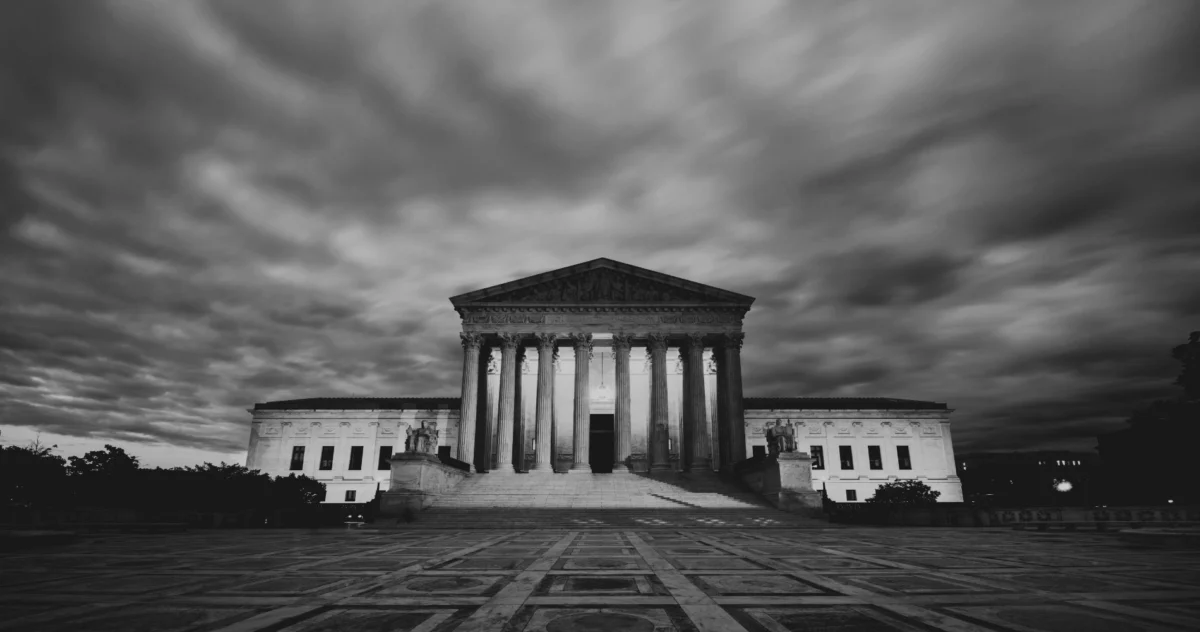
The Supreme Court delivered a profound blow to the bedrock of American democracy yesterday, effectively gutting Section 2 of the Voting Rights Act (VRA) in a 6-3 decision in Louisiana v. Callais. The landmark ruling, which radically reinterprets the statute, mandates that plaintiffs challenging vote dilution must now prove discriminatory intent rather than simply demonstrating discriminatory effects. This monumental shift, as Justice Elena Kagan vehemently articulated in her dissenting opinion, “threatens a half-century’s worth of gains in voting equality” and transforms Section 2 into a tool far less capable of safeguarding minority voters’ political power. The decision is expected to have sweeping repercussions, potentially unwinding decades of progress in minority representation and making it significantly harder to challenge racially biased electoral maps and systems.
Understanding Section 2: A Pillar of Voting Rights
Section 2 of the Voting Rights Act, enacted in 1965 and significantly strengthened in 1982, was designed to combat racial vote dilution—a sophisticated tactic employed, particularly in the South, to diminish the political influence of Black voters and other minority groups. Following the VRA’s initial passage, which banned direct methods of disenfranchisement like poll taxes and literacy tests, states and local jurisdictions pivoted to more subtle, structural methods. These included drawing discriminatory electoral maps (gerrymandering) that packed minority voters into a few districts or split them across many, thereby diluting their collective strength. Another common tactic was the use of at-large election systems, where all voters in a jurisdiction elect representatives from a single pool, often allowing a white majority to consistently elect only white candidates, effectively marginalizing minority candidates even in areas with substantial minority populations.
Recognizing the insidious nature of these practices, Congress amended Section 2 in 1982. This crucial amendment explicitly conditioned liability not on the notoriously difficult-to-prove discriminatory intent of lawmakers, but on the discriminatory effects of a districting scheme or electoral system. This "effects test" was revolutionary, transforming Section 2 into an indispensable and effective tool for communities to challenge systemic racial discrimination in voting. It allowed courts to examine whether, “based on the totality of circumstances,” electoral processes denied minority citizens an equal opportunity to participate in the political process and elect representatives of their choice.
The impact of this amendment was immediate and profound. Prior to the 1982 amendment, only 18 Black individuals were elected to the 96th Congress (1979-1981). Fast forward to the projected composition of the 119th Congress (2025-2027), and the number has surged to 65 Black representatives and five Black senators. Nationwide, the Joint Center for Political and Economic Studies reports that the number of Black elected officials in the U.S. has soared from a mere 1,469 in 1970 to more than 10,000 today. Much of this remarkable increase, particularly at local and state levels, is directly attributable to successful challenges under Section 2.
The Louisiana Case: A Catalyst for Reversal
The Louisiana v. Callais case originated from a challenge to Louisiana’s congressional map following the 2020 census. Despite Black residents constituting approximately one-third of the state’s population, Louisiana lawmakers initially drew a new congressional map with only one out of six districts where Black voters had a realistic opportunity to elect their preferred candidate. Black voters subsequently sued under Section 2 of the VRA, arguing that this map unlawfully diluted their voting power. A federal court sided with the plaintiffs, striking down the map and ordering the state to redraw it to include a second Black-majority congressional district, which Louisiana complied with in early 2024.
However, a group of white voters then challenged this redrawn map, asserting that the creation of the new Black-majority district constituted an unconstitutional racial gerrymander. The Supreme Court’s conservative majority seized this opportunity to fundamentally alter Section 2’s application. As the dissent sharply noted, the Court effectively “convert[ed] Section 2 into its opposite—a statute turning on discriminatory intent, not effects.” The majority’s reasoning, while not fully detailed in the provided excerpt, centered on re-establishing a higher bar for proving discrimination, aligning Section 2 with other civil rights laws that often require proof of intent. The Court found that the Black voters in Louisiana had failed to meet these newly imposed, more stringent requirements, concluding that Section 2 did not, in fact, compel the state to add a second majority-minority district. Consequently, Louisiana’s redrawn map, which had sought to remedy the dilution, was struck down.
Justice Kagan’s Scathing Dissent: A Warning of Grave Consequences
Justice Elena Kagan, joined by Justices Sonia Sotomayor and Ketanji Brown Jackson, issued a powerful and deeply critical dissent, warning of the “far-reaching and grave” consequences of the majority’s decision. She argued that requiring voters to prove intentional racial discrimination “renders Section 2 all but a dead letter,” effectively dismantling a crucial safeguard against systemic disenfranchisement.
Kagan emphasized the historical context of Section 2, noting that the "intent" standard was precisely what Congress sought to avoid with the 1982 amendment because states were adept at obscuring their discriminatory motives behind race-neutral language. She pointed out the extreme difficulty, if not impossibility, of proving intent, especially when states can now offer a political gerrymandering defense to shield their actions. For instance, in Louisiana’s case, the historical fact that the state has never elected a Black Congressperson from a non-majority-Black district would now be largely inadmissible as evidence of discriminatory intent.
Her dissent concluded with a poignant reflection on the Voting Rights Act’s historical significance:
"The Voting Rights Act is—or, now more accurately, was—’one of the most consequential, efficacious, and amply justified exercises of federal legislative power in our Nation’s history.’ Shelby County, 570 U. S., at 562 (Ginsburg, J., dissenting). It was born of the literal blood of Union soldiers and civil rights marchers. It ushered in awe-inspiring change, bringing this Nation closer to fulfilling the ideals of democracy and racial equality. And it has been repeatedly, and overwhelmingly, reauthorized by the people’s representatives in Congress. Only they have the right to say it is no longer needed—not the Members of this Court. I dissent, then, from this latest chapter in the majority’s now-completed demolition of the Voting Rights Act."
This fiery conclusion underscores the perception among the dissenting justices that the Court has overstepped its bounds, usurping Congress’s role in determining the necessity and scope of voting rights protections.
A Brief History of the Voting Rights Act: From Bloody Sunday to Legal Battles
To fully grasp the magnitude of the Callais decision, it is essential to revisit the arduous journey that led to the Voting Rights Act’s enactment and its subsequent battles. After the Civil War, the Fifteenth Amendment was ratified, explicitly prohibiting racial discrimination in voting. However, Southern states, determined to maintain white supremacy, systematically circumvented this amendment through a battery of discriminatory practices. These included poll taxes, literacy tests designed to disproportionately fail Black applicants, grandfather clauses, and outright violent intimidation by groups like the Ku Klux Klan and local law enforcement.
Selma, Alabama, stands as a stark testament to the effectiveness of these tactics. In 1965, Black residents constituted half of Selma’s population, yet a mere 2% of the county’s 15,000 eligible Black voters were registered to vote. The struggle for voting rights culminated in a series of dramatic events in 1965. On March 7, 1965, known as "Bloody Sunday," hundreds of nonviolent voting rights protestors attempting to march from Selma to the state capital in Montgomery were brutally attacked by Alabama state troopers and local police on the Edmund Pettus Bridge, suffering severe injuries from billy clubs, whips, and tear gas.
The images of the violence shocked the nation and galvanized public opinion. Two weeks later, thousands of activists, led by Rev. Dr. Martin Luther King Jr., successfully completed the march to Montgomery, culminating in a powerful speech by King before 25,000 people at the Capitol. The widespread outrage and moral imperative spurred President Lyndon Johnson to sign the Voting Rights Act into law on August 6, 1965. This landmark legislation outlawed discriminatory qualification laws and, crucially, established a "preclearance" requirement (Section 5), mandating that jurisdictions with a history of egregious discrimination obtain federal approval before implementing any new voting laws. Congress overwhelmingly reauthorized the VRA multiple times, including in 2006, when Republicans controlled both chambers of Congress and the White House, signifying broad bipartisan support for its provisions.
The VRA’s immediate impact was transformative. Within a decade of its passage, over a million Black people registered to vote in the Deep South, including approximately 200,000 in Alabama by 1975. The number of Black people elected to public office in the Deep South soared from virtually none to about 1,000, fundamentally altering the political landscape and bringing new voices into government.
The First Major Blow: Shelby County v. Holder (2013)
Despite its undeniable success and repeated reauthorization, the VRA has faced continuous challenges. The first major blow came on June 25, 2013, with the Supreme Court’s 5-4 decision in Shelby County v. Holder. This ruling struck down Section 4(b) of the VRA, which contained the coverage formula determining which states and localities were subject to the preclearance requirement of Section 5. The majority argued that "things have changed dramatically" since 1965, citing the illegality of voting tests, diminished racial disparities in voter turnout and registration, and record numbers of minorities holding elected office.
Justice Ruth Bader Ginsburg, in her iconic dissent, famously retorted, “Throwing out preclearance when it has worked and is continuing to work to stop discriminatory changes is like throwing away your umbrella in a rainstorm because you are not getting wet.” Her words proved prophetic. Immediately following Shelby County, jurisdictions previously under federal oversight swiftly enacted new voting restrictions. These included imposing strict voter identification requirements, limiting early voting periods, and closing polling places, leading to disproportionately long lines in minority communities and disenfranchising poor and minority voters who struggled to obtain requisite identification.
Furthermore, many states engaged in "voter purging," aggressively removing names from registration lists in often flawed and racially discriminatory ways. Within five years of Shelby County, the Brennan Center for Justice reported that states like Florida, New York, North Carolina, and Virginia had engaged in illegal purges, while others like Alabama, Arizona, Indiana, and Maine implemented policies that violated federal laws designed to protect against such practices. The cumulative effect of these new barriers has been a widening "turnout gap" between white and nonwhite voters, which reached 18 percentage points by the 2022 midterms. This gap grew twice as quickly, on average, in counties that were formerly covered by preclearance requirements, starkly illustrating the immediate negative impact of Shelby County.
The Transformative Power of Section 2 (Before Callais)
While Shelby County crippled Section 5, Section 2 remained a powerful tool, particularly after its 1982 amendment. As the VRA largely succeeded in preventing direct denial of ballots, states increasingly relied on vote dilution schemes. Section 2 became the primary legal recourse for voters to challenge these practices, especially discriminatory electoral maps and at-large election systems.
The results were dramatic, particularly at the local government level. The Brennan Center reported that within a decade of the 1982 amendment, hundreds of cities, towns, and counties across the South abandoned discriminatory at-large election systems. They replaced them with single-member districts or alternative election systems, which, for the first time since Reconstruction, allowed candidates preferred by communities of color to win elections. This transformation reshaped local governance, making it more representative of the diverse populations it served.
In an amicus curiae brief submitted to the Supreme Court in Callais, the Brennan Center succinctly summarized Section 2’s profound impact: “Indeed, since the 1980s, Section 2 of the Voting Rights Act has played an indispensable role in improving representation on city councils, school boards, county commissions, and other local government bodies across the country. Its impact has been especially transformational in the South.” The brief highlighted how entrenched racially polarized voting and hostility from white voters often locked minority voters out of any realistic chance to elect candidates of their choice, a systemic problem Section 2 effectively addressed in both partisan and non-partisan local elections.
Beyond local governments, Section 2 also empowered voters to challenge discriminatory congressional and legislative districting plans. This led to significant changes in national representation, with states like Alabama, Florida, North Carolina, and Virginia creating their first majority-minority congressional districts after the 1990 census. Until yesterday’s ruling, Section 2 vote-dilution claims continued to play a crucial role in expanding electoral opportunities for voters of color, particularly in the South, where its protections were most urgently needed.
Implications and Future Outlook
The Louisiana v. Callais decision marks a devastating setback for voting rights in the United States, fundamentally altering the landscape of election law. By reintroducing the requirement to prove discriminatory intent, the Supreme Court has erected an almost insurmountable barrier for plaintiffs challenging vote dilution. Proving intent is notoriously difficult; lawmakers can easily couch discriminatory actions in seemingly race-neutral language, making it nearly impossible to uncover their true motives. This will likely lead to a dramatic decrease in successful Section 2 challenges.
One of the most immediate implications is in the realm of redistricting. With the "effects test" effectively nullified, states and local jurisdictions will face far less legal pressure to draw maps that ensure fair representation for minority communities. Civil rights advocates and legal scholars anticipate a wave of challenges to existing majority-minority districts, potentially leading to their dismantling. This could reverse decades of progress in minority representation, effectively silencing the political voices that Section 2 had helped empower. Many jurisdictions, as the Brennan Center warned in its brief, are now "poised to accept the Court’s invitation to return to the racially discriminatory systems that previously entrenched the power of white voters at the expense of minority communities."
The decision places an increased burden on civil rights organizations and affected communities, who will now need to expend vastly more resources to gather evidence of intent, a task that often requires access to internal legislative communications and deliberations, which are frequently shielded from public view. This will make litigation significantly more complex, lengthy, and expensive, potentially deterring many legitimate challenges.
Politically, the ruling could exacerbate existing partisan divisions. While the VRA traditionally enjoyed bipartisan support, recent decades have seen it become a flashpoint in culture wars. The Callais decision, coming from a conservative majority on the Court, is likely to be hailed by those advocating for states’ rights and less federal oversight, while being vehemently condemned by civil rights groups, voting rights advocates, and progressive lawmakers.
The broader erosion of voting rights, initiated by Shelby County and now exacerbated by Callais, paints a grim picture for the future of electoral equality. With both Section 5’s preclearance and Section 2’s "effects test" severely weakened, the Voting Rights Act, once considered a crown jewel of American legislative achievement, now stands significantly diminished. The path forward for voting rights advocates is uncertain. It will likely involve a renewed focus on state-level protections, public awareness campaigns, and potentially calls for new federal legislation, though the current political climate makes such legislative action highly improbable. The Louisiana v. Callais decision serves as a stark reminder of the fragility of democratic rights and the enduring struggle to ensure that every citizen’s vote holds equal weight.