What a tumultuous time the past two years have been! The pandemic era, an ongoing period of unprecedented global upheaval, has driven a massive, rapid-paced experimentation with new ways of working, fundamentally altering our collective understanding of employment and the future of labor. As myriad open questions persist and data continues to evolve, a comprehensive article series is exploring these emerging trends, categorized under ‘Purpose,’ ‘People,’ ‘Process & Policy,’ and ‘Polarization & Activism.’ This particular installment delves into the profound shifts observed within the ‘People’ dimension, alongside critical reflection questions on the implications these changes hold for Diversity, Equity, and Inclusion (DEI) efforts amidst this highly ambiguous and fast-changing landscape.
As economies, organizations, and individuals worldwide strive to recover and adapt, the role of talent has emerged as paramount. A significant power shift has occurred, placing employees in a considerably stronger position to articulate their expectations regarding what will attract and retain them within an organization. This recalibration of the employer-employee dynamic marks a pivotal moment in the history of work.
The Genesis of the Great Resignation and Evolving Workforce Dynamics
The pandemic era famously brought forth what has been widely termed "The Great Resignation," a global phenomenon characterized by an elevated rate of voluntary job departures. While some researchers contend that a gradual increase in resignation trends predated the pandemic, the crisis undeniably acted as a powerful accelerant, intensifying the movement and bringing it into sharp public focus.
A seminal global survey released in March 2021, notably by Microsoft’s Work Trend Index, revealed that over 40% of the global workforce was contemplating leaving their jobs within the year. This sentiment translated into tangible shifts in labor markets across major economies. In the United States, August 2021 saw an unprecedented 4.3 million voluntary quits, coinciding with a staggering 10.4 million open jobs during the same period, according to the U.S. Bureau of Labor Statistics. Similarly, the United Kingdom recorded over 1 million job vacancies, a historic high, around the same time, as reported by the Office for National Statistics. These figures underscored an immediate talent concern that rapidly escalated into a long-term strategic challenge for businesses globally.
Projections from industry experts, such as Willis Towers Watson, indicated that as many as 70% of U.S. employers anticipated this talent gap to persist well into the following year, with 61% reporting ongoing struggles with employee retention. The concern was not confined to Anglo-Saxon economies; in Germany, the largest economy in the European Union, company leaders expressed increasing alarm over a scarcity of skilled employees, with a notable 11% jump in concern over three months, reaching 34.6% by July 2021, according to the Ifo Institute. These statistics painted a clear picture of a workforce in flux, demanding a re-evaluation of traditional employment models.
Demographics and Drivers Behind the Exodus
Further analysis provided insights into who was driving this wave of resignations. Data from sources like the Harvard Business Review indicated that resignation rates were particularly prevalent among mid-career professionals, showing an increase of 20% from pre-pandemic levels. Sectors experiencing extreme demand during the pandemic, such as technology and healthcare, witnessed some of the highest turnover rates. This suggested that burnout, increased workloads, and a re-evaluation of work-life balance played significant roles for these critical frontline and innovation-driven workforces.
While high turnover has historically characterized service and hospitality sectors, the pandemic brought a heightened public awareness and empathy for the often-poor working conditions in these industries. This period saw a shift from quiet departures to more vocal expressions of dissatisfaction, including a phenomenon dubbed "Rage Quitting," where employees, no longer willing to tolerate negative work environments, departed abruptly and demonstratively. This trend highlighted a growing intolerance for toxic workplaces and a demand for more respectful and equitable treatment.
The pandemic acted as a catalyst, sharpening attention on the fundamental need for organizations to genuinely value their employees and cultivate inclusive workplaces supported by fair labor practices and progressive policies. The prolonged period of uncertainty also prompted many individuals to re-evaluate their career paths and life priorities. For some, the stress of the unknown was debilitating; for others, it became a powerful impetus for change, leading to a proactive search for new opportunities that offered better alignment with their values, aspirations, and personal circumstances. Quitting, in this context, became an active declaration that "we can do better," signaling a collective realization that alternative, more fulfilling work options exist.
The Imperative for People-Centred Cultures and The Great Reset
The pervasive impact of the pandemic underscored that no organization can afford to disregard how workplace culture and the overall employee experience directly influence talent attraction and retention, ultimately determining organizational success and contributing to broader societal economic growth. As global dialogues around "The Great Reset" and "build back better" initiatives gain momentum, a people-centred work culture must be central to these frameworks as we navigate the post-pandemic recovery. This involves prioritizing employee well-being, fostering psychological safety, and ensuring that policies are designed with empathy and flexibility.
Beyond Voluntary Quits: The Great Divergence and Inclusive Recovery
Crucially, it is vital to acknowledge that not all pandemic-era employment changes constituted "Great Resignations." A parallel phenomenon, "The Great Divergence," highlights the exacerbation of inequalities within the economic recovery. Many individuals faced involuntary job losses, further intensifying a pre-existing global employment crisis. This distinction is critical for understanding the full scope of the pandemic’s impact on labor markets and for crafting truly inclusive recovery strategies.
According to the OECD, as of early 2022, there were approximately 20 million fewer people employed in OECD countries compared to pre-pandemic levels, and over 110 million fewer jobs worldwide. The International Labour Organization (ILO) calculated that global hours worked in 2021 remained 4.3% below pre-pandemic levels, equating to a loss of 125 million full-time jobs. The OECD further emphasized that the most significant reductions in working hours disproportionately affected low-paid jobs, deepening economic disparities. While global unemployment rates showed a slight decline by May 2021, they largely remained higher than before the pandemic, indicating a fragile and uneven recovery.
This stark reality necessitates an inclusive approach to talent and employment—one that holistically addresses the wide spectrum of pandemic-era work shifts and fundamentally resets talent and employment frameworks to be more equitable for all people. This moment presents a unique opportunity to enact profound, systemic changes that foster a more just and resilient global workforce.
Chronology of a Crisis: Key Milestones in Workforce Transformation
- Early 2020: Initial widespread lockdowns force an abrupt shift to remote work for many, particularly in white-collar sectors. Essential workers face heightened risks.
- Mid-2020: Companies grapple with maintaining productivity, employee well-being, and adapting infrastructure for remote operations. Initial job losses concentrated in hospitality, travel, and retail.
- Late 2020: Signs of burnout emerge among remote workers. Discussions around "Zoom fatigue" and work-life blur intensify.
- Early 2021: Mass vaccination efforts begin, sparking debates about return-to-office plans. The concept of "The Great Resignation" gains traction as reports of high turnover rates surface.
- Mid-2021: Data from the U.S., UK, and Germany confirm widespread talent shortages and record-high job vacancies. Employee power in negotiations noticeably increases.
- Late 2021: "Rage Quitting" becomes a recognized phenomenon. Organizations begin implementing hybrid work models and enhancing benefits to attract and retain talent.
- Early 2022: The "Great Divergence" is fully acknowledged, highlighting the uneven recovery and disproportionate impact on vulnerable populations. Focus shifts to building resilient, inclusive workplaces.
Statements from Related Parties and Industry Reactions
HR leaders and industry analysts have widely acknowledged the seismic shifts. "The past two years have profoundly redefined the employee value proposition," states Maria Hernandez, a leading HR strategist. "Employees are no longer just seeking a paycheck; they demand purpose, flexibility, psychological safety, and a workplace that genuinely reflects their values. Companies that fail to adapt will simply not survive the talent war."
Economists, such as Dr. Kenji Tanaka, note, "The pandemic didn’t just disrupt; it accelerated long-simmering tensions within the labor market. Automation, demographic shifts, and the gig economy were already pressuring traditional employment. COVID-19 simply brought these issues to a head, forcing an urgent re-evaluation of labor market structures and social safety nets."
Government bodies and international organizations have also begun to respond. The ILO, for instance, has repeatedly called for robust social protection systems and active labor market policies to support an inclusive recovery, emphasizing reskilling and upskilling initiatives to bridge emerging skill gaps. Companies, in turn, are investing more in employee well-being programs, mental health support, and flexible work arrangements, recognizing these as critical components of retention strategies.
Broader Impact and Implications for Diversity, Equity, and Inclusion (DEI)
The shifts in workforce dynamics have profound implications for Diversity, Equity, and Inclusion. The increased leverage of employees in the job market means that organizations cannot merely pay lip service to DEI; they must demonstrate tangible commitment. A truly inclusive culture, fair labor practices, and equitable policies are no longer just ‘nice-to-haves’ but essential components of an attractive employer brand.
- Talent Acquisition: In a highly competitive talent market, organizations must broaden their recruitment pipelines and eliminate biases in hiring to tap into diverse talent pools. This means actively seeking out candidates from underrepresented groups, ensuring accessible application processes, and training hiring managers to mitigate unconscious bias.
- Retention and Employee Experience: The focus on employee well-being, flexibility, and a positive work culture directly correlates with DEI. Marginalized groups, who often bear the brunt of workplace inequities, are particularly sensitive to these factors. Creating an environment where all employees feel valued, heard, and supported is paramount to retaining diverse talent. This includes addressing microaggressions, fostering psychological safety, and providing equitable opportunities for advancement.
- Leadership Accountability: The demand for people-centred cultures places a greater onus on leaders to be empathetic, inclusive, and accountable for fostering equitable environments. Inclusive leadership is no longer an optional skill but a fundamental requirement for navigating complex workforce challenges.
- Addressing the Great Divergence: DEI initiatives must explicitly address the inequalities exacerbated by the pandemic. This means focusing on pathways to re-employment for those who involuntarily lost jobs, investing in training for low-wage workers, and ensuring that economic recovery benefits all segments of society, not just the privileged few. The recovery must be designed to uplift those who were most impacted by job losses, often women, minorities, and those in precarious work.
- Policy and Process Reimagination: Organizations must critically examine their existing policies and processes through an equity lens. Are hybrid work policies truly inclusive of all roles and demographics? Do performance management systems fairly evaluate diverse contributions? Are benefits packages responsive to the varied needs of a diverse workforce?
Closing Notes:
The journey through the pandemic era has been a stark reminder of the interconnectedness of global health, economic stability, and social equity. The insights gleaned from the ‘People’ trends underscore that a return to ‘business as usual’ is neither possible nor desirable. Instead, this period offers an unprecedented opportunity for organizations to build back better, centering their strategies on human capital and fostering truly inclusive, resilient, and equitable workplaces.
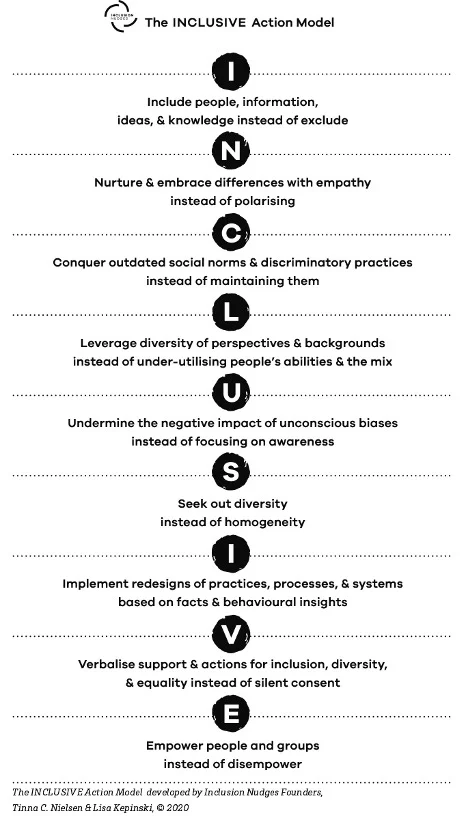
For organizations seeking to navigate these complex shifts, leveraging behavioural science and ‘inclusion nudges’ can be a powerful tool. These subtle interventions can help counteract unconscious biases and promote more inclusive decision-making in talent management, leadership development, and organizational culture. Resources like the Inclusion Nudges Guidebook offer practical strategies such as "Retention with an Alternative Future Vision" to encourage employees to see long-term opportunities, "Talent Readiness & Mobility in Colours & Shapes" to ensure fair talent progression, "Colour Code People to Ensure Meritocracy" to reduce bias in evaluations, and "Social Shuffle to Include Others" to foster broader connection. Furthermore, techniques like "Ask Flip Questions to Change Your Perceptions in the Moment" empower individuals to challenge their assumptions and cultivate more inclusive mindsets.
The time for profound change is now. By embracing these lessons and proactively shaping more inclusive work environments, organizations can not only secure their talent pipeline but also contribute to a more equitable and prosperous future for all.