The human cognitive system, under constant pressure to process vast amounts of information swiftly, frequently veers from conscious intentions of open-mindedness, respect, and inclusion. A significant majority of our daily thinking operates on an automatic, intuitive mode, often referred to as System 1 thinking. This rapid processing, while efficient, can lead to faulty judgments rooted in immediate feelings, superficial observations, past experiences, ingrained stereotypes, prevailing societal norms, and deeply held beliefs acquired during upbringing. The deliberate act of reframing, which involves consciously altering what we perceive and articulate, offers a powerful mechanism to reshape these inherent mental shortcuts, aligning them more accurately with our desired interactions with ourselves and others.
The Pervasive Influence of Normative Patterns on Perception
Throughout our lives, individuals are continuously and often unconsciously internalizing messages that define what constitutes "good," "attractive," "smart," "trustworthy," "a leader," "friendly," "caring," "strong," or "talented." These pervasive normative patterns are not benign; they are powerfully reinforced by an array of societal agents, including family, peer groups, social influencers, traditional and digital media, educational institutions, reward systems, corporate cultures, and broader societal structures. This constant exposure to predefined ideals profoundly shapes individual self-perception and interactions with others, influencing the design and operation of the systems we inhabit.
The ramifications of these entrenched perceptions are substantial, contributing to widespread discrimination and the systemic exclusion of individuals who do not conform to dominant normative archetypes. This societal impact underscores the critical importance of diversity, equity, and inclusion (DEI) initiatives, driving efforts to dismantle these exclusionary frameworks.
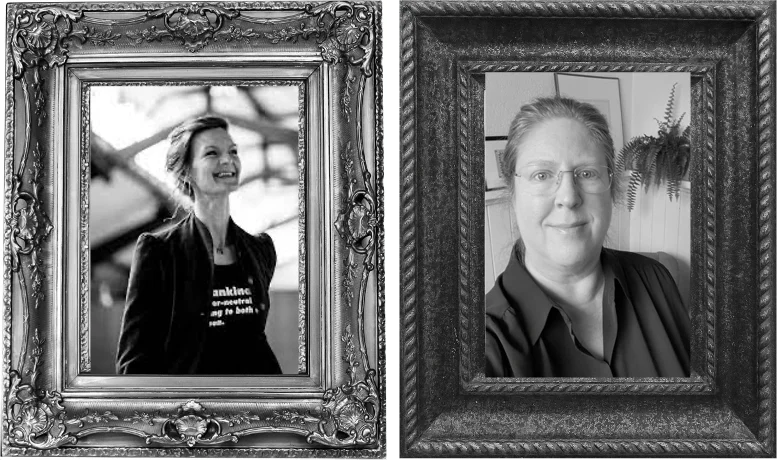
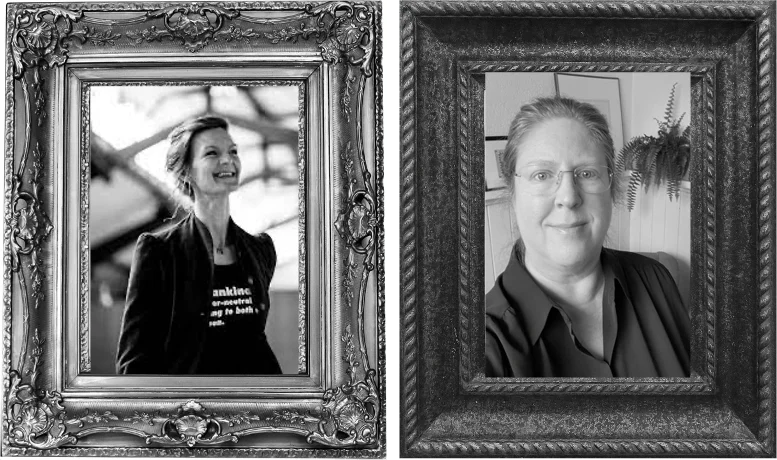
On a personal level, these normative patterns can lead to equally damaging self-associations. A notable contemporary example is the emergence of "Zoom dysmorphia," a phenomenon observed over nearly two years of video-based online work, where individuals develop a negative fixation on their physical appearance as seen through virtual meeting platforms. This self-judgment often occurs unconsciously, contradicting rationally held positive self-beliefs. Behavioral scientists Lisa Kepinski and Tinna C. Nielsen, founders of Inclusion Nudges, have both shared personal experiences of feeling like "outliers" throughout their lives due to not fitting prevailing norms, highlighting the universality of this challenge.
Understanding the Cognitive Roots of Bias
The foundation of understanding unconscious bias lies in cognitive psychology, particularly the dual-process theory championed by Nobel laureate Daniel Kahneman. He distinguishes between System 1 (fast, automatic, intuitive, emotional) and System 2 (slow, effortful, logical, deliberative) thinking. While System 2 allows for rational decision-making, it is System 1 that predominates in daily life, handling the vast majority of our mental load. This efficiency comes at a cost: System 1 relies heavily on heuristics—mental shortcuts—which, while often useful, are also the primary source of cognitive biases and stereotypes.
These biases are not moral failings but rather inherent features of our cognitive architecture. They allow us to make quick judgments in complex situations, but they also predispose us to favor certain groups or individuals, often unconsciously, leading to unintended discriminatory outcomes in hiring, promotions, social interactions, and even self-perception. Research consistently shows that implicit biases persist even among individuals who explicitly endorse egalitarian values. For instance, studies using the Implicit Association Test (IAT) have revealed widespread unconscious biases related to race, gender, age, and other social categories across various populations.
The Evolution of Addressing Bias: From Awareness to Behavioral Design
Historically, efforts to combat bias often focused on raising awareness through traditional diversity training. However, numerous studies, including a meta-analysis published in the Annual Review of Psychology, have indicated that such training often falls short of producing sustained behavioral change. While awareness is a necessary first step, it is rarely sufficient to counteract deeply ingrained System 1 processes.
This realization has spurred a shift towards behavioral science approaches, drawing insights from behavioral economics, which posits that environmental cues and subtle interventions (nudges) can significantly influence human behavior without restricting choice. The concept of "inclusion nudges" builds on this framework, designing specific interventions to interrupt biased thinking and promote inclusive actions. This represents a more sophisticated, evidence-based strategy for fostering equitable environments.
Personal Experimentation: The "That’s a Human…" Intervention
As behavioral change designers, Kepinski and Nielsen often apply their methodologies to themselves to refine techniques for interrupting and reshaping internalized negative messages, biases, and exclusionary behaviors. One such experimental design they developed is titled "That’s a human…" This intervention aims to reframe personal perceptions, particularly those related to self-image and judgments of others.
Lisa Kepinski recounted her personal experience during a period of extended lockdown, utilizing the time to actively counter negative thoughts about her appearance. She observed a pattern of taking quick, critical glances in mirrors, often followed by an internal argument between self-criticism and self-confidence. Inspired by the "Re-Frame ‘Migrant’ to ‘Human’" Inclusion Nudge detailed in The Inclusion Nudges Guidebook—where the South African non-profit PASSOP actively reframes terms like "refugee crisis" to "human crisis" on social media to shift focus to human dignity—Kepinski adapted this principle.
Her personal steps involved:
- Conscious Observation: Intentionally looking at her reflection for longer than a fleeting glance.
- Verbal Reframing: Silently or audibly stating, "That’s a human face," "That’s a human body," or "That’s a human being" upon seeing herself.
- Mindful Reflection: Noting the immediate thoughts that preceded the reframing statement.
This practice quickly became a regular habit, extending beyond self-reflection to interactions with other people. Kepinski noted catching herself thinking, "That’s a human face," or "That’s a human body" when observing others. The subsequent self-reflection often revealed unconscious judgmental thoughts, creating a dissonance between her inclusive intentions and her automatic reactions. This dissonance served as a powerful motivator to continue practicing the reframing technique, reinforcing the understanding that while bias cannot be "cured," deliberate behavioral designs can interrupt its influence, allowing for more considered thought and literally changing perceptions.
Tinna C. Nielsen was similarly inspired by Kepinski’s experiment. She adopted the practice of silently stating, "There’s a human being" when observing people in public spaces. Nielsen recognized her own tendency to make quick, often judgmental assessments of others’ appearances—e.g., "she is skinny," "he is overweight," "ugly shoes." This self-awareness, coupled with a desire to change this habit, led her to embrace the reframing technique. She observed that the default statement "there is a human being" fostered a more positive internal energy, effectively short-circuiting the judgmental thought process. An additional benefit was a reduction in her own feelings of being an "outlier" due to her height (185 cm), reinforcing her self-perception as simply "a human being among others."
Framing Perceptions: A Core Inclusion Nudge Methodology
The personal narratives of Kepinski and Nielsen underscore a fundamental challenge: judgments of body shape, appearance, and voice can disproportionately influence self-perception, often overriding a strong sense of self-worth, accomplishment, and value. This internal conflict highlights the limitations of purely rational approaches to bias reduction. Bias, as a product of System 1 thinking, cannot simply be wished away; it requires strategically designed interventions.
Framing Perceptions Inclusion Nudges are precisely this type of intervention. As defined in The Inclusion Nudges Guidebook by Kepinski & Nielsen, these designs "alter perceptions to help the brain perceive issues related to inclusion, diversity, equality in a resource discourse. The designs also prime specific associations and counter stereotypes. Altering the framing of an issue or message and changing the anchor of a thought process helps to promote inclusive behaviour because it influences the reactions in the automatic, stereotyped, and unconscious mind."
These nudges operate by subtly altering the context or presentation of information, guiding individuals towards more inclusive interpretations and responses without coercive measures. For instance, instead of focusing on deficits, framing can emphasize strengths and shared humanity. By shifting the "anchor" of a thought process—the initial reference point—these designs can redirect automatic cognitive associations.
One widely impactful Framing Perceptions design is "Ask Flip Questions to Change Your Perceptions in the Moment." This technique, described in The Inclusion Nudges Guidebook and its companion Action Guide books, encourages individuals to ask counter-stereotypical questions or consider alternative perspectives when faced with an initial judgment. For example, if an automatic thought about a person arises ("She seems unsuited for this leadership role"), a "flip question" might be, "What evidence would support that she is exceptionally suited for this role?" This deliberate cognitive interruption forces System 2 engagement, expanding thinking, enriching information gathering, and leading to more equitable decision-making.
Broader Implications and Societal Impact
The application of framing perceptions extends far beyond individual self-talk. In organizational contexts, these nudges can address systemic biases in recruitment, performance reviews, and team dynamics. For example, anonymizing resumes (a form of framing perception by removing demographic identifiers) has been shown to increase the diversity of candidates invited for interviews. Similarly, structuring performance feedback to focus on objective achievements rather than subjective personality traits can mitigate gender or racial bias.
The impact of such interventions is significant. Diverse and inclusive organizations are consistently linked to improved financial performance, enhanced innovation, and higher employee engagement. A report by McKinsey & Company, for instance, found that companies in the top quartile for gender diversity on executive teams were 21% more likely to outperform on profitability, and those in the top quartile for ethnic/cultural diversity were 33% more likely to do so. These benefits accrue because diverse teams bring a wider range of perspectives, problem-solving approaches, and market insights.
Beyond economic benefits, fostering inclusive perceptions contributes to a more just and equitable society. When individuals are seen and treated as "human beings" first, irrespective of their background, appearance, or perceived social group, it dismantles the foundations of prejudice and discrimination. This approach aligns with fundamental human rights principles, promoting dignity and equal opportunity for all.
The challenge of unconscious bias is not a new one, but the understanding of its cognitive mechanisms and the development of behavioral science-informed solutions like Framing Perceptions Inclusion Nudges represent a significant advancement. By moving beyond mere awareness to practical, actionable designs that reshape mental shortcuts, individuals and organizations can proactively cultivate environments where intentions of open-mindedness, respect, and inclusion are consistently translated into reality.
Examples of Framing Perceptions Inclusion Nudges
Several established Inclusion Nudges exemplify the power of reframing:
- Re-Frame ‘Migrant’ to ‘Human’: As discussed, this design from The Inclusion Nudges Guidebook directly challenges dehumanizing language by substituting it with terminology that emphasizes shared humanity, thereby fostering empathy and reducing prejudice.
- Images Framing Immigrants as One of Us: Featured in The Inclusion Nudges Guidebook and Inclusion Nudges for Motivating Allies, this design uses visual cues to counter stereotypes. By depicting immigrants in relatable, everyday contexts, performing ordinary activities, or contributing positively to society, it re-frames their image from "outsider" to "integral community member," influencing automatic associations.
- Interrupt Gender Caregiver Stereotypes with Images: Also found in The Inclusion Nudges Guidebook and Inclusion Nudges for Motivating Allies, this intervention specifically targets entrenched gender roles. By showcasing men in caregiving roles and women in professional, non-traditional roles, it subtly challenges and expands traditional perceptions of gender, promoting a more equitable view of responsibilities and capabilities.
These examples highlight that reframing is not merely about changing words but about strategically altering the cognitive environment to promote more inclusive thinking and behavior. The ongoing work in behavioral science and DEI continues to explore and refine these powerful methods, offering practical pathways to overcome the limitations of our automatic minds and build truly inclusive societies. Organizations and individuals are encouraged to explore these and other reframing designs, recognizing their potential to significantly lessen the influence of negative biases and stereotypes in daily life.