The evolution of domestic media consumption and the rising visibility of women’s professional leagues have created a unique cultural environment for children raised in LGBTQ+ households, where women’s sports often serve as the primary athletic reference point. For many same-sex couples, the traditional hierarchy of sports media—which historically prioritized men’s leagues—is being inverted, leading to a domestic landscape where leagues such as the Women’s National Basketball Association (WNBA) and the National Women’s Soccer League (NWSL) are the default standard. This shift necessitates a conscious pedagogical approach when introducing male-dominated sports to children who have grown up in environments where female athletes are the primary role models. As these children navigate their formative years, parents are increasingly finding it necessary to provide historical context and deliberate exposure to ensure a comprehensive understanding of the broader athletic world.
The Cultural Shift in Domestic Sports Consumption
In recent years, the landscape of professional sports has undergone a significant transformation, driven by increased broadcasting deals, social media engagement, and a growing cultural emphasis on gender equity. For children born into households where women’s sports are celebrated as the cultural norm, the traditional "outsider" status of women’s athletics is nonexistent. Instead, these children often experience "osmosis learning," where the sounds and sights of WNBA games or local community leagues, such as lesbian kickball associations, form their earliest memories of organized play.
Sociological observers note that this environment provides a stark contrast to the mid-20th-century American household. In the current era, parents are leveraging the ubiquity of women’s sports to instill values of athleticism and competition before introducing the historical and economic complexities of men’s leagues. This "women-first" exposure is not merely a byproduct of parental preference but a reflection of a growing community infrastructure that supports women’s athletics through local rituals and shared media experiences.
Historical Chronology of Professional Basketball Leagues
To understand the current disparity in visibility and economics, it is essential to examine the timeline of professional basketball in the United States. The National Basketball Association (NBA) was founded on June 6, 1946, as the Basketball Association of America (BAA), later merging with the National Basketball League (NBL) in 1949 to form the current entity. This gave the men’s professional game a 51-year head start in establishing infrastructure, fanbases, and media rights before the WNBA began play in 1997.
The WNBA was officially approved by the NBA Board of Governors on April 24, 1996, and commenced its inaugural season the following year. While the WNBA has seen exponential growth—particularly in the 2024 and 2025 seasons—the five-decade gap in professional development remains a significant factor in the economic differences between the two leagues. For parents educating their children on the history of the sport, this timeline serves as a critical tool for explaining why men’s sports often occupy more physical and digital space in the public square, despite the equal athletic merit of their female counterparts.
Economic Disparities and the Fight for Pay Equity
A central component of the conversation regarding gender in sports involves the significant wealth inequality between male and female athletes. Despite the high level of skill and increasing viewership, female athletes have historically fought for wages that represent a fraction of their male counterparts’ earnings. For example, in the 2024 WNBA season, the base salary for top draft picks remained below $80,000, while the minimum salary for an NBA player exceeded $1 million.
This economic gap is even more pronounced in sports like soccer. Despite the United States Women’s National Team (USWNT) consistently outperforming the men’s team in terms of international success and domestic viewership for much of the last decade, it took a protracted legal battle and a landmark 2022 collective bargaining agreement to achieve equal pay. Educational strategies for children often include these facts to foster a sense of social justice and an understanding of how systemic privilege operates within the sports industry. By discussing these disparities early, parents aim to equip the next generation with the analytical tools to advocate for continued reform.
Pedagogical Approaches to Introducing Men’s Sports
Experts in child development and LGBTQ+ parenting suggest several strategies for broadening a child’s athletic worldview when their primary exposure is to women’s sports. These methods focus on gradual introduction, historical education, and personal participation.

Encouraging Direct Participation
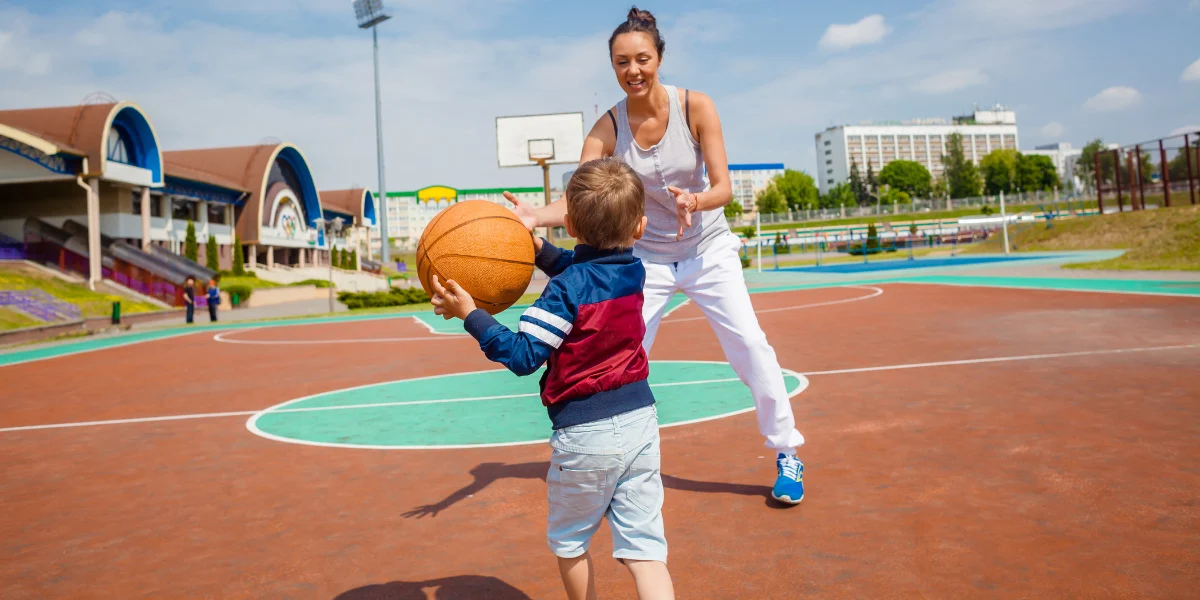
One of the most effective ways to introduce the concept of male athleticism is through the child’s own participation in sports. By providing access to athletic equipment—such as basketball hoops in various domestic settings—parents allow children to associate the "man" in their own life (themselves) with the concept of being an athlete. This creates a personal connection to the sport that transcends gendered media representations.
Contextualizing Sports History
Providing historical context helps children understand that men’s sports are not "the default," but rather a segment of the sporting world with its own long and documented history. Utilizing documentaries and historical narratives allows parents to frame men’s leagues as established institutions that have benefited from decades of investment. This approach de-centers the "men’s sports as the norm" narrative and places it within a factual, chronological framework.
Separating Adult Narratives from Child Interests
In the modern era of sports media, "parasocial" relationships and off-court drama often drive engagement. While adult fans may be invested in the romantic lives or interpersonal rivalries of athletes—such as the complex dating histories often tracked within the WNBA community—educators suggest keeping a child’s focus on the mechanics of the game. For a young child, the technical skill of "playing ball" is the primary interest. Allowing children to enjoy the sport for its physical and strategic elements, rather than its social complexities, ensures that they view all athletes—regardless of gender—as valid competitors.
The Role of Media and Representation
The influence of media cannot be overstated. Organizations such as Autostraddle and other LGBTQ-focused outlets have highlighted how representation in sports media affects the development of children in non-traditional families. When a child sees women’s sports celebrated in their "house of worship" or local community centers, they internalize the value of those athletes.
However, the "mixed-gender sports bar" or the public golf course represents a different reality. These spaces often prioritize men’s sports, which can lead to confusion for children who have only seen women in professional athletic roles. Professional analysis suggests that these moments of "culture shock" are inevitable and should be treated as learning opportunities. When a child observes men playing sports on a public television for the first time, it provides a natural opening for a conversation about the diversity of the athletic world.
Impact and Future Implications
The long-term impact of raising children in a "women’s sports first" environment is currently being studied by sociologists. Initial findings suggest that these children may grow up with a more equitable view of gender roles and a higher degree of skepticism regarding traditional media hierarchies. By normalizing the excellence of female athletes from birth, parents are effectively bypassing the internalized biases that have historically marginalized women’s sports.
Furthermore, as the WNBA and other women’s leagues continue to secure larger broadcasting contracts and higher attendance records—such as the record-breaking viewership of the 2024 WNBA Finals—the gap between "women’s sports" and "mainstream sports" is closing. In the future, the need to "explain" that men also play sports may become less of a corrective measure and more of a standard part of a well-rounded athletic education.
Conclusion
The task of introducing men’s sports to a child raised in an LGBTQ+ household is a reflection of a broader societal shift toward gender-diverse representation. By combining personal play, historical education, and an awareness of economic disparities, parents can provide a comprehensive worldview that respects the history of men’s athletics while maintaining the cultural importance of women’s sports. As wealth inequality in sports continues to be a point of national debate, these domestic conversations serve as the foundation for a more informed and equitable future in the world of professional athletics. The goal is not to exclude men’s sports, but to integrate them into a worldview where women’s excellence is already an established and celebrated fact.