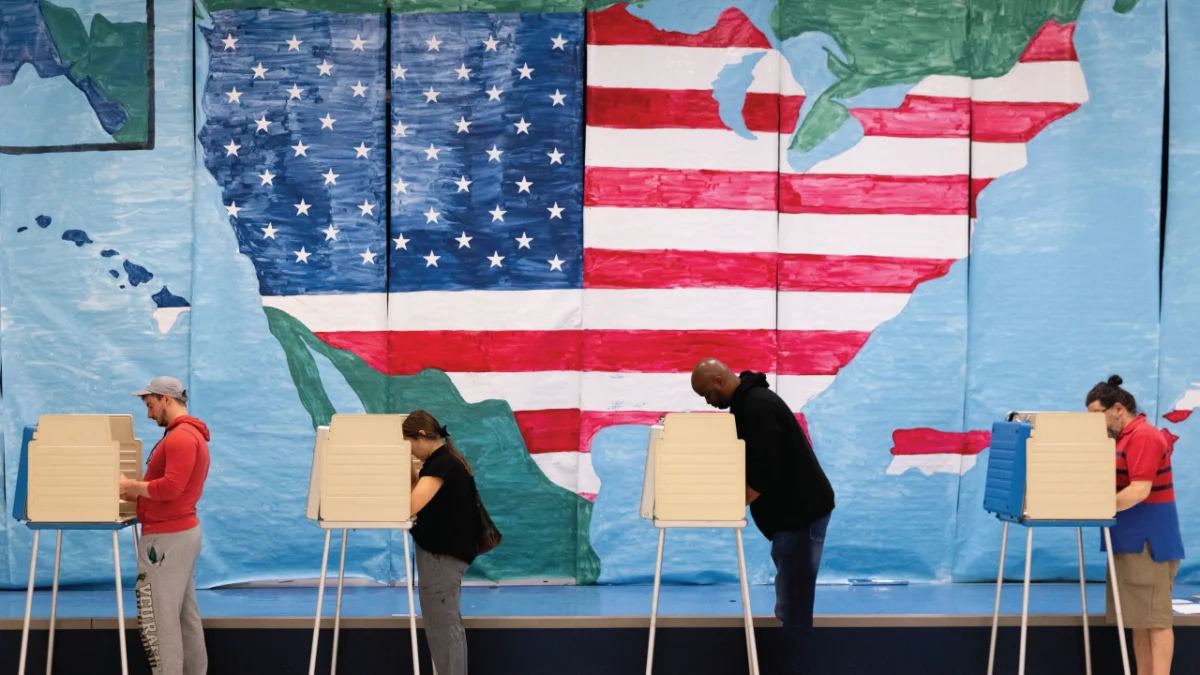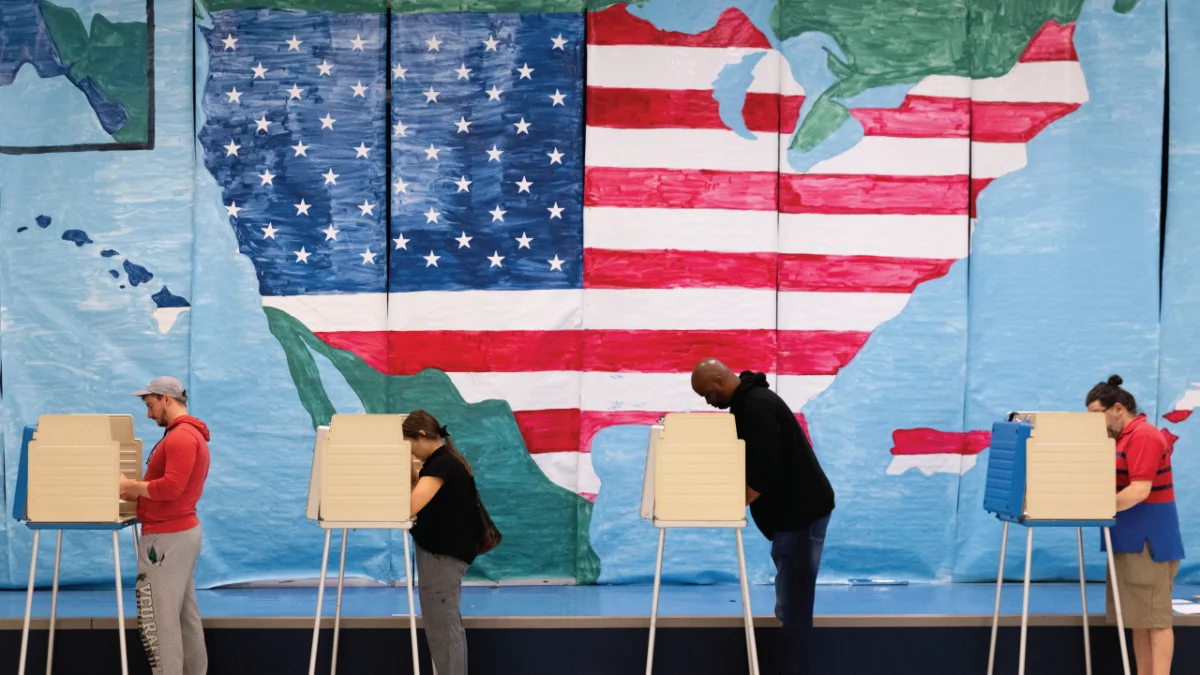
Millions of Latin Americans will head to the polls this year, with presidential elections planned in Peru in April, Colombia in May, and Brazil in October. Clear majorities in these three countries see a role for religion in key aspects of public life, as do many others elsewhere in the region, according to Pew Research Center surveys conducted in 2024. Protestants – who account for a relatively small share of the population in each of the six Latin American countries surveyed – often stand out as especially inclined to favor a strong role for Christianity in their country’s leadership, national identity, and laws.
This analysis examines the role of religion in public life in Latin America. It focuses on several of the largest countries in the region: Brazil, Mexico, Colombia, Argentina, and Peru are the five most populous countries in Latin America and the Caribbean, while Chile has the region’s seventh-largest population. The Pew Research Center conducted these surveys to better understand the complex interplay between faith, governance, and national identity in a region historically shaped by religious traditions yet experiencing significant demographic and social shifts.
A Region at the Polls: Faith and the Political Landscape
The upcoming electoral cycles in Peru, Colombia, and Brazil are set against a backdrop where religious conviction remains a significant force in the lives of millions. As voters prepare to choose their leaders, their views on the intersection of faith and public policy are coming into sharper focus. The Pew Research Center’s 2024 survey data reveals a strong sentiment across these nations that religion should play a discernible role in the functioning of the state, influencing leadership, national identity, and the very fabric of law.
In Peru, where presidential elections are scheduled for April, the populace is grappling with significant political and economic challenges. The election of a new president will be a critical juncture for the nation, and public opinion data suggests that religious values are likely to be a consideration for many voters. Similarly, Colombia’s May elections will determine the country’s path forward amid ongoing social reforms and regional dynamics. Brazil, the region’s largest economy, will hold its presidential elections in October, a process that will undoubtedly be influenced by the deeply held religious beliefs of a significant portion of its population.
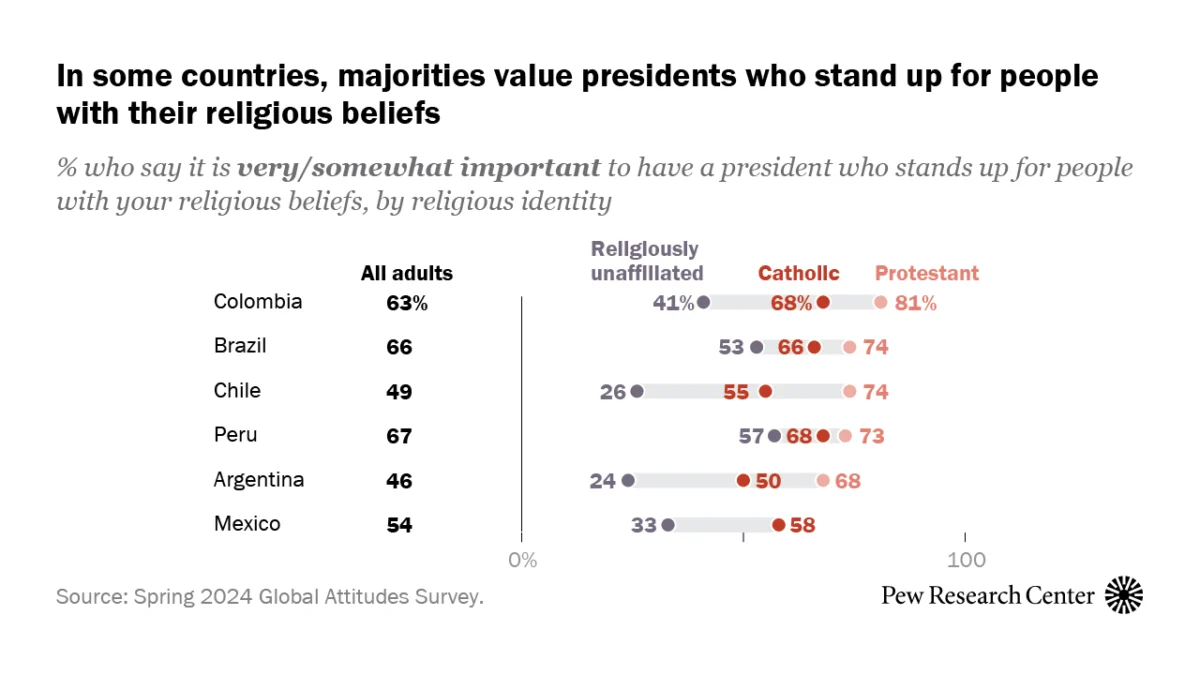
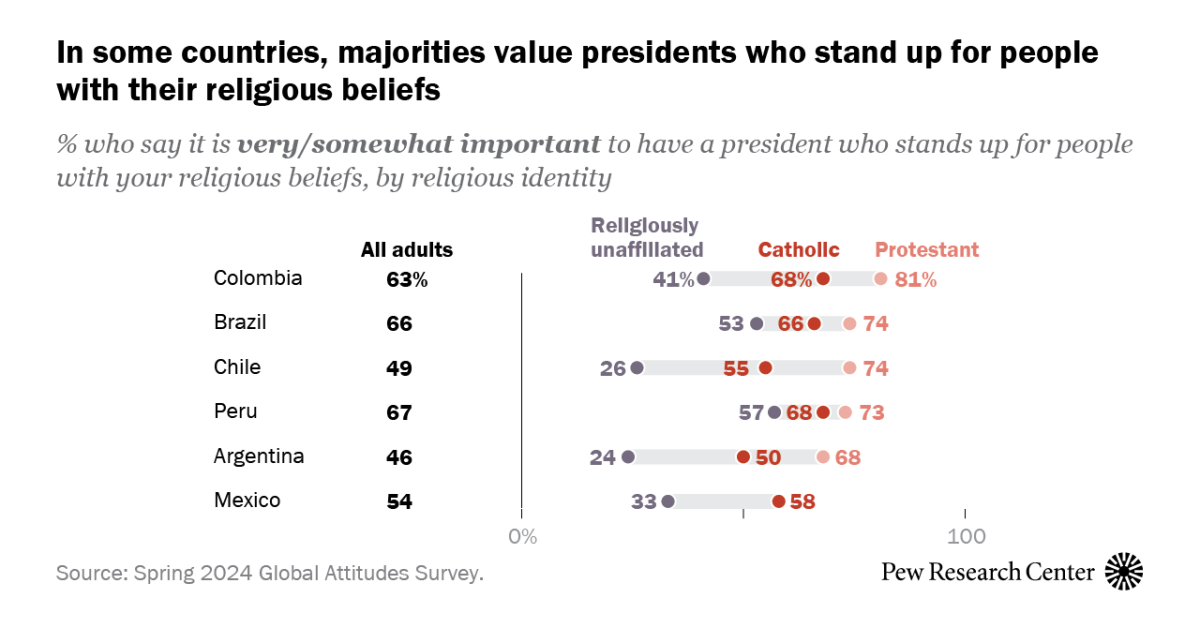
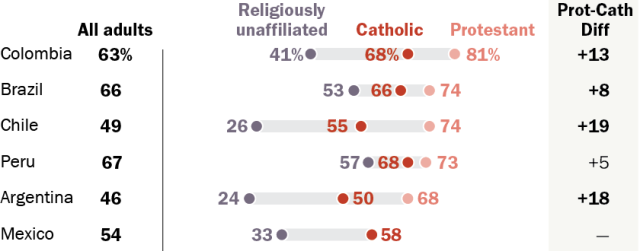
The survey data indicates that in Brazil, Colombia, and Peru, majorities of adults believe it is important for their president to champion the religious beliefs of their constituents. Specifically, around two-thirds of adults in these countries expressed this sentiment. This contrasts with Argentina, Chile, and Mexico, where closer to half of the adult population holds a similar view. This suggests a nuanced regional landscape where the perceived importance of religiously aligned leadership varies, but remains a significant factor in several key electoral contests.
Protestants as Advocates for Religious Influence
Within this broader trend, Protestant communities, though smaller in number across the surveyed nations, emerge as particularly vocal proponents of integrating Christian principles into public life. The research indicates that Protestants are consistently more likely than Catholics or the religiously unaffiliated to believe that religious faith should actively shape national leadership, define national identity, and inform legal frameworks.
For instance, in Chile, a substantial 74% of Protestants surveyed stated that it is important for a president to stand up for people with their religious beliefs. This figure is notably higher than the 55% of Catholics and a mere 26% of religiously unaffiliated individuals who expressed the same sentiment. This pattern, where Protestants exhibit a stronger inclination towards a faith-informed public sphere, is a recurring theme throughout the Pew Research Center’s findings.
Even among the religiously unaffiliated, often referred to as "nones," a considerable segment in some countries still values religious leadership. In Brazil, 53% of unaffiliated adults believe it is important for a president to stand up for their religious views, and in Peru, this figure stands at 57%. While lower than the proportions among religious adherents, these numbers underscore a pervasive influence of religious considerations in the political discourse of the region.
The Nuances of Religious and Political Alignment
The research also delves into the correlation between religious identity and political ideology. It suggests that in Latin America, Catholic and Protestant individuals often lean towards the political right. Consequently, those identifying with the right of the ideological spectrum are more likely to desire national leaders who embody strong religious characteristics. This alignment highlights a potential intersection of religious conservatism and political conservatism in shaping public opinion and electoral outcomes.
The importance placed on a president possessing the same religious beliefs as the respondent also varies. In Chile, 35% of adults consider this important, while in Peru, it rises to 59%. However, across all surveyed countries, Protestants consistently place greater emphasis on this shared religious identity compared to Catholics or the unaffiliated. This suggests a strong desire among Protestant communities for leaders who reflect their specific faith traditions.
Christianity as a Cornerstone of National Identity
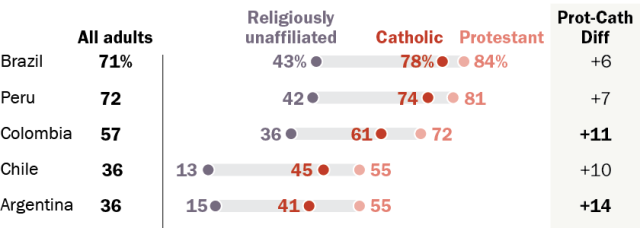
Beyond leadership, the survey data reveals that Christianity is perceived by many Latin Americans as fundamental to national belonging. In Brazil, Colombia, and Peru, majorities of adults believe that being a Christian is important to being considered a true national. For example, in Brazil, 71% of all adults believe this, with similar percentages of Catholics and Protestants agreeing. In Colombia, 57% of all adults hold this view, with Protestants (72%) being more likely than Catholics (61%) to link Christianity with national identity.
In contrast, Argentina and Chile show a lower degree of association between Christian identity and national belonging, with only 36% of adults in each country expressing this view. This regional variation points to different historical trajectories and contemporary social compositions within these nations, influencing how deeply religious heritage is woven into the fabric of national identity.
The Bible’s Influence on the Law
The influence of religious texts on legal systems is another significant area explored by the research. In Brazil, Colombia, and Peru, approximately two-thirds of adults believe the Bible should have a substantial impact on their country’s laws. This sentiment is particularly pronounced among Protestants, with 90% in Colombia and 86% in Peru advocating for the Bible’s influence on legislation.
Even among the religiously unaffiliated in Brazil and Colombia, about half believe the Bible should shape their country’s laws. This finding is notable, suggesting that the influence of religious texts may extend beyond adherents of specific faiths, impacting secular segments of the population as well. In Argentina, the disparity is striking, with 81% of Protestants supporting biblical influence on laws compared to 46% of Catholics, and a mere 20% of the unaffiliated.
Constitutional Frameworks and Religious Freedom
The legal standing of religion within these nations presents a complex mosaic. While the constitutions of Chile and Peru acknowledge the separation of church and state, Peru also recognizes Catholicism’s historical and cultural significance. Argentina grants the Catholic Church a preferential legal status, though it does not establish a state religion.
Colombia’s constitution upholds the equal freedom of all faiths, with no official religious or non-religious identity. Similarly, Brazil and Mexico’s constitutions enshrine the principle of governmental neutrality towards religion, prohibiting support or restriction of any faith. These constitutional frameworks provide the legal scaffolding within which the public’s religious sentiments interact with the state, influencing the degree to which faith can be formally incorporated into governance and law.
Broader Implications and Future Trajectories
The Pew Research Center’s findings offer a critical lens through which to understand the role of religion in Latin American politics. As nations like Peru, Colombia, and Brazil navigate significant electoral periods, the data underscores the enduring influence of faith on public opinion and policy preferences. The distinct perspectives of Protestant communities, their strong advocacy for religious integration in public life, and the evolving views of the religiously unaffiliated all contribute to a dynamic and multifaceted religious landscape.
The trend towards a greater emphasis on religious identity in national leadership and legal frameworks, particularly among Protestant populations, could shape future political discourse and policy initiatives. It also raises questions about secular governance, religious pluralism, and the protection of minority faiths in a region where Christian traditions hold significant sway. The interplay between religious belief, national identity, and political ideology will undoubtedly continue to be a defining feature of Latin American governance in the years to come, influencing the direction of these nations as they address their unique social, economic, and political challenges. The upcoming elections will serve as a crucial barometer for these deeply held beliefs and their manifestation in the corridors of power.