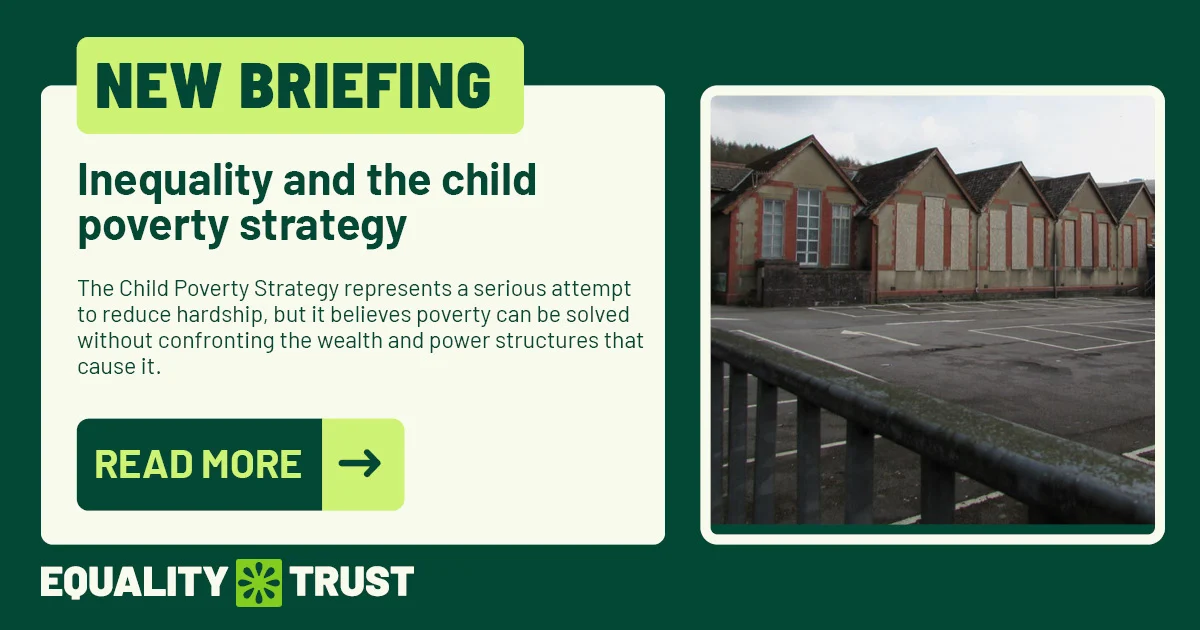
The United Kingdom’s approach to social welfare underwent a significant shift on January 13, 2026, as policy experts and government officials gathered at the Public Policy Exchange to scrutinize the recently unveiled Child Poverty Strategy, titled Tackling Child Poverty: Improving Welfare, Security and Future Prospects. During the event, Priya Sahni-Nicholas, Co-Executive Director of The Equality Trust, delivered a comprehensive briefing that highlighted a critical disconnect in the government’s current framework. While the strategy acknowledges poverty as a systemic failure rather than an individual one, Sahni-Nicholas argued that it remains insufficient because it fails to confront the broader structures of economic inequality—specifically the concentration of wealth and the imbalance of political power.
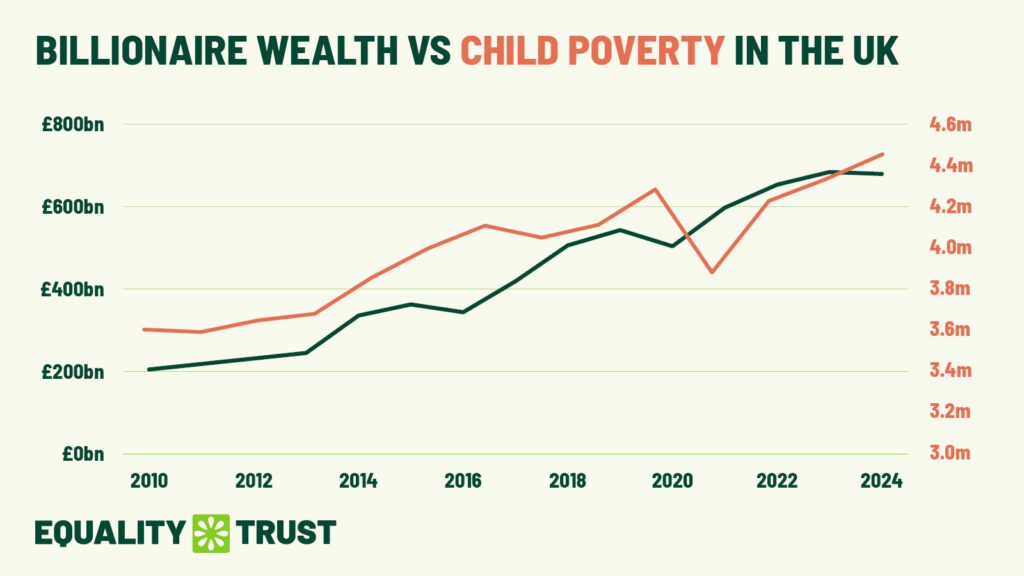
The 2026 strategy marks the first UK-wide initiative of its kind in over fifteen years, arriving at a time when child poverty rates have reached historic highs. According to the latest figures, 4.5 million children—approximately one in three—are living in poverty across the UK. Furthermore, nearly 20% of households face consistent food insecurity. The Equality Trust’s analysis suggests that while the government has successfully reintroduced poverty as a core national priority, its focus remains disproportionately on income redistribution, leaving the foundational drivers of wealth disparity untouched.
A Chronology of Policy Shifts and the Rise of Child Poverty
The trajectory of UK child poverty over the last three decades provides essential context for the current strategy. In 1999, the then-Labour government pledged to end child poverty within twenty years, a goal that saw initial success through the introduction of tax credits and increased public service investment. Between 1997 and 2010, approximately 600,000 children were lifted out of poverty.
However, the period following 2010 marked a stark reversal. The implementation of austerity measures and significant changes to the welfare system—most notably the introduction of the "two-child limit" in 2017—led to a steady increase in child poverty. While many other advanced economies saw poverty rates fall during the 2010s and early 2020s, the UK became an outlier. By 2025, the compounding effects of low wage growth, rising housing costs, and the "cost of living crisis" had entrenched hardship for millions of families.
The December 2025 release of the Child Poverty Strategy was framed by the government as an explicit rejection of post-2010 policy choices. It characterizes child poverty as a moral and economic failure inherited from a decade of underinvestment. The stated objective is the total eradication of child poverty over the long term, with a commitment to achieving measurable reductions within the current parliamentary term.
Core Pillars of the 2026 Strategy
The government’s new strategy rests on several key policy interventions designed to provide immediate relief to low-income households. The most significant of these is the abolition of the two-child limit, a policy that had previously capped benefits for families with more than two children. Economists estimate that this single move will lift approximately 450,000 children out of relative poverty, addressing a mechanism that disproportionately affected larger families and minority ethnic groups.
Beyond benefit reform, the strategy emphasizes "in-work poverty," acknowledging that employment is no longer a guaranteed escape from hardship. Key measures include:

- National Living Wage Increases: Adjusting the minimum wage to better reflect the actual cost of essentials.
- Universal Credit Uprating: Ensuring that benefits keep pace with inflation to prevent the erosion of purchasing power.
- Educational Support: Expanding free school meals, establishing breakfast clubs, and placing caps on the cost of school uniforms.
- Childcare Expansion: Reducing barriers to entry for parents, particularly mothers, seeking to re-enter the workforce.
A notable feature of the strategy’s development was the inclusion of "lived experience." The government consulted with organizations such as Changing Realities to ensure that the voices of parents facing poverty shaped the diagnosis of the problem. This led to a focus on the "mental load" of poverty, the stigma associated with welfare, and the necessity of maintaining dignity within the system.
Supporting Data: The Income vs. Wealth Gap
While The Equality Trust welcomes these income-based interventions, its briefing emphasizes that income is only one side of the economic coin. The UK currently faces a profound disparity between income and wealth. Supporting data indicates that while wages have stagnated for much of the population, the returns on capital—such as property, stocks, and inherited assets—have continued to outpace general economic growth.
The absence of the word "wealth" from the government’s 100-page strategy document is a primary concern for inequality advocates. Poverty is not merely a lack of monthly income; it is a lack of resilience. Families with identical incomes can experience vastly different qualities of life based on their assets. A family with savings or homeownership is shielded from the shocks of a sudden rent hike or a broken appliance, whereas a family without assets remains in a state of constant precariousness.
Reference was made during the briefing to the economic theories of Thomas Piketty, specifically the principle that when the rate of return on capital (r) exceeds the rate of economic growth (g), inequality widens. The Equality Trust argues that by ignoring the concentration of wealth at the top of the distribution, the government is attempting to "empty a bath while the taps are still running."
Official Responses and Stakeholder Perspectives
The strategy has garnered a range of reactions from civil society and political observers. While anti-poverty charities have largely praised the abolition of the two-child limit as a "landmark victory for social justice," some fiscal hawks have raised concerns regarding the long-term funding of these commitments.
The government maintains that investment in public services and social security is dependent on economic growth. However, The Equality Trust and other progressive think tanks argue that this logic is flawed because it relies heavily on income tax revenue. Currently, income from work is taxed at a significantly higher rate than income from wealth (such as capital gains). Critics suggest that fiscal reform—specifically narrowing the gap between how work and wealth are taxed—is the only sustainable way to fund a comprehensive child poverty eradication program.
Furthermore, the strategy’s "spatial lens"—which recognizes that poverty varies by region and neighborhood—has been welcomed by local government leaders. However, they note that without a redistribution of power and resources to local authorities, place-based approaches may struggle to overcome the structural decline in "left-behind" regions.
Broader Impact and the Need for Structural Reform
The implications of the 2026 Child Poverty Strategy extend beyond immediate financial relief. If the government fails to address the underlying power structures of the economy, the progress made through income top-ups may be temporary. History suggests that the most durable reductions in inequality occur when there is a fundamental shift in how the economy is organized.

Following the Second World War, the UK achieved significant social mobility and low inequality not just through benefits, but through the creation of the National Health Service, a massive expansion of social housing, and the strengthening of trade union power. These measures rebalanced power between capital and labor. In contrast, the current strategy operates within the margins of a highly financialized economy where corporate influence and housing market volatility continue to drive costs upward for the poorest.
For the strategy to evolve from a "corrective" measure into a "transformative" one, The Equality Trust identifies several necessary future steps:
- Wealth Taxation: Implementing reforms to ensure that those with the greatest assets contribute proportionally to the social safety net.
- Housing Security: Moving beyond cost-capping to address the systemic shortage of social housing and the power imbalance in the private rental sector.
- Binding Accountability: Establishing statutory targets that require the government to report not just on poverty lines, but on the narrowing of the gap between the top 10% and the bottom 10% of the population.
- Cross-Departmental Integration: Ensuring that the Department for Work and Pensions (DWP), the Treasury, and the Departments for Health and Education work in a locked-step mechanism to address the "compounding disadvantage" of poverty.
Conclusion: A Necessary Floor, Not a Ceiling
The 2026 Child Poverty Strategy represents a meaningful departure from the "individual failure" narrative that dominated UK policy for over a decade. By reinstating child poverty as a national priority and removing punitive measures like the two-child limit, the government has set a new floor for social standards.
However, as highlighted by Priya Sahni-Nicholas and The Equality Trust, the strategy stops short of the structural changes required for long-term eradication. The persistence of child poverty is a political choice, inextricably linked to how wealth and power are distributed. Without a bold narrative that challenges the compatibility of extreme wealth concentration with children’s rights and dignity, the UK risks a cycle where poverty is managed rather than ended. The true measure of the strategy’s success will not just be how many families are lifted above a statistical line, but whether the economy is redesigned to prevent them from falling toward it in the first place.