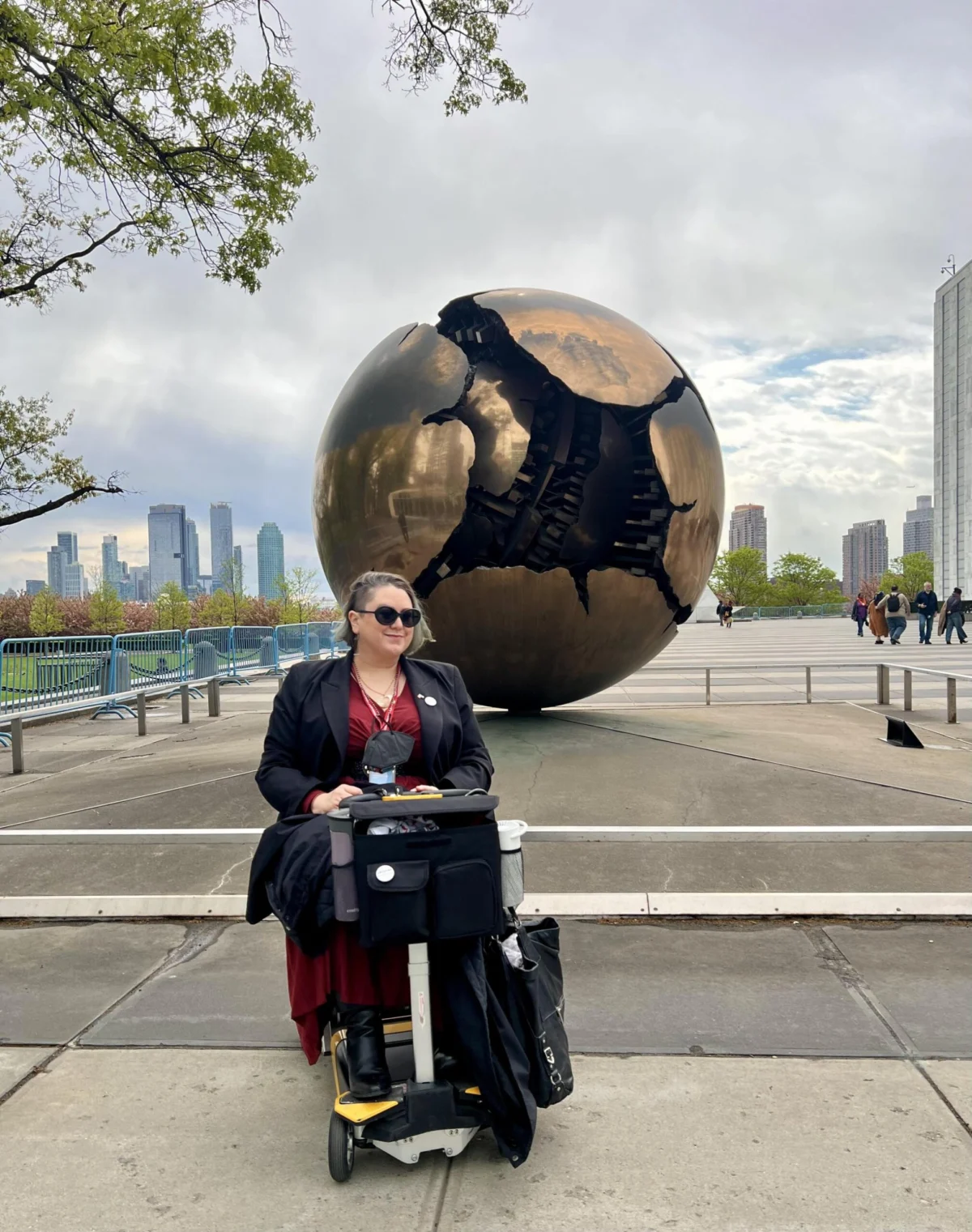
Jen Deerinwater, Founding Executive Director, Crushing Colonialism, delivered powerful remarks at the 25th Session of the United Nations Permanent Forum on Indigenous Issues on April 24, 2026, highlighting the pervasive marginalization and systemic neglect faced by Indigenous individuals with disabilities. Her address underscored the urgent need for global recognition, comprehensive data collection, and the implementation of inclusive policies and community-based care systems.
Addressing a Critical Gap in Indigenous Rights Discourse
Deerinwater’s intervention at the UN Permanent Forum on Indigenous Issues (UNPFII) marked a significant moment in bringing the often-overlooked intersection of Indigenous identity and disability to the forefront of international dialogue. The UNPFII, established by the Economic and Social Council (ECOSOC) in 2000, serves as a vital advisory body to the ECOSOC, providing specialized advice and recommendations on matters concerning Indigenous peoples. Its annual sessions bring together Indigenous representatives, member states, UN agencies, and civil society organizations to discuss critical issues affecting Indigenous communities worldwide.
However, as Deerinwater pointed out, despite the significant number of Indigenous people who also live with disabilities, this demographic has been conspicuously absent from much of the Forum’s discussions. This oversight, she argued, fundamentally undermines the pursuit of comprehensive well-being and equitable rights for all Indigenous peoples.
The Magnitude of the Issue: Unseen and Uncounted
The statistics presented by Deerinwater paint a stark picture of the scale of the challenge. The UN estimates that over one billion people globally, approximately 15% of the world’s population, live with some form of disability. Concurrently, the global Indigenous population is estimated at 476 million. The Indigenous Persons with Disabilities Global Network estimates that a staggering 71 million of these individuals are Indigenous people living with disabilities.
Further disaggregation of these numbers reveals deeply concerning regional disparities. The network estimates that 45 million Disabled Indigenous people reside in the Asia Pacific region, often in countries categorized as developing or underdeveloped. Deerinwater also highlighted that rates of disability and chronic illnesses disproportionately affect Indigenous women and Two-Spirit, Lesbian, Gay, Bisexual, and Trans (2SLGBT+) relatives, indicating compounding layers of vulnerability and discrimination.
Crucially, Deerinwater refutes the notion that these elevated rates are attributable to genetic factors. Instead, she firmly links them to the enduring and multifaceted impacts of colonialism, pervasive violence, and systemic oppression. These historical and ongoing injustices manifest in various forms, including war and conflict, severe environmental degradation, and the escalating climate crisis, all of which disproportionately affect Indigenous communities and contribute to increased health challenges and disabilities.
The Data Deficit: A Barrier to Action
A significant hurdle in addressing the rights and needs of Disabled Indigenous people is the alarming lack of comprehensive global data. Deerinwater emphasized that even the UN’s 2013 global population figures for disabled people are outdated and likely underestimate the current reality. The intervening years have been marked by intensified global conflicts, escalating climate disasters, and the lingering impacts of the COVID-19 pandemic, all of which are known to exacerbate disability rates and chronic health conditions, particularly within vulnerable populations.
The absence of dedicated, up-to-date global studies on Indigenous people with disabilities means that policymakers and international bodies lack the precise information needed to develop targeted and effective interventions. This data deficit perpetuates their invisibility and hinders the allocation of necessary resources and support.
Inaccessible Systems, Unmet Needs: The Reality of Daily Life
Deerinwater’s remarks moved beyond statistics to articulate the lived realities of Disabled Indigenous people. She questioned the efficacy of discussions on "good health," encompassing mental, emotional, and spiritual well-being, when the very environments where these discussions occur, including the UN headquarters in New York and related events, are often not universally accessible.
The inability to navigate physical spaces, including essential facilities like restrooms and medical services, creates insurmountable barriers for many. Furthermore, access to crucial disability and mobility-related devices, such as the scooter Deerinwater herself uses, is often precarious and dependent on external support.
The reliance on colonial governments for essential healthcare needs and support for daily living activities is portrayed as unsustainable and inadequate. Deerinwater called for the development of robust community-based care systems that can provide the necessary support for chronically ill and Disabled Indigenous relatives, acknowledging the historical failure of colonial structures to adequately meet these needs. This highlights a fundamental distrust in and a necessary shift away from systems that have historically excluded and harmed Indigenous peoples.
A Call for Sovereign Rights and Dignified Existence
The core of Deerinwater’s message was a powerful assertion of the inherent rights of Disabled Indigenous people. She stated unequivocally that they deserve the same sovereign and human rights as all other individuals, demanding the right to live with dignity and joy.
Her address culminated in two critical calls to action:
- For the United Nations: To undertake a comprehensive global study specifically focusing on Deaf, Disabled, and chronically ill Indigenous people. This would provide the foundational data necessary for informed policy development and advocacy.
- For Indigenous Relatives and Tribal Leaders: To proactively create and implement disability access and care systems within their own communities. This call emphasizes self-determination and the crucial role of Indigenous leadership in ensuring the well-being of all their members.
The closing words, "We are your relatives. Do not forget us. Wado. Thank you," served as a poignant reminder of kinship and the collective responsibility to uplift the most marginalized within Indigenous communities.
Broader Implications and Future Directions
Deerinwater’s remarks at the UNPFII have significant implications for the broader Indigenous rights movement and the global disability advocacy landscape. They highlight the urgent need for intersectional approaches that recognize and address the unique challenges faced by individuals at the confluence of multiple marginalized identities.
The call for a global study by the UN could set a precedent for future data collection initiatives, ensuring that the experiences of often-invisible populations are systematically documented. This data would be invaluable for international bodies, national governments, and Indigenous governments alike in developing more effective policies, allocating resources, and monitoring progress towards achieving the Sustainable Development Goals (SDGs) for Indigenous peoples with disabilities.
The emphasis on community-based care systems resonates with the principles of Indigenous self-determination and the revitalization of traditional support networks. Empowering Indigenous communities to design and implement their own solutions acknowledges their deep understanding of their specific cultural contexts and needs. This approach can foster greater resilience and culturally appropriate support, moving away from externally imposed and often ill-fitting models.
The potential reactions from related parties, while not explicitly stated in the provided text, can be inferred. Indigenous leaders attending the forum would likely be prompted to reflect on their internal community structures and to consider how to better integrate disability inclusion into their governance and service provision. Member states present would face increased pressure to acknowledge their colonial legacies and to commit to tangible actions that address the systemic oppression contributing to disability in Indigenous communities. UN agencies, in turn, would be urged to prioritize research and program development that specifically targets this demographic.
The implications of Deerinwater’s advocacy extend beyond immediate policy changes. It challenges dominant narratives about disability and Indigenous identity, pushing for a paradigm shift that recognizes the inherent strengths, resilience, and rights of Disabled Indigenous people. By demanding visibility, access, and dignity, her address contributes to a more inclusive and equitable future for all Indigenous peoples, underscoring that the fight for Indigenous rights is incomplete without addressing the specific needs of its disabled members. The commitment to "Wado" – thank you – signifies a path forward built on mutual respect and collective responsibility.