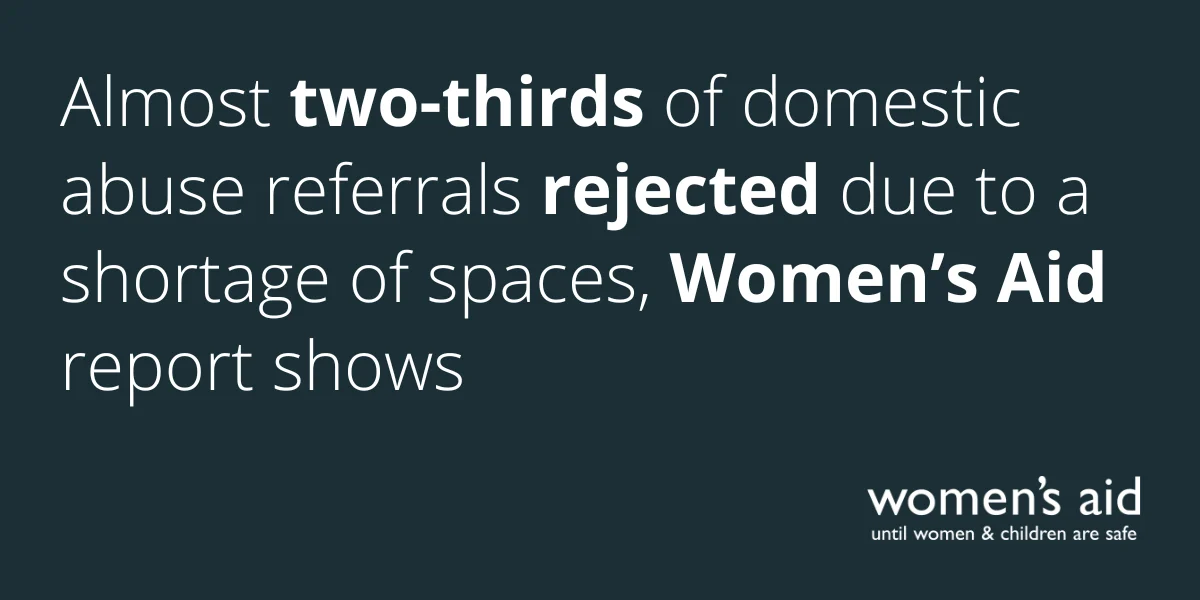
A critical new report from national domestic abuse charity Women’s Aid reveals a deeply concerning trend: almost two-thirds (65.2%) of domestic abuse refuge referrals were rejected in the past year, primarily due to a severe shortage of available spaces and capacity. This alarming figure marks the highest proportion of rejections in five years, underscoring a deepening crisis in the provision of life-saving support for survivors at a time when government strategies aim to build a safer society for women and girls and halve violence against women and girls (VAWG) within the next decade. The findings, published in Women’s Aid’s annual Domestic Abuse Report, paint a definitive national picture of overwhelming demand outstripping woefully inadequate provision, demanding immediate and systemic change to prevent countless women and children from being left in perilous situations.
The Escalating Crisis in Domestic Abuse Support
The report’s central finding—that 65.2% of refuge referrals were turned away—highlights a stark reality for thousands fleeing abuse. Despite a marginal year-on-year increase in the number of bed spaces, the system remains critically overwhelmed. Last year, 10,665 women and 11,732 children were supported by refuge services, yet these numbers represent only a fraction of those seeking help. The unprecedented rate of refusals directly contradicts national policy ambitions and places immense pressure on an already strained sector, forcing refuges to make impossible choices and turn away vulnerable individuals at their most desperate point of need. This situation is not merely a logistical problem; it is a profound failure to protect those most at risk, with devastating consequences for individuals and society at large.
Domestic abuse continues to be the most common form of VAWG in the United Kingdom, impacting millions of lives annually. The need for safe spaces and specialist support remains consistently high, yet the infrastructure to provide it is demonstrably crumbling under systemic pressures. These pressures are multifaceted, stemming from a combination of poor commissioning practices at local government levels, chronic underfunding, and a critical lack of move-on accommodation that prevents survivors from transitioning out of refuges. These factors collectively create a bottleneck, trapping women and children in a cycle of danger or delaying their access to essential aid, thereby exacerbating trauma and hindering recovery.
A Disconnect Between Policy and Reality
The publication of Women’s Aid’s report is particularly poignant, arriving shortly after the unveiling of the cross-government strategy aimed at creating a safer environment for women and girls, alongside Labour’s pledge to halve VAWG over the next ten years. While these commitments signal a recognition of the pervasive issue of gender-based violence, the reality depicted in the Domestic Abuse Report suggests a significant chasm between political aspiration and practical implementation. The report argues that for the domestic abuse sector to continue delivering its life-saving support, rhetorical commitments must be matched by urgent, systemic, and adequately funded change.
The government’s "Tackling Violence Against Women and Girls Strategy," updated in 2021, outlined a comprehensive approach to address VAWG, including provisions for supporting victims and survivors. Similarly, the Domestic Abuse Act 2021 was hailed as a landmark piece of legislation designed to provide greater protection and support. However, the report’s findings imply that the implementation and funding mechanisms underpinning these policies are insufficient to meet the scale of the challenge. The promises of a safer society ring hollow when the very services designed to offer immediate safety are forced to reject nearly two-thirds of those seeking refuge. This highlights a critical need for a more robust and responsive framework that translates policy into tangible, accessible support for survivors across the nation.
The Systemic Roots of the Crisis
Farah Nazeer, Chief Executive of Women’s Aid, articulated the deep-seated issues driving this crisis. She stated, "As a direct result of consistently poor commissioning decisions, the domestic abuse sector has faced a decades-long funding crisis, yet despite this, it continued to deliver life-saving care to women and children escaping abuse." This statement underscores a persistent problem where local authorities, often under budgetary constraints, may opt for cheaper, non-specialist services over those with proven expertise in domestic abuse, leading to a fragmented and often ineffective support landscape.
Poor Commissioning Practices: The report identifies "poor commissioning practices" as a primary driver of the crisis. Commissioning refers to the process by which local authorities and other public bodies assess needs, plan services, and then procure them from providers. When these practices are poor, they often prioritize cost-cutting over the specific, complex needs of domestic abuse survivors. This can lead to:
- Underfunding of Specialist Services: Specialist domestic abuse services, particularly those "by and for" Black and minoritised women, often struggle to secure stable, adequate funding because their unique expertise and tailored support are not sufficiently valued or understood in commissioning processes.
- Fragmented Support: A lack of coordinated commissioning can result in a patchwork of services, some excellent, some inadequate, with significant geographical disparities. Survivors may face a postcode lottery in accessing help.
- Short-Term Funding Cycles: Many services operate on short-term contracts, making long-term planning, staff retention, and service development incredibly difficult. This instability forces reliance on reserves and volunteers, unsustainable models for essential services.
Inadequate Funding: The "decades-long funding crisis" mentioned by Nazeer is a pervasive issue. Government funding streams for domestic abuse services, while existing, are often insufficient to meet the escalating demand and the rising costs of operation. This financial instability means:
- Limited Capacity: Services cannot expand their capacity (e.g., increase bed spaces, hire more staff) even when demand skyrockets.
- Impact on Specialist Support: Services for survivors with complex needs, such as those with disabilities, mental health issues, or from specific cultural backgrounds, are particularly vulnerable to funding cuts or neglect.
- Reliance on Charity and Volunteers: The sector’s resilience often comes at a high cost, with many organisations depending heavily on charitable donations and the dedication of unpaid volunteers to maintain operations.
Lack of Move-On Accommodation: This is a critical bottleneck in the system. Refuges are designed as temporary safe havens, providing immediate protection and support. However, without affordable and appropriate "move-on accommodation," survivors are forced to stay in refuges for much longer than intended. This has a cascading effect:
- Blocked Spaces: Longer stays mean fewer spaces become available for new referrals, directly contributing to the high rejection rate.
- Delayed Recovery: Prolonged stays in temporary accommodation can hinder a survivor’s ability to rebuild their life, secure employment, or establish stability for themselves and their children.
- Increased Pressure on Refuges: Refuges become overstretched, unable to fulfill their primary function as emergency shelters efficiently.
The Evolving Landscape of Abuse
The Domestic Abuse Report also sheds light on the evolving nature of abuse, demonstrating the adaptability and necessity of specialist services. Survivors are increasingly experiencing new and sophisticated forms of technology-facilitated abuse, which demand specific expertise and resources to address. Among the most prevalent forms disclosed to services were online stalking (reported by 78.1% of services) and non-consensual intimate image sharing or threats of sharing (66.4%). These digital forms of abuse amplify the control and harm inflicted by perpetrators, extending their reach beyond physical proximity.
Furthermore, the report identified new emerging trends in technology-facilitated abuse, with coerced participation in platforms like OnlyFans or other online activities being a novel concern for services in the past year. This highlights how perpetrators exploit digital spaces for financial control, exploitation, and further isolation of survivors.
Beyond technology, services have also had to adapt to broader social and political developments. This includes providing support to survivors impacted by events such as far-right riots, which can create heightened vulnerability and fear within certain communities, and the effects of international humanitarian crises, which can lead to increased stress, trauma, and specific needs for refugee and asylum-seeking women fleeing abuse. The ability of specialist services to respond to these diverse and complex challenges underscores their invaluable role and the necessity of stable, flexible funding that acknowledges the dynamic nature of abuse and its societal context.
Urgent Calls for Action and Sustainable Investment
Women’s Aid urges the government to acknowledge the intrinsic value of specialist services and commit to long-term, sustainable investment. Farah Nazeer’s powerful statement encapsulates this plea: "It is clear that if we are to tackle the epidemic of violence faced by women and girls, we need the government to urgently address all parts of the system. It is unacceptable that, due to poor decision-making at local level, and the resulting lack of housing and move-on accommodation, women and children are forced to remain in refuges for far longer, leaving countless others unable to receive the support they so desperately need."
The charity’s recommendations are clear and actionable:
- Dedicated, Ringfenced Funding: There is an urgent need for funding specifically allocated for victims, survivors, and the specialist services that support them. This funding must be ringfenced to ensure it reaches its intended purpose and is not diverted elsewhere. This would provide the stability necessary for services to plan, grow, and deliver consistent, high-quality care.
- Review and National Commissioning Statement: The government must expedite its plans to review current commissioning standards. This review should culminate in a new National Commissioning Statement for supported housing, which prioritises survivor needs over purely cost-cutting measures. Such a statement would provide national guidance and oversight, ensuring that local commissioning decisions are aligned with national objectives to end VAWG.
- Oversight of Poor Commissioning: There needs to be a robust mechanism for overseeing and challenging poor commissioning decisions at the local level. This would hold local authorities accountable and ensure that funding decisions genuinely serve the best interests of survivors.
- Investment in Specialist Services: Women’s Aid warns that investing in non-specialist services often leads to survivors "flocking to other public services," thereby creating more pressure on the NHS, police, and social care systems. Specialist services, with their deep understanding of trauma and tailored support models, are far more effective in helping survivors rebuild their lives and preventing further system strain.
Nazeer concludes by reiterating the irreplaceable role of specialist services: "The reality is that domestic abuse cannot be eradicated without the support and knowledge that specialist domestic abuse services bring. These services understand survivors and the help they need to rebuild their lives. Their value must be recognised for the life-saving work they do, and that they are fundamentally the backbone of our country’s response to ending violence against women and girls. The work of these services must be protected, if we are to finally live in a world where domestic abuse is no longer tolerated."
Broader Implications and the Path Forward
The implications of turning away nearly two-thirds of domestic abuse referrals are profound and far-reaching. For individual survivors, it means being trapped in dangerous homes, enduring continued abuse, or resorting to unsafe alternatives, significantly increasing their risk of serious harm or even death. For children, witnessing or experiencing domestic abuse has lifelong developmental and psychological consequences, perpetuating cycles of trauma.
Beyond the immediate human cost, there are significant societal and economic ramifications. Unaddressed domestic abuse places immense strain on other public services. Police forces are frequently called to domestic incidents, healthcare providers treat injuries and mental health conditions resulting from abuse, and social services become involved in child protection cases. The economic cost of domestic abuse to the UK is staggering, estimated by the government to be in the tens of billions of pounds annually, encompassing direct costs to services, lost economic output, and human suffering. Investing in specialist domestic abuse services is not merely a social imperative; it is a fiscally responsible decision that can alleviate pressure across the public sector and contribute to a healthier, more productive society.
The Women’s Aid report serves as an urgent wake-up call. Without addressing the systemic issues of funding, commissioning, and housing, the government’s ambitious targets for halving VAWG will remain aspirational rather than achievable. Survivors will continue to be left without safe exit routes, and the "epidemic of violence" will persist. The path forward requires a unified, comprehensive national strategy that truly values and adequately funds the specialist services that are at the frontline of this critical fight. It necessitates a shift from short-term, reactive measures to long-term, preventative investment, ensuring that every survivor seeking help finds a safe space and the support needed to rebuild their life free from violence.
The full report, including detailed recommendations, is available for download on the Women’s Aid website.