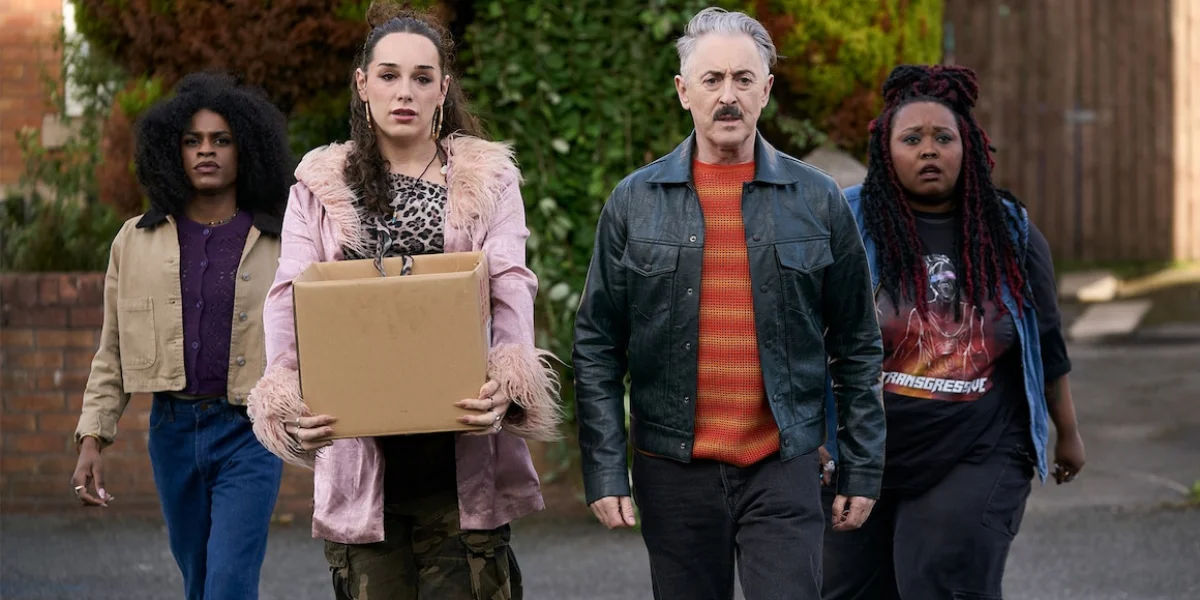
The British television landscape has seen a significant addition to its dramatic canon with the release of Tip Toe, a new series written by Russell T Davies and broadcast on Channel 4. Set in the suburbs of Manchester, the production serves as a contemporary examination of social friction, generational divides, and the escalating tensions within modern British society. The series, which chronicles ten specific days in the lives of two neighbors, marks a return to Manchester for Davies, whose previous works such as Queer as Folk and It’s a Sin have been instrumental in shaping the representation of LGBTQ+ lives on screen. Tip Toe deviates from traditional linear narratives by establishing the protagonist’s death in the opening moments, thereby framing the subsequent story as a forensic exploration of the events leading to a tragic conclusion.
Production Background and Creative Leadership
Russell T Davies, widely regarded as one of the most influential showrunners in the United Kingdom, serves as the primary architect of Tip Toe. Following his successful return to Doctor Who and the critical acclaim of the dystopian drama Years and Years, Davies has shifted his focus toward a more grounded, yet equally unsettling, portrayal of suburban life. The series is produced for Channel 4, a network with a statutory remit to provide innovative and alternative programming that reflects the diversity of the UK.
The casting of the series features Alan Cumming and David Morrissey in the lead roles, representing two distinct archetypes of British masculinity. Cumming portrays Leo, a flamboyant and long-term owner of a gay bar on Manchester’s famous Canal Street. Morrissey plays Clive, a stern, traditional patriarch and electrician. The casting is significant as both actors bring decades of experience in high-profile dramatic roles, providing the necessary weight to a script that relies heavily on character nuance and unspoken tension.
Narrative Structure and Chronology
The narrative of Tip Toe is structured around a ten-day countdown. This chronological framework is established through the revelation that Leo’s life ends at the conclusion of this period. The plot is initiated by a seemingly minor incident: Leo is locked out of his home following a "hookup gone wrong." This event forces an interaction with his neighbor, Clive, who eventually assists in installing a lockbox on Leo’s property.
The ensuing ten days are characterized by a series of forced interactions. Guilt and a desire for neighborly reconciliation lead Leo to offer Clive electrical work at his bar. This move places Clive, a man of rigid social views and visible discomfort with overt displays of queerness, directly into Leo’s professional environment. The timeline tracks the gradual escalation of their mutual misunderstanding.
Key events within the first two episodes include:
- The Lockout: The initial catalyst that breaks the barrier of suburban privacy between Leo and Clive.
- The Lockbox Installation: A moment of practical assistance that underscores Clive’s need for control and security.
- The Bar Renovation: Clive’s entry into the "gay village" of Manchester, exposing him to Leo’s staff and lifestyle.
- The Rescue of Zee: A subplot involving Leo’s staff assisting Zee, a trans woman, in escaping a hostile living situation, highlighting the protective community surrounding Leo.
- The Secret Communication: A pivotal moment where Clive’s teenage son, George, reaches out to Leo for guidance regarding his own hidden identity.
Character Dynamics and Societal Conflict
The central conflict of Tip Toe lies in the inability of Leo and Clive to find common ground, despite their physical proximity. Leo is depicted as a man who refuses to sanitize his identity for the comfort of others. His dialogue is often witty and sharp, serving as a defense mechanism against the perceived judgment of his neighbor. Conversely, Clive is portrayed with a "slow Scouse monotone," a character whose discomfort with the modern world manifests as a mixture of stoicism and underlying hostility.
David Morrissey’s performance as Clive has been noted for its portrayal of a man unequipped to handle a rapidly changing social landscape. In one instance, Clive attempts to initiate a conversation about a football match, a traditional "ice-breaker" in British male culture. However, the attempt fails as Leo does not share this cultural touchstone, highlighting the vast cultural chasm between them. The series explores the "cruelty" of these missed connections—the idea that under different societal conditions, a functional neighborly relationship might have been possible.
The supporting cast, representing a younger generation of the LGBTQ+ community, includes Zee (a trans woman), Hannah (non-binary), and Mikey (a young gay man). Their presence introduces themes of inter-generational angst, as Leo and his long-time friend Melba represent a different era of activism and social survival compared to the more overtly political stance of the younger staff.
Socio-Political Context and Supporting Data
Tip Toe is released during a period of documented increase in social polarization and hate speech in the United Kingdom. Data from the Home Office and various social monitoring organizations suggest a trend that mirrors the tensions depicted in the show.
According to Home Office statistics for England and Wales, hate crimes based on sexual orientation increased significantly over the last decade. For the year ending March 2023, there were 24,102 recorded sexual orientation hate crimes, a figure that has risen steadily from approximately 4,600 in 2012/13. Furthermore, transgender-targeted hate crimes saw a 11% increase in the most recent reporting period.
The show’s focus on suburban Manchester is also historically significant. Canal Street, where Leo’s bar is located, has been the heart of the city’s LGBTQ+ community since the 1990s. While the area has seen commercial success and increased mainstream acceptance, the series posits that this "progress" is fragile and often does not extend beyond the borders of the "gay village" into the residential suburbs.
The mention of shifting political allegiances—specifically the rise of populist movements—is an underlying theme in Davies’ script. The narrative reflects a contemporary anxiety regarding the "open sport" of hatred, suggesting that the previous era of "shy" conservatism has been replaced by more vocal and confrontational ideologies.
Critical Analysis of Thematic Implications
The primary metaphor of the series is the "lockbox"—a device intended for security that ultimately becomes a symbol of the barriers between the characters. The "dread" established in the first episode serves to inform the audience’s perception of every interaction. Even moments of levity, such as Clive briefly dancing on the bar’s stage, are immediately suppressed, reinforcing the theme of repression.
The show also addresses the role of the "elder" in the LGBTQ+ community. Through the character of George, Clive’s closeted son, the series examines the continued necessity of mentorship and safe spaces for queer youth. Despite legal advances, the emotional and domestic reality for many remains one of fear and isolation. Leo’s internal struggle to define his role as a mentor to a sixteen-year-old reflects the ongoing responsibility felt by older generations who survived more overt eras of persecution.
From a journalistic perspective, Tip Toe functions as a "state-of-the-nation" drama. It does not offer easy resolutions or a hopeful outlook on social cohesion. Instead, it utilizes the domestic thriller format to analyze the breakdown of communication. The "clunky dialogue" noted in some segments serves as a deliberate stylistic choice to represent how political discourse has infiltrated personal interactions, with characters often speaking in slogans or ideological positions rather than human connection.
Industry and Official Responses
While Channel 4 has not released specific viewership figures for the premiere at this stage, the network has emphasized the show’s importance to its summer programming lineup. In a statement regarding the commissioning of the series, Channel 4’s Head of Drama highlighted the "urgency" of Davies’ writing and the show’s alignment with the network’s history of challenging social norms.
Television critics have largely praised the performances of Cumming and Morrissey, noting that the chemistry—or lack thereof—between the two leads is the engine of the series. Comparisons have been drawn to Davies’ 2019 series Years and Years, with many noting that Tip Toe brings that show’s dystopian warnings into a present-day, realistic setting.
Broader Impact
Tip Toe arrives at a time when the role of public service broadcasting is under scrutiny. By producing a high-budget drama that tackles sensitive social issues, Channel 4 reaffirms its position as a platform for provocative content. The series is expected to spark discussions regarding the nature of "neighborliness" in a polarized age and the limits of tolerance in diverse communities.
The legacy of Russell T Davies is further cemented by this work, as he moves away from the celebratory tones of some of his earlier projects toward a more cautionary and analytical approach. Tip Toe suggests that the barriers between different sections of society are not merely political or ideological, but are deeply rooted in the inability to communicate across the divide of lived experience.
In conclusion, Tip Toe is more than a suburban drama; it is a clinical observation of the friction points in contemporary Britain. Through the tragic lens of Leo and Clive’s ten-day encounter, the series challenges its audience to consider the consequences of social isolation and the urgent need for genuine dialogue in an increasingly divided landscape. The show is currently available for streaming on Channel 4 in the United Kingdom.