Fon remembers the gnawing exhaustion, the relentless push to keep moving even when his body screamed for rest, and the pervasive uncertainty that clouded his future. His journey to safety was an odyssey marked by immense hardship, traversing 13 countries on foot, including the notoriously dangerous Darién Gap, a dense jungle region separating Colombia and Panama. This arduous path was undertaken while living with a disability, relying on a wheelchair and crutches to navigate the challenges of each day. Like countless displaced individuals, Fon carried the heavy burden of trauma from what he endured, profound grief for what he had lost, and a persistent fear of what lay ahead.
"The pain in my country was scarier than the Darién Gap," Fon recounted. "On my way to the U.S., I was conscious that I could die on the journey. I didn’t come to the U.S. looking for a new life. I came looking for safety."
Upon his arrival in the United States in 2023, Fon embarked on the intricate and often protracted process of seeking legal protection. The following year, he was granted asylum, a monumental and life-altering decision that affirmed his right to remain in the U.S. without the threat of being forcibly returned to danger. However, as many individuals who find safety after prolonged periods of uncertainty discover, obtaining legal status is merely the initial step in a much longer journey of rebuilding a life.
Beyenech Taye, Fon’s HIAS Clinical Case Manager, explained the complexities faced by those in his situation: "Rebuilding a life in the U.S. often means navigating systems that are confusing even for citizens and nearly impossible when you are recovering from trauma, living with a disability, and separated from your family."
The Lingering Shadow of Separation
Meanwhile, Fon’s wife and children remained in Cameroon. His wife, a courageous activist dedicated to advocating for the rights of people with disabilities, had become a target due to her work and was forced into hiding. HIAS’s legal team immediately began working with Fon, assisting him in petitioning for his wife and children to join him in the United States, a crucial step towards family reunification.
For Fon, the separation from his family was a constant ache, a persistent thought that never left his mind. He had found safety, but his loved ones had not. As he anxiously awaited progress on their case, life in the U.S. presented its own set of formidable challenges.
Fon was referred to HIAS’s social services team in July 2024, grappling with significant financial and emotional strain as he strived to establish a new life. He had become disconnected from vital refugee resettlement services and was unsure how to re-engage with them. Adding to his difficulties, his SNAP (Supplemental Nutrition Assistance Program) benefits had been reduced, making it increasingly challenging to afford rent. Furthermore, an administrative error on his immigration documents prevented him from renewing his driver’s license or applying for essential health care.
The most immediate and pressing concern was the critical need for a new battery for Fon’s wheelchair. At a cost of several hundred dollars, he could not afford the replacement. This directly impacted his ability to get to work, and missing work meant a loss of income, which in turn meant falling further behind on rent.
"This is the reality many asylees face: the moment protection is granted, the world expects you to be ‘fine.’ But the barriers don’t disappear; they multiply," Beyenech observed, highlighting the systemic gaps that often emerge after initial protection is secured.
HIAS is widely recognized for its comprehensive legal services for individuals seeking asylum and protection. However, what distinguishes HIAS is its commitment to providing support that extends far beyond legal representation.
"For people like Fon, the greatest threats to safety often come from the gaps between systems: between immigration paperwork and healthcare access, between a work permit and stable housing, between surviving trauma and having the tools to keep going," Beyenech elaborated.
Navigating the Labyrinth: A Multifaceted Approach to Support
Working collaboratively, Fon and the HIAS social services team began to systematically address the crises that jeopardized his stability and future. Beyenech provided Fon with essential resources for food and other basic necessities, offered Lyft vouchers to facilitate transportation to appointments, and connected him with the ENDependence Center of Northern Virginia, a crucial community resource and advocacy center for individuals with disabilities.
In close partnership with HIAS’s legal team, Beyenech advocated on Fon’s behalf and guided him through the intricate process of resolving errors on his official documents. This dedicated support enabled Fon to rectify his paperwork, obtain a state-issued ID card, and successfully enroll in health insurance. Through the assistance of HIAS, he also applied for and received financial aid for the repair of his wheelchair. Additionally, HIAS’s Asylee Outreach Project Manager played a pivotal role in helping Fon reconnect with refugee resettlement services, securing employment support and facilitating the renewal of essential benefits.
"These steps may sound small," Beyenech stated. "But for people navigating the immigration system, small steps can be the difference between stability and collapse."
The emotional toll of his family’s situation remained immense. Then, a harrowing call brought Fon the news he had dreaded: his wife had been kidnapped in Cameroon. Fon was already under immense stress, striving to maintain his footing in the U.S., navigate a system that felt designed to impede him, and protect his children from afar. In this moment of profound crisis, HIAS facilitated a connection with a HIAS social work student who provided vital emotional support and equipped him with strategies for managing his fear, anxiety, and distress.
"Waiting for papers while taking care of my family back home was scary," he reflected.
Fon’s personal story, while unique in its details, mirrors the experiences of many refugees, asylum seekers, and asylees in the United States. Their arduous journeys do not conclude upon arrival or even upon receiving legal protection.
HIAS’s U.S. programs are designed to offer comprehensive support, empowering displaced individuals to transition from crisis to stability. This multifaceted approach includes immigration legal services, pro bono representation, case management, mental health support, and targeted initiatives that assist families in accessing housing, employment services, and vital benefits.
For Fon, this all-encompassing support system meant he did not have to face the most challenging chapters of his life in isolation. It meant having someone available to help him rectify a bureaucratic error that threatened to derail his entire future. It meant having assistance to reach critical appointments, access necessary healthcare, and, most importantly, to continue moving forward even as his family remained in peril.
A Beacon of Hope: Family Reunited
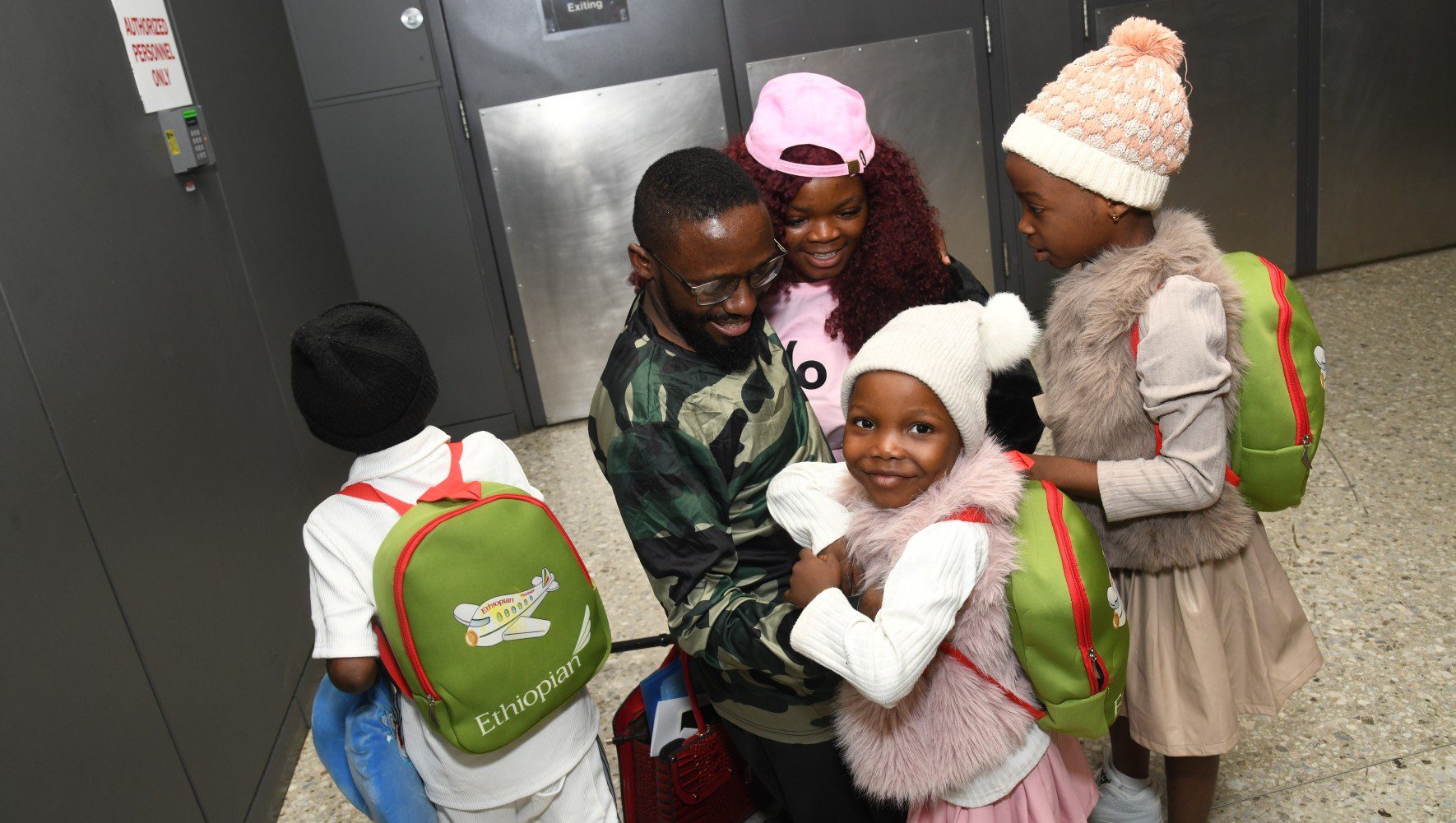
In early December 2025, after years of agonizing separation and profound uncertainty, Fon was finally reunited with his wife and children in the United States. This reunion marked the culmination of a long and arduous struggle, offering a profound sense of relief and closure.
"Getting [my family] here clears all my pain. Facing immigration challenges while having HIAS support me is a shoulder I won’t forget," Fon expressed, his voice reflecting the depth of his gratitude.
Today, HIAS continues to provide ongoing support to the family as they navigate the complexities of rebuilding their lives in the U.S. This includes assistance with school enrollments, identifying essential community resources, and ensuring they can access the benefits necessary for healing and achieving long-term stability.
"There is a misconception that once someone reaches the U.S., they are safe," Beyenech added. "But safety is not just the absence of danger. It is housing. It is healthcare. It is legal protection. It is community. It is the ability to keep your family together."
And crucially, it is the assurance that when the ground beneath you shifts, there will be a steadfast presence offering support and guidance.
Broader Implications and the Enduring Need for Comprehensive Support
Fon’s narrative underscores a critical reality for displaced populations in the United States: the journey to safety and stability is rarely a linear path. The process of rebuilding a life after fleeing persecution or violence is fraught with systemic complexities, bureaucratic hurdles, and profound personal challenges. The United States, as a destination for asylum seekers, faces the ongoing imperative to provide robust and accessible support systems that go beyond immediate legal protections.
The challenges Fon encountered—navigating complex immigration systems, securing essential benefits like SNAP, accessing healthcare, and addressing disability-related needs—are common experiences for many who arrive seeking refuge. The administrative errors that can delay or deny access to vital services, as seen with Fon’s driver’s license and healthcare applications, highlight the need for efficient and responsive government agencies.
The role of organizations like HIAS in providing integrated services is paramount. Their ability to offer legal aid, case management, mental health support, and connections to community resources creates a vital safety net. This comprehensive approach is not merely a matter of humanitarian aid; it is essential for fostering successful integration and enabling individuals to contribute to their new communities.
The fact that Fon’s wife was targeted for her activism highlights the ongoing risks faced by individuals and their families, even after they have left their home countries. This underscores the importance of robust asylum processes and the need for continued vigilance in ensuring the safety of asylum seekers and their families.
The timeline of Fon’s experience, from his perilous journey to securing asylum and then navigating the subsequent challenges, illustrates the protracted nature of refugee and asylum seeker integration. The U.S. immigration system, while providing a pathway to safety, often presents a labyrinthine process that can take years to navigate. This protracted period can exacerbate trauma and create significant barriers to economic and social stability.
The implications of successful integration extend beyond the individual and their family. When asylum seekers and refugees are able to secure stable housing, employment, and healthcare, they become active participants in the economy and contribute to the social fabric of their communities. This not only benefits the individuals themselves but also strengthens the nation as a whole.
The ongoing need for funding and support for organizations like HIAS is critical. As global displacement continues to rise, the demand for these essential services will only increase. Policy decisions regarding asylum, resettlement, and access to social services have a direct and profound impact on the lives of vulnerable individuals and families seeking a new beginning. Fon’s story serves as a powerful testament to the resilience of the human spirit and the transformative impact of comprehensive, compassionate support in the face of overwhelming adversity.