The Trump administration is launching a significant legal challenge that could fundamentally alter how individuals with disabilities seek recourse against federal agencies for discrimination. In a protracted lawsuit concerning the accessibility of White House press briefings, the Department of Justice has asserted that people with disabilities do not possess the right to sue federal entities under Section 504 of the Rehabilitation Act of 1973, a cornerstone law prohibiting disability discrimination in federally funded programs. This argument, if successful, could have far-reaching implications, potentially limiting the avenues available for millions of Americans with disabilities to challenge discriminatory practices across a vast spectrum of federal services and interactions.
Background of the Lawsuit: The Fight for Sign Language Interpretation
The current legal battle stems from a lawsuit filed by the National Association of the Deaf (NAD) and two deaf individuals. They argued that the White House’s failure to provide sign language interpreters at press briefings constituted a violation of Section 504. This practice was abruptly halted after President Donald Trump took office in 2017, despite a previous commitment to accessibility.
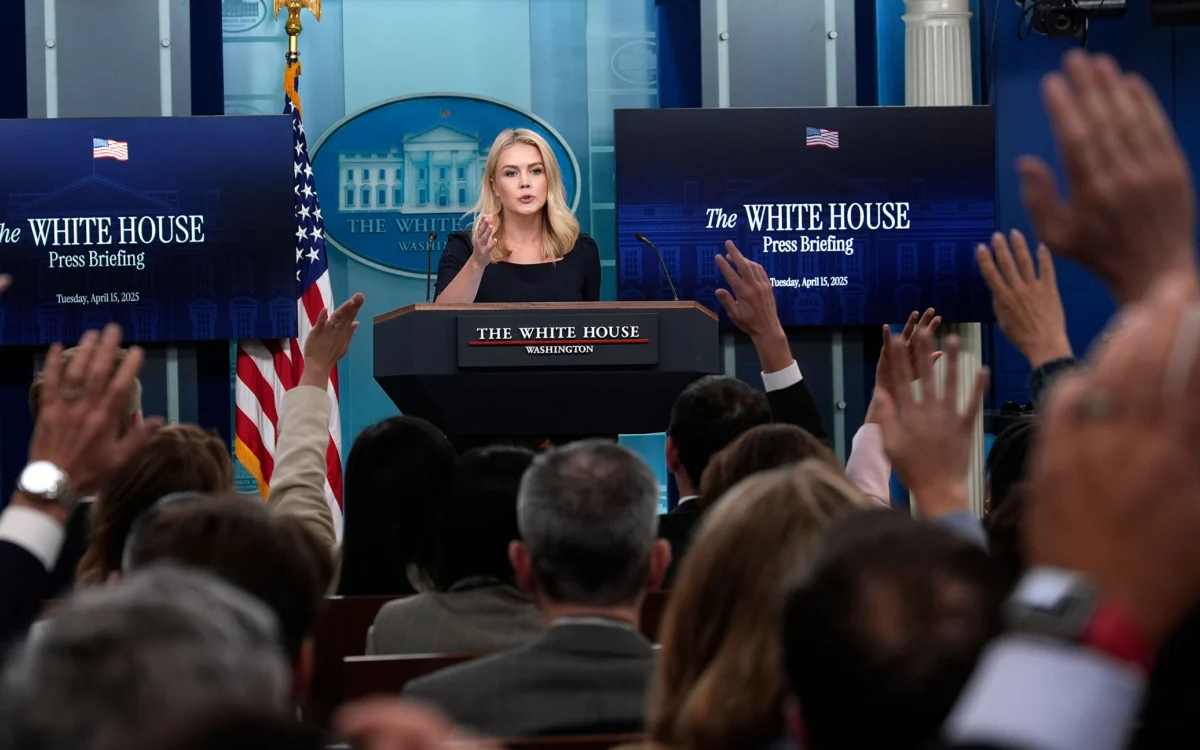
The NAD contends that American Sign Language (ASL) is a distinct language with its own unique grammar and structure, making closed captioning alone insufficient to ensure full and equal access for ASL users. The administration, conversely, has maintained that captioning and transcripts are adequate and that mandating interpreters would "severely intrude on the President’s prerogative to control the image he presents to the public." This stance has been met with strong opposition from disability advocates who view ASL as essential for meaningful participation in public discourse.
In November of the previous year, U.S. District Judge Amir H. Ali issued a preliminary injunction, ordering the White House to provide qualified ASL interpreters at all publicly announced press briefings conducted by President Trump or White House Press Secretary Karoline Leavitt. This ruling was a significant victory for the plaintiffs and underscored the legal obligation of federal entities to ensure accessibility. Following this judicial order, the White House did begin to include ASL interpreters at some events, a development that offered a glimmer of hope for improved accessibility.
The Department of Justice’s Novel Legal Argument
However, the Trump administration’s appeal of Judge Ali’s ruling has introduced a new and potentially more impactful legal strategy. In filings with the U.S. Court of Appeals for the District of Columbia, Justice Department attorneys have argued that the text, structure, and legislative history of the Rehabilitation Act indicate that Section 504 does not provide individuals with a "private right of action" to sue federal agencies for discrimination in their programmatic capacities.
Instead, the administration proposes that individuals believing they have faced discrimination should pursue their claims under the Administrative Procedure Act (APA). This legal framework typically governs judicial review of agency actions and decisions, focusing on whether those actions were arbitrary, capricious, an abuse of discretion, or otherwise not in accordance with law. Disability advocates argue that relying solely on the APA would significantly weaken their ability to challenge systemic discrimination.
Implications for Individuals with Disabilities
The implications of the Department of Justice’s argument are profound and extend far beyond the specific issue of sign language interpreters at White House briefings. Section 504 of the Rehabilitation Act, enacted in 1973, has been instrumental in ensuring that individuals with disabilities are not excluded from, denied the benefits of, or subjected to discrimination under any program or activity receiving federal financial assistance. This includes a vast array of federal services, from healthcare and education to transportation and employment.
"They’re arguing in a nutshell that there is no private right of action, that there is no right for an individual to go before the court and say my rights have been violated under Section 504," explained Amy Robertson, an attorney who filed an amicus brief in the case on behalf of nine prominent disability advocacy groups. "It really would mean it would be more difficult to challenge discrimination by any federal agencies."
Robertson elaborated on the practical consequences, noting that this legal maneuver could affect individuals with disabilities encountering a wide range of barriers. This could include discrimination when interacting with the Transportation Security Administration (TSA) at airports, difficulties in obtaining accessible materials from agencies like the Social Security Administration (SSA), or challenges in accessing services provided by the Department of Veterans Affairs. Essentially, it could create significant hurdles for millions of Americans seeking to assert their rights and ensure equitable treatment when engaging with the federal government.
Historical Precedent and Advocate Concerns
Disability advocates are particularly concerned because they argue the Department of Justice’s current stance is inconsistent with decades of legal precedent and the federal government’s own past arguments in similar cases. For over forty years, the "private right of action" under Section 504 has served as a critical tool for individuals and organizations to hold federal entities accountable for discriminatory practices.
The amicus brief filed by the coalition of disability groups emphasizes this point: "For more than four decades, disabled people have relied on the private right of action under Section 504 to hold the federal government accountable when it discriminates – in national parks, veterans’ hospitals, federal prisons, and the halls of power. Those gains were not won through agency self-policing. They were won by disabled people going to court."
The brief further warns of the potential consequences: "A ruling eliminating that right as to executive agencies would close the courthouse door to the many millions of disabled people who participate in federal programs, at precisely the moment when federal enforcement of disability rights is most uncertain." This highlights a fear that weakening the ability of individuals to sue directly could lead to a decline in the enforcement and protection of disability rights.
The coalition of organizations supporting this argument includes a broad spectrum of influential disability rights groups: the Disability Rights Education and Defense Fund, the American Association of People with Disabilities, the Autistic Women & Nonbinary Network, CommunicationFIRST, Disability Law United, Disability Rights Bar Association, Justice in Aging, the National Federation of the Blind, and Paralyzed Veterans of America. Their collective voice underscores the widespread concern within the disability community.
The Chronology of Legal Action
The legal journey began with the NAD’s lawsuit, initiated last year after the White House ceased providing ASL interpreters for press briefings following President Trump’s inauguration. This decision, as previously noted, was met with criticism and legal challenges.
- Early 2017: White House stops providing ASL interpreters at press briefings.
- Prior to November [Year]: National Association of the Deaf and two deaf individuals file a lawsuit alleging violation of Section 504 of the Rehabilitation Act.
- November [Year]: U.S. District Judge Amir H. Ali issues a preliminary injunction ordering the White House to reinstate ASL interpreters at publicly announced press briefings.
- Following the injunction: The White House begins including ASL interpreters at some events.
- [Current Year]: The Trump administration, through the Department of Justice, appeals the ruling and, in court filings, challenges the right of individuals with disabilities to sue federal agencies under Section 504.
Official Responses and Future Outlook
The White House has not issued a public comment in response to requests for information regarding its latest legal claims. The Department of Justice referred inquiries to its existing court filings. This lack of direct engagement from the executive branch leaves the interpretation and potential impact of their legal strategy largely to the courts and legal analysts.
The case is now poised to be heard by a three-judge panel from the U.S. Court of Appeals for the District of Columbia. The timing of this hearing remains uncertain. The outcome of this appeal could set a significant legal precedent, shaping the landscape of disability rights litigation and the ability of individuals with disabilities to seek justice when federal agencies fall short of their accessibility and non-discrimination obligations. The broader implications suggest a critical juncture in the ongoing effort to ensure full inclusion and equal opportunity for all Americans, regardless of disability.