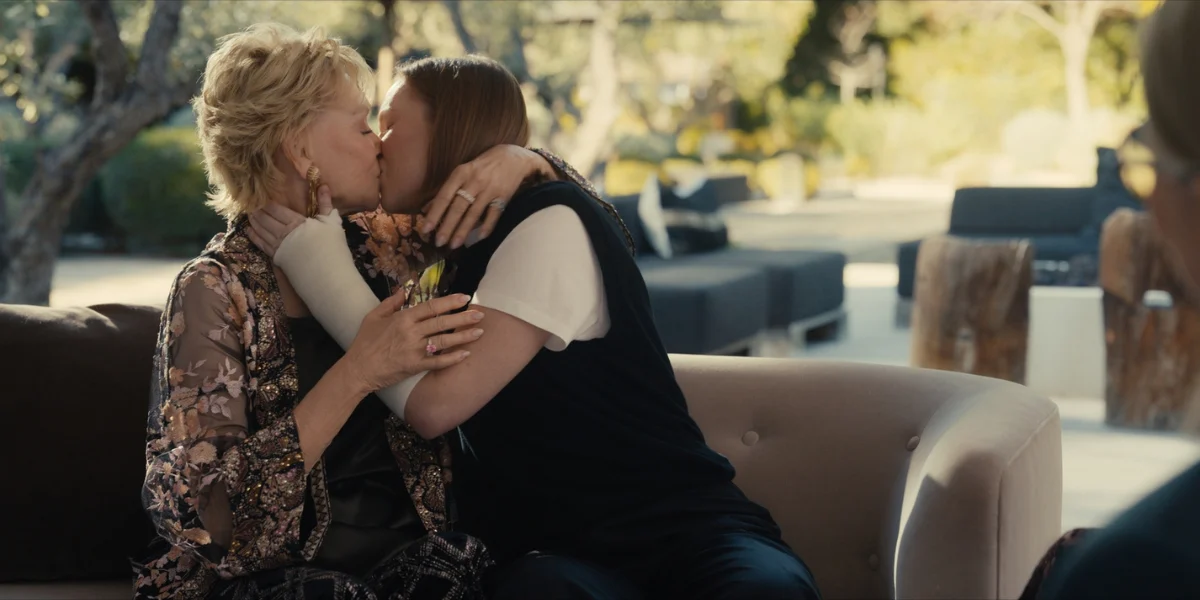
The seventh episode of the third season of the Max original series Hacks, titled Montecito, presents a pivotal shift in the central relationship between legendary comedian Deborah Vance and her protégé, Ava Daniels. Written by Guy Branum, Andrew Law, and Bridget Parker, and directed by series co-creator Paul W. Downs, the episode utilizes a classic television trope—the "fake relationship"—to explore the complexities of platonic intimacy, professional ambition, and the boundaries of personal disclosure. By placing the protagonists in a situation where they must feign a romantic partnership, the series provides an analytical lens through which to view their actual, often tumultuous, working bond.
Narrative Catalyst: The Pursuit of the Carol Burnett Jumpsuit
The episode’s primary conflict is driven by Deborah Vance’s (Jean Smart) unrelenting drive to secure her legacy. As she prepares for a landmark performance at Madison Square Garden (MSG), Deborah identifies a specific designer jumpsuit once worn by comedy icon Carol Burnett as the essential wardrobe piece for the event. The garment is currently in the possession of Kelly Kilpatrick (Cherry Jones), a veteran comedian with whom Deborah shares a long-standing and vitriolic rivalry.
The animosity between the two women is rooted in decades of professional competition and Deborah’s historical use of homophobic material in her stand-up sets—jokes that specifically targeted Kilpatrick. To bridge this gap and acquire the jumpsuit, Deborah arranges a lunch meeting. The encounter is initially tense, defined by Kilpatrick’s justified resentment. However, the dynamic shifts when Ava Daniels (Hannah Einbinder) arrives unexpectedly to return a mobile phone Deborah had left in their vehicle.
A misunderstanding occurs when Ava begins to "nag" Deborah regarding her caffeine intake, noting that a late-afternoon coffee would disrupt their collective sleep schedule. Kilpatrick, observing the domestic nature of their bickering, incorrectly concludes that the two women are in a clandestine romantic relationship. Recognizing an opportunity to soften Kilpatrick’s stance, Deborah adopts the falsehood. In a moment of calculated improvisation, she claims to be gay, leading Kilpatrick to invite the "couple" to her estate in Montecito for the weekend.
Chronology of the Montecito Weekend
The weekend in Montecito serves as a pressure cooker for the show’s central duo. Deborah does not inform Ava of the ruse until they arrive at the residence of Kilpatrick and her wife, Monica (Leslie Bibb). The directive is clear: they must pretend to be "lesbian lovers" to secure the jumpsuit.
The timeline of the weekend unfolds through several key stages:
- The Arrival and Initial Commitment: Ava, initially blindsided, decides to lean into the performance with what observers describe as "UCB-improviser-level commitment." This decision is partly fueled by a desire to see Deborah uncomfortable, subverting the power dynamic that usually favors the elder comedian.
- The Origin Story: When questioned about how they met, Ava recounts the actual events of their first meeting from the series pilot. By maintaining the factual details of their initial professional confrontation but altering the emotional delivery, the story convincingly mimics the "meet-cute" of an unlikely romantic pairing. This sequence highlights the thin line between intense professional collaboration and romantic chemistry.
- Escalation of the Ruse: The performance escalates during a series of social interactions. Ava initiates a physical kiss to test Deborah’s resolve and later engages in provocative dinner conversation. When Monica inquires about their sexual dynamics, Ava utilizes modern queer terminology—describing Deborah as a "pillow princess"—to further embarrass her employer.
- The Disclosure of Toxicity: As the weekend progresses, Kilpatrick and Monica begin to perceive signs of a toxic or abusive relationship. They mistakenly interpret a physical injury on Ava’s arm (caused by a collision with an autonomous Waymo vehicle) as evidence of Deborah’s physical aggression. While Deborah denies hitting Ava, Ava reminds her of a previous slap (a reference to Season 2), forcing a moment of uncomfortable honesty regarding their actual history of volatility.
Analytical Perspective: Subverting the Fake Dating Trope
The use of the "fake dating" trope in Hacks serves a different purpose than in traditional romantic comedies. Typically, this narrative device leads to the realization of suppressed romantic feelings. In "Montecito," the trope is used to validate a different form of partnership.
Industry analysts note that Hacks consistently challenges the societal tendency to prioritize romantic love over other forms of deep human connection. By having Kilpatrick and Monica—two characters in a committed marriage—fail to see Deborah and Ava as anything other than lovers, the show critiques the lack of cultural vocabulary for intense, platonic, multi-generational female bonds.
The episode draws a parallel to real-world creative partnerships, such as that of Fred Armisen and Carrie Brownstein. In various media interviews, Brownstein has described their relationship as "deeply loving in a slightly romantic way" despite being strictly platonic. Hacks positions Deborah and Ava in this same "gray area" of intimacy, where the shared labor of comedy creates a bond that is as significant and demanding as a marriage, without being sexual.
Production Context and Casting Impact
The success of the episode is bolstered by the guest performances of Cherry Jones and Leslie Bibb. Jones, an Emmy and Tony Award winner, brings a "cigar-smoking butch" gravitas to the role of Kilpatrick, providing a formidable foil to Jean Smart’s Deborah Vance. Bibb’s portrayal of Monica as a "chaotic femme" adds a layer of comedic unpredictability, particularly as Ava finds herself genuinely attracted to her host’s wife, adding further complexity to the "fake" dynamic.
From a production standpoint, the episode continues the series’ trend of high critical performance. Jean Smart, who has already secured two Primetime Emmy Awards for Outstanding Lead Actress in a Comedy Series for this role, is noted for her nuanced delivery during the "coming out" scene, where she balances Deborah’s predatory opportunism with a palpable sense of internal discomfort.
Resolution and Emotional Implications
The resolution of the episode moves away from the comedic ruse and toward emotional transparency. A secondary plot point involves a secret Deborah had been keeping from Ava: she recently underwent a medical procedure to remove a mass.
Deborah’s initial lie to Ava regarding her health was not born of malice, but of a desire to avoid appearing vulnerable. The eventual confession serves as a reconciliation of their differing communication styles. While the weekend began with a massive public lie, it ended with a significant private truth.
This development reinforces the theme that Deborah and Ava have achieved a level of partnership that transcends the employer-employee relationship. Even when they eventually confess the ruse to Kilpatrick and Monica, the couple refuses to believe them, convinced that the romantic spark they witnessed was too authentic to be faked. This serves as a meta-commentary on "shipping culture"—the tendency of audiences to demand romantic resolutions for characters with high chemistry.
Broader Impact and Conclusion
"Montecito" is an essential entry in the Hacks canon because it addresses the "elephant in the room" regarding the protagonists’ relationship. By explicitly naming the romantic potential and then choosing to remain in the realm of the platonic, the writers assert that the current iteration of their bond is more interesting and "real" than a standard romance.
The episode also highlights the evolution of Deborah Vance. In Season 1, Deborah was a woman defined by her isolation; by Season 3, she has entered a partnership so convincing that it can fool veteran observers of human nature.
As Hacks continues its third season, the implications of the "Montecito" weekend are likely to resonate. The acquisition of the Carol Burnett jumpsuit symbolizes Deborah’s continued ascent toward the pinnacle of the comedy world, but the emotional breakthroughs of the episode suggest that her greatest achievement may be the sustained, complex intimacy she has built with Ava Daniels. The series continues to prove that there is a profound depth to be found in "the work," and that creative soulmates are perhaps the most enduring partners of all.