This week, the Supreme Court will hear arguments in Trump v. Barbara, a pivotal case that could fundamentally alter the landscape of immigration and citizenship in the United States by challenging the long-standing principle of birthright citizenship. The lawsuit directly confronts a Trump administration executive order aimed at dismantling this constitutional right, prompting a broad coalition of religious and civil liberties organizations to unite in its defense.
Heralded as one of the most significant legal battles against the Trump administration’s immigration agenda, Trump v. Barbara centers on the interpretation and application of the 14th Amendment, the bedrock of American citizenship for over 150 years. The case is poised to have profound implications for millions of families and shape the nation’s identity as a beacon for immigrants.
Understanding Birthright Citizenship: A Cornerstone of American Identity
Birthright citizenship, legally known as jus soli or "right of the soil," is the principle that grants citizenship to any individual born within a nation’s geographical boundaries, irrespective of their parents’ nationality or immigration status. This contrasts with jus sanguinis, or "right of blood," where citizenship is inherited through parentage. Globally, only a minority of countries, just over three dozen, adhere to the jus soli principle. Its widespread adoption in these nations serves to provide a clear and unequivocal legal status for all children born within their territories, thereby preventing statelessness and fostering social cohesion and integration of diverse populations.
The Constitutional Mandate: The 14th Amendment and Its Legacy
In the United States, birthright citizenship is enshrined in the 14th Amendment of the Constitution. Ratified in 1868 in the aftermath of the Civil War, its primary objective was to secure the rights and citizenship of newly freed enslaved people. The amendment unequivocally states, "All persons born or naturalized in the United States, and subject to the jurisdiction thereof, are citizens of the United States and of the State wherein they reside." This foundational clause has, across generations, ensured that children born on American soil, regardless of their parents’ origins, automatically receive citizenship. This principle has been instrumental in the successful integration of countless immigrant communities, from the Irish and German waves of the 19th century to the more recent influxes from Asia, Latin America, and Africa, contributing to the rich tapestry of American diversity.
The Genesis of the Legal Challenge: A Direct Confrontation
The Trump v. Barbara case arose as a direct response to an executive order issued by the Trump administration early in its term, which sought to eliminate birthright citizenship. This move was widely condemned by legal scholars and civil rights advocates as an unprecedented and unconstitutional attempt to circumvent established constitutional law. The administration’s rationale for this executive order was rooted in a selective interpretation of the 14th Amendment, arguing that "subject to the jurisdiction thereof" did not apply to the children of undocumented immigrants. However, this interpretation has been consistently rejected by legal experts and has historically been understood to include all individuals born within the United States, with very limited exceptions such as children of foreign diplomats.
A Coalition of Conscience: Faith-Based Organizations Stand Firm
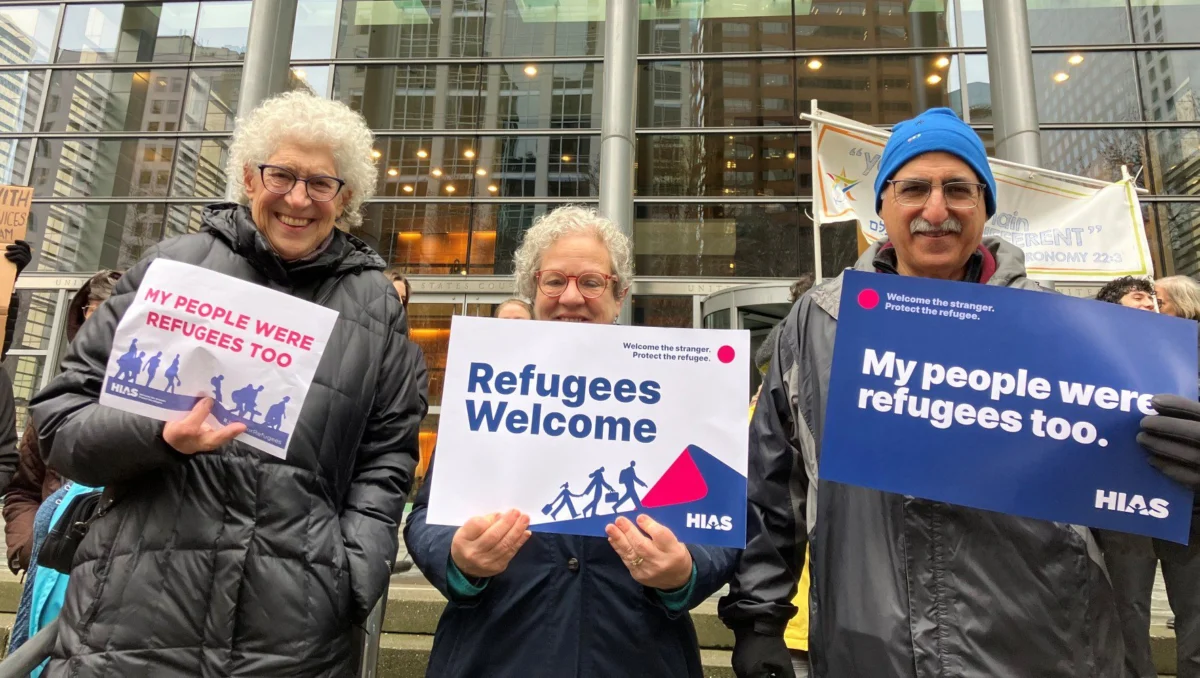
In a powerful display of solidarity, HIAS, a global Jewish refugee and immigration agency, joined forces with 57 other faith-based organizations to submit an amicus brief in support of birthright citizenship. This diverse coalition represents a broad spectrum of religious denominations, including Catholics, Protestants, Muslims, Hindus, and Jews. Their collective brief underscores the profound moral and ethical dimensions of the birthright citizenship debate, emphasizing its importance to the spiritual and communal values of various faith traditions and immigrant groups. The amicus brief argues that the principle of jus soli aligns with fundamental tenets of hospitality, compassion, and the inherent dignity of every human being, often central to religious teachings. It highlights the potential for devastating human consequences if birthright citizenship were to be revoked, particularly for vulnerable populations.
The Stakes: A Constitutional Crossroads
The Supreme Court’s decision in Trump v. Barbara, scheduled for oral arguments on April 1, 2026, carries immense weight. The outcome will either affirm the constitutional guarantee of birthright citizenship, reinforcing a legal precedent that has shaped American society for over a century, or it will fundamentally alter the nation’s historical role as a welcoming haven for immigrants. A ruling that upholds the executive order could have immediate and far-reaching repercussions for non-citizen families residing in the United States, potentially creating a class of individuals born in the U.S. who are denied citizenship and face an uncertain legal future.
The Specter of Statelessness: A Global Perspective
The potential ramifications of revoking birthright citizenship extend beyond American borders. HIAS, with its extensive experience assisting refugees and displaced persons worldwide, has a deep understanding of the devastating consequences of statelessness. Stateless individuals, numbering approximately 4.4 million globally according to UNHCR, are denied essential rights and protections, including access to education, healthcare, employment, and legal documentation. They often exist in a precarious legal limbo, lacking a nationality and facing systemic discrimination. The erosion of birthright citizenship in the U.S. could exacerbate this global crisis, creating a new population of individuals vulnerable to statelessness and all its attendant hardships. Countries lacking birthright citizenship often rely on jus sanguinis, which can leave children born abroad or to parents with uncertain legal status in a precarious position.
Broader Implications for American Society
The debate over birthright citizenship is not merely a legalistic argument; it is a reflection of America’s evolving identity and its commitment to the principles of equality and inclusion. Historically, the nation has benefited immensely from the contributions of immigrants who, upon birth within its borders, became integral members of society. The ability to build a life, raise a family, and contribute to the nation’s economic and cultural fabric has been facilitated by the certainty of citizenship. The reversal of this principle could undermine social cohesion, create intergenerational uncertainty, and diminish the nation’s allure as a land of opportunity. It could also foster division and discrimination against specific communities, particularly those whose immigration status is frequently targeted.
Analyzing the Legal Arguments
The core of the legal challenge lies in the interpretation of the phrase "subject to the jurisdiction thereof" within the 14th Amendment. Proponents of birthright citizenship argue that this phrase was intended to be broad, encompassing all individuals born within U.S. territory. They point to the historical context of the amendment’s passage, emphasizing its role in ensuring citizenship for all born in the U.S., regardless of race or previous condition of servitude.
Conversely, the Trump administration’s legal argument, if formalized and presented to the court, would likely hinge on a narrower interpretation, suggesting that children born to parents who are not legally present in the U.S. are not fully "subject to the jurisdiction" of the United States. This interpretation, however, is not supported by established legal precedent and has been widely contested by constitutional scholars. The Supreme Court’s previous rulings, particularly United States v. Wong Kim Ark (1898), have consistently upheld the principle of birthright citizenship for individuals born in the U.S., even if their parents were not citizens. This landmark case affirmed that individuals born on American soil are citizens by birth, with very limited exceptions.
Reactions from Stakeholders
The impending Supreme Court hearing has generated significant commentary and reaction from various stakeholders. Civil liberties organizations, including the American Civil Liberties Union (ACLU), have been at the forefront of defending birthright citizenship, often collaborating with organizations like HIAS. Their statements have consistently emphasized the constitutional imperative and the potential for widespread harm if the executive order were to be upheld.
Immigration advocacy groups have expressed deep concern, warning of the destabilizing effects on families and communities. They have highlighted the practical challenges that could arise, such as increased fear and uncertainty among immigrant populations, potential difficulties in accessing essential services, and the creation of a permanent underclass of individuals born in the U.S. but denied citizenship.
Conversely, proponents of restricting birthright citizenship often cite concerns about national security, border control, and the perceived strain on public resources. They may argue that birthright citizenship incentivizes illegal immigration and that a change is necessary to reinforce the rule of law and national sovereignty. However, factual data on the extent to which birthright citizenship directly influences undocumented immigration patterns remains a subject of debate and analysis.
A Call to Action: Mobilizing for Defense
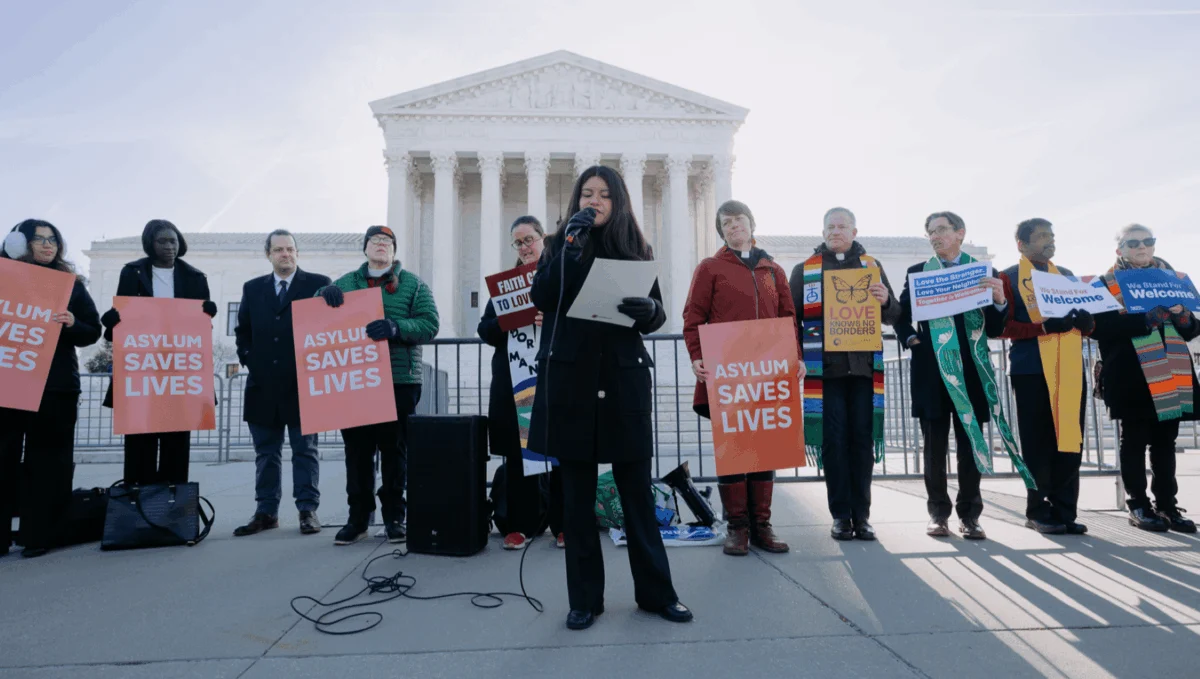
In anticipation of the Supreme Court’s proceedings, HIAS, alongside the ACLU and other partner organizations, is organizing a rally in front of the Supreme Court on April 1st at 10 a.m. This public demonstration aims to galvanize support for birthright citizenship and signal the broad opposition to the administration’s executive order. The event serves as a crucial opportunity for individuals and communities to voice their commitment to upholding this fundamental right and to advocate for an inclusive vision of American society.
The Road Ahead: Awaiting the Court’s Decision
The Supreme Court is expected to take several months to deliberate and issue its ruling in Trump v. Barbara. During this period of anticipation, organizations like HIAS are providing resources and support for individuals and communities seeking to take action and advocate for immigrant neighbors. The case represents a critical juncture in American legal and social history, and its resolution will undoubtedly resonate for generations to come, defining the contours of citizenship and belonging in the United States. The outcome will be a stark indicator of the nation’s commitment to its founding principles and its ongoing evolution as a diverse and inclusive society.