Virginia Governor Abigail Spanberger this week signed into law a landmark bill, HB167, that officially terminates state tax exemptions for several organizations with historical ties to the Confederacy, reversing a decades-old policy that had financially supported groups promoting a divisive narrative of the Civil War. This legislative action signifies a profound shift in how the Commonwealth of Virginia addresses its complex past, moving to dismantle the vestiges of state endorsement for institutions that historically upheld and romanticized the Confederacy.
The newly enacted law specifically targets a "segregation era carve-out" within Virginia’s tax code, a provision that has, since the 1950s, extended significant financial benefits to pro-Confederate groups such as the United Daughters of the Confederacy (UDC) and the Sons of Confederate Veterans. Delegate Alex Askew, who sponsored HB167, championed the bill as a necessary step towards a more equitable and historically accurate public policy, stating that ending these exemptions is part of fostering a "fairer, more inclusive tax policy that truly reflects our commitment to equality and progress." The move is part of a broader legislative package aimed at confronting the state’s historical legacy of racial injustice and its enduring symbols.
The Deep Roots of State Support: A Historical Timeline of Virginia’s Confederate Endorsement
Virginia’s extensive support for Confederate organizations is deeply intertwined with the state’s history of racial segregation and its efforts to maintain a white supremacist social order, particularly during the mid-20th century. The original tax exemptions were not merely administrative oversights but deliberate policy choices made during an era of "Massive Resistance" to federal desegregation mandates.
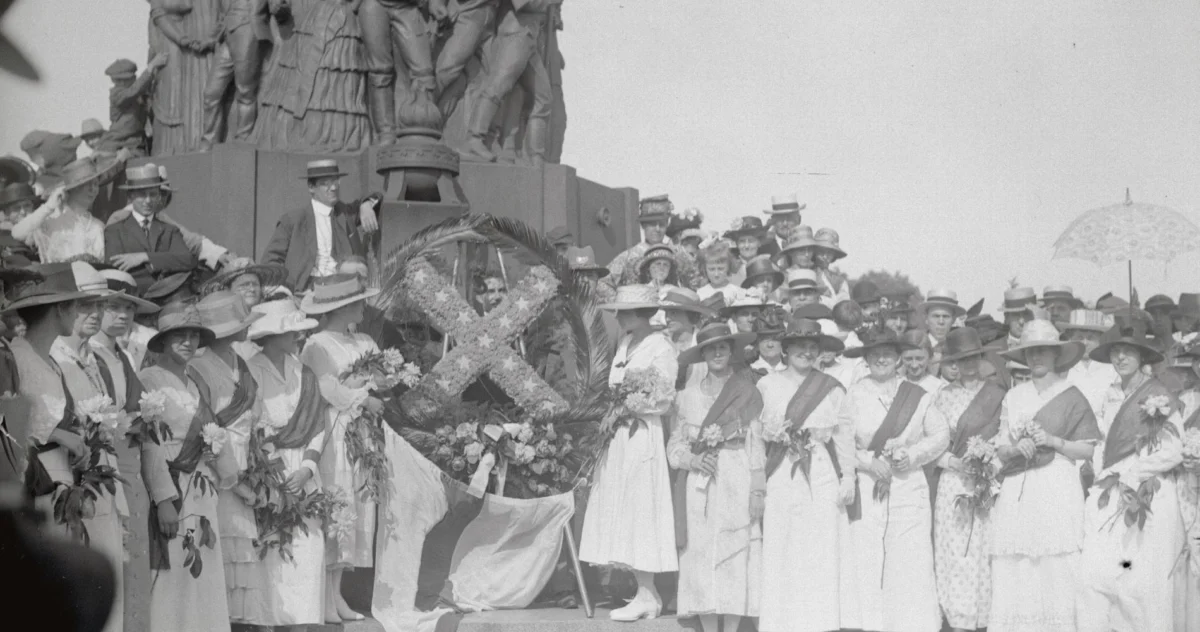
Post-Reconstruction and the Rise of the "Lost Cause": Following the Civil War and the Reconstruction era, white Southerners, including prominent groups like the United Daughters of the Confederacy (established 1894) and the Sons of Confederate Veterans (established 1896), embarked on a concerted campaign to reshape the narrative of the Confederacy. This effort, known as the "Lost Cause," sought to romanticize the Confederate cause, portraying it not as a fight to preserve slavery but as a noble defense of states’ rights and Southern honor. Key tenets of the Lost Cause included minimizing the role of slavery, glorifying Confederate generals and soldiers as heroic figures, and asserting the moral righteousness of the Confederacy. These groups were instrumental in installing hundreds of Confederate monuments and memorials across the Southern landscape, effectively creating a physical manifestation of this revisionist history. These monuments served not only as commemorative symbols but also as stark reminders of the racial hierarchy that leaders sought to re-establish and maintain.
The Era of Massive Resistance (1950s-1960s): The mid-20th century witnessed a resurgence of monument building and heightened state support for Confederate groups. This period coincided directly with the burgeoning Civil Rights Movement and federal efforts to desegregate public institutions, most notably following the Supreme Court’s landmark 1954 ruling in Brown v. Board of Education. In Virginia, "Massive Resistance" became the official policy, with state leaders actively opposing desegregation. During this critical period, state support for organizations like the UDC intensified, becoming, as WHRO reported, "part of a wave of resistance to racial integration and civil rights efforts in the commonwealth."
- 1950: Virginia Governor John S. Battle signed a deed gifting the United Daughters of the Confederacy land in Richmond. This land became the site of the UDC’s elaborate marble-clad headquarters, a property reportedly valued at approximately $4.7 million today. This act provided a tangible, high-value asset to the organization, cementing state endorsement.
- 1952: Just two years later, the Virginia General Assembly further solidified its support by explicitly exempting the UDC from the state recordation tax. This tax is typically levied when property sales are registered, and notably, the UDC’s Virginia division was the only organization singled out by name in this specific section of the state’s tax code, highlighting a unique and preferential treatment.
- Ongoing Exemptions: Beyond the recordation tax, lawmakers also provided broad tax exemptions for real and personal property owned by the Virginia Division of the UDC, the General Organization of the UDC, the Confederate Memorial Literary Society, and the Stonewall Jackson Memorial, Incorporated. These exemptions translated into substantial financial savings for these groups. For instance, The New York Times reported that the UDC saved an estimated $57,000 annually in property tax alone on its Richmond headquarters.
Virginia, holding the distinction of having more Confederate monuments than any other state in the country, became a focal point for the physical and financial perpetuation of the Lost Cause narrative. These monuments, as Delegate Askew noted, were strategically placed "to show African Americans and certain individuals, certain communities, that they were second-class citizens." The financial relief provided through these tax exemptions essentially subsidized the ongoing efforts of these groups to "glorify the Confederacy and essentially… have whitewashed the commonwealth’s history," according to Askew.
The Mechanics of the Repeal: HB167 and Its Immediate Impact
HB167 specifically targets the sections of the Virginia tax code that granted these preferential exemptions. By repealing these provisions, the new law effectively ends more than 75 years of direct state financial support for organizations dedicated to romanticizing slavery, glorifying the Confederacy, and, by extension, perpetuating the ideologies that underpinned Jim Crow segregation.
The financial impact, while not necessarily crippling to the organizations, sends a powerful message. For example, the United Daughters of the Confederacy reported approximately $2.1 million in revenue and $1.1 million in expenses in 2025. While the $57,000 annual property tax saving on their headquarters might represent a fraction of their overall finances, its removal signifies the cessation of a symbolic and tangible state subsidy. This policy change removes a form of institutional legitimization that these groups have long enjoyed, aligning Virginia’s tax policy with a more inclusive and truthful understanding of its history.
Governor Spanberger’s Broader Reform Agenda
The signing of HB167 is not an isolated incident but part of a concerted effort by Governor Spanberger’s administration to confront Virginia’s complex racial history and foster a more inclusive future. Delegate Askew hailed the signing as "a proud moment and an important step forward for Virginia," underscoring the significance of the legislative package.
In addition to HB167, Governor Spanberger also signed into law a bill that discontinues specialty license plates featuring images of Robert E. Lee and symbols of the Sons of Confederate Veterans. These license plates, for years, served as a highly visible, state-sanctioned endorsement of Confederate iconography on Virginia’s roadways. Their discontinuation represents another move to remove overt state promotion of Confederate symbols from public life.
Furthermore, the Governor sent back to the Assembly with recommendations a bill (HB1377) aimed at establishing a task force. This task force’s mandate would include recommending changes to institutions like the Virginia Military Institute (VMI) to distance them from the "Lost Cause" narrative. This initiative reflects an understanding that confronting historical revisionism requires not only legislative changes but also a critical re-evaluation of educational institutions and their historical associations. The "Lost Cause" narrative, which asserted the Civil War was not about slavery, minimized the Confederacy’s military defeat, and celebrated the South’s supposed triumph over Reconstruction, has long influenced academic and public discourse, particularly in institutions with deep historical roots in the South.
A National Reckoning: Virginia’s Path Amidst Contrasting Trends
Virginia’s proactive stance in confronting its Confederate legacy stands in notable contrast to certain actions at the federal level and highlights a broader, ongoing national debate about historical memory and public symbols.
While many states and localities have moved to remove or contextualize Confederate monuments and symbols, there have been instances where federal policy has appeared to move in a different direction. For example, reports have indicated efforts during the Trump administration to remove content related to slavery at several national parks and pressure the Smithsonian Institution to alter exhibits that, as the president reportedly stated, focused on "how bad Slavery was." These actions reflect a desire by some to minimize or sanitize difficult aspects of American history, particularly those related to slavery and racial injustice.
However, Virginia is not alone in its commitment to a more truthful historical accounting. Across the nation, other states, cities, and private museums are actively working to preserve history accurately and confront the difficult truths about the American past. This includes initiatives to rename public schools, remove monuments, and create new educational resources that provide a comprehensive and unvarnished view of history.
The ongoing challenges are evident in situations such as the lawsuit filed by Black students in the Shenandoah Valley. These students sued their school board after it reinstated the names of two schools originally christened for Confederate generals. The students argued that naming schools after figures who not only fought for slavery but also openly espoused racist beliefs was a deliberate act "to make it very clear that Black students were not welcome." This case, which remains pending, underscores the enduring impact of Confederate symbols and the continued struggle for racial equity in public institutions.
Virginia’s recent legislative actions, particularly the repeal of tax exemptions for Confederate groups, represent a significant step towards fulfilling Delegate Askew’s vision. As he succinctly put it, "It’s truthfully time to move forward… It’s about moving forward from our dark past that our commonwealth has had." By ending state financial endorsement of organizations that romanticized a past built on racial subjugation, Virginia is signaling a clear commitment to a future built on principles of equality, progress, and a more honest engagement with its history.