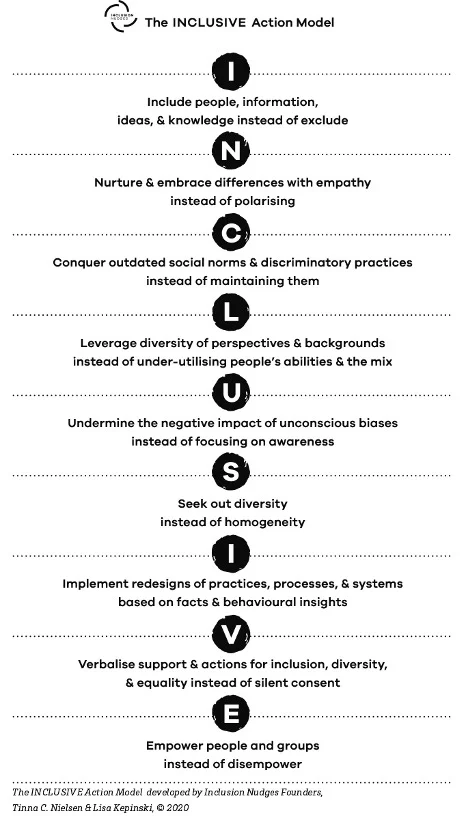
The effectiveness of diversity, equity, belonging, and inclusion (DEBI) initiatives hinges significantly on how these crucial concepts are framed and defined within organizations and broader society. A recent analysis highlights that the outcomes of DEBI efforts are profoundly impacted by the underlying definitions applied, revealing that ambiguous or poorly articulated terms can inadvertently create barriers to progress and engagement. The "Inclusion Nudges" change approach, for instance, advocates for a precise, action-oriented understanding of these terms, arguing that such clarity is essential for dismantling obstacles and mobilizing individuals to embed inclusion as a fundamental norm.
The Peril of Ambiguous Terminology: Triggering Resistance
When terms like "diversity," "equity," and "inclusion" are introduced in organizational contexts, they often elicit a range of reactions, from genuine curiosity to dismissive indifference or even outright skepticism. Without a shared, robust understanding, these words can trigger unhelpful associations, memories, and mental constructs. Decades of observation in the field reveal recurring patterns of resistance and misunderstanding:
- "Not My Issue": Many individuals perceive diversity as solely pertinent to minority groups, thereby externalizing responsibility and failing to see their own role or benefit.
- "It’s Your Problem": This reaction manifests in two primary forms. Some from majority groups may feel unfairly targeted or blamed, perceiving DEBI as an imposition, while others from minority groups may feel burdened with the sole responsibility for "fixing" issues they experience, rather than seeing it as a collective organizational challenge.
- "Not My Day Job": A common sentiment is that DEBI is a specialized function, detached from core business responsibilities, leading to a lack of personal investment and engagement.
- "Attracting Diversity Talent": While well-intentioned, this phrase often narrowly defines "diversity" as solely referring to women or racial minorities, overlooking the broader spectrum of human differences and potentially leading to tokenism.
- "Excluding Others": The perception that promoting women and minorities inherently means disadvantaging or "excluding" white men highlights a deep-seated fear of a zero-sum game, where gains for one group necessitate losses for another.
These reactions underscore a critical flaw in traditional DEBI approaches: they often inadvertently establish "hidden trip wires" that impede progress.
Psychological Barriers to Engagement
The underlying understandings and perceptions behind these reactions are not arbitrary; they are deeply rooted in human psychology and the historical positioning of DEBI efforts. For many years, organizations have pursued DEBI strategies by setting targets for specific minority groups or women, often developing initiatives aimed at "helping" these groups or "fixing" perceived deficiencies. This approach frequently overlooks the necessity of engaging all people—both majority and minority groups—and fails to address the systemic implicit norms and organizational structures that perpetuate discriminatory practices. The result is often an emphasis on "fixing the difference" or promoting assimilation, rather than fostering a genuinely inclusive environment that values and integrates all attributes. Such framing inherently creates division, reinforcing an "us and them" dynamic that actively works against the core intentions of DEBI.
The power of language in shaping perceptions and behaviors is well-documented by science. Words, through phenomena like the priming effect, can unconsciously influence thoughts and actions. For example, studies have shown that exposure to words associated with stereotypes (e.g., "elderly" words like "wrinkle" or "forgetful") can subtly alter behavior, such as making participants walk slower. Similarly, attempts to counteract stereotypes, such as stating "girls are as good as boys at math," can sometimes backfire by inadvertently reinforcing the very stereotype they aim to dismantle.
Beyond cognitive influence, words also trigger powerful emotions, which are significant drivers of unconscious thinking, decision-making, and behavior. This emotional dimension is particularly impactful in DEBI work:
- Fear of Loss (Loss Aversion): If diversity is perceived as a zero-sum game—one group’s gain is another’s loss—then calls for equity can trigger loss-aversion bias. Individuals may resist change, fearing a reduction in their own power, privilege, or status, and consequently fight to maintain the status quo. Research consistently demonstrates that people are more motivated to avoid losses than to acquire equivalent gains.
- Strengthening Tribalism (In-group/Out-group Bias): Language that inadvertently highlights group differences can activate innate tribal mentalities and the fear of the "unknown." This can lead to unconscious, irrational anxieties when interacting with "out-group" members, resulting in the unintentional exclusion of their knowledge and perspectives. Conversely, "in-group" members are often trusted more readily, and their contributions processed with greater openness, reinforcing existing biases.
- Shame and Blame: A pervasive, often unspoken, emotional barrier in DEBI work is shame. Individuals may feel shame when confronted with language that implies past discrimination (even if unintentional) or when acknowledging their own privilege in the face of inequality. This can lead to defensive behaviors, including unconscious micro-aggressions against those perceived to be instigating these feelings, further stalling change.
These psychological reactions underscore how critical it is to thoughtfully craft the language and definitions used in DEBI initiatives. Left unaddressed, these linguistic tripwires can undermine even the most well-intentioned efforts, creating an "absurd reality" where progress remains elusive.
The Absence of Guiding Stars: The Need for Clear Definitions
Despite the widespread use of terms like "diversity," "equity," "belonging," and "inclusion," their formal definitions are surprisingly rare in many organizational settings. This absence leaves individuals to construct their own interpretations based on personal lived experiences, social constructs, and varying levels of knowledge. The unspoken assumption that everyone shares a common frame of reference is a significant impediment. For one person, "diversity" might exclusively mean "women"; for another, "inclusion" might equate to merely organizing "diversity networks"; and "equity" might be reduced to "minority hiring targets." While these interpretations may capture facets of the concepts, they fall far short of their full scope. Without a common framework, expecting aligned actions and behaviors becomes an "absurd reality," leading to fragmented efforts and stalled progress.
This challenge highlights the necessity for clear, articulated definitions that serve as "guiding stars" for change makers and organizational leaders. For instance, the founders of the Inclusion Nudges global initiative offer a set of definitions designed to foster a universally shared understanding and drive concrete action:
- Diversity: The Mix of All of Us. This definition emphasizes that diversity encompasses all people, recognizing demographic differences, multiple identities, unique experiences, perspectives, knowledge, abilities, and ideas. It explicitly rejects the narrow view of diversity as referring only to "the minority" but embraces the full spectrum of human difference.
- Equity: The Fairness Frame for the Mix. Equity is defined as ensuring fair access to opportunities and treatment for all, actively eliminating discriminatory practices, systems, laws, policies, social norms, and cultural traditions. It involves balancing power imbalances, correcting existing inequalities, and addressing behavioral patterns that perpetuate unfairness. Equity aims for fairness to all, potentially with legal mandates attached in certain contexts.
- Belonging: I Feel Valued as a Part of the Mix. Belonging focuses on the individual’s experience within an environment, where they feel welcomed, supported by fair structures, and able to be their full, authentic self without fear of having to "cover" or downplay personal traits. It arises when equitable and inclusive practices lead to people feeling seen, heard, safe, and valued—the natural outcome when diversity, equity, and inclusion are effectively implemented.
- Inclusion: Welcoming and Applying the Mix. Inclusion centers on fostering the structures, systems, processes, culture, behaviors, and mindsets that embrace and respect all people and their diversity. It means actively seeking out diverse perspectives, challenging exclusionary norms and stereotypes, being open to others, and speaking up. Inclusion ensures that all individuals are valued, can participate fully, and contribute their best, effectively "welcoming and applying the mix of all of us."
Translating Definitions into Action: The Inclusion Nudges Approach
While articulating these definitions is a crucial first step, a purely rational understanding is insufficient to drive inclusive behavior. Conscious understanding (System 2 thinking) acts as a guide, but it is not the primary driver of everyday actions, which are often governed by unconscious processes (System 1 thinking). This is why merely communicating definitions, however well-crafted, is often ineffective. The true challenge lies in translating these intellectual concepts into deeply embedded, inclusive actions and behaviors.
The Inclusion Nudges approach proposes a more impactful strategy: inclusive definitions of inclusive actions. Instead of solely focusing on words, the emphasis shifts to engaging "the people it’s about" in identifying concrete, observable actions and behaviors that they perceive as inclusive, inviting, respectful, empathetic, and that make them feel included, belonging, valued, growing, and empowered.
This participatory approach yields several significant benefits:
- Contextually Relevant Definitions: The resulting definitions are tailored to the specific group or organization, ensuring they resonate with the lived experiences of its members.
- Immediate Onboarding and Ownership: By involving individuals in the development process, they become active co-creators of the change initiative, fostering a sense of ownership and commitment from the outset.
- Leveraging Internal Diversity: The process itself embodies inclusion, drawing on the diverse perspectives within the group to build a robust and widely accepted framework.
Once these inclusive behaviors are identified, the next step is to make them widely visible and actionable. Rather than compiling them into complex documents or spreadsheets that gather dust, the recommendation is to:
- Showcase Real-Life Examples: Share diverse, practical examples and personal stories through communication materials.
- Physical Visibility: Display these examples prominently on walls in factories, offices, meeting rooms, and public spaces to illustrate the manifold ways inclusion manifests. Crucially, the advice is to not explicitly use the word "inclusion" on these displays, but rather let the actions speak for themselves.
- Focused Communication: In internal communications, share one example at a time, emphasizing that these actions are performed by "peers and similar others." If data is available, highlight that a majority of colleagues are already engaging in specific inclusive behaviors (e.g., "8 out of 10 of your colleagues are doing XX"), leveraging social proof to encourage wider adoption.
Achieving Inclusion Without Talking About Inclusion
Ultimately, the goal is to embed a shared understanding of inclusion, diversity, belonging, and equity so deeply that it becomes an intrinsic part of organizational culture, without the need for constant explicit articulation. While formal definitions may be necessary for strategies, KPIs, and official documents, the risk of "buzzword fatigue" must be managed.
The Inclusion Nudges approach addresses this by shifting perception from the word itself to the action. It encourages framing DEBI not as a separate initiative, but as "how work gets done here" or "how people experience being in the group." Challenging oneself to reference desired outcomes instead of the DEBI terms directly can be powerful—for example, saying "we need the thinking from everyone for new solutions" instead of "we need more diversity," or "we need our systems designed to enable our most objective decision-making" instead of "we need equity." This approach creates resource-oriented perceptions with positive associations, making inclusive behaviors and cultures the norm rather than an isolated program.
Broader Implications and the Path Forward
The meticulous framing and definition of DEBI concepts are not merely semantic exercises; they are strategic imperatives for organizational success and societal well-being. Research consistently demonstrates a strong correlation between robust DEBI practices and enhanced business outcomes. Companies with diverse leadership teams, for instance, are significantly more likely to outperform their peers in profitability. Diverse teams are also known to be more innovative, agile, and better equipped to understand and serve diverse customer bases. Conversely, organizations where DEBI is poorly defined or implemented often face challenges with employee engagement, retention, and reputation.
The historical evolution of DEBI discourse, from early affirmative action programs to contemporary emphasis on belonging and psychological safety, underscores a continuous learning curve. The persistent challenge has been translating policy and good intentions into widespread behavioral change. The Inclusion Nudges framework provides a practical methodology for overcoming this, by leveraging insights from behavioral science to nudge individuals towards inclusive actions.
By fostering a common framework aligned with desired outcomes, organizations can move beyond mere compliance or performative gestures towards genuine cultural transformation. This paradigm shift requires leadership commitment, sustained effort, and a willingness to critically examine and refine the language used to discuss these vital topics. The ultimate vision is a world where inclusion is not an aspiration or an initiative, but the default mode of operation—everywhere, for everyone. This requires a collective movement, grounded in shared understanding and propelled by concrete, intentional action.