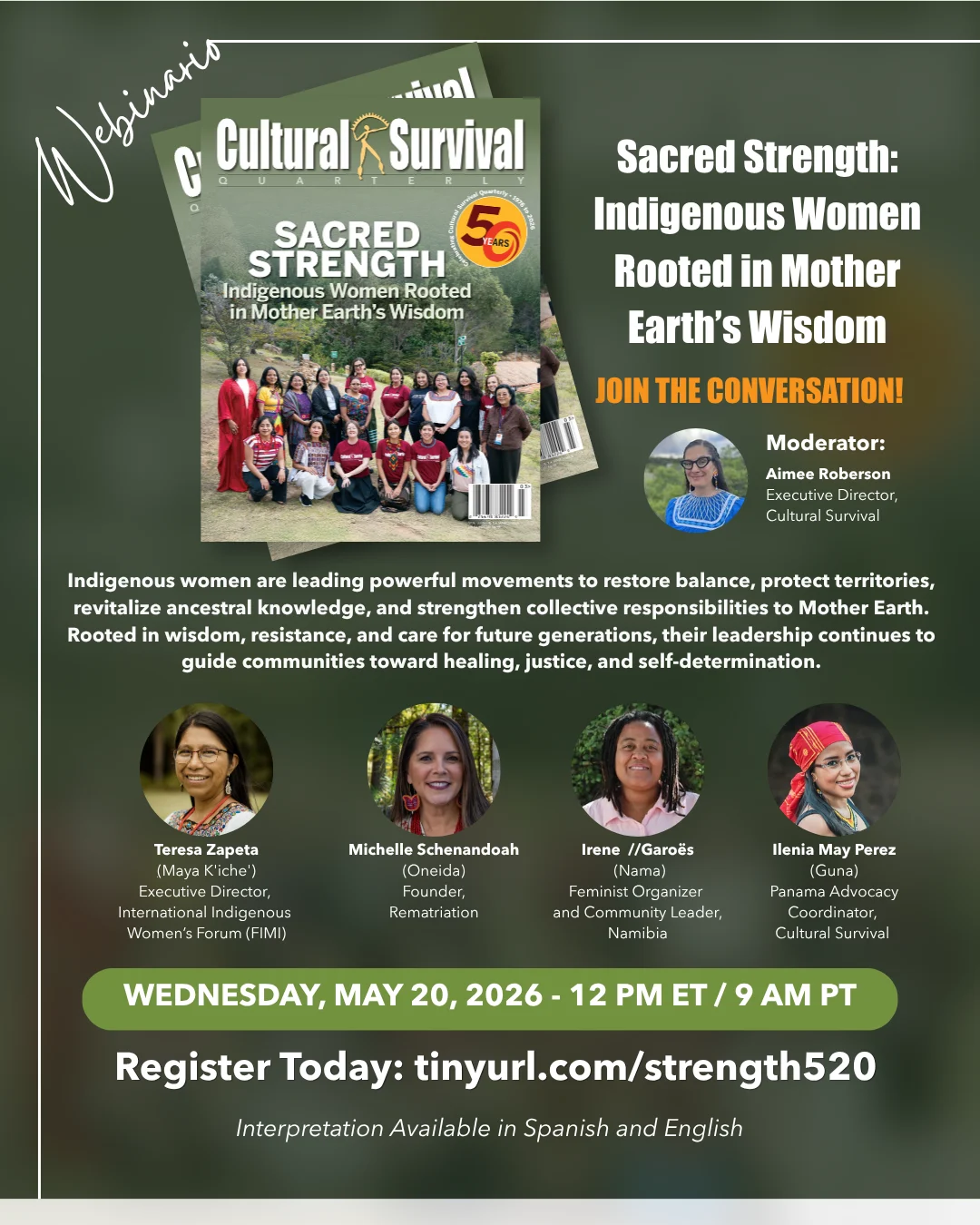
Cultural Survival is scheduled to host a pivotal webinar on Wednesday, May 20, 2026, at 10:58 AM Eastern Standard Time. This event, detailed in a recent announcement from the organization, promises to delve into the critical themes of Indigenous resilience and the ongoing pursuit of self-determination. While specific details regarding the webinar’s speakers and precise agenda remain forthcoming, the timing and thematic focus underscore Cultural Survival’s enduring commitment to amplifying Indigenous voices and advocating for their rights on a global scale.
Background: The Crucial Role of Cultural Survival
Founded in 1972, Cultural Survival has established itself as a leading international non-governmental organization dedicated to defending the rights of Indigenous Peoples worldwide. For over five decades, the organization has worked tirelessly to support Indigenous communities in their efforts to maintain their cultures, languages, spiritual traditions, and political autonomy. Their mission is rooted in the belief that Indigenous Peoples possess inherent rights, including the right to self-determination, which encompasses the freedom to govern their own affairs, control their lands and resources, and preserve their unique ways of life.
The organization’s approach is multifaceted, encompassing advocacy, grant-making, research, and public education. Cultural Survival actively engages with international bodies, national governments, and local communities to promote policies that respect Indigenous rights and foster sustainable development that is in harmony with Indigenous worldviews. Their vision is one where Indigenous Peoples thrive, their cultures are celebrated and preserved, and their governance structures are recognized and empowered. This upcoming webinar is a direct manifestation of this vision, aiming to foster dialogue and share knowledge on pressing issues facing Indigenous communities today.
Thematic Significance: Resilience and Self-Determination in the 21st Century
The chosen themes of resilience and self-determination are particularly pertinent in the contemporary global context. Indigenous Peoples continue to face multifaceted challenges, including land dispossession, environmental degradation, cultural assimilation, political marginalization, and violence. Despite these adversities, Indigenous communities have consistently demonstrated remarkable resilience, adapting and innovating while holding steadfast to their cultural identities and ancestral lands.
Self-determination, a cornerstone of Indigenous rights, is not merely a political aspiration but a fundamental prerequisite for the survival and flourishing of Indigenous cultures and societies. It empowers Indigenous Peoples to make decisions about their own futures, manage their territories sustainably, and ensure that development projects align with their values and needs, rather than being imposed upon them. In recent years, there has been a growing recognition of Indigenous self-determination in international law, notably through the United Nations Declaration on the Rights of Indigenous Peoples (UNDRIP), adopted in 2007. However, the implementation of UNDRIP and the practical realization of self-determination remain significant challenges in many parts of the world.
This webinar will likely explore how Indigenous communities are actively exercising and asserting their right to self-determination through various means, such as establishing Indigenous governance structures, engaging in customary law, advocating for land rights, developing sustainable economic initiatives, and preserving their languages and traditional knowledge. The concept of resilience, in this context, refers not just to the ability to withstand hardship, but also to the proactive capacity of Indigenous Peoples to adapt, innovate, and thrive in the face of ongoing colonial legacies and contemporary threats.

Potential Webinar Content and Data
While the specific speakers and detailed agenda are yet to be released, it is reasonable to anticipate that the webinar will draw upon a wealth of evidence and case studies illustrating Indigenous resilience and the pursuit of self-determination. This could include:
- Case Studies of Indigenous Governance: Presentations on successful Indigenous-led governance models, such as those found in parts of Canada, Australia, or Latin America, highlighting how these structures empower communities and protect their rights. Data on the effectiveness of these governance models in areas like resource management, education, and cultural preservation could be presented.
- Land Rights and Territorial Defense: Discussions on the ongoing struggles for land rights and the legal and political strategies employed by Indigenous communities to protect their territories from extractive industries, agricultural expansion, and other threats. Statistics on land restitution successes or ongoing land disputes could be shared.
- Cultural Revitalization Efforts: Insights into Indigenous-led initiatives aimed at reviving and strengthening languages, traditional knowledge systems, and cultural practices. This might involve data on language immersion programs, the transmission of traditional ecological knowledge, or the impact of cultural tourism on community well-being.
- Indigenous Environmental Stewardship: Exploration of the vital role Indigenous Peoples play in environmental conservation and climate change mitigation. Evidence of Indigenous protected areas’ effectiveness in biodiversity preservation and their contributions to sustainable resource management could be featured. For instance, data from organizations like the World Wildlife Fund (WWF) or the United Nations Environment Programme (UNEP) often highlight the crucial role of Indigenous territories in global conservation efforts.
- Economic Self-Determination: Examples of Indigenous entrepreneurship, cooperative models, and community-based economic development projects that prioritize cultural values and environmental sustainability. This could include data on the economic impact of Indigenous businesses or the success of community-owned enterprises.
- Impact of Global Policies: An analysis of how international policies, such as those related to climate change, biodiversity, or development aid, either support or hinder Indigenous self-determination. This might involve discussions on the successes and failures of UNDRIP implementation.
Chronology of Cultural Survival’s Engagement
Cultural Survival’s commitment to these issues is not new; it is a consistent thread woven throughout its history. The organization’s work can be broadly contextualized within several key periods:
- Early Years (1970s-1980s): Focus on documenting and raising awareness about the human rights abuses and cultural erosion faced by Indigenous Peoples globally. This era saw the establishment of the Cultural Survival Quarterly, a vital platform for sharing information and analysis.
- Advocacy and Empowerment (1990s-2000s): Increased engagement with international forums, including the United Nations, to advocate for Indigenous rights. The organization provided critical support for the development of the UN Declaration on the Rights of Indigenous Peoples.
- Global Support and Programmatic Growth (2010s-Present): Expansion of grant-making programs to directly support Indigenous-led initiatives. Increased focus on issues such as Indigenous media, environmental justice, and women’s leadership within Indigenous communities. The development of digital platforms and webinars represents a modern approach to extending their reach and impact.
This upcoming webinar on May 20, 2026, therefore, stands as a continuation of this long-standing tradition, leveraging contemporary communication tools to foster dialogue and action.
Broader Impact and Implications
The webinar hosted by Cultural Survival has the potential to significantly impact various stakeholders:
- Indigenous Communities: It offers a platform for Indigenous leaders and activists to share their experiences, strategies, and challenges directly with a global audience, fostering solidarity and potential partnerships. It can also serve as a source of inspiration and practical knowledge for communities seeking to strengthen their resilience and assert their self-determination.
- Policymakers and Governments: The event can provide valuable insights for policymakers and government officials on the realities faced by Indigenous Peoples and the importance of respecting their rights. It can inform the development and implementation of more effective and rights-based policies.
- Researchers and Academics: The webinar can present new data, case studies, and theoretical frameworks related to Indigenous resilience and self-determination, contributing to academic discourse and future research.
- The General Public: By raising awareness and providing accessible information, the webinar can educate the broader public about the diverse cultures, rights, and contributions of Indigenous Peoples, fostering greater understanding, respect, and support.
Official Responses and Future Outlook
While no specific official responses from governmental or intergovernmental bodies have been directly tied to this particular webinar announcement, the broader work of Cultural Survival consistently elicits attention and engagement from these sectors. Organizations like the UN Permanent Forum on Indigenous Issues, national human rights commissions, and various government departments responsible for Indigenous affairs often interact with and are influenced by the advocacy and research disseminated by Cultural Survival.
The upcoming webinar is likely to reinforce the ongoing global conversation surrounding Indigenous rights. The growing body of evidence demonstrating the effectiveness of Indigenous governance and environmental stewardship, coupled with the increasing global awareness of climate change and social justice issues, suggests a continued and perhaps accelerated focus on Indigenous self-determination. Cultural Survival’s commitment to providing platforms for these crucial discussions ensures that the voices and aspirations of Indigenous Peoples remain at the forefront of these critical dialogues. The organization’s sustained efforts, including this upcoming webinar, are instrumental in advancing the vision of a future that truly respects and honors the inherent rights and dynamic cultures of Indigenous Peoples worldwide.