The Trump administration is injecting a significant financial boost into special education services, announcing an additional $144 million in funding to support students with disabilities nationwide. This substantial allocation, drawn from non-expiring funds previously returned to the U.S. Department of Education, aims to bolster programs under the Individuals with Disabilities Education Act (IDEA). Notably, this initiative includes a groundbreaking expansion that permits the use of IDEA Part C funds to engage with expectant parents of infants with disabilities, potentially facilitating support even before a child’s birth.
The U.S. Department of Education revealed this week that the $144 million will be distributed to state and local governments, earmarked for existing IDEA programs. This infusion of resources comes at a critical juncture, as advocates have long highlighted the persistent gap between rising numbers of eligible children and stagnant funding levels. The funds are scheduled for distribution via formula grants on July 1 and October 1, providing a timely injection of capital for essential educational and early intervention services.
Reallocating Returned Funds for Enhanced Support
An official from the Education Department, speaking to Disability Scoop, explained that the investment comprises "non-expiring funds that have been returned to the agency in recent years." While the department did not elaborate on the specific reasons for these funds being returned, their re-prioritization for special education services underscores a commitment to addressing identified needs within the existing federal framework. This strategic reallocation bypasses the typical legislative appropriations process for new funds, offering a more immediate pathway to increased support.
The distributed funds are segmented to address different age groups and service needs within IDEA. Approximately $123.6 million will be directed toward IDEA Part B, which serves individuals from ages 3 to 21. This segment of IDEA is crucial for providing a comprehensive range of special education and related services to school-aged children. The remaining $20.5 million will be allocated to IDEA Part C, the early intervention program designed to provide crucial support for infants and toddlers from birth up to age 2.
Expanding the Reach of Early Intervention: A Proactive Approach
A significant development accompanying this funding announcement is the introduction of a new flexibility for states under IDEA Part C. For the first time, states can now elect to utilize these early intervention funds to conduct "child find, public awareness, and referral activities" specifically targeting expectant parents of infants who may have disabilities. This proactive measure, made possible by a provision within a federal spending law enacted earlier this year, represents a paradigm shift in how early intervention services are conceptualized and delivered.
The Education Department has provided detailed guidance to states on how to implement this new option. A seven-page document outlines the parameters and examples of how this flexibility can be leveraged. The guidance illustrates a scenario where an expectant mother, upon learning through genetic testing that her child will be born with a condition like Down Syndrome and thus eligible for Part C services post-birth, can be proactively engaged. In such a case, a state opting to use this flexibility could work with the mother to ensure she understands the Part C system, refer her to necessary resources, and initiate the process for establishing an Individualized Family Services Plan (IFSP) within 45 days of the child’s birth.
Implications of Proactive Engagement
This forward-thinking approach is poised to have a profound impact on the lives of children with disabilities and their families. By identifying potential needs and initiating support networks before birth, the goal is to ensure that these children can access critical early intervention services as soon as they are born. Early intervention is widely recognized as a cornerstone of positive developmental outcomes for children with disabilities, offering therapies and support that can significantly mitigate developmental delays and enhance overall well-being.
The implications of this expanded reach are multifaceted. For families, it means a potential reduction in the anxiety and uncertainty often associated with a prenatal diagnosis of a disability. They can be empowered with information and connected to resources during a critical period, fostering a sense of preparedness and agency. For service providers, it allows for more efficient and effective planning, ensuring that resources are available and tailored to the specific needs of newly identified infants. This could lead to smoother transitions into early intervention programs and a more seamless start to a child’s developmental journey.
Voices from the Field: Need for Continued Investment
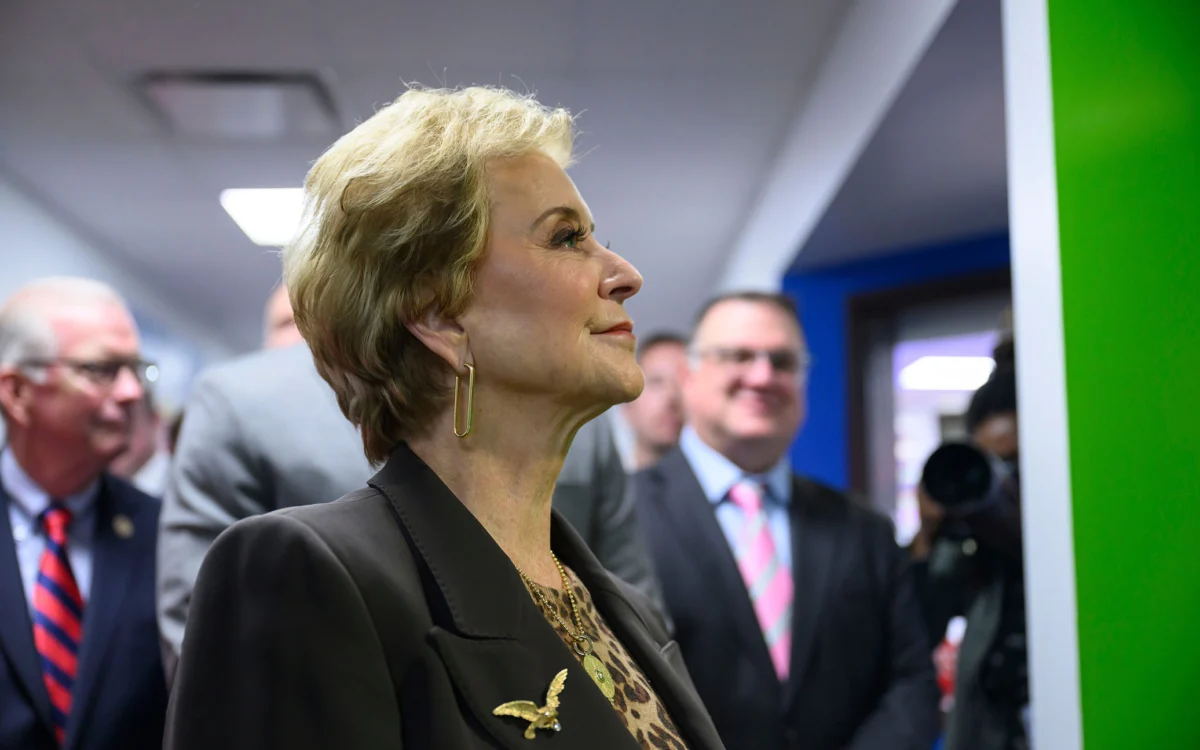
The announcement has been met with cautious optimism from organizations representing special education professionals and advocates. Secretary of Education Linda McMahon hailed the investment as "a substantial expansion of resources for students with disabilities and their families," emphasizing the administration’s commitment to this vulnerable population.
Chad Rummel, executive director of the Council for Exceptional Children, acknowledged the significance of the funding increase, stating that "the influx of funds is needed." He further elaborated, "As the number of eligible children under IDEA continues to rise and funding remains stagnant, I am pleased to see that additional funds for IDEA will be distributed by the U.S. Department of Education."
However, Rummel also underscored the ongoing need for sustained and increased federal commitment. "It is my hope that Congress will build on this momentum and provide increased funding for all parts of IDEA in fiscal year 2027, ensuring all IDEA programs are well supported," he urged, highlighting the persistent challenge of ensuring adequate funding across all facets of the program.
Background and Context: The Evolution of IDEA
The Individuals with Disabilities Education Act (IDEA) is a landmark federal law that ensures children with disabilities have access to free appropriate public education. First enacted in 1975 as the Education for All Handicapped Children Act, it has undergone several reauthorizations, most recently in 2004. The law mandates that schools identify, evaluate, and provide necessary special education and related services to eligible children with disabilities.
IDEA is divided into several parts, with Part B covering services for children aged 3-21, and Part C focusing on early intervention services for infants and toddlers from birth to age 2. The funding for these programs is a combination of federal, state, and local contributions. Historically, federal funding has often fallen short of the 40% target established by Congress for IDEA, leading to a reliance on state and local resources, which can vary significantly in their capacity.
The inclusion of expectant parents under Part C represents an evolution in the application of IDEA principles. Previously, Part C services primarily commenced after a child’s birth, based on a formal diagnosis or identification of a developmental delay. The new provision allows for a more holistic and preventative approach, recognizing that early identification and preparation can be instrumental in optimizing a child’s developmental trajectory from the outset. This shift aligns with growing research emphasizing the critical importance of the first few years of life for brain development and the long-term impact of early interventions.
Broader Implications and Future Outlook
The $144 million allocation, while substantial, is a component of the broader ongoing conversation surrounding special education funding. Advocates and policymakers continually grapple with ensuring that IDEA is fully funded to meet the needs of all eligible students. The Trump administration’s move to reallocate returned funds demonstrates a willingness to leverage existing resources to address immediate needs.
The expanded use of Part C funds for expectant parents is a particularly noteworthy development. Its success will likely be measured by increased early identification rates, improved access to early intervention services, and ultimately, enhanced developmental outcomes for children with disabilities. This initiative could serve as a model for other federal programs that aim to support vulnerable populations by emphasizing early engagement and preventative measures.
Looking ahead, the call for increased congressional appropriations for all parts of IDEA, as voiced by the Council for Exceptional Children, remains a critical objective. The current funding is a step forward, but the long-term goal is to ensure a sustainable and robust funding stream that fully supports the intent and requirements of IDEA, thereby empowering every child with a disability to reach their full potential. The success of this new proactive approach to early intervention will undoubtedly be a key factor in shaping future policy discussions and funding priorities for special education and early childhood development.