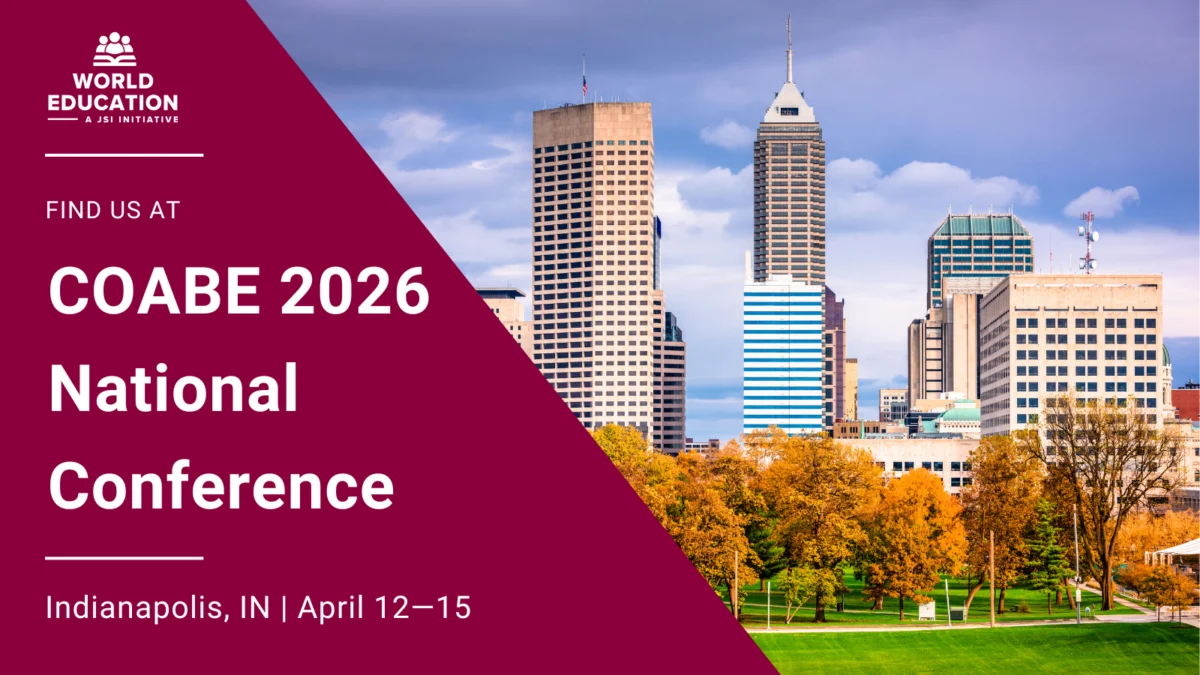
World Education, a prominent initiative of JSI Research & Training Institute, Inc., has announced its comprehensive participation in the Coalition on Adult Basic Education (COABE) 2026 National Conference, scheduled to take place in Indianapolis, Indiana, from April 12 to April 15. As the landscape of adult education undergoes a rapid transformation driven by technological advancement and shifting workforce demands, World Education’s presence at this premier event underscores its commitment to bridging the digital divide and enhancing professional development for educators nationwide. The organization’s delegation of experts is set to present a diverse array of sessions focusing on the integration of generative artificial intelligence (AI), the implementation of digital literacy frameworks, and the scaling of research-based instructional tools.
The COABE National Conference serves as the largest gathering of adult education professionals in the United States, typically attracting thousands of practitioners, administrators, and policymakers. The 2026 iteration in Indianapolis arrives at a critical juncture for the field, as federal investments through the Digital Equity Act and the Workforce Innovation and Opportunity Act (WIOA) continue to prioritize the modernization of adult learning systems. World Education’s involvement is designed to translate these high-level policy goals into actionable classroom strategies and institutional practices.
A Strategic Response to the National Digital Skills Gap
The urgency of World Education’s mission is supported by recent labor market data indicating that approximately 92 percent of jobs across all industries now require some level of digital skill. However, a significant portion of the adult population remains under-equipped to navigate the complexities of a digital-first economy. According to data from the National Skills Coalition, nearly one-third of American workers have limited or no digital skills, a disparity that disproportionately affects low-income communities and individuals with limited formal education.
To address these challenges, World Education has curated a series of presentations for COABE 2026 that focus on scalable solutions. By leveraging its decades of experience in applied research and program design, the organization aims to provide educators with the tools necessary to foster "digital resilience"—the ability to navigate new technologies and solve problems in a digital environment.
Chronological Overview of Technical Sessions and Presentations
The four-day conference will feature an intensive schedule of workshops led by World Education’s senior technical advisors and project directors. These sessions are structured to provide both in-person and virtual attendees with evidence-based methodologies for improving adult learner outcomes.
Monday, April 13: Frameworks and Policy Implementation
The first full day of programming begins with a focus on foundational digital skills. At 8:00 AM, Jeff Goumas will lead a session in the JW Grand Ballroom 2 titled "Using BRIDGES Skills Checklists to Drive Digital Skills Development in Any Context." This session will introduce the BRIDGES framework, a tool designed to help educators assess and track the acquisition of digital competencies across various learning environments. By utilizing standardized checklists, instructors can ensure that learners are not only using technology but mastering the specific sub-skills required for workplace success.
Later that morning, Sandy Goodman and Catalina González will present "From Policy to Practice: Implementation Lessons from Boston’s Digital Literacy Initiative." This session, held at 11:50 AM, offers a case study of municipal-level intervention. Boston has long been a testing ground for innovative digital equity programs, and the presenters will share data-driven insights into how local policies can be effectively translated into classroom realities.
The afternoon of April 13 will conclude with a deep dive into the CREATE Network. From 3:50 PM to 5:00 PM in Room 205, Jen Vanek and Jeff Goumas, alongside partners from the American Institutes for Research (AIR), will present "Practical Solutions from Research: Digital Tools to Support Teaching and Learning from the CREATE Network." This in-person-only session will highlight findings from the National Center for Research on Adult Education for Instruction in Technology-Enhanced Environments, emphasizing how research-based tools can be seamlessly integrated into adult education curricula.
Tuesday, April 14: The Intersection of AI and Adult Literacy
The second day of the conference shifts focus toward the emerging role of artificial intelligence in education. Rachel Riggs, a leading voice in educational technology at World Education, will open the day at 8:00 AM with "Aligning AI Literacy with Learning and Work Goals in Adult Ed." This session addresses the growing "AI divide," arguing that if adult learners are not introduced to AI concepts, they risk further marginalization in a workforce increasingly reliant on automated systems.
At 11:50 AM, the focus moves to open-source curriculum development. Jen Vanek and Jeff Goumas will join Stephen Sireci from the University of Massachusetts Amherst to present "Free and Open Online Literacy Curriculum: Leveraging SkillBlox and ASAP for Adult Readers." This presentation will showcase how digital platforms like SkillBlox can aggregate high-quality, free resources to create customized learning pathways for adult readers.
The afternoon will feature two concurrent sessions at 2:00 PM. In Room 206, Vanek and Goumas will join researchers from AIR to present "Practitioner-Friendly Findings: How to Leverage Free Research-based Resources to Teach In-Demand Skills." Simultaneously, in JW Grand Ballroom 3, Rachel Riggs will return to the stage for "Generative AI and the EdTech Maker Space: Leveraging GenAI to Fill Learning Resource Gaps." This session is particularly relevant for instructors facing a shortage of materials tailored to adult learners; Riggs will demonstrate how AI can assist in the rapid creation of accessible and relevant educational content.
Wednesday, April 15: Professional Development and Instructional Strategy
The final day of the conference emphasizes the "train-the-trainer" model, ensuring that the innovations discussed earlier can be sustained within educational institutions. At 11:50 AM, Dani Scherer will present "Maximum Impact Professional Development: A Three-Pronged Approach" in Room 209. This session explores how professional development can be structured to move beyond one-off workshops toward a more holistic model of continuous improvement.
In the afternoon, Eliana Stanislawski will lead two consecutive sessions. The first, "EdTech in Action: Structuring a Digital Literacy Learning Series for Adult Educators" at 1:30 PM, provides a blueprint for administrators looking to build the digital capacity of their staff. The second, "Engaging Strategies for Online Instruction of Literacy-Level Adults" at 3:00 PM, tackles one of the most difficult challenges in the field: maintaining engagement and providing effective instruction to learners with the lowest levels of literacy in a virtual environment.
Broader Implications for the Adult Education Sector
The comprehensive nature of World Education’s 2026 program reflects a broader shift in the sector toward integrated, technology-forward instruction. Experts in the field suggest that the move toward digital literacy is no longer an "optional add-on" but a fundamental requirement of adult basic education.
"The sessions planned for Indianapolis represent more than just individual projects; they represent a cohesive strategy to modernize the adult education infrastructure," noted a technical observer familiar with World Education’s recent initiatives. "By combining AI literacy with traditional foundational skills, the organization is setting a standard for what 21st-century adult education should look like."
The focus on "Free and Open Online Literacy Curriculum" (OER) is particularly significant given the budget constraints often faced by community-based organizations and state-funded adult education centers. By promoting tools like SkillBlox, World Education is advocating for a more equitable distribution of high-quality educational materials, ensuring that a learner’s zip code or an institution’s funding level does not dictate the quality of their education.
The Role of Applied Research and Collaborative Partnerships
A recurring theme throughout the COABE 2026 presentations is the importance of partnership. World Education’s collaborations with the American Institutes for Research (AIR), UMass Amherst, and the JSI network demonstrate a multi-disciplinary approach to solving educational challenges. This collaborative framework is essential for conducting the type of large-scale applied research necessary to validate new instructional methods.
Furthermore, World Education’s position as a JSI initiative allows it to leverage global health and social development expertise, applying rigorous evaluation standards to educational programs. This ensures that the strategies presented at COABE are not merely theoretical but are backed by empirical evidence and successful field testing.
Conclusion and Future Outlook
As the COABE 2026 National Conference approaches, the adult education community looks toward Indianapolis as a hub for innovation. The contributions of World Education are expected to influence national conversations on how best to serve the estimated 26 million adults in the United States who lack a high school diploma or its equivalent, as well as the millions more who require upskilling to remain competitive in the labor market.
By focusing on the practical application of technology—from the foundational level of digital checklists to the cutting edge of generative AI—World Education is positioning itself as a primary driver of systemic change. For the practitioners attending these sessions, the goal is clear: to return to their respective states and organizations equipped with the knowledge and resources necessary to empower adult learners in an increasingly digital world.
World Education invites all conference attendees to engage with their presenters and explore opportunities for partnership. As the organization continues to foster enduring collaborations across sectors, its work remains a cornerstone of the effort to advance education outcomes for all, ensuring that no adult is left behind in the transition to a technology-driven future.