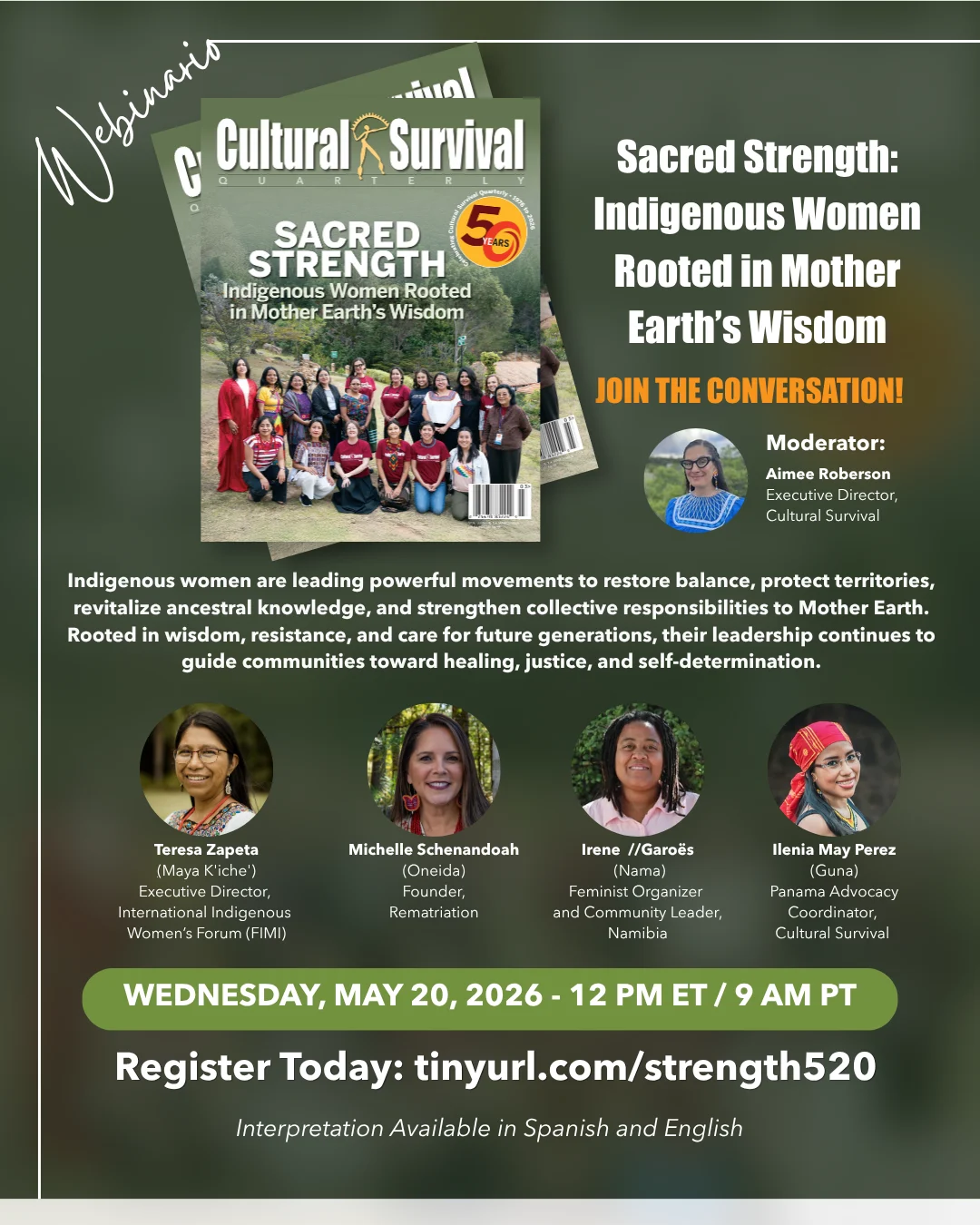
A significant webinar hosted by Cultural Survival is scheduled to take place on Wednesday, May 20, 2026, at 10:58 AM. This event aims to delve into critical issues surrounding Indigenous Peoples’ rights, self-determination, and the enduring strength of their cultures. While specific details regarding the webinar’s speakers and precise thematic focus are not yet fully elaborated in the provided information, the organization’s overarching mission and vision provide a strong indication of the topics that will be addressed. Cultural Survival, an organization with a history dating back to 1972, is dedicated to advocating for and supporting Indigenous communities worldwide. Its stated mission is to champion Indigenous Peoples’ rights and foster their self-determination, cultures, and political resilience. This webinar is expected to serve as a platform for dialogue, knowledge sharing, and the amplification of Indigenous voices on matters of vital importance to their present and future.
Background and Context of Cultural Survival’s Work
Cultural Survival’s commitment to Indigenous Peoples spans over five decades. Founded in 1972, the organization emerged during a period of heightened global awareness of human rights and the challenges faced by marginalized communities. Its establishment was a response to the growing need for a dedicated entity to document, advocate for, and support the rights of Indigenous populations who were often overlooked or actively suppressed by national governments and global economic forces. The organization’s foundational years were marked by extensive fieldwork, research, and advocacy, aiming to bring international attention to issues such as land dispossession, cultural erosion, and political disenfranchisement experienced by Indigenous communities across the Americas, Africa, Asia, and Oceania.
Over the years, Cultural Survival has evolved its strategies to remain relevant and impactful. It has transitioned from primarily a documentation and advocacy group to a multifaceted organization that includes direct financial support to Indigenous communities through grants, media production, and the promotion of Indigenous-led initiatives. This includes the widely recognized Cultural Survival Quarterly, which has historically served as a vital source of information and analysis on Indigenous issues globally. The organization’s approach is rooted in the belief that Indigenous Peoples themselves are the primary agents of their own liberation and development.
The organization’s vision articulates a future where Indigenous Peoples’ inherent rights and vibrant cultures are not only respected but also deeply interwoven into the fabric of society. This vision emphasizes the importance of Indigenous lands, languages, spiritual traditions, and artistic expressions as integral components of their identity and self-governance. It envisions a world where Indigenous self-determination and self-governance are not merely aspirational goals but lived realities, allowing Indigenous communities to thrive on their own terms.
The Significance of the Upcoming Webinar
The scheduled webinar on May 20, 2026, is a contemporary manifestation of Cultural Survival’s enduring mission. In an era marked by ongoing environmental crises, the rise of globalized economies, and persistent political challenges, the need for platforms that amplify Indigenous perspectives and strategies for resilience is more critical than ever. Indigenous Peoples are often at the forefront of environmental stewardship, possessing invaluable traditional ecological knowledge that is crucial for conservation efforts and addressing climate change. Their fight for self-determination is intrinsically linked to their ability to protect their lands, maintain their cultural practices, and ensure the well-being of future generations.

The webinar’s timing, while specific, can be viewed within the broader context of ongoing global dialogues on Indigenous rights. International bodies like the United Nations have recognized the importance of Indigenous self-determination, culminating in the adoption of the UN Declaration on the Rights of Indigenous Peoples (UNDRIP) in 2007. Despite this progress, the implementation of these rights remains a significant challenge in many parts of the world, with Indigenous communities continuing to face land grabs, resource extraction, discrimination, and violence. Therefore, a platform like this webinar offers a crucial opportunity to discuss these ongoing struggles, share successful strategies for resistance and resilience, and foster solidarity among Indigenous Peoples and their allies.
Potential Thematic Areas and Expected Discussions
Based on Cultural Survival’s mission and vision, the webinar is likely to address several key themes:
- Indigenous Self-Determination in Practice: Discussions could focus on how Indigenous communities are actively asserting their right to self-determination in various contexts, including political governance, resource management, and cultural preservation. This might involve case studies of successful Indigenous-led governance structures or advocacy campaigns that have led to greater autonomy.
- Cultural Resilience and Revitalization: The webinar could explore the ways in which Indigenous cultures are being preserved, revitalized, and adapted in the face of external pressures. This might include discussions on language revitalization programs, the role of traditional knowledge in contemporary challenges, and the transmission of cultural heritage to younger generations.
- Environmental Stewardship and Indigenous Rights: Given the deep connection between Indigenous Peoples and their ancestral lands, discussions on environmental issues are almost certain. This could encompass the role of Indigenous communities in combating climate change, protecting biodiversity, and advocating for sustainable resource management practices that respect their rights and traditional territories.
- Economic Empowerment and Sustainable Development: The webinar might also touch upon Indigenous-driven economic initiatives that prioritize sustainability and cultural integrity over exploitative development models. This could include discussions on Indigenous entrepreneurship, fair trade practices, and the importance of Free, Prior, and Informed Consent (FPIC) in development projects affecting Indigenous territories.
- Digital Activism and Global Solidarity: In the digital age, Indigenous Peoples are increasingly utilizing online platforms to connect, share information, and mobilize support. The webinar could explore how digital tools are being used to amplify Indigenous voices, build global networks of solidarity, and counter misinformation.
Anticipated Impact and Broader Implications
The Cultural Survival webinar has the potential to generate significant impact, both within Indigenous communities and on a broader global stage.
- Amplifying Indigenous Voices: By providing a dedicated platform, the webinar can amplify the voices of Indigenous leaders, activists, and community members, allowing them to share their experiences, challenges, and solutions directly with a global audience. This can help to counter dominant narratives and foster a more nuanced understanding of Indigenous issues.
- Fostering Knowledge Exchange and Best Practices: The event is likely to facilitate the exchange of knowledge and best practices among Indigenous communities facing similar challenges. This can lead to the adoption of innovative strategies for advocacy, cultural preservation, and sustainable development.
- Strengthening Global Solidarity: Webinars of this nature can serve as crucial nodes for building and strengthening solidarity networks between Indigenous Peoples worldwide, as well as with allies in civil society, academia, and governmental institutions. Such networks are essential for collective action and advocacy.
- Informing Policy and Practice: The discussions and insights generated during the webinar can inform policymakers, international organizations, and corporations about the realities and rights of Indigenous Peoples. This can contribute to the development of more effective and equitable policies and practices.
- Raising Public Awareness: By engaging a wider audience, the webinar can raise public awareness about the importance of Indigenous rights and the contributions of Indigenous Peoples to global well-being. Increased public understanding can translate into greater support for Indigenous causes.
Staying Informed and Engaging with Cultural Survival
The mention of a "Stay Informed" section on the Cultural Survival website, encouraging sign-ups for news, program updates, and events, suggests that this webinar is part of a larger, ongoing engagement strategy. This indicates that the organization is actively seeking to build a community of supporters and stakeholders who are committed to advancing Indigenous rights. Interested individuals are likely encouraged to visit the Cultural Survival website to register for the webinar, access any available resources, and subscribe to their communications to remain updated on future initiatives.
The image accompanying the webinar announcement, described as a "webinar image," would ideally provide visual cues about the specific focus or tone of the event. However, without access to the image itself, its contribution to the article remains speculative. Nevertheless, the overall announcement underscores Cultural Survival’s continued dedication to its foundational principles and its adaptation to modern communication tools to further its vital work in supporting Indigenous Peoples globally. The organization’s consistent advocacy since 1972, coupled with its forward-looking vision, positions this upcoming webinar as a significant event for anyone interested in the future of Indigenous rights and cultural survival.