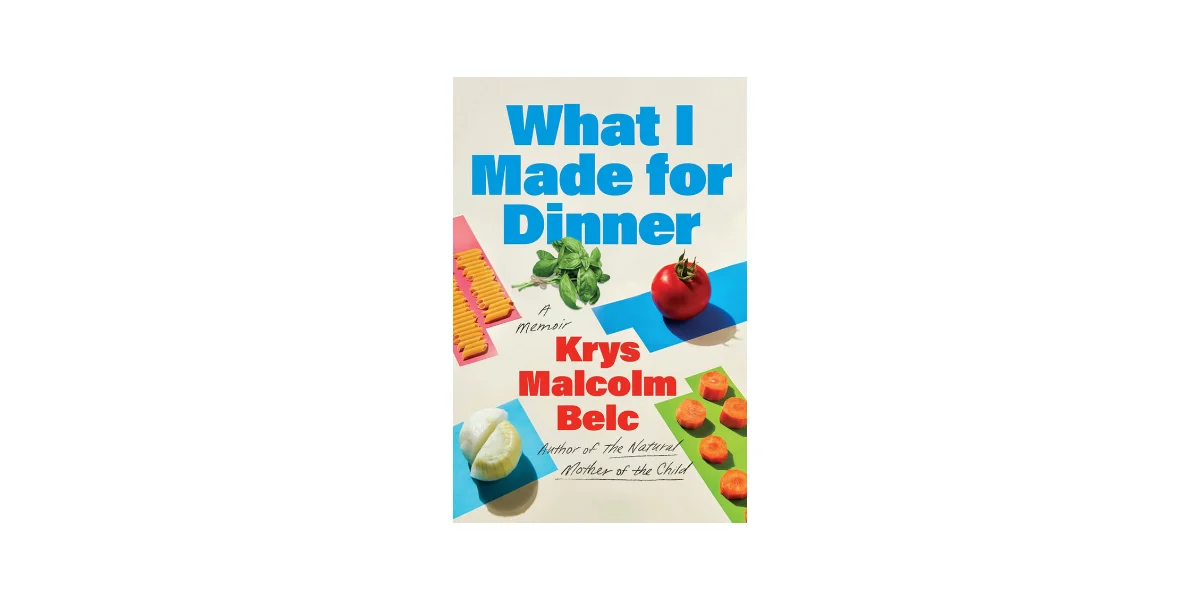
The Intersection of Domesticity and Identity
The narrative departs from the common cultural trope that frames the preparation of nightly meals as a source of "agony" or a burdensome domestic chore. While social media platforms are frequently populated with expressions of "decision fatigue" regarding dinner, Belc’s memoir investigates the underlying drive to provide. For the author, who manages a household with his wife, Anna, and their four children, the act of cooking is less an escape and more a structural framework for his existence.
The memoir posits that for many queer and transgender individuals, the traditional domestic sphere—often associated with heteronormative constraints—can be reclaimed as a space of intentionality and self-actualization. Belc reflects on his upbringing in a household of eight, where his mother’s constant "mothering" through food was the central labor of her life. He notes that as a queer child, he initially viewed this life of cooking and cleaning as something he was not "supposed to want" or "supposed to get." By documenting his journey into this very role, Belc challenges the binary perceptions of domesticity and provides a nuanced look at trans-masculinity in the kitchen.
Chronology of the Domestic Narrative
The timeline of the memoir is anchored by the global COVID-19 pandemic, a period that fundamentally reshaped domestic roles for millions. In 2020, as lockdowns were implemented, Belc transitioned into a full-time stay-at-home role with his three young children. Simultaneously, his wife, Anna, continued her work as a nurse, navigating the frontlines of the healthcare crisis. This shift placed Belc at the center of the household’s "food system," a role that demanded constant production and creativity under the stress of isolation.
As the pandemic progressed, the couple experienced a period of intense reflection. After years of what Belc describes as "churning through life stages"—including multiple moves, job changes, and the rapid expansion of their family—they made a conscious decision to "stop changing their lives." However, this period of stillness led to a significant new development: the desire for a fourth child.
This decision necessitated a complex medical and emotional journey. Belc, who had been on testosterone as part of his gender-affirming care, chose to pause his hormone therapy to pursue pregnancy. The process involved Anna donating her eggs, followed by Belc carrying the pregnancy to term. The memoir candidly documents the subsequent period of postpartum depression, which forced Belc to take a rare hiatus from the kitchen, highlighting the fragility of the domestic routines he had worked so hard to establish.
The Influence of Food Media and "Parasocial" Mentorship
A significant portion of What I Made for Dinner is dedicated to the role of celebrity chefs and food writers in Belc’s life. During the isolation of the pandemic, Belc turned to the content of figures such as Ina Garten, Deb Perelman (of Smitten Kitchen), Stella Parks, Sara Moulton, Ree Drummond, and Claire Saffitz. These women, though strangers to Belc, provided a form of "parasocial" mentorship, offering recipes that functioned as blueprints for his own domestic stability.
Belc uses specific chefs to frame different thematic explorations:
- Deb Perelman: Represents the grounded, relatable labor of the home cook. Belc notes that cooking her recipes felt like an act of survival, stating that he only felt like himself when engaged in the steady, rhythmic work of dicing an onion or frosting a cake.
- Ina Garten: Serves as a point of reflection on the concept of "futurity." Garten, who is famously childless, offers a vision of a curated, elegant life that contrasts with Belc’s chaotic, child-centered world. Through Garten, Belc realizes that parenting was the catalyst that allowed him to envision himself growing old.
- Laurie Colwin and Stella Parks: Provide the technical and emotional vocabulary for Belc to translate his feelings into tangible, edible results.
By filtering his experiences through these women’s stories, Belc analyzes the value of giving to others as a means of self-fulfillment. The memoir suggests that for the provider, the act of service is as much about the "self" as it is about the recipient.
Supporting Data: The Landscape of Modern Caregiving
The themes explored in Belc’s memoir are mirrored in broader sociological trends regarding domestic labor and LGBTQ+ family structures. According to data from the U.S. Bureau of Labor Statistics, the "mental load" of household management—which includes meal planning and grocery shopping—still falls disproportionately on primary caregivers, regardless of gender. However, in LGBTQ+ households, studies often show a more egalitarian distribution of labor, though these roles are frequently renegotiated during major life transitions, such as the pandemic or the arrival of a new child.
Furthermore, the "food media boom" of 2020-2022 saw a 25% increase in cookbook sales and a surge in traffic to cooking websites like Smitten Kitchen. Belc’s reliance on these digital and print mentors aligns with a global shift toward home-centered activities during the lockdown era. For Belc, this was not merely a hobby but a reconstruction of his identity as a trans father.
Institutional and Critical Reception
While official statements from the subjects of his "parasocial" relationships (the celebrity chefs) are not a primary focus of the text, the literary community has recognized Belc’s work as a vital contribution to the "trans-masculine domestic" genre. Critics have noted that while trans narratives often focus on the "before and after" of transition or the trauma of marginalization, Belc’s work is revolutionary in its focus on the "mundane" and the "cyclical."
His previous work, The Natural Mother of the Child, was a finalist for the Lambda Literary Award, signaling a strong institutional interest in his explorations of queer parenthood. What I Made for Dinner is expected to follow a similar trajectory, appealing to readers interested in food studies, gender studies, and the evolving nature of the American family.
Broader Impact and Implications
The implications of What I Made for Dinner extend beyond the culinary world. The memoir challenges the traditional "exit" narrative of transgender identity—the idea that once a person transitions, they move away from the "feminized" domestic sphere. Instead, Belc demonstrates that a trans man can occupy the role of the primary nurturer and "birthing parent" while maintaining a firm sense of masculine identity.
The book also addresses the "millennial extremophile" phenomenon—the tendency of a generation to live "on hard mode" by balancing career aspirations, complex family structures, and personal identity crises amidst economic and social instability. Belc’s eventual resolution is not found in an "answer," but in the acceptance of the "thrumming need" to create and to provide.
In conclusion, What I Made for Dinner is an analytical deep dive into the ways in which food, family, and identity are inextricably linked. By documenting his experiences through the 2020 pandemic and his subsequent pregnancy, Krys Malcolm Belc provides a roadmap for understanding how the most basic of human needs—hunger—can be transformed into a profound expression of love and self-discovery. The memoir stands as a testament to the idea that the "banalities" of domestic life are, in fact, the very materials used to build a future.