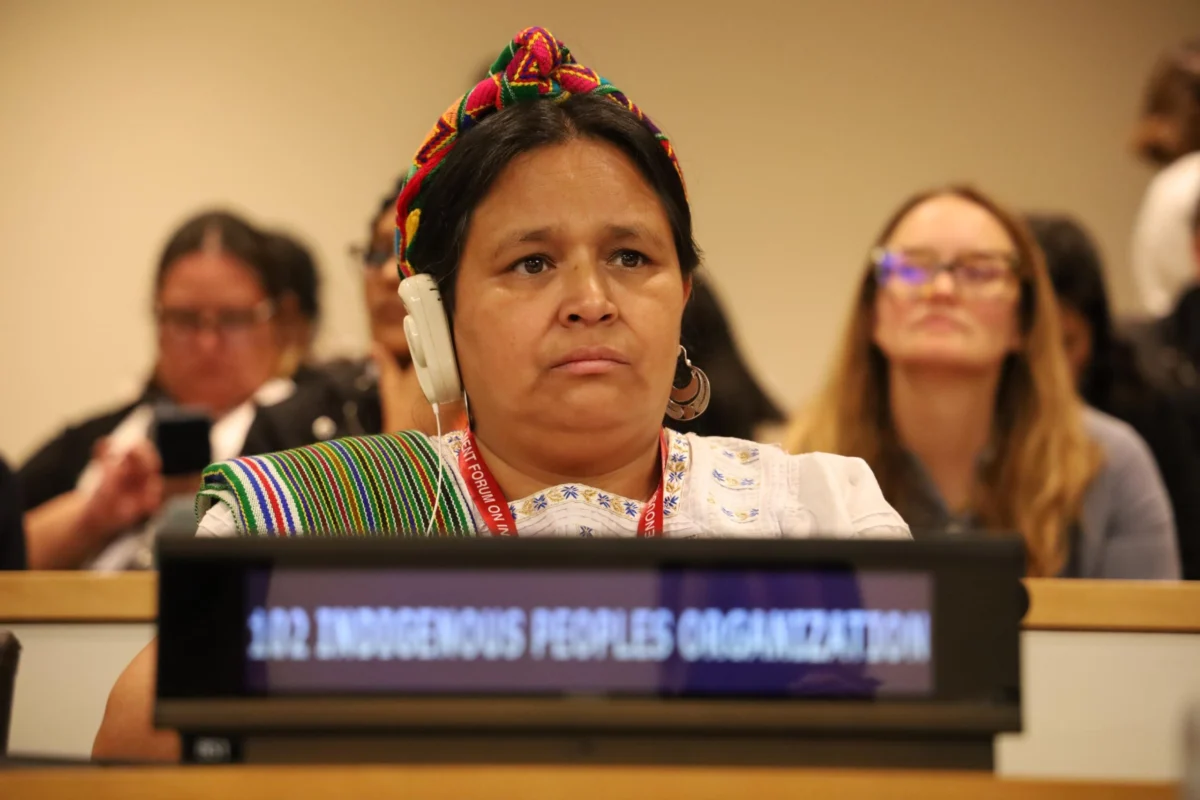
NEW YORK – April 21, 2026 – At the 25th session of the UN Permanent Forum on Indigenous Issues (UNPFII 25), Margarita Diaz, a prominent Maya Poptí’ woman representing the Wuxhtaj Council and the Council of the Maya Peoples (CPO), delivered a powerful address highlighting the dire state of healthcare access for Indigenous Peoples in Guatemala. Her statement, delivered on behalf of communities grappling with the lingering effects of colonization and the pressures of a globalized capitalist system, underscored a critical juncture where the fundamental rights to health and self-determination are under severe threat. Diaz explicitly called upon the Guatemalan government to cease the criminalization of individuals and communities actively defending their ancestral territories and inherent rights.
The Deep Roots of Health Disparities in Guatemala
Diaz’s opening remarks, delivered in her native tongue before transitioning to Spanish, immediately set a tone of urgency and deep historical context. "Honorable Madam President, State Representatives. Sisters and brothers. I greet you," she began, establishing a direct connection with the delegates. "I am Margarita Diaz, a Maya Poptí’ woman from Guatemala—speaking on behalf of the Wuxhtaj Council and the Council of the Maya Peoples (CPO)." She articulated a stark reality: Guatemala, like many nations, continues to bear the profound consequences of colonization and the pervasive influence of the contemporary capitalist system, a legacy that has resulted in "genocide, destruction, dispossession, and the subjugation of our peoples."
The statistics presented by Diaz paint a grim picture of the current health crisis. "Here in the 21st century, in my country, 49% of children under the age of five suffer from chronic malnutrition—a statistic that places us sixth in the world," she stated. This figure, a direct indicator of systemic failures, positions Guatemala among the nations with the most severe child malnutrition rates globally. The implications of such widespread chronic malnutrition extend far beyond immediate health concerns, impacting cognitive development, educational attainment, and long-term economic productivity for entire generations.
Diaz elaborated on the multifaceted nature of this crisis, emphasizing that "to speak of health in Guatemala is to speak of a structural crisis rooted in racism, historical exclusion, and the systematic violation of human rights." This assertion directly challenges simplistic explanations and points to deeply entrenched societal and governmental failings that disproportionately affect Indigenous populations. The historical marginalization of Indigenous Peoples in Guatemala has led to limited access to basic services, including healthcare, education, and clean water, perpetuating cycles of poverty and ill health.
Extractive Industries and the Erosion of Indigenous Well-being
A central theme of Diaz’s address was the direct link between the imposition of extractive projects and the compromised health of Indigenous communities. "The health of our peoples is compromised when our territories are invaded by extractive projects that pollute and destroy them; when our ancestral authorities are criminalized; and when the act of defending Mother Earth is punished as a crime," she declared. This statement highlights a critical conflict: the pursuit of economic development through resource extraction often directly clashes with the environmental stewardship and cultural integrity of Indigenous territories.
The UNPFII, established by the Economic and Social Council (ECOSOC) in 2000, serves as the primary UN forum for Indigenous issues, with the mandate to provide specialized advice and recommendations on Indigenous peoples’ economic and social development, culture, environment, education, health, and human rights. The 25th session, held in April 2026, convenes representatives from Indigenous communities worldwide, alongside UN member states, intergovernmental organizations, and NGOs, to address pressing issues facing Indigenous Peoples. Diaz’s participation in this high-level forum underscores the global recognition of the challenges faced by Indigenous populations in Guatemala.
Diaz detailed how "the imposition of extractive projects—without consultation or free, prior, and informed consent—has created conflict-ridden scenarios within our territories." The principle of Free, Prior, and Informed Consent (FPIC) is a cornerstone of Indigenous rights, recognized in the UN Declaration on the Rights of Indigenous Peoples (UNDRIP). Its violation signifies a profound disrespect for Indigenous sovereignty and self-determination. The absence of genuine consultation allows for projects that can lead to environmental degradation, including water contamination from mining operations or deforestation from logging, directly impacting the health and livelihoods of local communities who rely on these natural resources.
The consequences of these violated rights, Diaz explained, extend beyond physical ailments. "This not only violates our rights but also undermines our physical, mental, and spiritual health. Fear, violence, the fracturing of the social fabric, and the destruction of our natural commons are, in themselves, forms of illness." This holistic understanding of health encompasses the interconnectedness of individual well-being, community cohesion, and the health of the environment. The psychological toll of displacement, conflict, and the destruction of sacred lands can be devastating, creating what can be described as collective trauma.
Demands for Accountability and Action
In response to this critical situation, the Council of the Maya People (CPO) presented a clear set of demands aimed at addressing the systemic issues and seeking redress. While the provided text indicates a list of demands, the specific points were not detailed in the excerpt. However, based on the context of Diaz’s speech, these demands likely include:
- Cessation of Extractive Projects: A moratorium or outright halt to extractive projects that proceed without the free, prior, and informed consent of Indigenous communities.
- Protection of Territories: Robust legal and governmental protection for Indigenous ancestral lands and natural resources against encroachment and exploitation.
- End to Criminalization: An immediate cessation of the prosecution and persecution of Indigenous leaders, environmental defenders, and community members who advocate for their rights and territories.
- Access to Culturally Appropriate Healthcare: The development and implementation of healthcare services that are not only accessible and timely but also culturally sensitive and responsive to the specific needs and traditional healing practices of Indigenous communities.
- Restorative Justice and Reparations: Mechanisms for addressing historical injustices and providing reparations for the damages caused by colonization and ongoing exploitation.
Diaz concluded her address with a fervent appeal to the international community. "We urge the international community to take action to guarantee the full enjoyment of human rights—including equitable, timely, and culturally appropriate access to physical and mental healthcare—and to address the profound inequalities affecting the peoples." This call to action seeks to mobilize global support and pressure on the Guatemalan government to enact meaningful reforms and uphold its international commitments.
The Inherent Right to Self-Determination
The speech powerfully reaffirmed the fundamental right of Indigenous Peoples to self-determination. "Self-determination is the inalienable right of Indigenous Peoples; defending and exercising it protects the health of Mother Earth and, with it, our own," Diaz stated, drawing a direct parallel between political autonomy and ecological and personal well-being. This principle underscores the idea that Indigenous Peoples have the inherent right to determine their own political status and to pursue their economic, social, and cultural development freely.
The concept of "Mother Earth" (in Maya languages, often referred to as Ixchel or similar deities) is central to many Indigenous cosmologies, representing a sacred entity that sustains life. The health of this entity is inextricably linked to the health of Indigenous Peoples. Therefore, the defense of territories is not merely an environmental issue but a deeply spiritual and existential imperative.
Diaz’s concluding remarks emphasized the importance of unity and respect: "Respect and unity in diversity constitute our present and serve as the foundation for our future." This sentiment highlights the strength found in Indigenous solidarity and the recognition of diverse cultural expressions as a vital component of a sustainable future.
Context and Potential Responses
The UN Permanent Forum on Indigenous Issues (UNPFII) serves as a crucial platform for Indigenous voices to be heard directly by international bodies and governments. The 25th session, held in April 2026, likely focused on themes related to the implementation of the UN Declaration on the Rights of Indigenous Peoples (UNDRIP), environmental justice, and the role of Indigenous knowledge systems in addressing global challenges such as climate change and public health crises.
Margarita Diaz’s participation and statement at UNPFII 25 are significant for several reasons. Firstly, it brings to the forefront the specific challenges faced by Maya Poptí’ communities in Guatemala, drawing international attention to their plight. Secondly, her direct appeal to the Guatemalan government, coupled with her call for international action, aims to create accountability and stimulate policy changes.
Supporting Data and Background:
- Guatemalan Indigenous Population: Indigenous Peoples constitute approximately 40% of Guatemala’s population, with over 20 distinct linguistic groups. Despite their significant presence, they remain the most marginalized and impoverished segment of society.
- Healthcare Infrastructure: Rural areas, where a large proportion of Indigenous communities reside, often suffer from a severe lack of healthcare facilities, trained personnel, and essential medicines.
- Criminalization of Defenders: According to reports by human rights organizations like the UN Human Rights Office and local NGOs, Guatemala has a concerning record of criminalizing human rights defenders, particularly those involved in environmental and land rights advocacy. This often involves arbitrary arrests, politically motivated charges, and intimidation tactics. A 2023 report by the Guatemalan Human Rights Ombudsman (PDH) indicated a rise in threats and attacks against environmental and Indigenous leaders.
- Extractive Industries in Guatemala: Guatemala has been a site of significant mining and hydroelectric dam projects, often met with strong opposition from Indigenous communities due to their environmental and social impacts. Conflicts over land rights and resource extraction have led to numerous human rights violations and environmental damage. For instance, the Marlin mine, a large gold and silver mine operated by Goldcorp (now part of Agnico Eagle Mines) in the San Marcos department, faced sustained opposition from local Indigenous communities due to allegations of water contamination and human rights abuses.
Inferred Reactions and Broader Implications:
While specific reactions from the Guatemalan government were not detailed in the provided excerpt, statements from government representatives at UNPFII sessions typically aim to defend national policies and highlight efforts to address Indigenous issues, often emphasizing progress in poverty reduction and service provision. However, such statements are frequently met with skepticism by Indigenous representatives and human rights advocates who point to persistent systemic failures.
The broader implications of Diaz’s statement are significant. It reinforces the ongoing struggle for Indigenous rights globally, highlighting that the legacy of colonialism continues to manifest in contemporary forms of exploitation and marginalization. The interconnectedness of environmental health, cultural survival, and physical well-being for Indigenous Peoples is a crucial message that resonates with broader global discussions on sustainable development and human rights. The demand for culturally appropriate healthcare underscores the need to move beyond one-size-fits-all approaches and recognize the unique needs and perspectives of diverse populations. The call to end the criminalization of defenders is a plea for the protection of fundamental democratic freedoms and the right to peaceful protest against injustices.
The inclusion of a video link in the original article suggests that Diaz’s speech was likely recorded and disseminated, further amplifying her message and the concerns of the Wuxhtaj Council and the Council of the Maya Peoples. The UNPFII provides a vital stage for such critical dialogues, aiming to foster understanding, promote dialogue, and ultimately drive concrete action towards ensuring the rights, well-being, and self-determination of Indigenous Peoples worldwide. The persistence of issues like chronic malnutrition and the criminalization of rights defenders, as highlighted by Margarita Diaz, indicates that the path towards achieving these goals remains long and arduous, requiring sustained commitment from both national governments and the international community.