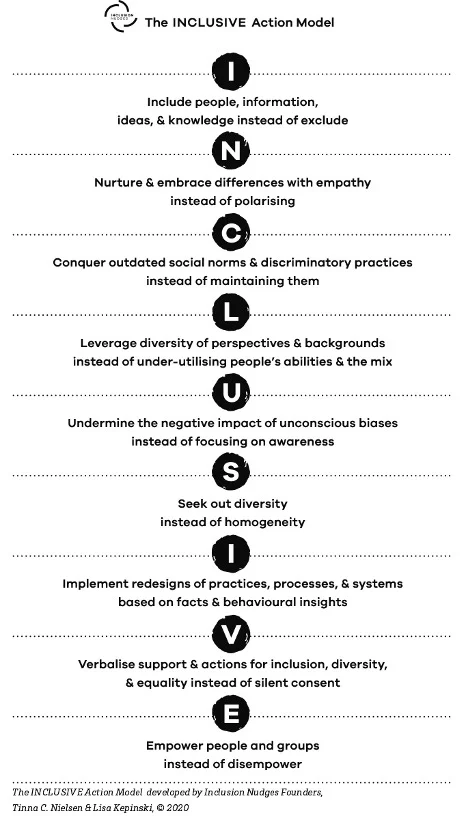
Unconscious bias awareness training has emerged as the prevailing, often knee-jerk, response to the pervasive challenges of discrimination and inequality within organizations worldwide. This strategy, frequently presented as a swift solution to foster equity and inclusion, has fueled a multi-billion dollar global industry. However, mounting evidence and real-world outcomes reveal a significant problem: at best, these trainings are largely ineffective; at worst, they can actively backfire, exacerbating the very issues they aim to resolve. The prevailing reliance on individual awareness as the primary catalyst for change is proving to be a misdirected effort, necessitating a fundamental redesign of our approach to building a more just and inclusive world for the greater good of all.
The Rise of a Billion-Dollar Industry: Why Organizations Embraced Bias Awareness Training
The pattern of organizational response to issues of exclusion, disrespect, and discrimination has become remarkably predictable. Following major social reckonings like the #MeToo movement, which exposed widespread gender-based discrimination and harassment, or the #BlackLivesMatter movement, which brought systemic racial injustice to the forefront, many leaders instinctively turned to unconscious bias awareness training. Similarly, individual employee grievances or a general desire to signal commitment to diversity, equity, and inclusion (DEI) often triggers the immediate deployment of such programs across entire workforces.
This rush to implement bias training stems from a deeply ingrained, yet flawed, assumption: that increased awareness of one’s own biases will naturally lead to behavioral change. Organizations frequently adopt these trainings as a defensive shield against external criticism or internal demands for change, often issuing statements like, "We’re offering bias training across the organization" as ostensible proof that "things are going to change here." This approach is rooted in a hope that a simple educational intervention can "fix" complex, deeply embedded societal and organizational issues. The significant investment in this training methodology underscores a widespread belief that cognitive understanding is the key to unlocking inclusive behaviors.
Beyond Awareness: The Cognitive Science Behind Training’s Limitations
The fundamental flaw in the over-reliance on unconscious bias awareness training lies in its appeal to the wrong cognitive system. Human cognition, as extensively studied in behavioral science, operates on two primary systems: System 1 and System 2. System 1, often referred to as the unconscious mind, is fast, intuitive, emotional, and automatic. It processes the vast majority of our daily decisions and interactions, including the manifestation of biases and stereotypes. System 2, the conscious mind, is slower, deliberate, analytical, and effortful. It is where rational thought, logical reasoning, and explicit knowledge reside.
Unconscious bias awareness training primarily targets System 2. It delivers knowledge, statistics, and examples, aiming to educate individuals about the existence and impact of their unconscious biases. The expectation is that by consciously understanding these biases (System 2), individuals will then be able to override their automatic, biased responses (System 1). However, knowing about bias in our rational, conscious mind, and even possessing good intentions, does not automatically diminish the pervasive influence of the unconscious mind. Training that is predominantly knowledge-based and appeals to System 2 is fundamentally misaligned with the neural pathways that drive lasting behavioral change. It attempts to convince people to be more inclusive and aware of biases through explicit instruction, a method largely ineffective against the deeply ingrained patterns of System 1. The challenge isn’t merely talking to the wrong brain system; it’s often speaking the wrong language altogether for sustained behavioral transformation.
The Paradox of Awareness: How Bias Training Can Backfire
The ineffectiveness of unconscious bias awareness training is not merely a matter of stagnation; it often results in actively counterproductive outcomes. Research and extensive real-world experience have illuminated several critical ways these trainings can backfire:
Mental Overload and Paradoxical Reinforcement
The act of constantly trying to be consciously aware of unconscious biases creates significant cognitive load. When individuals are forced to continuously monitor and suppress their automatic System 1 responses, it leads to mental overload. Paradoxically, this state of heightened cognitive strain has been shown to strengthen the impact of biases rather than diminish them. When System 2 is overwhelmed, System 1 defaults become even more pronounced, leading to an increased reliance on automatic, often biased, behaviors. This creates a vicious cycle: the attempt to consciously control bias can inadvertently make individuals more susceptible to it, paralyzing effective action.
Strengthening Stereotypes and Prejudicial Thinking
Contrary to its intent, some research indicates that unconscious bias awareness training can unintentionally enhance more biased thinking and behaviors, and even strengthen existing stereotypes. By explicitly highlighting common stereotypes and biases, and discussing their prevalence, such trainings can inadvertently make these cognitive shortcuts more salient in people’s minds. This increased salience, without effective mechanisms for mitigation, can reinforce rather than dismantle prejudiced thought patterns. A study published in the Journal of Applied Psychology, for instance, found that some diversity training programs could, under certain conditions, increase animosity towards diversity initiatives among some employees.
Reinforcing Misconceptions of Societal Fairness
A particularly concerning finding comes from 2020 research indicating that making individuals in privileged positions aware of racial prejudice, inequality, and discrimination in contemporary society often fails to alter their common misconception that society is largely fair to all. Instead, it can paradoxically strengthen this belief. Furthermore, such awareness can lead to a more optimistic perception of past inequalities, suggesting that simply highlighting existing disparities does not necessarily foster empathy or a drive for change among those who benefit from the status quo. In essence, awareness can backfire by creating a defensive posture that entrenches existing beliefs about fairness rather than challenging them.
The "Natural Bias" Excuse: Demotivating Change
When bias awareness training emphasizes that unconscious biases are "natural" and an inherent part of human cognition, it can inadvertently reduce motivation to change. Hearing that everyone holds stereotypes and that bias is an unavoidable human trait can lead individuals to feel less responsible for their biased actions or less compelled to actively mitigate them. If bias is framed as an uncontrollable, natural phenomenon, the impetus for personal and systemic change can diminish, fostering a sense of resignation rather than empowerment.
Triggering Negative Emotions: Shame, Fear, and Resistance
The very terminology surrounding "Unconscious Bias Awareness Training" or "Inclusion & Diversity Training" can trigger counterproductive emotional and psychological responses. These terms often carry connotations in the unconscious mind that activate anxiety ("I am going to be fixed"), loss aversion ("I’ll lose privilege, status, and power"), or even resentment ("Now, I’ll get them and show them how wrong they are"). For others, it might lead to over-optimism ("Now, I know my bias and control it"). These deeply rooted emotions and defensive reactions act as significant barriers to genuine engagement and behavioral modification, turning what should be a constructive dialogue into a battleground of subconscious anxieties.
The Pitfall of Moral Licensing: Good Intentions, Harmful Outcomes
Perhaps one of the most insidious backfiring effects is "moral licensing." Attending bias training can create a self-perception of being in control of one’s biases and being one of the "good people" who do not discriminate. This positive self-image can unconsciously trigger moral licensing, a phenomenon where a past moral action (like attending training) gives an individual permission to behave immorally or non-inclusively in subsequent situations. Studies have powerfully demonstrated this effect: individuals who strongly express disagreement with sexist statements have been shown to be more likely to hire a man for a job and make sexist comments later, because they feel secure in their "non-sexist" self-image. Similarly, those who voice opposition to racist statements have been observed to unconsciously discriminate against racial minorities. This phenomenon demonstrates how good intentions, when channeled through ineffective mechanisms, can inadvertently lead to outcomes diametrically opposed to stated values and beliefs.
Fleeting Impacts and Stalled Progress: The Broader Implications for DEI
Beyond the direct backfiring mechanisms, even when unconscious bias training yields positive results, these effects are often short-lived, typically lasting only a few days. This fleeting impact renders the substantial financial investment – billions of dollars annually – largely wasteful. The continuous cycle of offering, completing, and then re-offering training creates an illusion of progress without achieving any sustained behavioral or systemic change.
This stagnation has significant broader implications for diversity, equity, and inclusion initiatives. If the primary tool employed by organizations is ineffective, actual progress towards creating truly equitable and inclusive environments is severely hampered. It can lead to cynicism among employees, particularly those from marginalized groups, who repeatedly witness training efforts yielding no tangible improvement in their daily experiences. This erosion of trust can damage morale, increase turnover, and ultimately undermine the very fabric of an inclusive organizational culture. The challenge for HR professionals and policymakers is immense: to find solutions that genuinely address deeply embedded biases rather than merely scratching the surface.
Rethinking the Approach: Designing for Inclusion Through Behavioral Science
Given the compelling evidence of the limitations and potential harms of traditional bias awareness training, a paradigm shift is urgently needed. We cannot fundamentally redesign how the human mind works, nor can we expect that merely knowing about cognitive biases will alter their powerful influence. The solution lies not in fighting our inherent cognitive systems but in working with them, transforming mental barriers into strengths.
To achieve lasting behavioral change, we must appeal directly to the unconscious mind (System 1), as this is the system that drives our automatic behaviors. This involves leveraging insights from behavioral and social sciences, particularly nudge theory, to design environments and processes that make inclusive behavior the default. The focus shifts from attempting to "fix" individuals to designing systems that mitigate the impact of bias, making it easier to be inclusive automatically.
Inclusion Nudges: A Systemic Solution for Automatic Inclusion
This alternative approach is embodied in the concept of "Inclusion Nudges." An Inclusion Nudge is a carefully designed action intended to influence the unconscious mind, making it effortless to be inclusive and to practice inclusion automatically in daily interactions and decisions. These actions are practical applications of robust insights from behavioral science, nudge theory, and a deep understanding of the hidden barriers to achieving inclusion.
Inclusion Nudges operate by minimizing the impact of mental shortcuts (biases) without relying on the conscious mind to drive change. This means that rational arguments or attempts to "convince" people to change become largely unnecessary. Instead, Inclusion Nudges subtly steer the unconscious mind towards desired inclusive behaviors, making them automatic. They align an individual’s behavior with their self-interest and stated intent, without resorting to threats or punishment, and while fully respecting freedom of choice. Crucially, these interventions are often low-cost to implement, offering a highly effective and efficient path to fostering widespread inclusion.
Proven Success: The Enduring Legacy of Anonymous Auditions
An exemplary and long-standing illustration of an Inclusion Nudge in action is the practice adopted by some symphony orchestras since the 1970s: anonymous auditions. Faced with a predominantly white, male composition, some orchestras began questioning the fairness of their selection processes. The innovative solution involved having musicians audition behind a screen, preventing the selection committee from seeing the candidates.
The results of early pilot programs were profound. The number of women selected for orchestras increased by as much as 50%, and the ethnic diversity of successful candidates also saw a radical shift. This simple design change, an effective nudge, ensured that evaluations were based purely on musical merit, stripping away potential biases related to gender, ethnicity, or appearance. Today, most major symphony orchestras worldwide utilize anonymous auditions to secure the most qualified musicians, recognizing its power to de-bias the selection process. Some orchestras have even taken this a step further, placing a carpet behind the screen to prevent the sound of shoes from inadvertently priming gender bias in the unconscious minds of committee members, thereby skewing their perception of the musical performance.
This practice, which provides robust evidence for the power of design-based solutions, has been known for over four decades. Yet, its widespread implementation beyond specific niches has been remarkably slow. While the concept of anonymizing candidates is finally gaining traction in various organizations, aided by emerging technological platforms, the slow pace of adoption highlights a persistent gap between proven effective strategies and conventional organizational practices. This example underscores that awareness alone is insufficient; we must actively mitigate the influence of unconscious bias by nudging the unconscious mind to default to inclusive behaviors and norms.
The Path Forward: From Individual Awareness to Systemic Design
The journey towards a truly equitable and inclusive world demands a fundamental recalibration of our strategies. Relying on individual awareness, however well-intentioned, has proven to be an insufficient and often counterproductive approach. The future of DEI lies not in attempting to "fix" individuals’ biases through conscious effort, but in designing systems, processes, and environments that make inclusive behavior the default.
By leveraging the insights of behavioral science and implementing Inclusion Nudges, organizations can create structural changes that inherently steer individuals towards more equitable decisions and interactions. This shift from an individual-centric, awareness-based model to a systemic, design-centric approach offers a more potent and sustainable path to fostering genuine inclusion. It is a call to action for leaders, HR professionals, and policymakers to move beyond the quick fix and invest in evidence-based, design-led solutions that will make inclusion the norm everywhere, for everyone, building a more just world for all.