The recent union of global music superstar Taylor Swift and NFL icon Travis Kelce has captured the public’s imagination, positioning them as America’s most prominent newlyweds. Beyond the star power, however, their marriage serves as a compelling case study, aligning with several significant shifts in contemporary American marital patterns, according to a comprehensive analysis by the Pew Research Center. These trends reveal a nation where marriage is increasingly delayed, the economic roles within partnerships are diversifying, and a larger proportion of couples are entering marriage as first-time spouses.
The Delay of "I Do": Marrying Later in Life
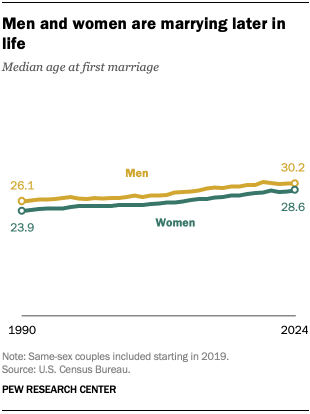
One of the most pronounced transformations in American marriage is the increasing age at which individuals first tie the knot. The Pew Research Center data indicates a substantial upward trend in the median age for first marriages. In 1990, the average age for men was 26, and for women, it was 24. Fast forward to 2024, and these figures have risen to approximately 30 for men and 29 for women. This generational shift suggests a societal reevaluation of the traditional timeline for marriage, with individuals prioritizing education, career development, and personal independence before committing to a lifelong partnership.
While Swift and Kelce, both 36 years old, are above the current median age for first marriage, their personal timelines resonate with the broader societal inclination to marry later. This delay is not solely dictated by age but also by a complex interplay of economic factors, educational attainment, and evolving social expectations. A significant portion of Americans, as noted by Pew Research, do not adhere to a strict "best age" for marriage, underscoring a cultural acceptance of diverse personal journeys toward matrimony. This sentiment reflects a growing understanding that readiness for marriage is a multifaceted personal decision rather than a predetermined milestone.
The implications of marrying later are far-reaching. Couples who delay marriage often do so with greater financial stability and a clearer understanding of their personal and professional goals. This can contribute to more stable marriages, as partners are more likely to have established careers and have navigated the formative years of early adulthood independently. However, it also means that the window for childbearing may become more compressed, influencing family planning decisions for many couples. The data from the U.S. Census Bureau’s historical marital status tables consistently supports this trend, illustrating a clear and persistent increase in the median age at first marriage over the past several decades.
The Shifting Economic Landscape: The Rise of the "Breadwinner Wife"
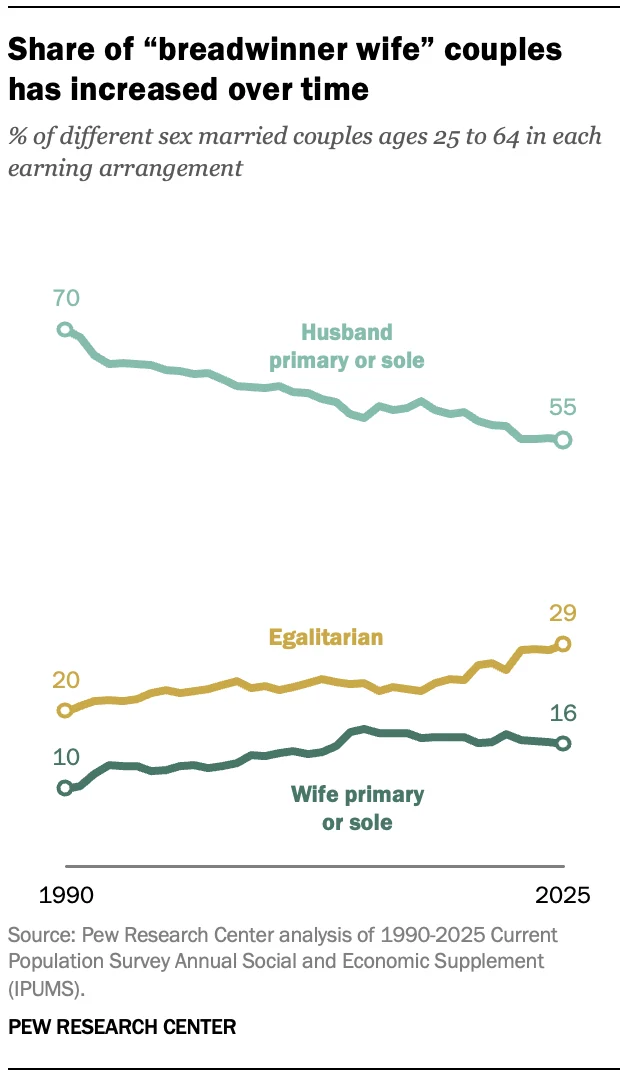
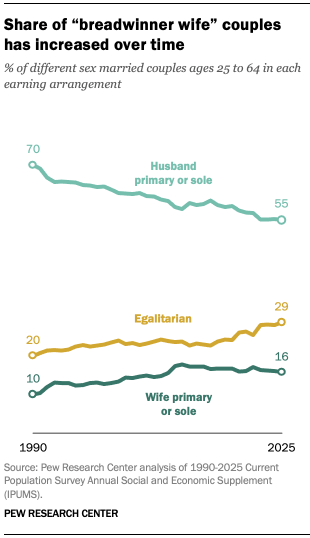
Another significant trend highlighted by the Pew Research Center is the growing proportion of marriages where the wife serves as the primary breadwinner. In 1990, only 10% of opposite-sex marriages featured a wife earning significantly more than her husband. By 2025, this figure had climbed to 16%. This surge reflects the increasing educational and professional achievements of women, alongside evolving societal norms that are more accepting of women in prominent economic roles within the household.
Taylor Swift and Travis Kelce’s relationship vividly exemplifies this trend. Swift, a global music phenomenon with a vast empire built on her artistic and entrepreneurial endeavors, reportedly earns substantially more than her NFL-playing husband. While their individual earnings are in the stratosphere and not representative of the average couple, their dynamic accurately mirrors the broader societal shift towards female financial empowerment in marriage. This growing prevalence of "breadwinner wives" signifies a departure from traditional gender roles and a move towards more equitable partnerships where financial contributions are more balanced or even reversed.
The Pew Research Center’s analysis of the U.S. Census Bureau’s Current Population Survey (CPS) provides robust data for this trend. The CPS, specifically the Annual Social and Economic Supplement, allows researchers to track income disparities within married couples. The consistent rise in the percentage of wives out-earning their husbands indicates a fundamental alteration in the economic architecture of American families. This shift can lead to complex renegotiations of household responsibilities, decision-making power, and overall relationship dynamics. For many couples, this evolving economic reality fosters a greater sense of partnership and shared responsibility, while for others, it may necessitate ongoing adjustments to traditional expectations. The implication is a more fluid and less rigidly defined division of labor within marriage, adapting to the diverse talents and ambitions of both partners.
A New Chapter: A Rising Share of First Marriages
The third key trend identified by Pew Research is the increasing proportion of marriages where both partners are entering matrimony for the first time. In 1990, 55% of newly formed couples consisted of individuals marrying for the first time. By 2024, this figure had grown to 68%. This upward trajectory suggests that while divorce rates may fluctuate, a greater number of individuals are choosing to marry only after extensive dating and relationship exploration, often leading to a more definitive union when they do decide to wed.
Taylor Swift and Travis Kelce also fit this demographic pattern, as neither has been previously married. This aligns with the data indicating that a larger segment of the population is not entering marriage with prior marital experience. This trend could be attributed to a variety of factors, including the aforementioned delay in marriage, a greater emphasis on finding a "life partner" before marriage, and perhaps a societal perception that first marriages are more likely to be enduring unions compared to remarriages.
The Pew Research Center’s analysis draws upon data from multiple sources, including the National Center for Health Statistics’ reporting of marriage and divorce records and the U.S. Census Bureau’s American Community Survey (ACS). The ACS, in particular, began collecting self-reported data on marital history, providing valuable insights into the proportion of first marriages. The increase in first marriages can be seen as a positive indicator of relationship stability, as individuals may be more carefully selecting their partners and entering marriage with a clearer commitment to its permanence. However, it is important to note that this statistic does not preclude the possibility of divorce among first marriages; rather, it reflects the changing composition of those entering the married state.
Context and Methodology: Understanding the Research
The Pew Research Center’s analysis is part of its ongoing commitment to understanding the evolving landscape of American families and relationships. The research meticulously gathers data from reputable sources to provide a clear and objective picture of societal trends. The data on median age at first marriage is derived from the U.S. Census Bureau’s historical marital status tables, a cornerstone for demographic analysis.
The "breadwinner wife" trend is meticulously tracked through a specialized analysis of the U.S. Census Bureau’s Current Population Survey (CPS), focusing on opposite-sex married couples aged 25 to 64 with reported earnings. This detailed examination ensures a nuanced understanding of economic contributions within marriages. For the trend concerning first marriages, the research synthesizes information from the National Center for Health Statistics and the American Community Survey, leveraging both official records and self-reported data to provide a comprehensive view. The use of IPUMS from the University of Minnesota further standardizes and enhances the cross-year comparability of the data, ensuring the reliability of the observed trends.
Broader Implications and Future Outlook
The confluence of these three trends—delayed marriage, increased female breadwinners, and a rise in first marriages—paints a picture of American marriage that is more diverse, adaptable, and reflective of contemporary societal values. As individuals continue to prioritize personal development and career aspirations, the traditional courtship and marriage timelines are being redefined. The increasing economic parity and partnership within marriages suggest a move towards more equitable and collaborative relationships.
The marriage of Taylor Swift and Travis Kelce, while extraordinary in its celebrity status, serves as an accessible touchpoint for understanding these profound societal shifts. Their union, characterized by delayed marriage, a dynamic where the wife is a significant financial contributor, and both entering as first-time spouses, resonates with millions of Americans navigating similar paths. As these trends continue to unfold, the institution of marriage in the United States is likely to become even more personalized, varied, and deeply rooted in the individual aspirations and evolving realities of its participants. The Pew Research Center’s ongoing efforts to document and analyze these changes are crucial for a comprehensive understanding of the American family in the 21st century.