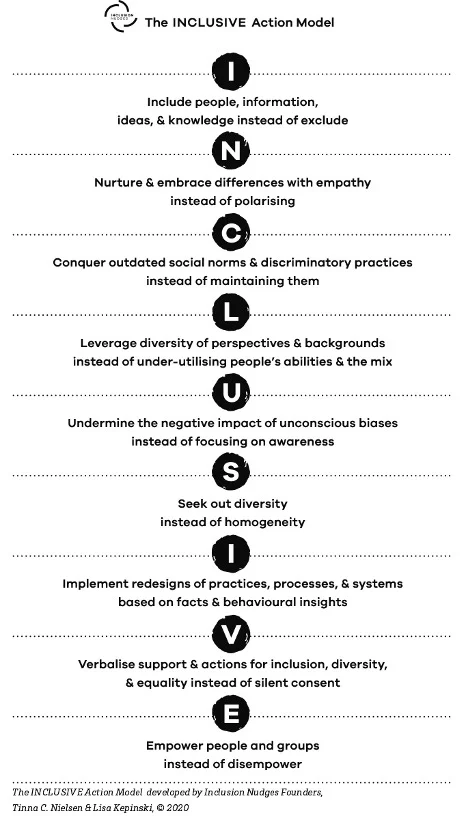
The persistent challenge of fostering truly inclusive environments in organizations, communities, and society at large has long confounded change-makers. Despite significant investment in diversity, equality, and inclusion (DEI) initiatives, many efforts yield slow progress or, frustratingly, witness a regression to default behaviors. This phenomenon, often described as taking "three steps forward and one step back," highlights a critical gap in conventional approaches to social change. A new methodology, rooted in the robust findings of behavioral and social sciences, is emerging to bridge this divide: Inclusion Nudges. This innovative framework aims to embed inclusion as the default, leveraging insights from fields such as behavioral economics, psychology, anthropology, linguistics, neuroscience, and complex systems theory to redesign environments and processes that subtly steer human behavior towards equitable outcomes.
The Enduring Challenge: Unmasking Unconscious Bias
The difficulty in achieving lasting inclusive change often stems from a fundamental misunderstanding of human decision-making. Most individuals harbor a genuine intention to act fairly and inclusively, yet their actions frequently diverge from these conscious values. Consider a scenario often dismissed as absurd in a rational context: a group of leaders evaluating candidates for a senior management position, concluding that the "best qualified candidate is definitely the tallest of them." While consciously, no leader would logically argue that height dictates leadership prowess, extensive global research consistently demonstrates that height disproportionately influences leadership selection. For instance, studies reveal that approximately 60% of top leaders in various sectors are 185 cm (6 ft 1 in) or taller, a stark contrast to the general population where only 14% reach this height. This "height-leadership effect" manifests in greater high-status opportunities, more promotions, and higher incomes for taller individuals, establishing a normative pattern that even local cultures struggle to mitigate.
This apparent absurdity highlights the profound influence of the unconscious mind. Our brains instinctively form associations – in this case, between "tall" and traits like "strong," "presence," "powerful," and "capable." Once these unconscious beliefs are activated, the rational mind often seeks evidence to confirm them, leading to flawed judgments and conclusions that bypass objective facts and merits. Crucially, individuals are often blind to this cognitive process, believing their decisions are purely rational and merit-based.
The Dual Systems of the Human Mind: A Scientific Perspective
The core of this challenge lies in the interplay of two interdependent cognitive systems that govern human thought and decision-making, a concept popularized by Nobel laureate Daniel Kahneman. The automatic system is characterized by its unconscious, fast, instinctive, effortless, associative, and uncontrolled nature. It operates like an autopilot, dominating 90-99% of our daily behaviors and choices. Conversely, the reflective system is conscious, slow, effortful, rational, logical, self-aware, rule-following, and controlled. Both systems are universal across all human beings, but their dynamic interaction, and crucially, the gap between them, perpetuates many "absurd realities" in our personal and professional lives.
The automatic system relies heavily on mental shortcuts, such as associations and biases – systematic errors in processing information. These shortcuts, while generally efficient for rapid decision-making, can lead to significant errors when applied to complex social judgments. For example, the "tall equals strong leader" association is an implicit bias that overrides conscious knowledge. In situations demanding mental effort due to ambiguity, complexity, or time pressure, reliance on these shortcuts intensifies. While our unconscious brain evolved to ensure survival, it can inadvertently hinder objectivity and inclusivity, leading to decisions that contradict our conscious intentions and values. This intention-action gap is particularly pronounced in issues of inclusion, diversity, and equality, where self-perception as a fair individual does not always align with actual behavior. Knowledge and willpower alone are often insufficient to close this gap; a more systemic, design-based approach is required.
The Evolution of DEI: From Awareness to Systemic Design
Historically, many diversity, equity, and inclusion initiatives have focused on raising awareness, training individuals to recognize their biases, and promoting rational arguments for the benefits of diversity. While valuable, these approaches often fall short because they primarily target the conscious, reflective mind. They assume that providing information and fostering good intentions will automatically translate into inclusive actions. However, as behavioral science demonstrates, this is often not the case due to the pervasive influence of the unconscious mind and the default behaviors embedded in organizational systems.
The emergence of behavioral economics in the late 20th and early 21st centuries, pioneered by figures like Richard Thaler and Cass Sunstein, introduced the concept of "nudging" – subtle interventions that steer people towards better choices without restricting their freedom. Initially applied to public policy areas like health and finance, the principles of nudging are now being adapted to the complex social dynamics of DEI. This marks a significant shift from solely focusing on individual attitudes to redesigning the "choice architecture" – the environment and processes in which decisions are made – to make inclusive behaviors the default.
The Power of Inclusion Nudges: Designing for Default Inclusion

Inclusion Nudges represent a specialized application of behavioral science to combat discrimination, mitigate bias, challenge stereotypes, and foster a genuine sense of belonging. They operate on the understanding that human behavior is not always rational or self-serving, and therefore, the environment itself must be designed to promote desired outcomes. An Inclusion Nudge is a carefully crafted design, informed by behavioral and social sciences, that subtly steers the unconscious mind towards inclusive behavior by targeting behavioral drivers, judgment processes, and perceptions.
This approach is particularly critical in an increasingly complex world. Research indicates that the power of the unconscious mind is not diminishing but potentially increasing due to cognitive overload from information complexity, social media echo chambers, and demanding lifestyles. This intensifies the reliance on mental shortcuts, paradoxically leading to greater homogeneity and exclusion precisely when collective diversity is most needed. Inclusion Nudges offer a powerful counter-strategy, enabling organizations to close the intention-action gap by making inclusion the easy, default choice, without resorting to rational arguments, threats, or conscious effort.
Practical Application: Three Pillars of Inclusion Nudges
The Inclusion Nudges change approach manifests through three distinct yet interconnected types of designed interventions, each targeting a specific aspect of behavioral change:
-
Show the Hidden Issue and Make People FEEL THE NEED to Engage in Change:
Human beings are moved to action not just by knowing, but by seeing and feeling. This pillar focuses on making invisible patterns of exclusion visible, creating an emotional resonance that motivates the unconscious mind to seek change. Simply telling people they are biased is often ineffective; showing them the tangible implications of bias, without explicitly labeling it, can be transformative. For example, a "Feel the Need" Nudge might involve visualizing the gender imbalance in formal and informal networks within senior leadership. By presenting data that highlights the extensive network of male leaders versus the limited visibility of female talent, the unconscious mind of leaders can be prompted to acknowledge the disparity and feel a genuine need for interventions like sponsorship programs. One concrete example cited is showing a long list of male names for senior executives in networks, contrasted with a very short list of female names, making the inequality immediately palpable and creating buy-in for initiatives aimed at greater visibility for women. This emotional realization bypasses rational resistance and motivates engagement. -
PROCESS DESIGNS to Make Inclusion the Norm Without Talking About Inclusion and Diversity:
Beyond motivating engagement, sustained inclusion requires embedding it directly into daily processes and systems. This pillar involves designing the architecture of collaboration, decision-making, idea generation, IT systems, or physical environments to be inherently inclusive. The goal is to make inclusive behavior automatic, reducing the negative influence of bias and ensuring diverse perspectives are included by default. For instance, addressing the common challenge of unequal participation in group discussions, where some individuals dominate and others self-silence, a "Process Design" Nudge can be implemented. An intervention like "Share with a Peer to Access Diversity in Groups" ensures that all voices are heard. In this design, before a group discussion, individuals are asked to first share their thoughts or ideas with a single peer. This pre-discussion peer interaction can increase psychological safety, allow for initial refinement of ideas, and prevent individuals from conforming to the majority view when the full group convenes. It ensures that diverse perspectives are captured and communicated, contributing to better decisions and fostering an inclusive culture where everyone feels heard. These designs mitigate bias and promote inclusive ways of working as the default. -
FRAME PERCEPTIONS of Issues in Ways That Alter Understanding and Support Action:
Perceptions, narratives, stereotypes, and the way information is presented profoundly influence judgment and behavior. This pillar focuses on subtly altering these frames to foster inclusion. By strategically choosing words, communicating in specific ways, presenting problems from a new angle, or even arranging physical spaces, one can influence what people notice, how they interpret situations, and ultimately, how they act. "Flipping the numbers" or "reversing the anchor" are powerful techniques. For example, instead of focusing on the percentage of a minority group, a "Framing Perceptions" Nudge might highlight the missing or "hidden" individuals, thereby drawing attention to the consequences of their absence. If a report states "30% of our leadership are women," a reframed message might be "70% of our leadership are men, revealing a significant untapped potential among women." This simple rephrasing can shift the unconscious perception of diversity from a burden or a quota to an opportunity for growth and a clearer understanding of the hidden human capital. It encourages seeing the full picture and recognizing the individuals behind the statistics, altering narratives and stereotypes that often hinder inclusive action.
The Broader Impact and a Global Movement
The application of behavioral insights through Inclusion Nudges has demonstrated tangible success in diverse contexts globally. This approach empowers change agents by providing practical, scientifically-backed tools that are often easier to implement and yield more sustainable results than traditional methods. By co-creating changes with "the people it’s about," Inclusion Nudges foster ownership and ensure that interventions resonate with the specific needs and dynamics of an organization or community. The goal is to enable individuals and groups to design systems, processes, cultures, technologies, policies, and environments that naturally foster inclusive behaviors and decision-making.
The need for a fundamental shift in how we approach inclusive change has never been more urgent. Inclusion Nudges offer a scalable and accessible solution, making everyday experimentation a practical reality rather than an arduous task. This philosophy is at the heart of the Inclusion Nudges global initiative, which seeks to empower individuals worldwide to apply these designs and integrate inclusive practices into their daily work and interactions.
The initiative is built on principles of sharing, reciprocity, and open source. Recognizing the common frustration among change-makers who often hear what works but rarely how it works, the founders, Lisa and Tinna, committed to sharing detailed, step-by-step descriptions of effective behavioral designs. This commitment is embodied in resources like The Inclusion Nudges Guidebook and Action Guide Series. This sharing fosters a collaborative community where insights and experiences are exchanged, accelerating progress and expanding the scale of inclusive change. Reciprocity encourages individuals to contribute their own successful examples, creating a vibrant network of mutual support. Crucially, the initiative operates under a Creative Commons License, ensuring open access to knowledge and designs. This open-source approach rejects the hoarding of expertise, affirming that widespread social change can only occur when effective strategies are freely available to all, everywhere, for everyone.
By joining this global movement, individuals and organizations can collaboratively drive systemic change, making inclusion not just an aspiration but a lived reality across all facets of society. The collective power of these small, scientifically informed nudges promises to build a more equitable and belonging-rich future.