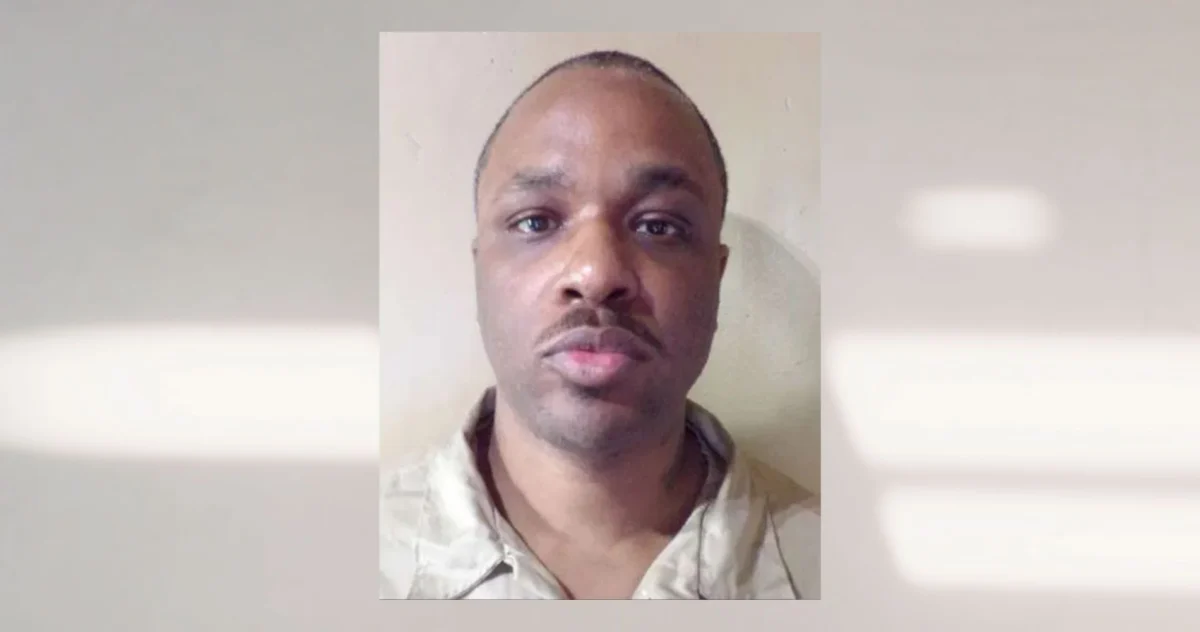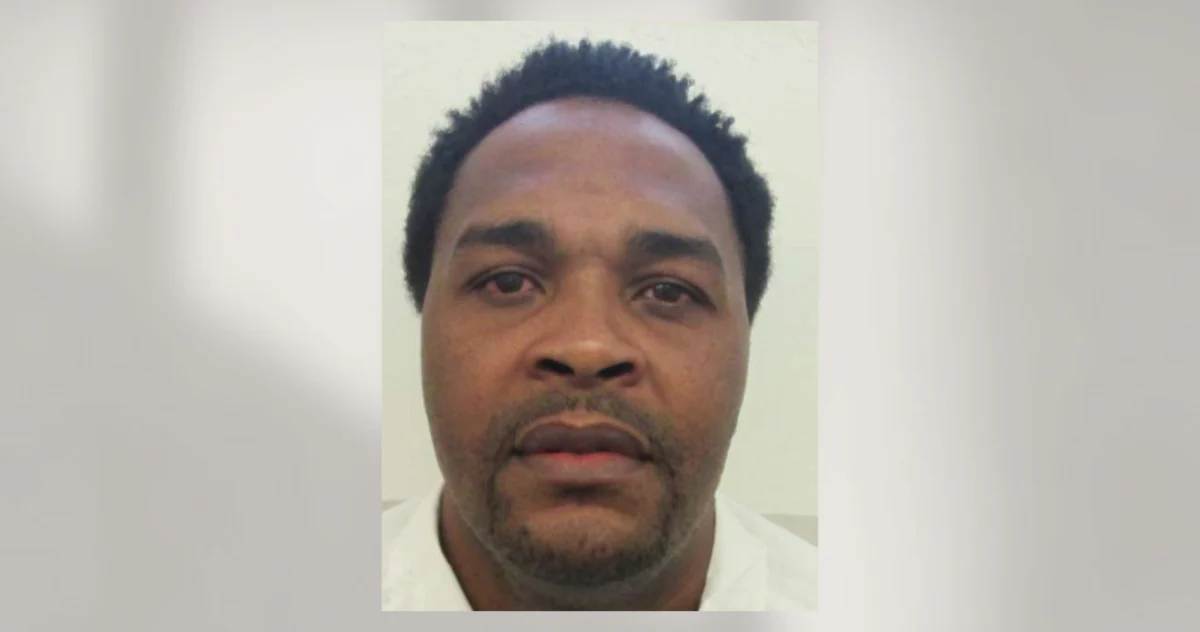
Alabama was barred from executing Jeffery Lee today by nitrogen suffocation after the Supreme Court refused to overturn the federal trial court’s ruling that the method is unconstitutional, marking a significant development in the ongoing legal challenges to capital punishment protocols in the United States. The decision effectively halted the planned execution, which was scheduled for later today, and underscores the judiciary’s scrutiny of novel execution methods.
The Genesis of the Legal Challenge: Nitrogen Hypoxia Under Scrutiny
The legal battle commenced last year when Mr. Lee initiated a federal lawsuit directly challenging the constitutionality of nitrogen suffocation, or nitrogen hypoxia, as a method of execution. His suit contended that the protocol constituted cruel and unusual punishment, a direct violation of the Eighth Amendment of the U.S. Constitution. Central to Mr. Lee’s argument was the assertion that death by nitrogen hypoxia would compel inmates to endure "prolonged air hunger and feelings of suffocation," which he argued would inevitably "evoke severe anxiety, fear, and physiological distress." The lawsuit meticulously detailed how this method cruelly "superadds pain" by simultaneously triggering an individual’s primal survival instincts to breathe oxygen while physically preventing them from doing so, thereby inflicting gratuitous suffering beyond the mere act of death.
Alabama’s pursuit of nitrogen hypoxia as an execution method has been fraught with controversy and has drawn considerable criticism from legal experts, medical professionals, and human rights advocates. The state adopted the method amidst a national shortage of drugs used for lethal injection, seeking an alternative to overcome legal hurdles and supply issues that have complicated executions across the country. However, the experimental nature of nitrogen hypoxia, which involves forcing a person to inhale pure nitrogen gas through a facemask until they die from oxygen deprivation, has consistently raised serious concerns about its potential to cause significant and protracted suffering.
Justice Sonia Sotomayor, in a prior dissenting opinion on a related case, eloquently captured the grim prospects of this method, recognizing that it inflicts "unnecessary psychological terror" through "conscious, excruciating suffocation" and "severe emotional suffering" as the condemned individual "consciously experience[s] the ‘primal urge to breathe.’" These sentiments highlight the profound ethical and legal questions surrounding a method that many argue transforms the act of execution into a prolonged ordeal of mental and physical torment.
A Judicial Journey: From District Court to the Supreme Court
The legal proceedings unfolded rapidly, demonstrating the judiciary’s intense focus on the specifics of execution protocols. On May 28, following a bench trial, U.S. District Court Judge Emily Marks issued a ruling that, while acknowledging the potential for suffering, initially sided with the state. Judge Marks found that "[w]hile Lee establishes that death by nitrogen hypoxia involves some suffering, he fails to show that the protocol is cruel and unusual in violation of the Eighth Amendment." The court’s findings detailed that individuals executed by nitrogen suffocation would "likely experience severe air hunger," leading to "profound physiological discomfort and distress, as well as anxiety, fear, and dread," and could even be "worse than pain." However, the judge concluded that this suffering was not unconstitutional because consciousness would be lost "in not significantly more than one to three minutes" after the nitrogen flow commenced. This initial ruling set a controversial benchmark for what constituted "tolerable" suffering under the Eighth Amendment.
Mr. Lee promptly appealed this decision. On Monday, the Eleventh Circuit Court of Appeals delivered a pivotal reversal of the district court’s judgment. The appellate court critically examined the "one to three minutes" timeframe, concluding that such a duration of suffering "presents a substantial risk of serious harm over and above death itself," thereby constituting a violation of the Eighth Amendment. The Eleventh Circuit’s opinion powerfully stated, "Counting to 60 or 180 seconds is not a quick exercise, and constitutionally speaking, that timeframe is intolerable given the suffering that would likely take place under Alabama’s nitrogen hypoxia protocol." This ruling underscored a stricter interpretation of the Eighth Amendment’s protections against cruel and unusual punishment.
However, prevailing Supreme Court precedent, established in cases like Baze v. Rees (2008) and Glossip v. Gross (2015), stipulates that a person challenging an execution method must not only prove "intolerable" suffering but also identify a feasible, readily implemented alternative method that significantly reduces the risk of harm. Mr. Lee’s legal team identified the firing squad as such an alternative. Given this requirement, the Eleventh Circuit remanded the case back to the district court to make specific findings regarding the viability of the firing squad and to determine whether to issue a stay of execution.
On Tuesday evening, the district court, following the Eleventh Circuit’s directive, found that the firing squad met the criteria for a constitutionally permissible alternative method. Consequently, the court held that Alabama’s nitrogen suffocation protocol did indeed violate the Eighth Amendment and took the significant step of permanently blocking Alabama from using nitrogen suffocation to execute Mr. Lee.
The legal saga continued late Wednesday when the Eleventh Circuit denied Alabama’s subsequent request to overturn this permanent ban. In a final effort to proceed with the execution, the State of Alabama urgently petitioned the Supreme Court to vacate the injunction. However, in an order issued at 8:10 p.m. today, the Supreme Court denied Alabama’s motion, effectively upholding the lower courts’ rulings and permanently halting Jeffery Lee’s execution by nitrogen suffocation.
The Shadow of Judge Override: A Jury’s Voice Silenced
Beyond the immediate legal challenge to nitrogen hypoxia, Jeffery Lee’s case has long been a stark emblem of the profound injustices embedded within Alabama’s capital punishment system, particularly concerning the practice of "judge override." In a chilling testament to the arbitrariness of capital sentencing, an Alabama jury in Mr. Lee’s trial voted 7-5 against the death penalty, explicitly choosing a sentence of life imprisonment without parole. However, in 2000, the trial judge unilaterally overrode the jury’s verdict and condemned Mr. Lee to death.
This practice was a unique and controversial feature of Alabama’s judicial landscape. Alabama stood alone as the only state where judges routinely overrode jury verdicts of life to impose the death penalty. Data from the Equal Justice Initiative (EJI) reveals that this occurred in "more than 100 cases" since 1976, leading to a staggering statistic: nearly 20% of individuals currently on Alabama’s death row were sentenced to death by elected judges, even when their juries had explicitly recommended life imprisonment without parole.
The tide began to turn in 2016 when Florida and Delaware, the only other states that had permitted judge override, abolished the practice. Alabama followed suit on April 11, 2017, becoming the last state to end judge override. However, this legislative change was not applied retroactively, leaving individuals like Mr. Lee, whose trials occurred before 2017, in a legal limbo, still facing execution despite a jury’s life recommendation.
Mr. Lee’s situation poignantly illustrates the arbitrary nature of Alabama’s death penalty system. Had his trial taken place today, or at any point after the abolition of judge override in 2017, he would have been sentenced to life imprisonment without parole, in accordance with his jury’s decision. Instead, he faced execution solely because his capital trial predated a crucial reform in Alabama law, which previously allowed a single judicial official to negate the collective judgment of 12 jurors.
Former Chief Justice of the Alabama Supreme Court, Drayton Nabers Jr., has been a prominent voice advocating for Mr. Lee. In a recent op-ed, Nabers Jr. highlighted that the Alabama Legislature and Governor Kay Ivey abolished judge override precisely because they recognized its inherent flaws. He implored Governor Ivey to commute Mr. Lee’s death sentence, grounding his appeal in "fidelity to the conservative principles of limited government, respect for the jury system, and the rule of law." Nabers Jr. underscored the moral imperative: "A jury of Alabamians voted for life. The state of Alabama later agreed that juries, not judges, should make that call. Governor Ivey can honor both of those judgments—the jury’s and the Legislature’s—by commuting Jeffery Lee’s sentence to life imprisonment without the possibility of parole."
An Unreliable Capital Trial and Racial Disparities
Jeffery Lee, who is Black, was charged with the 1998 shooting deaths of Jimmy Ellis and Elaine Thompson and the attempted murder of Helen King during the robbery of a pawn shop near Orrville in Dallas County, Alabama. All three victims were white. The racial dynamics of the case, set against the backdrop of Dallas County—located in Alabama’s historically significant Black Belt with a well-documented "history of racial injustice"—raised serious concerns about the fairness of his trial.
Court filings and subsequent analyses have highlighted that the prosecutor in Mr. Lee’s case systematically undermined the possibility of a fair and impartial jury by utilizing all 21 of his peremptory strikes against Black potential jurors. This practice, often scrutinized under Batson v. Kentucky precedent, suggests a deliberate effort to exclude Black voices from the jury, further compounding the racial disparities often observed in capital cases.
Adding to the unreliability of the trial, Mr. Lee, having lived his entire life in chronic poverty, could not afford legal representation. He was appointed counsel who, according to court filings, had never before tried a capital case and undertook minimal preparation for the trial. This lack of experience and preparation is a critical concern in capital defense, where the stakes are literally life and death, and thorough investigation and strategic defense are paramount. The trial itself lasted less than two days, an unusually short duration for a capital murder case, suggesting a rushed process that may have deprived Mr. Lee of a robust defense. Following his conviction in 2000, and after a perfunctory sentencing hearing where defense counsel presented no additional evidence to advocate for a life sentence, the trial judge proceeded to override the jury’s life verdict and sentenced Mr. Lee to death.
Transformation on Death Row and Calls for Clemency
Despite being condemned to death for over 25 years, Jeffery Lee, now 49, has undergone a profound transformation during his incarceration. He has emerged as a dedicated Kairos ministry leader, an assistant chaplain, and a mentor to other men on death row. The Catholic Mobilizing Network, an organization actively campaigning for clemency in his case, describes him as "a man of strong Christian faith" who has maintained a spotless record, with no violent infractions during his more than a quarter-century in prison. This transformation speaks to his rehabilitation and capacity for positive influence, factors often considered in clemency petitions.
Retired Brig. Gen. Carlton Fisher, drawing on his extensive experience as a chaplain in both correctional and military settings, echoed these sentiments in a recent op-ed, unequivocally stating, "Nothing good will come from executing Jeffery." Fisher also brought to light the often-overlooked human cost of executions, particularly on the correctional officers tasked with carrying them out. He emphasized that "Even for officers who never speak publicly, carrying out death sentences a jury did not support is a heavy weight to bear." This perspective highlights the broader ethical implications of capital punishment, extending beyond the condemned individual to those involved in the process itself.
Broader Implications for Capital Punishment in the U.S.
The Supreme Court’s intervention in Jeffery Lee’s case carries significant implications for the landscape of capital punishment in the United States. Firstly, it reaffirms the federal judiciary’s critical role in scrutinizing state execution protocols under the Eighth Amendment, particularly as states experiment with new methods due to lethal injection drug shortages. The ruling against nitrogen hypoxia, even if specific to Lee’s case for now, sends a strong signal to other states like Oklahoma and Mississippi, which have also authorized or explored this method. It underscores the high bar for proving that a novel method does not constitute cruel and unusual punishment, requiring rigorous scientific and medical backing, which nitrogen hypoxia has largely lacked. Medical organizations, including the American Medical Association and the American Veterinary Medical Association, have consistently opposed its use for executions, citing concerns about its potential to cause distress and its lack of established humane protocols.
Secondly, the case highlights the enduring legacy of the judge override system in Alabama. While abolished, its non-retroactive application continues to cast a long shadow over individuals like Mr. Lee, whose fates were determined by a system now deemed unjust. The continued legal battles, coupled with strong calls for clemency from former judicial leaders and human rights advocates, maintain pressure on Alabama’s executive and legislative branches to address these historical injustices. The disparity between a jury’s life verdict and a judge’s death sentence remains a powerful argument against the arbitrariness that can plague capital punishment.
Finally, the discussion of alternative methods, such as the firing squad, brings the national debate on execution protocols into sharper focus. As states grapple with the practical and legal challenges of carrying out death sentences, the viability and constitutionality of various methods will continue to be litigated. This case further emphasizes that the path to execution is not merely a procedural formality but a complex legal and ethical minefield, constantly subject to judicial review and public scrutiny, ensuring that even in the ultimate act of state power, constitutional rights remain paramount.