As the humanitarian crisis in Iran reaches a critical and devastating threshold in late March 2026, the United Kingdom finds itself at a profound geopolitical and economic inflection point. The conflict, characterized by significant civilian casualties and the displacement of millions, has moved beyond a regional security concern to become a catalyst for a fundamental debate regarding Britain’s national identity and its long-term economic strategy. While the immediate focus remains on the tragic human cost of the war, senior policy analysts and economic historians are increasingly viewing this moment as the definitive end of a forty-year era of British adherence to the American economic model.
The escalation of hostilities in Iran, coupled with a shift in Washington’s strategic posture toward aggressive economic nationalism and erratic alliance management, has exposed the vulnerabilities of the United Kingdom’s post-Brexit "Global Britain" strategy. For decades, British policy has gravitated toward the Washington consensus—a model defined by financial deregulation, the privatization of essential public services, and a defense infrastructure heavily reliant on American technology and strategic priorities. However, as the human catastrophe in Iran unfolds, the ethical and practical costs of this alignment are being scrutinized with unprecedented intensity in Westminster and beyond.
Chronology of the Crisis and the British Response
The path to the current crisis began in late 2025, following a series of diplomatic breakdowns regarding regional maritime security and nuclear non-proliferation. By January 2026, the situation transitioned into an active kinetic conflict, with United States forces taking a leading role in a campaign that has since been criticized by international human rights organizations for its impact on civilian infrastructure.
On February 12, 2026, the United Nations issued a dire warning regarding the collapse of the Iranian healthcare system, citing a blockade that has severely restricted the flow of medical supplies. By early March, the British government faced mounting internal pressure from both the opposition and members of its own backbench to distance the UK from the more unilateral aspects of the American military strategy.
The current situation on March 24, 2026, reflects a population in Iran living through unimaginable hardship. Reports from the ground indicate that major urban centers are facing acute shortages of water, electricity, and food. In London, this has translated into a broader public discourse: if the United Kingdom’s primary ally is pursuing a path of "America First" nationalism that disregards international institutions, can Britain afford to maintain an economic and strategic model that is so deeply tethered to Washington’s orbit?
The Erosion of the Anglo-American Economic Consensus
For the past four decades, the United Kingdom has systematically integrated its economic structures with those of the United States. This "Americanization" of the British economy was not a singular event but a series of deliberate policy choices. Key pillars of this transition included the weakening of trade unions, the dominance of American platforms in the UK technology sector, and a financial services industry that mirrors the high-risk, high-reward culture of Wall Street rather than the more conservative, stability-focused markets of continental Europe.
Economic data from the early 2020s through 2026 illustrates the consequences of this drift. While the United States remains the world’s largest economy, its domestic policies have become increasingly protectionist. The Inflation Reduction Act and subsequent executive orders have signaled a shift toward subsidies and domestic manufacturing that often leave allies like the UK in a disadvantageous position.
Furthermore, the "bet" on the Anglosphere—accelerated after the UK’s departure from the European Union—now appears increasingly precarious. Analysts point to the fact that while Britain deregulated its markets to attract American capital, it also imported American-style inequality. According to data from the Office for National Statistics (ONS) and the Equality Trust, wealth concentration in the UK has reached levels not seen since the early 20th century, with the top 1% of households holding significantly more wealth than the bottom 50% combined.
Comparative Models: The European Alternative
As the war in Iran forces a reorientation, policymakers are looking toward the North Sea and across the English Channel for alternative templates of governance. Countries such as Germany, the Netherlands, and the Scandinavian states offer a starkly different vision of capitalism—one that emphasizes lower inequality, stronger labor rights, and broader worker ownership.
Comparative economic indicators highlight the disparity:
- Income Inequality: The Gini coefficient, a standard measure of inequality, remains significantly higher in the UK (approximately 0.35) compared to Norway (0.26) or Denmark (0.28).
- Labor Participation: Northern European models typically feature "codetermination" laws, where workers have a seat on corporate boards, leading to higher long-term investment and fewer layoffs during economic downturns.
- Public Investment: While the UK has struggled with the "productivity puzzle," countries with higher levels of public investment in infrastructure and green energy have seen more consistent growth in real wages.
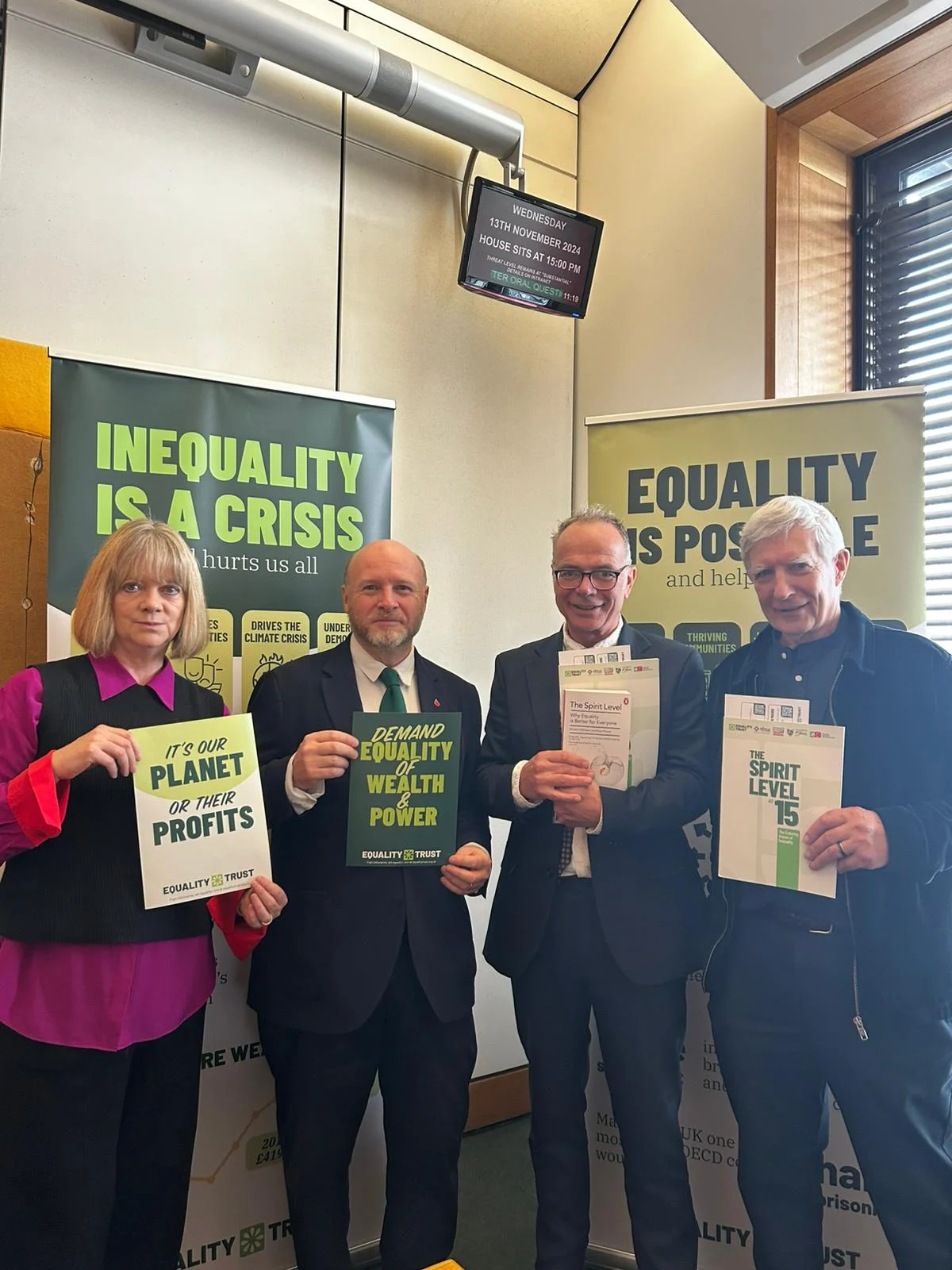
The Equality Trust, a leading advocacy group for economic reform, argues that moving closer to these models is not merely an economic necessity but a democratic one. Priya Sahni-Nicholas, Co-Executive Director of the Equality Trust, has noted that the current crisis provides an opportunity to ask whether a more independent British economy could work for everyone, rather than a narrow elite.
The Influence of Concentrated Wealth and Corporate Power
A significant barrier to this reorientation is the entrenched influence of extreme wealth within the British political and economic system. A recent briefing by the Equality Trust, titled "Money, Media and the Lords: How the Ultra-wealthy are Shaping Britain," details the feedback loop between concentrated corporate power and political influence.
The report highlights how oligopolies in the energy, technology, and defense sectors have successfully lobbied for regulations that favor large-scale incumbents over smaller, more innovative domestic firms. This has resulted in a "value extraction" economy, where profits are frequently funneled to overseas shareholders and Silicon Valley platforms rather than being reinvested in British communities.
In the context of the war in Iran, this influence is particularly visible in the defense sector. The UK’s reliance on American hardware means that British strategic autonomy is limited by the supply chains and export licenses controlled by Washington. This dependence creates a "gravitational pull" that makes it difficult for London to pursue a truly independent foreign policy without risking its primary defense relationships.
Strategic Recommendations for a Post-War Economy
To break this cycle of dependence and address the domestic inequality crisis, several economic strategies are being proposed by think tanks and reformist policymakers. These are not viewed as radical departures but as a return to the principles of "strategic autonomy" and "community wealth building."
- Community Wealth Building Strategy: This involves a nationwide effort to ensure that public procurement and local investment stay within the UK. By prioritizing local suppliers and cooperatives, the government can rebuild capacity in "left-behind" regions that have suffered under the deregulated American model.
- Domestic Industrial Investment: Rather than enriching overseas contractors for major infrastructure projects, a new industrial strategy would focus on building UK-based manufacturing capabilities, particularly in the green energy and technology sectors.
- Strengthened Financial Regulation: Moving away from speculative markets toward a "productive economy" would require stricter regulations on high-frequency trading and more incentives for long-term capital investment in British businesses.
- Robust Competition Policy: To counter the rise of oligopolies, the UK would need to empower regulators with "real teeth" to prevent the concentration of market power that allows a handful of corporations to dictate national policy.
Official Reactions and International Implications
The reaction from the British government has remained cautious. In a statement released yesterday, the Foreign, Commonwealth & Development Office (FCDO) reaffirmed the UK’s commitment to the "special relationship" while acknowledging the need for a "balanced approach" to global trade. However, sources within the Treasury suggest that there is a growing appetite for diversifying the UK’s economic partnerships, particularly with the European Union and the EFTA (European Free Trade Association) nations.
Internationally, the UK’s potential shift is being watched closely. European leaders in Brussels and Berlin have signaled a willingness to welcome a more "European-aligned" Britain, particularly in areas of defense cooperation and climate policy. Conversely, officials in Washington have warned that any significant move away from American standards and platforms could complicate future trade negotiations.
The markets have responded with volatility. The British pound saw a brief dip following reports of a potential strategic shift, but stabilized as investors weighed the benefits of increased stability and lower social inequality. Analysts at major financial institutions suggest that while the transition period would be challenging, a UK economy modeled on Northern European stability could be more resilient to the global shocks that are becoming increasingly common in the 2020s.
Conclusion: The Path Forward
The war in Iran is a tragedy of immense proportions, but it has also served as a mirror for the United Kingdom, reflecting the consequences of its long-term strategic choices. The "crossroads" described by analysts is a choice between continuing a path of dependency on an increasingly erratic American model or forging a new, more autonomous identity rooted in the principles of equity and community wealth.
As the civilian population in Iran continues to suffer, the pressure on the British government to act—not just diplomatically, but structurally—will only increase. The coming months will determine whether the UK treats this moment as a temporary crisis to be managed or as a catalyst for building an economy that serves the many rather than the few. The decision will define the United Kingdom’s place in the world for the remainder of the 21st century.