On Juneteenth, the Legacy Sites in downtown Montgomery, Alabama, open their doors from 8:30 am to 6:30 pm, inviting visitors to embark on a powerful journey through 400 years of American history. With free admission and no tickets required, the four interconnected sites — the Legacy Museum, the National Memorial for Peace and Justice, the Freedom Monument Sculpture Park, and Montgomery Square — offer a unique opportunity to honor the lives and memories of the 10 million Black people who endured enslavement in America, celebrating their indomitable courage and profound resilience. This annual observance at the heart of the former Confederacy provides a critical space for historical reckoning and contemplation on the ongoing struggle for racial justice.
Understanding Juneteenth: A National Day of Freedom and Reflection
Juneteenth, observed annually on June 19th, commemorates the day in 1865 when Union General Gordon Granger arrived in Galveston, Texas, to announce the end of slavery, more than two and a half years after President Abraham Lincoln’s Emancipation Proclamation. Though Lincoln’s proclamation was issued on January 1, 1863, its enforcement was contingent on Union army presence, and Texas, being the westernmost Confederate state, remained largely untouched by the war’s conclusion until Granger’s arrival. The news, delivered to an estimated 250,000 enslaved people in Texas, marked a delayed but profound moment of liberation, giving birth to a tradition of celebration that has persevered for over a century and a half.
For generations, Juneteenth was primarily celebrated by African Americans, particularly in Texas, with gatherings, picnics, and educational events. These celebrations served not only as a remembrance of freedom but also as a powerful affirmation of cultural identity and resilience in the face of persistent systemic oppression. In recent decades, awareness of Juneteenth has grown significantly across the United States. Following widespread calls for greater recognition of Black history and contributions, Juneteenth was officially designated a federal holiday on June 17, 2021, by President Joe Biden. This landmark decision underscored the holiday’s national significance, elevating it from a regional observance to a moment of collective national reflection on freedom, justice, and the unfinished work of equality. The Legacy Sites in Montgomery contribute significantly to this national conversation, providing tangible, immersive experiences that bring the history of Juneteenth to life.
The Equal Justice Initiative and the Genesis of the Legacy Sites
The creation of the Legacy Sites is the ambitious vision of the Equal Justice Initiative (EJI), a non-profit organization founded by acclaimed lawyer and social justice advocate Bryan Stevenson. EJI is dedicated to ending mass incarceration and excessive punishment in the United States, challenging racial and economic injustice, and protecting basic human rights for the most vulnerable people in American society. Stevenson’s work, chronicled in his bestselling memoir "Just Mercy," emphasizes the critical importance of confronting historical injustices as a prerequisite for achieving true reconciliation and equity.
EJI’s mission extends beyond legal advocacy to historical memorialization, recognizing that ignorance or denial of the nation’s brutal past – particularly regarding slavery and racial terror – perpetuates contemporary issues. Stevenson posits that "America has a narrative problem," having largely avoided a comprehensive public reckoning with its history of racial subjugation, unlike countries such as Germany regarding the Holocaust or South Africa regarding apartheid. The Legacy Sites were conceived as a response to this narrative deficit, designed to educate the public about the true scope and impact of slavery, racial terrorism, and segregation, and to draw direct lines to present-day racial injustice.
The choice of Montgomery, Alabama, as the location for these sites is profoundly symbolic. Montgomery served as the first capital of the Confederacy and was a major hub for the domestic slave trade, where thousands of enslaved people were bought and sold. Later, it became a pivotal battleground in the Civil Rights Movement, from the Montgomery Bus Boycott to the Selma to Montgomery marches. This dual history makes Montgomery a crucible of both oppression and resistance, an ideal setting for EJI’s endeavor to chronicle the American story of racial injustice and the struggle for freedom.
A Journey Through American History: The Legacy Museum
The Legacy Museum: From Enslavement to Mass Incarceration, which opened in April 2018, offers visitors a deeply immersive and often harrowing experience. Situated on the site of a former slave warehouse, the museum utilizes state-of-the-art technology, compelling narratives, and powerful artifacts to trace a continuous line from the transatlantic slave trade to the contemporary challenges of mass incarceration. The museum begins with sensory exhibits that evoke the horrors of the slave market, including holograms of enslaved individuals recounting their stories, designed to confront visitors with the human cost of this institution.
Beyond the era of chattel slavery, the museum meticulously documents the subsequent periods of racial terror lynchings, Jim Crow segregation, and the legal and extra-legal systems designed to maintain white supremacy. It employs interactive media, historical documents, and first-person accounts to illuminate the brutal realities of these periods. A significant portion of the museum is dedicated to drawing parallels between historical injustices and contemporary issues, particularly the disproportionate rates of incarceration among Black Americans. Data visualizations, personal testimonies from incarcerated individuals, and analyses of racial bias in the criminal justice system challenge visitors to understand how historical legacies continue to shape present-day inequities. The museum serves as a powerful educational tool, designed to provoke introspection and foster a deeper understanding of systemic injustice.
Confronting Racial Terror: The National Memorial for Peace and Justice
Just a short distance from the Legacy Museum stands the National Memorial for Peace and Justice, also opened in April 2018. Often referred to as the "lynching memorial," it is the nation’s first memorial dedicated to the victims of racial terror lynchings. The memorial’s design is stark and profound: more than 800 corten steel monuments, each six feet tall, representing the counties across the United States where lynchings occurred. Initially, these monuments are at eye level, but as visitors walk through the memorial, the ground slopes downward, causing the columns to rise above, symbolizing the thousands of lynching victims who were elevated and dehumanized.
Each steel column is inscribed with the names of lynching victims, meticulously documented by EJI, numbering over 4,400 from 1877 to 1950. The sheer volume of names, often unknown to the broader public, is overwhelming and serves as a powerful testament to the widespread nature of racial terror. The memorial is an intentional space for remembrance, reflection, and healing. It forces a direct confrontation with a brutal chapter of American history that has largely been suppressed or ignored, aiming to foster an era of truth-telling and reconciliation. The memorial’s design also includes a field of duplicate monuments, intended to be claimed by the counties they represent, bringing the history of racial terror back to its specific communities for local remembrance and reconciliation efforts.
Honoring Resilience: The Freedom Monument Sculpture Park
Opened in 2024, the Freedom Monument Sculpture Park is the newest and largest of the Legacy Sites, spanning 17 acres along the banks of the Alabama River. This location is strategically significant, as the river was a primary transportation route for the domestic slave trade, carrying countless enslaved people into the Deep South. The park specifically explores the institution of slavery, the daily lives of enslaved people, and the enduring legacy of slavery in the United States through a series of evocative sculptures and installations.
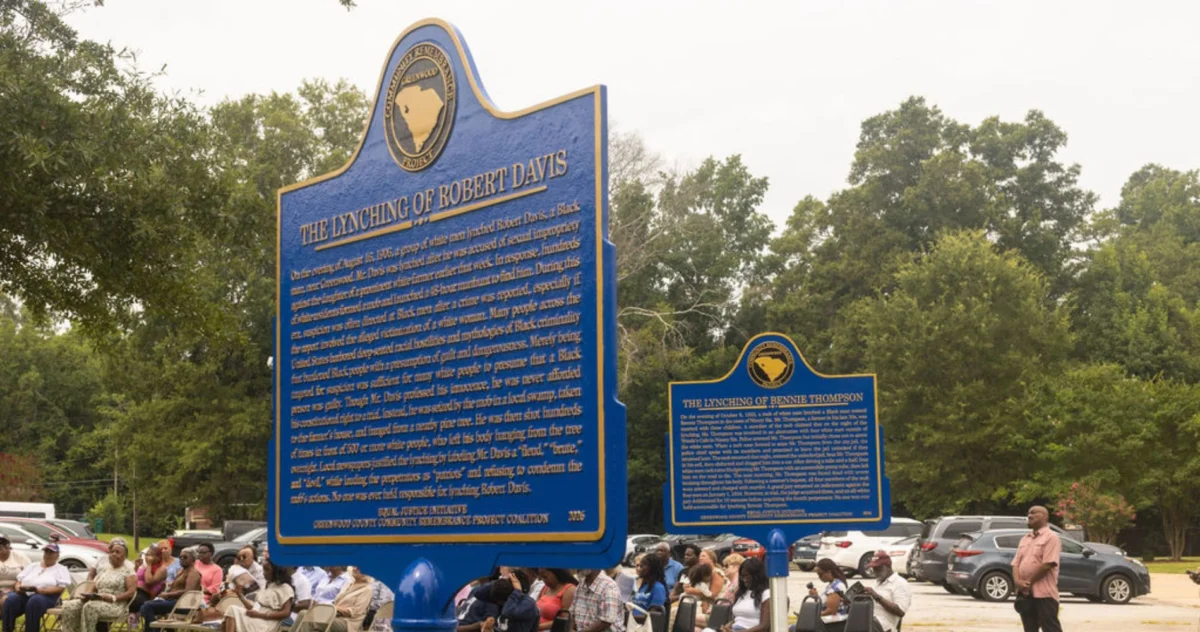
The park features original 19th-century slave pens, brought from an auction site in North Carolina, offering a chillingly authentic glimpse into the physical spaces of bondage. It also showcases commissioned artworks by leading contemporary artists, addressing themes of resilience, resistance, and the profound human spirit that persevered despite unimaginable hardship. Among its most striking features are a collection of historical markers detailing the specific stories of individuals and families caught in the slave trade, grounding the abstract statistics in personal narratives. The Freedom Monument Sculpture Park has quickly been hailed as an "essential American experience," particularly relevant as the nation approaches its 250th birthday, offering a crucial perspective on the foundational injustices that shaped its development.
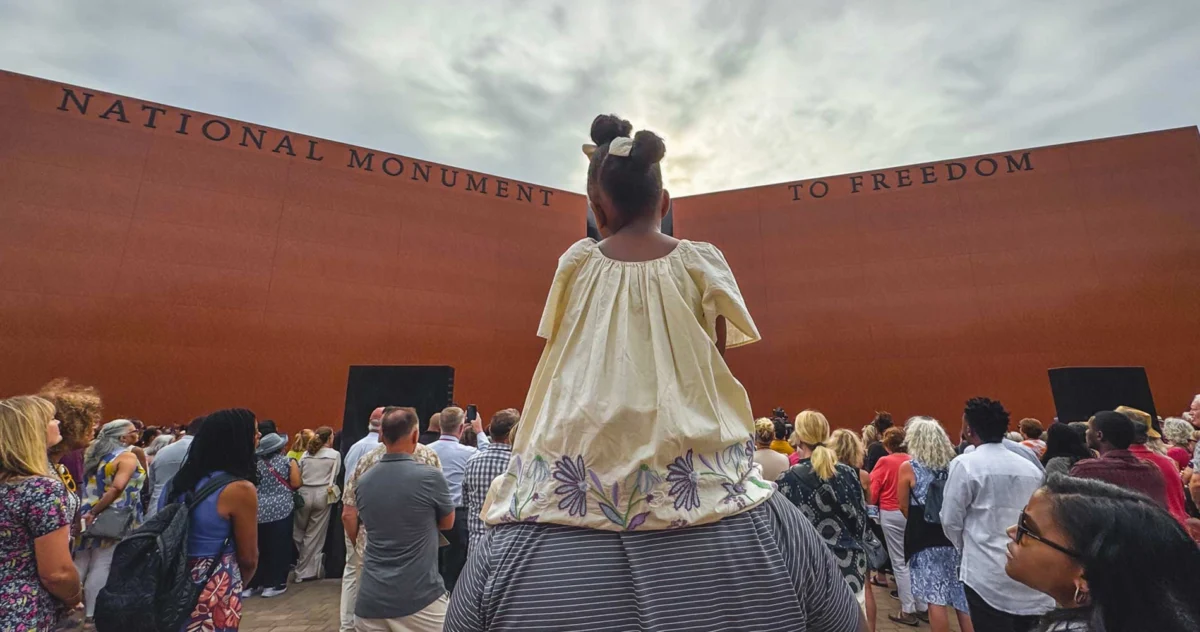
At the heart of the park is the soaring National Monument to Freedom, a testament to the strength and enduring legacy of formerly enslaved people. This monument, dedicated on a past Juneteenth, is inscribed with 122,000 unique surnames, meticulously collected by EJI, representing millions of Black families who have carried these names across generations. Many of these names originated from slaveholders, yet through generations of perseverance, love, and community, they have become symbols of heritage and identity. The monument serves as a powerful connection to ancestral courage, strength, and resilience for tens of millions of descendants, acknowledging their journey from bondage into the 21st century.
The Spirit of Activism: Montgomery Square
Montgomery Square, the final piece of the Legacy Sites constellation, reminds visitors that racial injustice and threats to voting rights are not relics of the past but ongoing challenges that can be overcome. This site is dedicated to the decade of extraordinary activism from 1955 to 1965, a period that began with the unprecedented and victorious resistance of the Montgomery Bus Boycott and culminated in the signing of the Voting Rights Act. It honors the spirit, the lives, the courage, and the tenacity of those who worked together to change a nation and, indeed, the world.
The Square pays homage to figures like Rosa Parks, whose defiant act of refusing to give up her seat sparked the Bus Boycott, and Dr. Martin Luther King Jr., who rose to prominence leading the movement. It highlights the collective power of ordinary Black residents who, with immense courage and determination, stood up against codified racial injustice in Montgomery. Through interpretive markers and public art, the site chronicles key events, legal battles, and the daily struggles and triumphs of the Civil Rights Movement, emphasizing that the fight for equality was a protracted and arduous one. Montgomery Square serves as an inspiring reminder that collective action and unwavering commitment to justice can dismantle oppressive systems and forge a path toward a more equitable future. Its message resonates particularly strongly in an era marked by renewed debates over voting rights and civil liberties.
Statements, Reactions, and Broader Implications
The Legacy Sites have garnered widespread acclaim since their inception, drawing hundreds of thousands of visitors annually from across the globe. Bryan Stevenson has consistently articulated the necessity of these sites, stating, "Truth and reconciliation are sequential. You can’t have reconciliation without truth. We have to tell the truth about our past if we want to move forward." This sentiment is echoed by countless visitors who describe their experience as profoundly moving, educational, and transformative. Reviews frequently highlight the emotional impact of confronting history in such a direct and unvarnished manner, often leading to a deeper understanding of systemic racism and a renewed commitment to social justice.
Local officials in Montgomery have acknowledged the significant impact of the Legacy Sites, not only in terms of historical education but also on local tourism and economic development. Mayor Steven L. Reed has emphasized the city’s embrace of its complex history, noting that the sites contribute to a more complete and honest narrative of Montgomery’s past and present. The EJI’s Juneteenth 2025 celebration, which featured musical performances and community gatherings in Montgomery, exemplifies the organization’s commitment to making history accessible and engaging, blending solemn remembrance with cultural celebration.
The broader implications of the Legacy Sites extend far beyond their physical location. They serve as a national model for historical memorialization and truth-telling, influencing discussions on how other communities might confront their own difficult histories. By meticulously documenting and presenting the interconnectedness of enslavement, racial terror, segregation, and mass incarceration, EJI provides an invaluable framework for understanding the enduring legacy of racial hierarchy in America. The sites challenge the national conscience, urging a critical examination of how historical injustices continue to manifest in contemporary society.
On this Juneteenth, the invitation to visit the Legacy Sites in Montgomery is more than a suggestion for a historical excursion; it is a call to action. It is an opportunity to reckon with the profound and often painful history of slavery, to honor the lives of generations of people who endured and persevered, who hoped and loved in the face of tremendous hardship and suffering. It is a chance to experience the power of confronting injustice in the very places where it was perpetrated and resisted, and to share in the strong conviction that the nation has come too far to turn around now in its pursuit of true equality and justice for all. The Legacy Sites stand as enduring monuments not only to suffering but also to the enduring human spirit, serving as beacons for a future where truth-telling paves the way for genuine reconciliation and liberation.