GENEVA, Switzerland (July 9, 2026) – In a profound testament to the interconnectedness of Indigenous rights and global climate action, leaders from the A’uwá-Xavante and Xikrin peoples of Brazil have undertaken a remarkable 9,000-kilometer journey from the heart of the Brazilian Cerrado to the United Nations in Geneva. Their mission: to confront the fundamental question underpinning the world’s burgeoning "green" energy boom: who truly bears the cost of this global clean transition, and at what human and environmental price?
Their arrival coincides with the 19th session of the UN Expert Mechanism on the Rights of Indigenous Peoples (EMRIP), commencing on July 13th and concluding on July 17th. During this pivotal forum, the Indigenous delegates will officially launch their international advocacy campaign, "Let the A’uwá-Xavante Keep Dreaming," aiming to expose a critical paradox embedded within current climate policies. Projects heralded as solutions to the climate crisis – particularly large-scale infrastructure and mining operations – are advancing across Indigenous territories, often without the free, prior, and informed consent (FPIC) of the very peoples whose ancestral lands are most directly impacted.
The "Green" Promise Versus the Reality on the Ground
At the forefront of the A’uwá-Xavante’s concerns is the Ferrovia de Integração do Centro-Oeste (FICO), a federal railway project ostensibly designed to facilitate low-carbon logistics for Brazil’s booming agribusiness exports. For the A’uwá-Xavante, however, this "green" infrastructure represents a grave threat to their cultural survival and territorial integrity. They contend that the project is proceeding without genuine FPIC, jeopardizing the sacred sites, vital water sources, and intricate food systems that underpin their ceremonial life and spiritual well-being.
The A’uwá-Xavante worldview posits that their territory is not merely land but a living entity, intrinsically linked to their ability to sustain their traditions, preserve their ancestral memory, and, crucially, to dream. In their cultural understanding, dreams are not abstract metaphors but a vital conduit for knowledge, guidance, and the continuation of their community’s spiritual and practical wisdom. Elders receive songs, ceremonies, and directives for their communities through these profound nocturnal experiences. To fragment their territory, leaders emphatically warn, is to fragment their people and sever this essential connection to their ancestral knowledge and future aspirations.
The delegation arrives in Geneva armed with documented evidence of their concerns. They cite fragmented consultation processes, instances of undue pressure exerted upon communities, and a pattern where the Brazilian state appears to prioritize development narratives over the fundamental rights of Indigenous peoples. This approach, they argue, risks exacerbating a long and painful history of violations against the Xavante people, who endured forced removals and devastating epidemics in the 20th century before returning to their ancestral lands to rebuild their lives and cultures.
A Pattern of Dispossession: From the Cerrado to the Jequitinhonha
The message carried by the A’uwá-Xavante and Xikrin leaders extends far beyond the immediate threat posed by the FICO railway. Their journey and advocacy highlight a disturbing pattern repeating across Brazil, where the pursuit of resources for the global green economy is encroaching upon Indigenous territories and ancestral lands.
In the Jequitinhonha Valley, a region already grappling with significant socio-economic challenges, lithium mining operations are advancing into the territories of the Aranã Caboclo, Pankararu, and Pataxó Peoples, as well as Quilombola communities. This lithium is destined for the global battery supply chain, a critical component for electric vehicles and renewable energy storage – technologies central to the global clean energy transition. For these communities, the Jequitinhonha River is not simply a resource to be exploited; it is a sacred relative, a life-giving force. When its basin is transformed into a "sacrifice zone" for the sake of "clean" energy, an entire way of life, deeply interwoven with the natural world, is placed at existential risk.
The fundamental question the delegation poses to governments, multinational corporations, financial institutions, and investors is stark and irrefutable: Can a truly just transition be built upon an unjust foundation? They argue that no climate solution can legitimately be founded upon the violation of Indigenous rights, the erosion of Free, Prior and Informed Consent, or the systematic conversion of living rivers, forests, and ancestral lands into expendable sacrifice zones.
Contextualizing the UN Expert Mechanism on the Rights of Indigenous Peoples (EMRIP)
The EMRIP, a subsidiary body of the UN Human Rights Council, was established in 2007. Its mandate is to provide expertise on the rights of Indigenous peoples and to assist Member States in implementing the principles enshrined in the UN Declaration on the Rights of Indigenous Peoples (UNDRIP). The UNDRIP, adopted by the General Assembly in 2007, affirms the individual and collective rights of Indigenous peoples, including their rights to their lands, territories, and resources, as well as their right to self-determination and cultural integrity. The EMRIP sessions offer a crucial platform for Indigenous peoples to voice their concerns directly to the international community and to hold states accountable for their commitments to Indigenous rights.
A Call to Action: "Let the Xavante Dream"
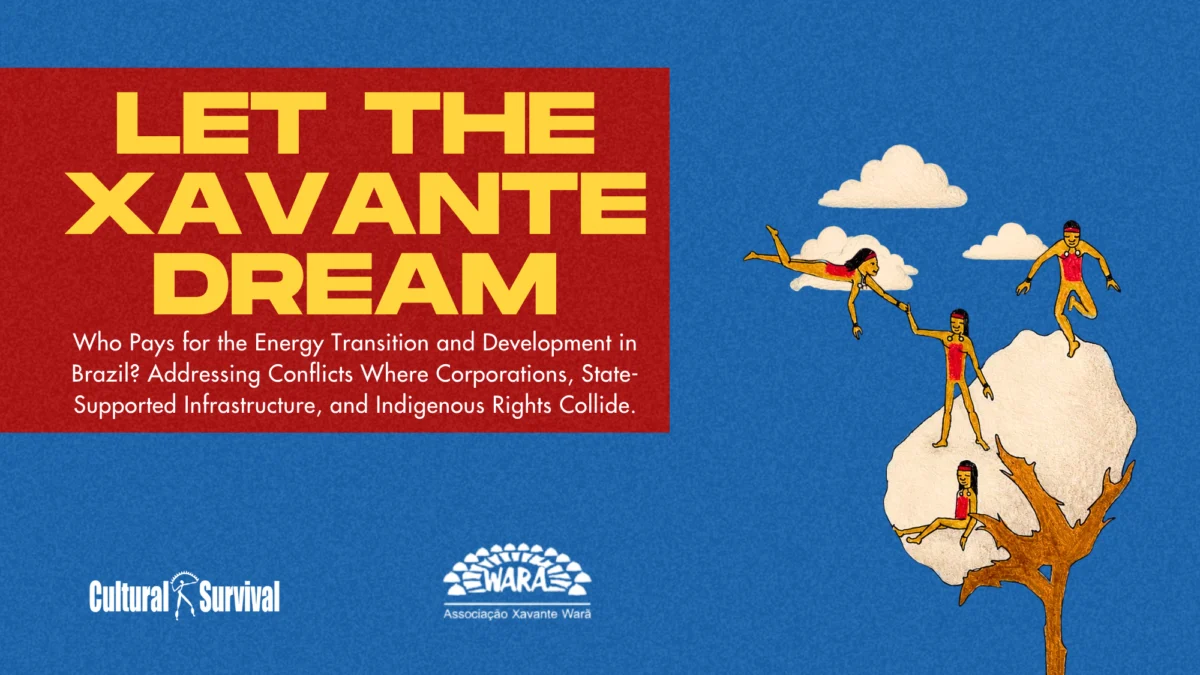
To amplify their message and foster international solidarity, the delegation will participate in a critical side event during the EMRIP session. This event, titled "Let the Xavante Dream: Who Pays for the Energy Transition and Development in Brazil? Addressing Conflicts Where Corporations, State-Supported Infrastructure, and Indigenous Rights Collide," is scheduled for Wednesday, July 15, 2026, at 10:00 a.m. in Room XI, Building A, at the Palais des Nations in Geneva.
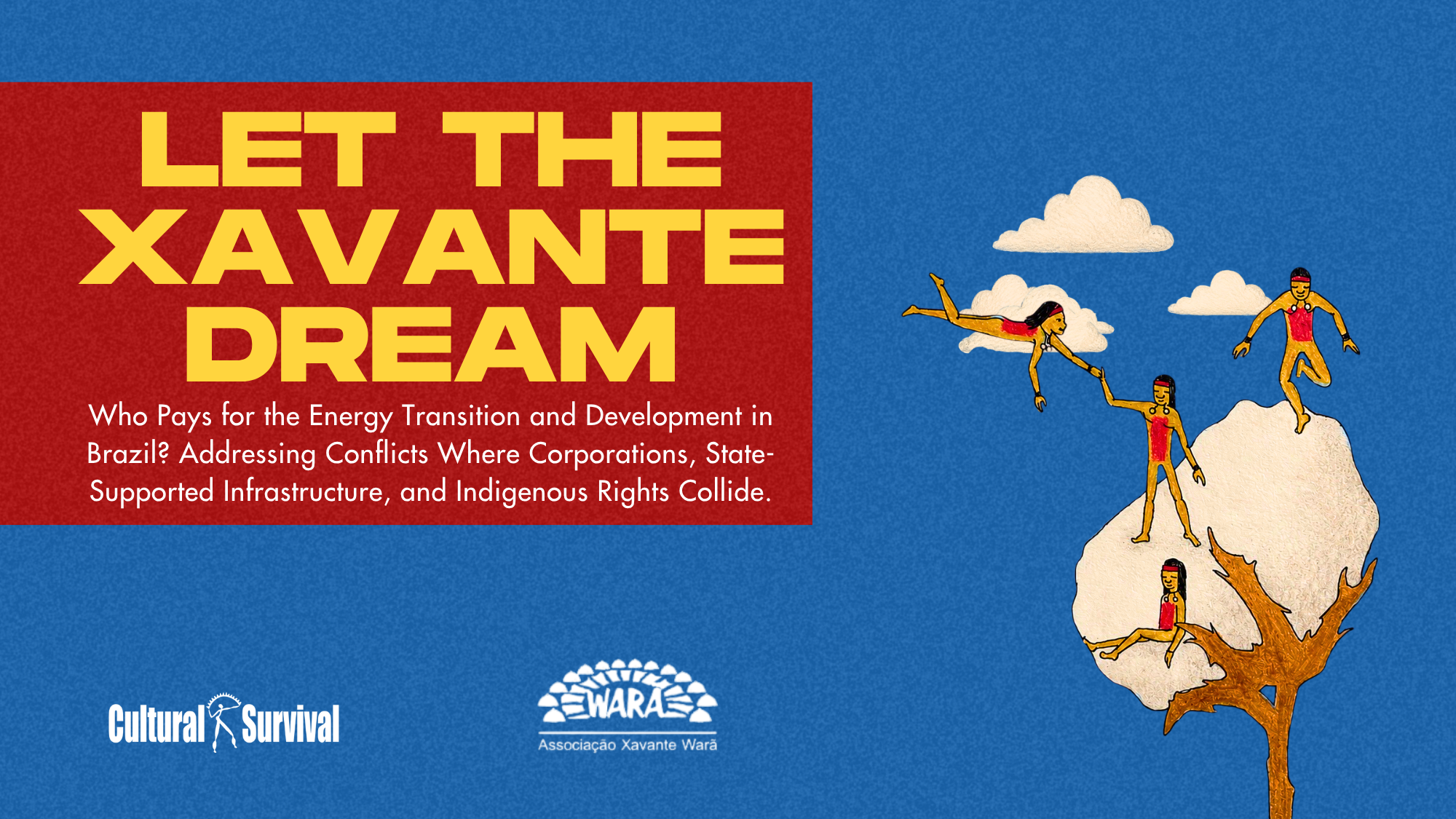
The event will feature presentations from Indigenous leaders, human rights defenders, and international experts. It will also mark the official launch of the advocacy brief, "Let the A’uwá-Xavante Keep Dreaming." This comprehensive brief, developed in close partnership with A’uwá-Xavante leadership, outlines a multifaceted advocacy strategy encompassing litigation, international lobbying, and a global solidarity campaign. The brief is a critical tool designed to inform policymakers, raise public awareness, and mobilize support for the A’uwá-Xavante’s struggle to protect their ancestral lands and cultural heritage. Interviews with delegates will be available in Portuguese, Xavante (with interpretation), Spanish, and English before, during, and after the EMRIP session.
The Voices of Resilience and Resistance
The delegation represents a powerful coalition of Indigenous leaders and advocates, each bringing unique perspectives and decades of experience in defending their peoples’ rights:
-
Hiparadi Dzutsi Wa Top Tiro (Xavante), chief of Abelhinha Village within the Sangradouro Indigenous Territory, serves as a pivotal figure in the Rede Cerrado network and is a founder of the Associaçāo Xavante Warã and the Mobilizaçāo dos Povos Indígenas do Cerrado (MOPIC). A lifelong defender of the Cerrado, the world’s most biodiverse savanna and often described as Brazil’s "forgotten frontline," he brings an intimate understanding of the ecological and cultural significance of the region.
-
Missia Ihiwe Urace (Xavante), a respected leader from the Areões community in the Mutum Indigenous Territory, also holds the position of Secretary of Sports and Leisure for the municipality of Nazaré, Mato Grosso. Her dual role highlights the complex intersection of Indigenous governance, local politics, and the ongoing struggle for land rights.
-
Bekroiti Xikrin (Xikrin), a vibrant youth leader, educator, and researcher, is the manager of the Komrã Xikrin Indigenous Association. Pursuing a master’s degree in Languages and Literature, Bekroiti is a key advisor to the Ação Saberes Indígenas na Escola initiative, dedicated to integrating Indigenous knowledge systems into Brazil’s formal education system, thus ensuring the transmission of cultural heritage to future generations.
The delegation is further supported by staff from Cultural Survival, a leading Indigenous-led NGO that has championed Indigenous rights for over five decades:
- Edson Krenak (Krenak), Brazil Program Manager, brings extensive experience in supporting Indigenous communities across Brazil.
- Djalma Ramalho (Aranã Caboclo), Brazil Special Projects Associate, contributes vital expertise in project development and implementation.
- Thais Soares Pellosi, Executive Assistant, provides crucial operational and logistical support.
Broader Implications for Global Climate Action
The A’uwá-Xavante’s journey to Geneva is more than just a plea for their own land; it is a critical intervention in the global discourse on climate change and development. Their message challenges the prevailing narrative that often overlooks the foundational requirement of respecting human rights and Indigenous sovereignty when implementing climate solutions.
The implications of their advocacy are far-reaching. As governments and corporations worldwide commit to ambitious decarbonization targets, there is an increasing demand for raw materials such as lithium, copper, and rare earth minerals, often found in or near Indigenous territories. Without robust mechanisms for Free, Prior and Informed Consent, and without genuine benefit-sharing, these resource extraction projects risk perpetuating colonial patterns of exploitation, leading to environmental degradation, social disruption, and the erosion of Indigenous cultures.
The delegation’s presence at the UN serves as a powerful reminder that the "green" transition cannot be truly just or sustainable if it proceeds at the expense of the world’s most vulnerable populations and the ecosystems they steward. Their demand for accountability from states, corporations, and financial institutions underscores the urgent need for a paradigm shift in how climate action is conceived and implemented, placing human rights and environmental justice at its absolute core. The question they pose is not merely rhetorical; it is an imperative for a future where both the planet and its peoples can thrive.
About Cultural Survival
Cultural Survival (CS) is an Indigenous-led non-governmental organization and a registered non-profit in the United States, dedicated to advocating for Indigenous Peoples’ rights and supporting their self-determination, cultural resilience, and political agency since its founding in 1972. For over 53 years, Cultural Survival has forged enduring partnerships with Indigenous communities worldwide, working to advance their rights and preserve their diverse cultures. The organization envisions a future where Indigenous Peoples’ inherent rights and dynamic cultures are respected and celebrated, deeply interwoven with their lands, languages, spiritual traditions, and artistic expressions, all rooted in self-determination and self-governance. The cornerstone of Cultural Survival’s efforts lies in its commitment to supporting, amplifying the voices of, and raising awareness about the importance of self-determination for Indigenous communities globally. For more information, please visit www.cs.org.
Media Contact:
Agnes Portalewska
Senior Communications Manager
[email protected]