With congressional primaries already underway and the crucial 2026 midterm elections on the horizon this fall, a significant divide has emerged among American voters regarding the desired approach of their elected representatives. A comprehensive report from the Pew Research Center reveals that voters across both major partisan coalitions are nearly evenly split on whether they prioritize candidates who seek common ground with the opposing party or those who will vigorously pursue the policies favored by their own party’s base. This division presents a complex challenge for candidates as they navigate the pre-election landscape, with implications for legislative strategy and voter engagement.
The Core Divide: Compromise or Conviction?
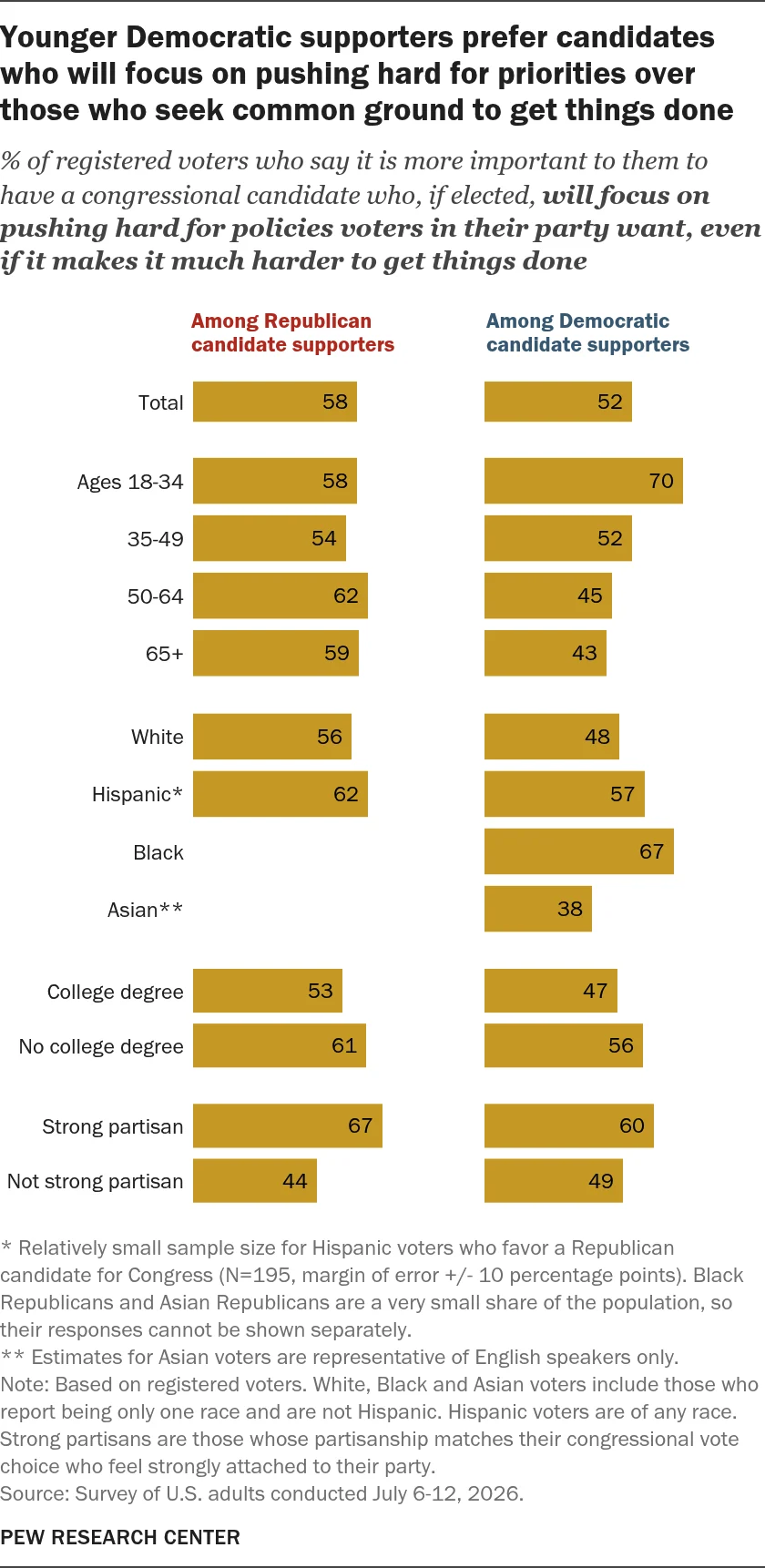
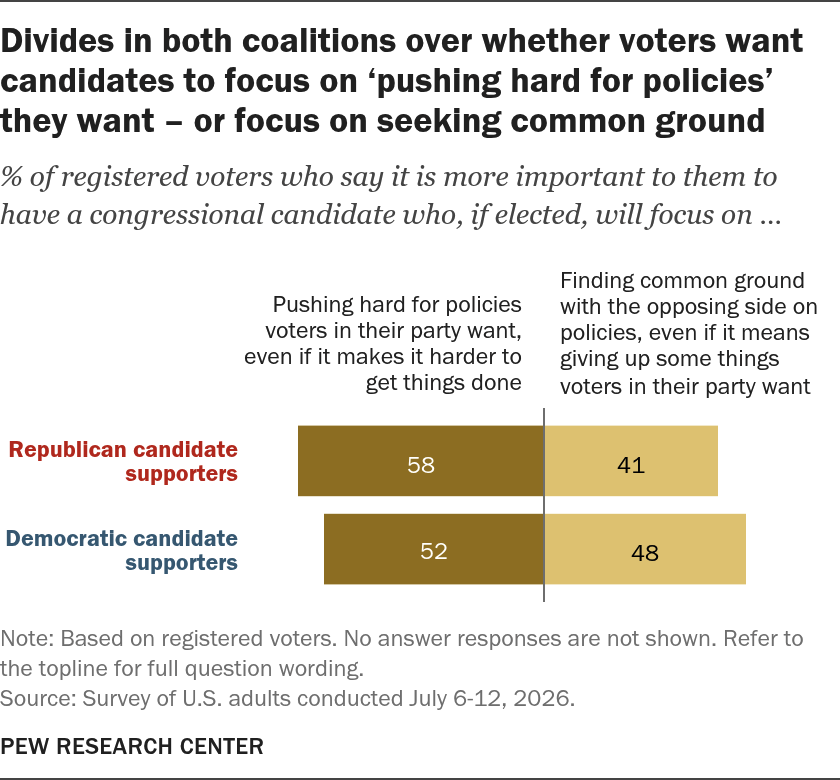
The survey data, conducted from July 6-12, 2026, indicates that 58% of registered voters who support Republican candidates for Congress believe it is more important for their elected officials to push hard for the policies their party wants, even if it complicates legislative progress. Conversely, 41% of these Republican supporters prefer a candidate who will prioritize finding common ground with Democrats, even if it means making concessions.
On the Democratic side, the split is even narrower. Fifty-two percent of Democratic candidate supporters favor a candidate who will prioritize their voters’ policy preferences, while 48% believe it is more important for a candidate to seek common ground with Republicans. This near-even distribution within the Democratic coalition underscores a palpable tension between the desire for assertive partisan action and the appeal of bipartisan cooperation.
This fundamental divergence in voter expectations suggests a potential mandate dilemma for whichever party gains control of Congress. Candidates who lean heavily into partisan priorities might energize their base but risk alienating moderate voters and hindering their ability to pass legislation in a potentially closely divided chamber. Conversely, candidates who emphasize compromise may appeal to a broader electorate but could face backlash from a base that yearns for decisive action and a clear ideological victory.
Engagement and Ideological Intensity
The research also sheds light on the relationship between voter preference for a candidate’s approach and their engagement with the 2026 midterm elections. A notable pattern emerges: voters who advocate for candidates committed to aggressively pursuing their party’s agenda appear to be more invested in the election cycle than those who prioritize compromise.
For Republican voters, this trend is particularly pronounced. Among those who want a Republican candidate to focus on pushing hard for policies, a significant 80% state that it "really matters which party wins control of Congress." This contrasts sharply with the 71% of Republican supporters who prefer a candidate focused on finding common ground, indicating a higher level of urgency and ideological commitment among those who favor a more combative political style.
Furthermore, Republican voters who champion a more assertive candidate approach are also more likely to have dedicated significant thought to the midterm elections. Thirty percent of these voters report having thought "a lot about congressional elections," compared to only 15% of those who prefer compromise. This suggests that a desire for strong partisan leadership correlates with deeper engagement and a greater sense of stakes in the election outcome.
A similar, though slightly less pronounced, pattern is observed within the Democratic coalition. Eighty percent of Democratic supporters who want a candidate to prioritize fighting for their party’s policies report that the outcome of the election "really matters." This compares to 71% among those who place a higher value on compromise.
In terms of election attentiveness, 46% of Democratic voters who favor a candidate focused on pushing for their party’s priorities have thought "a lot about the midterms." This figure dips to 39% among those who emphasize compromise. These findings suggest that a strong ideological stance and a commitment to partisan goals are powerful drivers of voter engagement, potentially influencing campaign strategies and voter mobilization efforts.
Demographic Nuances Within Coalitions
Beyond the overarching partisan divide, the Pew Research Center’s analysis reveals significant demographic variations within both the Republican and Democratic coalitions that shape candidate preferences.
Within the Republican Coalition:
While a majority of Republican supporters favor a candidate who pushes hard for party policies, this preference is particularly strong among those who identify as "strong partisans." Sixty-seven percent of strong Republican partisans want a candidate who will focus on pushing hard for policies, as opposed to finding common ground. This indicates that a robust ideological commitment is a key predictor of the desire for assertive, uncompromising leadership. Conversely, Republican voters who are not strong partisans are more evenly split, with 44% favoring a more combative approach and 49% preferring common ground. This suggests that a less intensely partisan Republican base might be more receptive to candidates who signal a willingness to engage in bipartisan efforts.
Within the Democratic Coalition:
The Democratic coalition exhibits more pronounced demographic differences, particularly concerning age and race.
-
Age: A striking generational divide is evident among Democratic voters. A substantial 70% of Democratic supporters aged 18-34 prefer candidates who will focus on pushing hard for Democratic policies. This preference diminishes significantly with age, with only 43% of Democratic voters aged 65 and older expressing the same sentiment. This suggests that younger Democrats are more inclined towards a confrontational political style, while older Democrats may be more open to or supportive of bipartisan approaches. The 35-49 age group remains relatively evenly split (52% for pushing hard, 52% for common ground), while those aged 50-64 show a slight preference for pushing hard (45% common ground vs. 52% pushing hard).
-
Race and Ethnicity: Racial and ethnic demographics also play a role in shaping Democratic voter preferences. Black Democratic voters show the strongest preference for candidates who will push hard for their party’s priorities, with two-thirds (67%) holding this view. Hispanic Democratic voters also lean towards this approach, with 57% preferring candidates who prioritize partisan policies. White Democratic voters are more evenly divided, with 48% preferring pushing hard and 52% preferring common ground. Asian Democratic voters, however, are less likely to favor a combative stance, with only 38% preferring candidates who push hard over those who seek common ground.
-
Education: Educational attainment also appears to influence preferences within the Democratic coalition. Those with a college degree are more evenly split on the preferred candidate approach (47% for pushing hard, 53% for common ground), whereas those without a college degree show a stronger preference for candidates who will push hard for policies (56% pushing hard, 44% common ground).
These demographic fissures within both coalitions highlight the complex and multifaceted nature of voter sentiment heading into the 2026 midterms. Candidates will need to carefully tailor their messages to resonate with specific segments of their party’s base while also considering the broader electorate.

Context and Implications for the 2026 Midterms
The 2026 midterm elections are occurring against a backdrop of intense partisan polarization and a landscape where legislative compromise has often been elusive. The survey findings from Pew Research Center offer a crucial insight into the electorate’s appetite for different styles of representation.
For incumbents and challengers alike, understanding these divisions is paramount. A candidate who solely focuses on aggressive partisan advocacy might energize a core group of voters but could struggle to win over swing voters or independents who may be weary of political gridlock. Conversely, a candidate who champions bipartisan cooperation might appeal to a broader audience but risks being perceived by their party’s base as insufficiently committed to their core principles.
The data also suggests a potential correlation between a candidate’s ideological firmness and their ability to mobilize voters. Those who express a desire for strong partisan leadership appear to be more engaged and invested in the electoral process. This could translate into higher turnout among these segments of the electorate, a critical factor in close elections.
The Pew Research Center’s report, published on July 23, 2026, is part of a larger ongoing examination of American voters’ perspectives as they approach the 2026 midterm elections. The detailed survey data provides a granular look at voter attitudes that will undoubtedly shape campaign strategies and the legislative agenda in the years to come. As the election cycle intensifies, the challenge for candidates will be to navigate these competing demands, seeking to balance the desire for decisive action with the enduring need for effective governance that serves a diverse electorate. The outcome of this balancing act could significantly influence the direction of policy and the nature of political discourse in the United States.