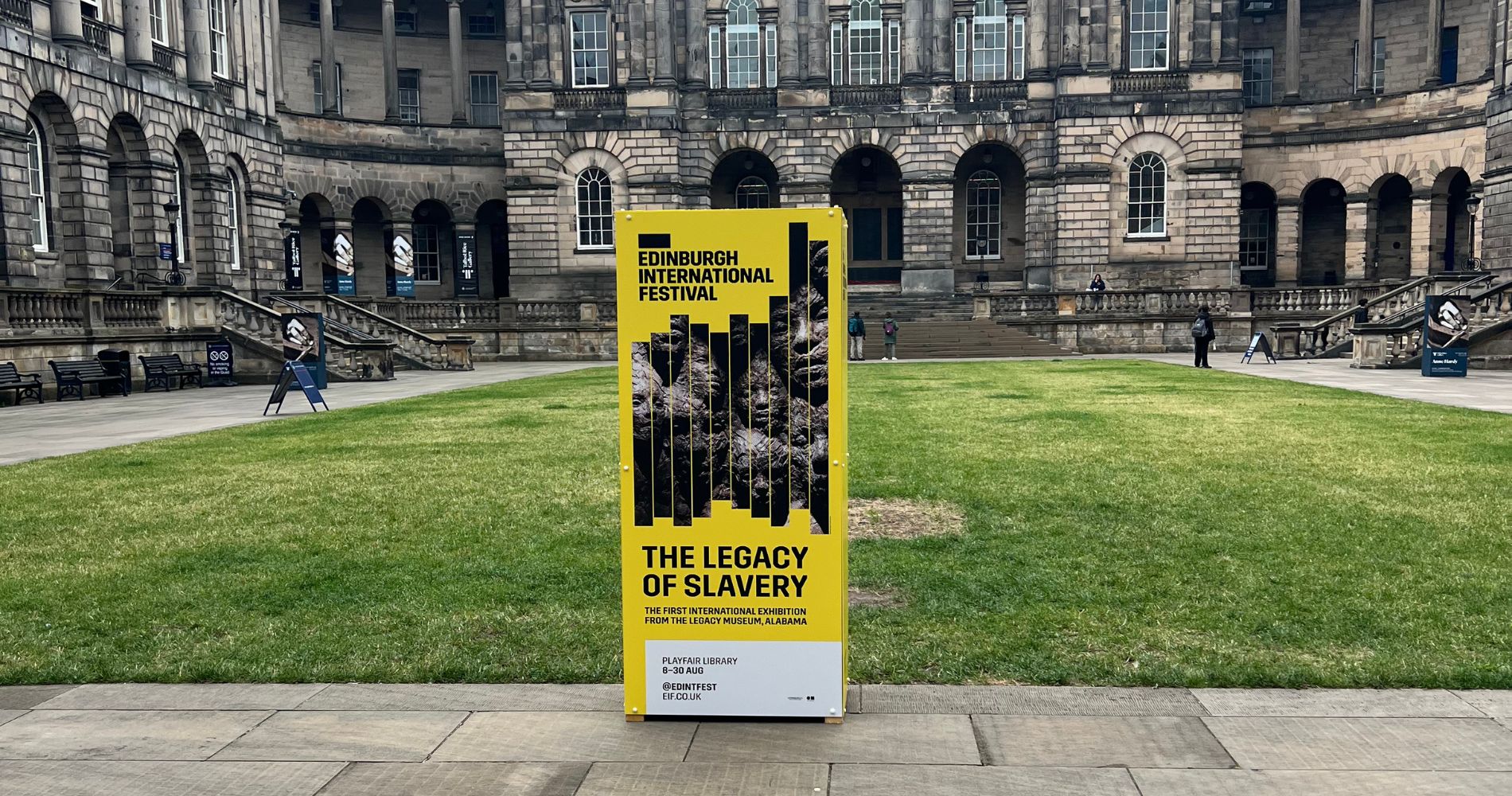
The Edinburgh International Festival, a cornerstone of global culture since its inception in 1947, has long served as a vessel for international reconciliation and artistic inquiry. This August, the festival reaches a significant milestone in its pedagogical mission by hosting The Legacy of Slavery in America, a profound exhibition curated by the Equal Justice Initiative (EJI). Marking the first time the festival has incorporated a museum-grade narrative experience into its program, the exhibition transforms the University of Edinburgh’s Playfair Library into a site of deep historical interrogation. By bringing an abridged version of the Alabama-based Legacy Museum to Scotland, EJI provides an international audience with a visceral exploration of the United States’ complex history of racial injustice.
The Intersection of Art, History, and Justice
The arrival of this exhibition coincides with the festival’s 2026 theme, All Rise, a clarion call for empathy and truth-telling through creative endeavor. While the festival traditionally celebrates the performative arts—theatre, opera, dance, and music—the inclusion of EJI’s work underscores a growing recognition that artistic expression is often forged in the fires of social struggle.
The exhibition, which remains open to the public daily from 10:00 am to 5:00 pm through August 30, utilizes a multidisciplinary approach to convey its message. Visitors encounter a narrative journey constructed through archival documents, first-person testimonies, evocative visual installations, and short-form documentary films. This immersive methodology is designed to trace the evolution of racial hierarchy from the inception of the Transatlantic Slave Trade to the contemporary challenges of systemic over-incarceration.
A Chronology of Institutionalized Inequality
To understand the scope of the exhibition, one must look at the historical trajectory it outlines. The narrative does not treat the abolition of slavery in 1865 as a definitive conclusion to racial inequality; rather, it posits that the ideology of white supremacy underwent a metamorphosis.
The Evolution of the False Narrative
- The Era of Enslavement (1619–1865): The foundation of the American racial hierarchy was built upon the economic necessity of the Transatlantic and Domestic Slave Trades. The exhibition highlights how the myth of inherent racial difference was manufactured to justify the commodification of human life.
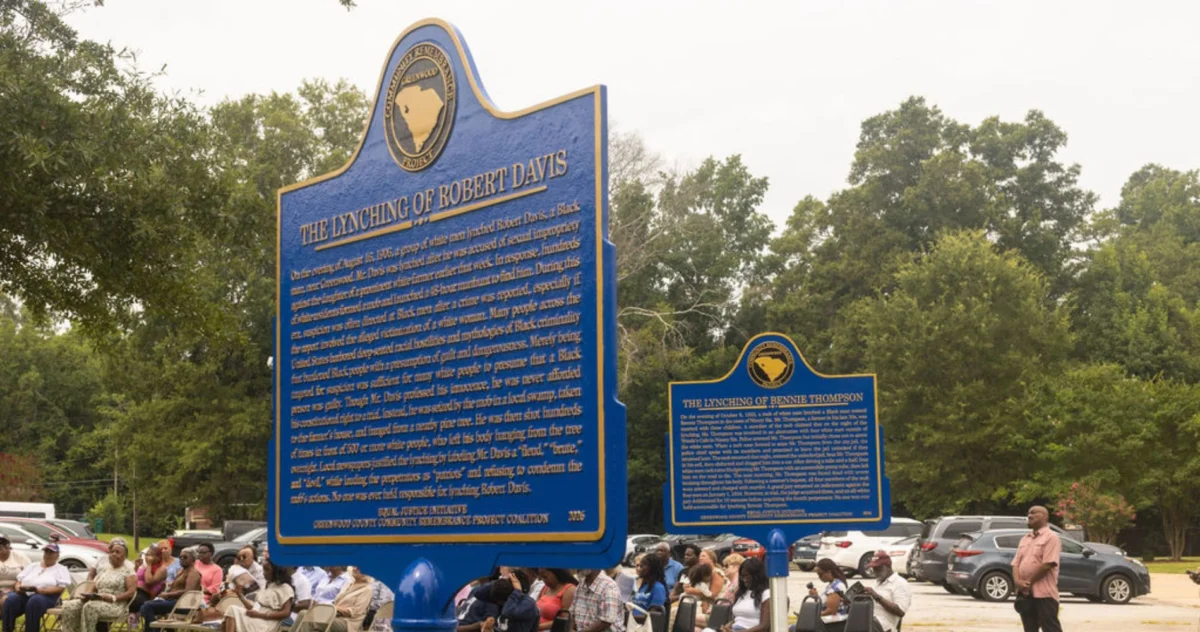
- The Era of Racial Terror (1865–1940s): Following the Civil War and the collapse of Reconstruction, the United States saw a surge in extrajudicial violence. Research cited by EJI indicates that thousands of Black Americans were victims of racial terror lynchings—acts of violence intended to enforce social control and maintain the status quo of white dominance.
- The Era of Codified Segregation (1890s–1960s): The emergence of Jim Crow laws institutionalized the separation of races, ensuring that Black Americans remained politically, economically, and socially marginalized.
- The Contemporary Era (1970s–Present): The final chapter of the exhibition examines the rise of mass incarceration. By analyzing the shift from segregation to a system of over-policing and punitive justice, EJI argues that the underlying philosophy of racial hierarchy remains a persistent, albeit rebranded, force in American society.
Data and Historical Context
The weight of the exhibition is supported by extensive research conducted by the Equal Justice Initiative over decades. EJI’s broader work, including the four "Legacy Sites"—the Legacy Museum, the National Memorial for Peace and Justice, the Freedom Monument Sculpture Park, and the newly established Montgomery Square—serves as the intellectual infrastructure for the Edinburgh exhibit.
Statistically, the impact of these historical eras is measurable. According to EJI’s research, the United States currently maintains one of the highest incarceration rates in the world, a direct outcome of policies implemented during the late 20th century. By juxtaposing this data with personal accounts from survivors and descendants of lynching victims, the exhibition bridges the gap between cold statistics and the lived reality of human suffering. This provides an essential backbone for festival-goers, many of whom are attending performances by American artists who grapple with these same themes in their own creative works.
Perspectives from the Equal Justice Initiative
Bryan Stevenson, the Executive Director of EJI and a prominent human rights lawyer, has emphasized that the relationship between art and justice is not merely coincidental but ancient. "So much of the world’s most extraordinary creative works have been shaped by eras of inequality, bigotry, and injustice," Stevenson stated during the exhibition’s opening.
For Stevenson, the Edinburgh International Festival acts as a unique stage to discuss these issues outside the immediate political climate of the United States. By presenting this history to an international audience in Scotland, EJI invites a global conversation about how nations account for their pasts. The presence of the exhibition alongside Wynton Marsalis’s jazz symphony, also titled All Rise, creates a thematic resonance that links the musical exploration of American identity with the historical realities of its structural failures.
The Role of the Edinburgh International Festival
The festival’s decision to integrate this exhibition reflects a shift in how major cultural institutions engage with the public. Since its founding in 1947, the Edinburgh International Festival has been an instrument of peace, designed to reconnect a fractured post-WWII Europe. The 2026 theme, which marks the 250th anniversary of the United States, asks audiences to consider the American experience through a lens of critical honesty.
By hosting the EJI exhibit, the festival is not merely providing a history lesson; it is facilitating a process of "seeing each other more truthfully," as the festival’s mandate suggests. This move acknowledges that the American narrative is a global concern, given the historical reach of its cultural and economic influence.
Broader Implications and Public Engagement
The implications of the exhibition extend beyond the walls of the Playfair Library. By bringing the reality of the Legacy Sites to a European audience, the exhibition encourages a comparative study of colonial legacies and racial justice movements worldwide.
Admission to the exhibit is free, reflecting the EJI’s commitment to accessibility, though tickets are required due to the expected volume of visitors. The logistics of the exhibition—managed in collaboration with festival organizers—demonstrate a high level of institutional support for the message. For attendees, the experience is intended to be transformative. It encourages a deeper appreciation for the creative works presented at the festival, many of which are explicitly engaged with the global impact of the United States.
As visitors move through the exhibits, they are encouraged to consider how the "false narrative of racial difference" continues to influence modern policy, policing, and social stratification. The exhibition does not offer simple solutions, but it provides a necessary foundation for understanding the depth of the work required to achieve true equality.
Conclusion
The presence of The Legacy of Slavery in America at the Edinburgh International Festival is a testament to the power of public history. By anchoring the festival’s artistic offerings in the realities of the American past, the event provides a holistic view of the struggle for civil rights and the role of creative expression in that struggle. As August 30 approaches, the exhibition stands as a solemn, essential invitation for attendees to move beyond the aesthetic enjoyment of the arts and into a deeper, more rigorous engagement with the history that continues to define our modern world.
The success of this collaboration suggests a potential template for future festivals, where the arts are consistently paired with rigorous historical inquiry. For the thousands of creators and audience members converging in Edinburgh, the exhibition acts as both a mirror and a compass, reminding them that the path toward a more just society must always be paved with an uncompromising commitment to the truth.