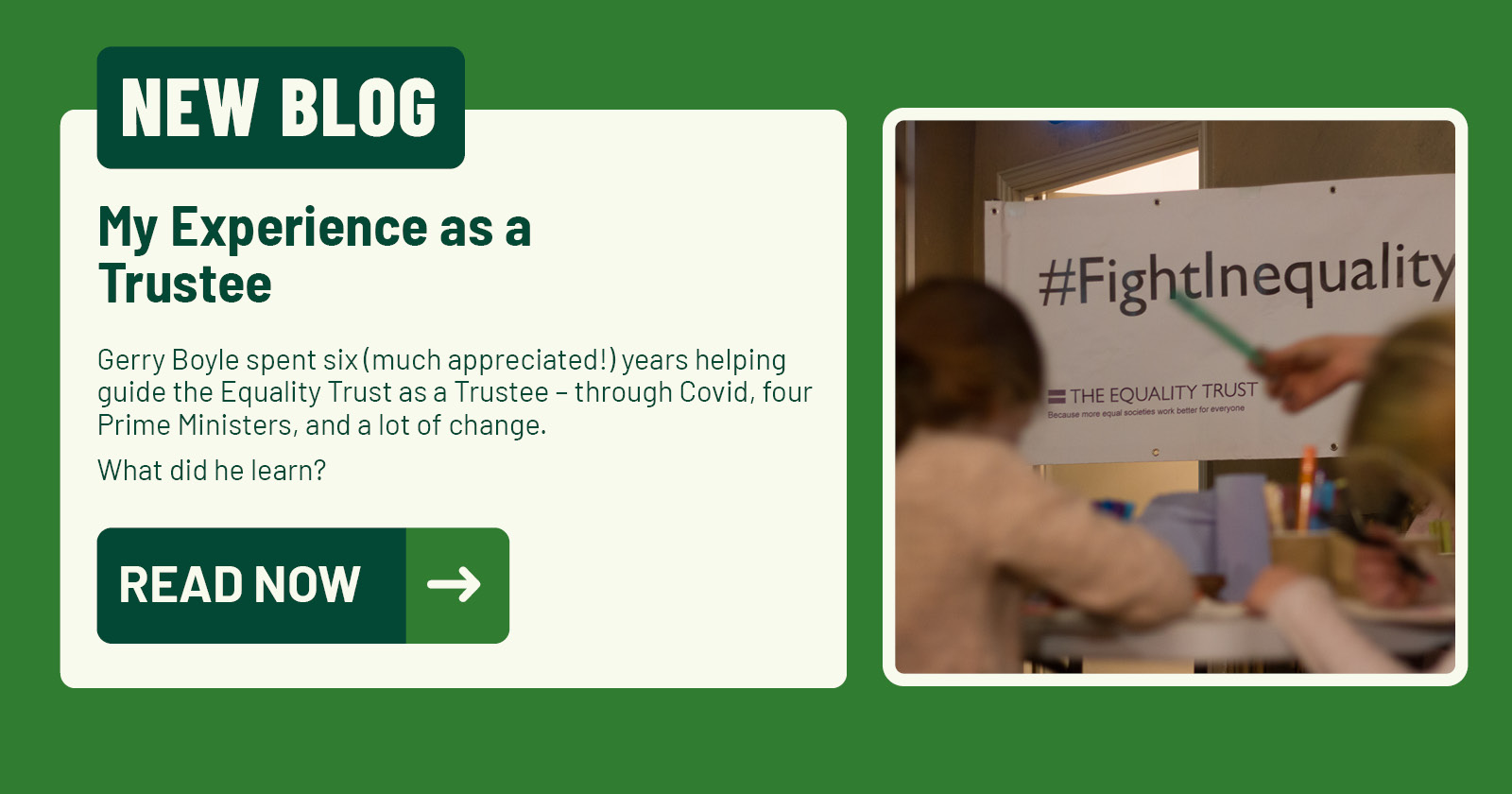
The landscape of UK social advocacy is undergoing a period of transition as long-standing Equality Trust Trustee Gerry Boyle steps down from his post after completing two consecutive three-year terms, the maximum tenure permitted under the organisation’s governing constitution. Boyle’s departure concludes an eventful six-year governance tenure defined by systemic economic challenges, funding contractions for the third sector, and critical policy campaigns targeting structural inequality in the United Kingdom.
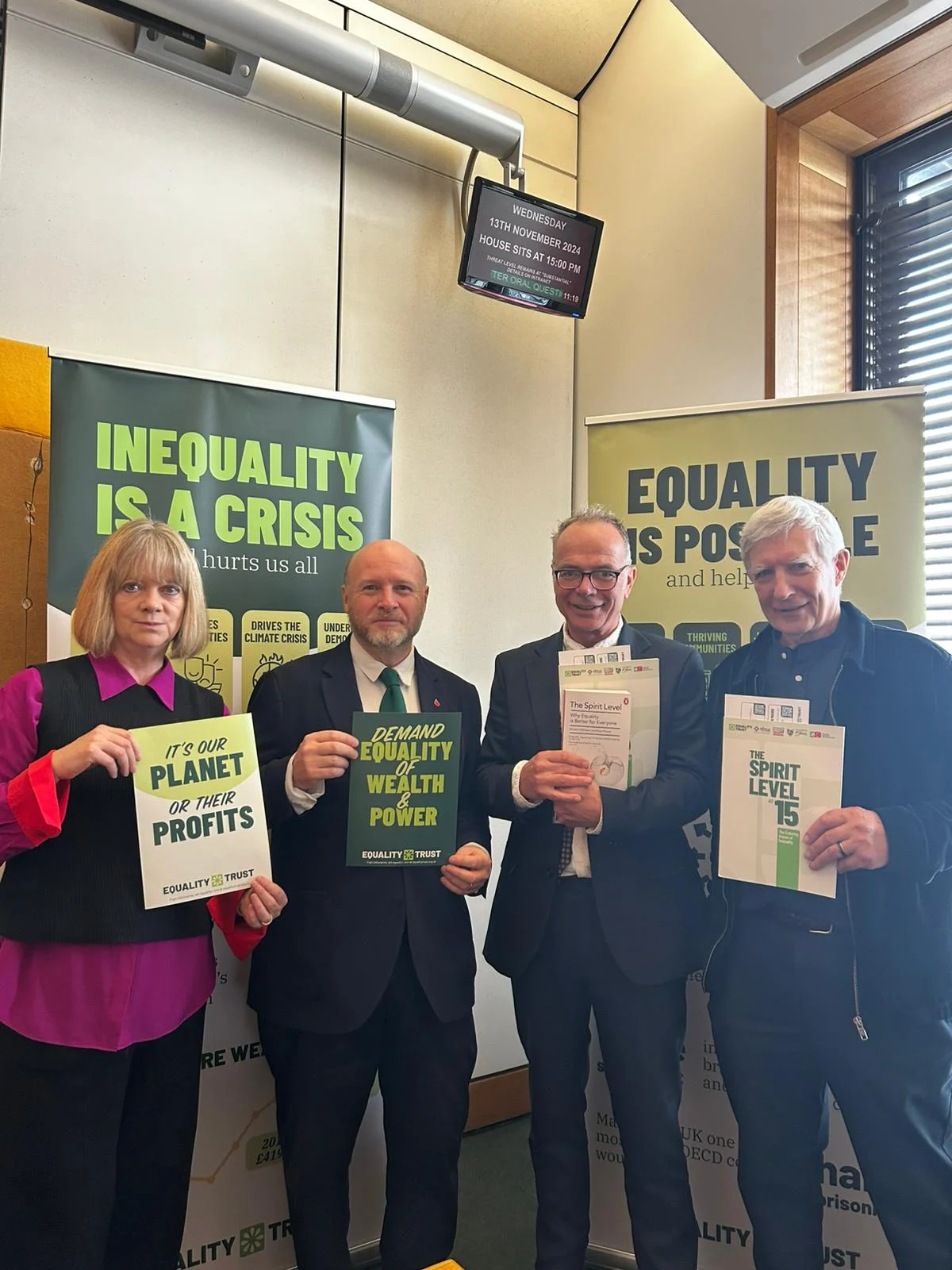
Boyle initially joined the board of the Equality Trust—an influential civil society organisation dedicated to addressing the societal consequences of economic disparity—prompted by the empirical findings presented in the seminal research text, The Spirit Level. Authored by Richard Wilkinson and Kate Pickett, the book demonstrated a direct correlation between high levels of income inequality and a broad spectrum of social pathologies, including diminished life expectancy, higher rates of mental illness, lower educational performance, and increased levels of violent crime.
When Boyle accepted the invitation to join the board, he brought a background in business management and international development, contrasting with, yet complementing, the diverse experiences of his fellow trustees who specialized in academia, grassroots campaigning, and lived experiences of poverty. Over the course of his six-year tenure, the organisation navigated numerous leadership and structural transitions, maintaining its core mission despite a deteriorating macro-environment.
The Chronology of a Tumultuous Tenure
The timeline of Boyle’s governance from 2020 to 2026 coincided with successive economic shocks and political realignments that severely tested the operational resilience of British charities.
In 2020, as the global COVID-19 pandemic took hold, the Equality Trust—like much of the non-profit sector—faced immediate operational disruptions alongside an unprecedented surge in demand for social safety-net interventions. By 2021 and 2022, the UK economy entered a protracted inflationary cycle driven by energy supply constraints and post-pandemic market adjustments, culminating in a severe cost-of-living crisis that disproportionately impacted low-income households.
During this period, Boyle spent an extended duration serving on the board’s finance committee. This vantage point provided him with a clear view of the structural funding pressures facing advocacy charities. Throughout 2023 and 2024, the confluence of ongoing public-sector austerity, constrained philanthropic budgets, and shifting international aid priorities created what economic analysts termed a systemic funding squeeze. Notably, successive governments in the UK, alongside retrenchments in international philanthropic and public grant-making frameworks, particularly within the United States, led to a significant contraction of available capital for advocacy and human rights organizations.
By 2025 and into early 2026, these macroeconomic pressures forced many third-sector entities into defensive postures, consolidating operations or facing insolvency as the pool of available grant capital shrank relative to the rising volume of organizations seeking support.
Financial Vulnerabilities and the Changing Philanthropic Landscape
A central theme of Boyle’s reflections upon his departure is the structural vulnerability inherent in traditional non-profit funding models. Historically, the Equality Trust relied heavily on a small number of substantial, long-term grants from major philanthropic foundations. While these large capital injections provided stability during favorable economic windows, they introduced significant financial volatility.
As Boyle noted, the loss or non-renewal of even a single major grant can transform a seemingly secure financial position into an acute operational crisis. This phenomenon, often referred to in the non-profit sector as "lumpy funding," has been exacerbated by the broader tightening of philanthropic budgets. In response, the Equality Trust has increasingly sought to diversify its revenue streams by transitioning toward a broader base of individual donors and supporters.
However, financial analysts specializing in civil society funding point out that transitioning from concentrated institutional grants to a decentralized model reliant on small, recurring public donations is a slow, capital-intensive process. This transition is further complicated by the ongoing cost-of-living crisis, which has suppressed the disposable income of many middle- and lower-income households who traditionally form the base of grassroots political and social donations. Despite these hurdles, the organisation has continued to press its donor base for sustained financial contributions, emphasizing that independent funding preserves the institutional freedom required to challenge entrenched political and economic power structures without fear of reprisal from state or institutional grant-makers.
Policy Milestones and Advocacy Achievements
Despite the hostile economic climate, Boyle’s tenure was marked by several notable policy and programmatic achievements that advanced the Equality Trust’s core agenda. Among the most significant milestones during his six-year term was the sustained advocacy surrounding the implementation and enforcement of the Socio-Economic Duty, enshrined under Section 1 of the Equality Act 2010. Although the duty lay dormant for years following the legislation’s passage, renewed pressure from organizations like the Equality Trust prompted localized adoptions by devolved administrations and municipal authorities, compelling public bodies to give due regard to socioeconomic disadvantage when making strategic decisions.
In parallel, the Trust placed a strategic emphasis on amplifying the voices of younger demographics. Recognizing that Generation Z and younger millennials bear the brunt of contemporary housing crises, stagnant wage growth, and precarious employment, the organisation integrated youth-led advocacy into its core campaigns. By elevating individuals with direct lived experiences of economic inequality, the Trust sought to ground abstract macroeconomic debates in the tangible realities of modern British life.
Furthermore, the organisation consistently published data-driven reports highlighting the widening wealth gap between the highest earners and the broader population, keeping the issue of economic fairness on the national political agenda through successive changes in government.
Governance Structures and the Part-Time Trustee Model
Boyle’s departure also shines a light on the mechanics of non-profit governance in the United Kingdom. Operating largely on a voluntary, part-time basis, trustees bear ultimate legal and fiduciary responsibility for the charities they oversee, balancing these high-stakes governance duties with their primary professional commitments and personal lives.
Reflecting on his transition from a hands-on project manager to a governance-level trustee, Boyle acknowledged the inherent challenges of adopting a "hands-off" strategic oversight role. Effective charity governance requires board members to resist operational micromanagement while maintaining rigorous oversight of executive performance, financial health, and regulatory compliance.
Experts in third-sector governance observe that recruiting and retaining skilled trustees who can navigate complex financial statements, legal compliance, and strategic communications remains a persistent challenge for medium-sized campaigning charities. Boyle’s ability to merge his corporate business acumen with international development insights illustrates the value of cross-sectoral recruitment on charity boards, ensuring that organizations are neither siloed within narrow academic echo chambers nor overly detached from practical operational realities.
Implications for the Future of UK Inequality Advocacy
As the Equality Trust looks beyond Boyle’s departure and prepares for new board appointments, the broader implications of his reflections point to an increasingly difficult road ahead for egalitarian advocacy in the UK.
Sociological and economic indicators suggest that societal fragmentation has accelerated over the past decade. Disparities in regional productivity, access to quality healthcare, educational attainment, and wealth accumulation continue to divide communities across England, Scotland, Wales, and Northern Ireland. With public finances remaining constrained and traditional philanthropic models under stress, organizations dedicated to systemic reform face a dual challenge: defending existing social safety nets while arguing for transformative economic restructuring.
The departure of experienced governance figures like Boyle underscores the reliance of the UK’s civil society sector on dedicated individuals willing to commit significant personal time to oversight and strategic direction. As the Equality Trust initiates its search for new board members to replace outgoing trustees, the organization must continue to adapt its operational models, secure sustainable funding streams, and maintain its independent voice.
Ultimately, Boyle’s reflections serve as both a retrospective assessment of an eventful six-year governance cycle and a forward-looking reminder of the persistent structural inequalities that continue to define contemporary British society. The resilience of organizations like the Equality Trust, supported by a shifting base of public donors and guided by committed trustees, remains a critical pillar in the ongoing national conversation concerning economic justice and social cohesion.