The comprehensive research report detailing the demographics and political leanings of the American electorate was spearheaded by a multidisciplinary team at the Pew Research Center, reflecting the institution’s commitment to rigorous, data-driven social science. The primary authorship was attributed to Dalia Fahmy, who serves as a senior writer and editor, alongside the diligent research contributions of Alexandra Cahn and the demographic expertise of Jeffrey S. Passel, a senior demographer whose work has long informed national discourse on population shifts. The editorial oversight for this project was provided by Mark Hugo Lopez, the director of race and ethnicity research, ensuring that the findings met the highest standards of analytical precision and neutrality.
The Collaborative Editorial Process
Beyond the core research team, the production of this report involved a sophisticated network of specialists. Strategic communications guidance was facilitated by Tanya Arditi, a senior communications manager, who worked in tandem with communications associate Maya Pottiger to ensure the findings were disseminated effectively to the public and policy stakeholders. Furthermore, the political context of the data was sharpened through additional guidance from Jocelyn Kiley, the director of politics research.
The integrity of the data was maintained through a rigorous "number-checking" process, an essential component of the center’s methodology. Shifra Dayak, an editorial specialist, led these efforts alongside John Gramlich, the associate director of Short Reads, and Jenn Hatfield, a writer and editor. The final text underwent a meticulous copy-editing process by David Kent, a senior editorial specialist, while the digital presentation was managed by digital producer Reem Nadeem. The visual storytelling, which remains a cornerstone of the report’s impact, was executed by Alexandra Cahn with expert guidance from information graphics designer John Carlo Mandapat.
Historical Context and Methodological Foundations
The research produced by this team does not exist in a vacuum; it is part of a larger, ongoing effort to map the complexities of U.S. elections and the evolving landscape of American race and ethnicity. For decades, the Pew Research Center has tracked the demographic shifts that redefine the American voter. By combining census data, longitudinal surveys, and statistical modeling, the center provides a baseline for understanding how the electorate is changing.
The importance of this work lies in the context of the 21st-century American demographic transition. Since the turn of the millennium, the U.S. has experienced significant shifts in the racial and ethnic composition of its population. The rising share of Hispanic, Asian, and multiracial voters, alongside the aging of the white population, has fundamentally altered the political calculus for both major parties. Understanding these shifts requires not just raw numbers, but a nuanced interpretation of how different groups interact with the political process.
Chronology of Demographic Shifts in the American Electorate
To appreciate the findings of the current report, one must look back at the historical arc of U.S. voter demographics.
- The Post-2000 Era: Following the 2000 Census, researchers noted a definitive uptick in the diversity of the eligible voter population. This period marked the beginning of a sustained trend where minority groups began to account for an increasingly large share of the growth in the total electorate.
- The 2010 Midterms and Beyond: During the 2010s, the conversation around the "browning of America" intensified as demographic data showed that racial and ethnic minorities were driving the majority of growth in the nation’s youth population—a group that would soon reach voting age.
- The 2020 Election Cycle: The 2020 presidential election saw record turnout levels, with demographic data showing that the electorate was the most diverse in history. This cycle served as a critical data point for the researchers involved in the current report, providing a wealth of information regarding voter participation rates across different racial and ethnic cohorts.
- Current Trends (2024 and Beyond): As we move toward the mid-2020s, the focus has shifted to the fluidity of voter alignment. The research team has placed increased emphasis on how demographic groups are not monoliths, noting significant shifts in support among specific subgroups within larger racial and ethnic categories.
Supporting Data and Statistical Significance
The report relies on a robust methodological framework. For instance, the analysis of voter participation often uses Current Population Survey (CPS) data, which provides a detailed snapshot of voting behavior. In recent years, these datasets have consistently shown that while the gap between the participation rates of white voters and minority voters has narrowed, it has not yet vanished.
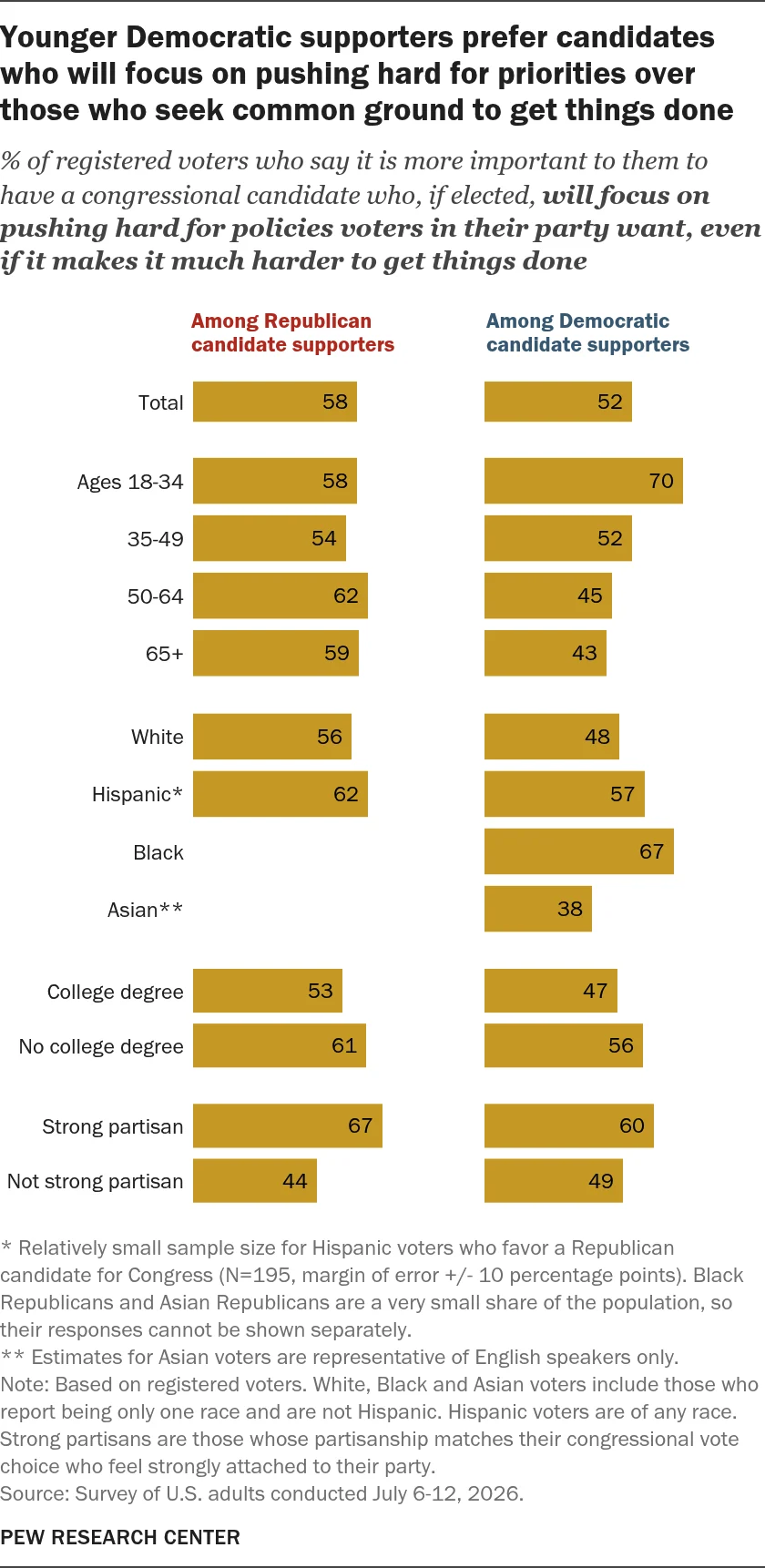
Data from the center indicates that education levels, geographic location, and age continue to serve as significant variables alongside race and ethnicity. For example, younger voters—who are statistically more likely to be non-white—often exhibit different turnout patterns than their older counterparts. By segmenting the data, the report provides a multi-layered view of the electorate that moves beyond simplistic binary models.
Official Responses and Academic Reception
While the Pew Research Center maintains a strict policy of neutrality, the implications of its findings are frequently debated by political strategists, academics, and policymakers. In the wake of reports like this, party operatives often analyze the data to recalibrate their outreach strategies.
Democratic strategists typically focus on the data showing the growing influence of non-white voters in key battleground states, seeking to maximize engagement within these communities. Conversely, Republican analysts often highlight the findings related to the shifting allegiances of working-class voters of all backgrounds, suggesting that economic policy may be as potent a motivator as demographic identity.
Independent observers, such as political scientists at major universities, often cite these reports to provide empirical evidence for their theories on partisan polarization. The consensus among these experts is that while demographic trends provide the "structure" of the electorate, the "agency" of voters—driven by current events, economic conditions, and candidate quality—remains the deciding factor in any given election.
Broader Impact and Societal Implications
The implications of this research extend far beyond the ballot box. By providing an objective look at who is voting and who is staying home, the report touches on the health of American democracy. A representative electorate is often cited as a benchmark for political legitimacy. When specific demographic groups participate at lower rates, it raises questions about systemic barriers, voter mobilization efforts, and the overall responsiveness of political institutions.
Furthermore, the integration of demographic research with political analysis allows for a deeper understanding of the "culture wars" that define modern American politics. When data shows that a specific demographic is moving toward a particular party, it often correlates with changing social values or economic anxieties that are being addressed (or exploited) by political messaging.
Future Directions for Election Research
As the U.S. continues to diversify, the methodologies used to track voters must also evolve. The research team acknowledged that future reports will need to grapple with more complex categories, such as the increasing number of Americans who identify as multiracial or who choose not to identify with traditional racial categories at all.
Additionally, the rise of digital campaigning and the role of social media in voter mobilization present new challenges for demographic researchers. Tracking how different groups consume political information and how that influences their behavior is the next frontier for the team.
In conclusion, the work produced by Fahmy, Cahn, Passel, and their colleagues serves as a vital resource for anyone seeking to understand the mechanisms of American power. By adhering to a rigorous, fact-based approach, they provide a clear lens through which the public can view the ongoing transformation of the United States. For those interested in further exploration, the center maintains an extensive archive of reports on U.S. elections, voter behavior, and the shifting dynamics of race and ethnicity, which continue to serve as the definitive record of the American political landscape. The meticulous nature of their process—from data collection to final copy-editing—ensures that these reports remain a cornerstone of informed civic participation.