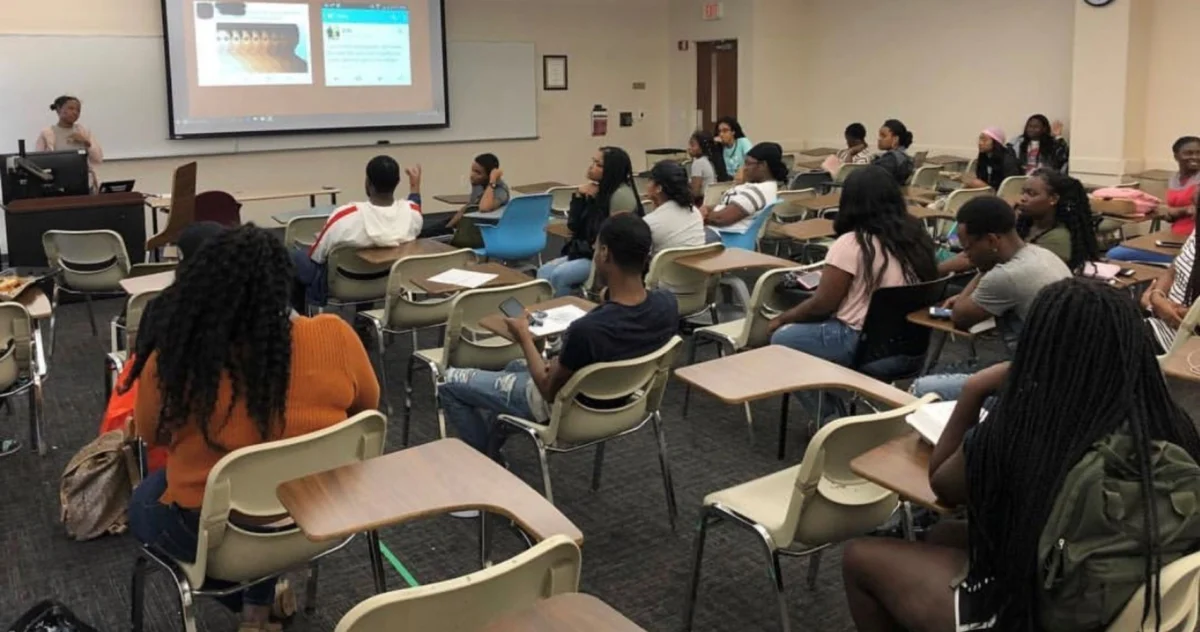
The United States Court of Appeals for the Eleventh Circuit delivered a definitive rebuke to state-sponsored intellectual restriction last week, ruling that Florida’s "Stop WOKE" Act—a statute designed to bar professors from discussing specific race and gender-related topics—constitutes a clear violation of the First Amendment. In a forceful 2-1 decision, the court characterized the law as a "naked prohibition on disfavored speech," reinforcing the constitutional principle that the government lacks the authority to dictate which ideas are permissible in the marketplace of public discourse, particularly within the walls of a university.
The majority opinion, authored by U.S. Circuit Judge Britt Grant, an appointee of former President Donald Trump, and joined by Senior U.S. Circuit Judge Charles Wilson, an appointee of President Bill Clinton, underscored the dangers of state-mandated ideological conformity. The ruling serves as a significant legal precedent, marking the first time a federal appellate court has addressed the constitutionality of classroom censorship laws, signaling a potential turning point for similar legislative efforts currently circulating in various states across the nation.
Chronology of the Individual Freedom Act
The genesis of this legal battle dates back to the spring of 2022, when Florida Governor Ron DeSantis championed the Individual Freedom Act, popularly known as the "Stop WOKE" (Wrongs to Our Kids and Employees) Act. Upon its signing, the law was framed by the Governor as a necessary safeguard against "indoctrination" in public schools and universities. The act specifically prohibited instruction or training that "espouses, promotes, advances, inculcates, or compels" students or employees to believe in eight specific concepts, ranging from theories of systemic racism to the idea that individuals should feel personal guilt for historical actions committed by members of their same race or sex.
The implementation of the law triggered immediate backlash from the academic community. By mid-2022, a coalition of professors, students, and advocacy groups, including the NAACP Legal Defense Fund, the ACLU, and the law firm Ballard Spahr, initiated Pernell v. Lamb. The plaintiffs argued that the law functioned as a "blacklist of ideas," creating a chilling effect on intellectual inquiry and faculty speech. In November 2022, a federal district court issued a preliminary injunction blocking the enforcement of the law on college campuses. The State of Florida subsequently appealed that decision to the Eleventh Circuit, setting the stage for last week’s appellate ruling.
The Scope of the Constitutional Conflict
At the heart of the legal dispute was the state’s bold assertion that because public universities are funded by the state, the speech of professors constitutes "government speech." Under this interpretation, Florida argued that the government possesses total control over the curriculum and the viewpoints expressed by faculty members. The Eleventh Circuit rejected this premise in no uncertain terms.
"Florida’s salary-for-speech rule is a breathtaking assertion of power to ban unpopular ideas from public discourse in the very places the State’s own statutes recognize as centers of inquiry," the court noted. By rejecting the state’s attempt to characterize faculty speech as government speech, the court preserved the traditional role of universities as "laboratories for expression and truth-seeking." The ruling emphasized that the First Amendment does not permit the government to impose a "straitjacket" on intellectual leaders, as doing so would imperil the nation’s democratic future.
Analyzing the Economic and Academic Stakes
The financial implications of the Stop WOKE Act were substantial, designed to ensure compliance through severe punitive measures. The court noted that the law imposed "dramatic financial consequences" for institutions that failed to enforce the ideological restrictions. For example, the University of South Florida faced the potential loss of over $73 million in state funding during the 2021-2022 academic year had the law been fully enforced.
Beyond the financial threat to institutions, the law enabled a reporting mechanism that allowed students to initiate investigations into professors, creating a climate of surveillance. Such investigations could lead to termination and other disciplinary actions, even for faculty members who attempted to modify their coursework to comply with the law’s vaguely defined constraints. Data regarding the number of professors who self-censored during the period the law was in effect remains difficult to quantify, but anecdotal evidence from university faculty unions suggests that many instructors opted to remove historical modules regarding Jim Crow, systemic inequality, and critical race theory to avoid potential litigation or the loss of tenure.
Official Reactions and Legal Perspectives
The ruling has been hailed as a landmark victory by civil rights organizations. Jin Hee Lee, director of strategic initiatives at the NAACP Legal Defense Fund, stated that the decision confirms that Florida cannot "actively erase their history of discrimination or their lived experiences without running afoul of our Constitution."
LeRoy Pernell, a professor at the Florida A&M University College of Law and a lead plaintiff in the case, expressed relief that the ruling prevents the "erasure of topics that have real implications for our students." According to Pernell, the ability to discuss complex social issues without fear of state-imposed censorship is essential to preparing students for the realities of modern society.
Conversely, supporters of the law, including representatives from the Governor’s office, have previously maintained that the act is a vital tool for protecting students from concepts they describe as divisive or discriminatory. However, the court systematically dismantled these justifications. When the state argued that the law was an anti-discrimination measure, the court countered that "hearing an idea you disagree with is not discrimination; it is an opportunity to come up with a better idea."
Broader Implications for American Education
The Eleventh Circuit’s ruling serves as a powerful check on the growing movement of "educational gag orders" that have swept through various state legislatures. According to a report by PEN America, a non-profit organization that tracks book bans and educational restrictions, dozens of bills have been introduced across the U.S. in recent years targeting the teaching of race, gender, and sexual orientation.
The legal standard established by this ruling—that viewpoint-based restrictions on speech are "the greatest First Amendment sin"—could have a cascading effect on these legislative efforts. While the ruling is specific to the Eleventh Circuit’s jurisdiction (covering Florida, Georgia, and Alabama), it provides a robust legal framework that other courts may adopt when weighing the constitutionality of similar laws.
Legal analysts suggest that the ruling reinforces the "Academic Freedom" doctrine, which holds that the classroom is a space for the exchange of competing ideas. By ruling that the government cannot force an "official line" in higher education, the court has effectively carved out a protective sphere for professors to teach subjects that, while controversial or offensive to some, are essential to a comprehensive liberal arts education.
Conclusion: A Precedent for Intellectual Liberty
The Eleventh Circuit’s decision is more than a legal victory for the plaintiffs; it is a reaffirmation of the fundamental role of the university in American democracy. By characterizing the state’s actions as an attempt to enforce "conformity," the court signaled that the constitutional guarantee of free speech is not merely a shield against government censorship, but a prerequisite for the intellectual maturity of the next generation.
As the legal landscape regarding education continues to evolve, the Pernell v. Lamb ruling stands as a significant barrier against the politicization of curriculum. Whether other states will adjust their legislative strategies in response to this appellate precedent remains to be seen. However, for now, the court has made its position clear: the state’s interest in promoting its own ideological agenda cannot supersede the First Amendment rights of those tasked with educating the public. As the court famously observed, the people lose whenever the government transforms prevailing opinion into enforced conformity, a warning that remains as relevant today as it was at the founding of the republic.