
Long before the codification of modern parliamentary democracy in the West, the Indigenous peoples of Minahasa in North Sulawesi, Indonesia, had established an egalitarian framework of governance. Rooted in consensus-based deliberation, a clear division of responsibilities, and strict collective accountability, traditional Minahasan society defied the rigid social stratifications common to many historical civilizations. Instead of hereditary castes, individual standing was determined by communal contributions, wisdom, and entrusted duties. This foundational philosophy is encapsulated in the ancient Tontemboan proverb, “Si tou peleng masuat, mapute waya. Cawana se pakuru’an, cawana se paruku’an,” which translates to: “All people are equal; no person is meant to be worshipped, and no person is meant to worship another.”
Today, this ancient ethos is experiencing a profound resurgence. As modern Indonesian society grapples with the complexities of decentralization and Indigenous rights, the Minahasan Peoples are actively bridging the gap between ancestral self-governance and contemporary municipal administration. Through legal advocacy, youth-led cultural mapping, and unprecedented institutional partnerships—such as recent legislative drafting initiatives in Tomohon—the Minhasa region is emerging as a compelling case study in how Indigenous democratic systems can coexist with and enrich modern nation-states.
The Architecture of Minahasan Self-Governance
The historical strength of Minahasan governance lay in its scalability and decentralized design, which moved seamlessly from the nuclear family unit to expansive regional confederations. At the foundation of this system was the taranak, a kinship group or family clan. Within each taranak, distinct responsibilities were distributed among key figures: the pahendon tu’a, a wise elder entrusted with administrative and dispute-resolution decisions; the wali’an un taranak, a spiritual leader who mediated relationships between the clan, their ancestors, and the natural world; and the si lumulukaz (also known as the tétérusan), who managed physical security and defense.

Expanding outward, multiple taranak united to form a wanua, the primary socioeconomic and political nucleus of Minahasan life. Within the wanua, governance became institutionalized through specialized roles. The tona’as umbanué’ served as the principal civic leader, while the wali’an wangko’ oversaw community-wide rituals. Security was maintained by the tétérusan wangko’, and the gumigirot enforced justice and conflict resolution.
Beyond individual villages, these communities formed regional alliances known as walak, organized along geographical lines, and pakasa’an, broader coalitions bound by shared language, history, and ritual practices. Leadership within these structures was meritocratic. Notably, even youth could attain the respected status of tona’as if they embodied the core philosophical criteria of sigha, enté’, wo wuaya—intelligence, conscience, physical capability, and courage. Decisions were never made unilaterally; instead, they were forged through prolonged public deliberations that ensured absolute collective buy-in.
Chronology of Disruption: From Colonial Subjugation to State Centralization
The autonomous political development of Minahasa was severely disrupted by the arrival of European colonialism. During the 17th and 18th centuries, the Dutch East India Company (VOC) recognized the stability and localized trust inherent in the Minahasan walak system. Rather than dismantling these Indigenous frameworks outright, colonial authorities co-opted them. The Dutch transformed traditional walak leaders into paid district administrators, utilizing their authority to enforce tax collection, agricultural quotas, and centralized governance.
This colonial restructuring systematically eroded the wanua as independent centers of community life. Over generations, traditional decision-making pathways were subordinated to European bureaucratic mandates. When Indonesia declared independence in 1945 and subsequently established a centralized republic, this colonial administrative legacy persisted. The newly formed state instituted standardized administrative boundaries—provinces, regencies, districts, and villages—that frequently fractured historical Minahasan territories, dividing closely linked clans across disparate governmental jurisdictions.
Despite losing formal recognition within the state administrative hierarchy, Indigenous self-governance proved remarkably durable. Rural communities maintained informal traditional practices, frequently electing village heads known as Hukum Tua—a position that, while integrated into the modern Indonesian village governance system (Desa), often retains deep historical ties to local leadership traditions.
The Contemporary Resurgence: The Sidang Adat and Modern Legal Integration
In recent years, the revival of traditional institutions has gained momentum through the convening of the sidang adat, or Indigenous council meeting. When complex community issues arise today, these councils are assembled to deliberate outcomes in accordance with ancestral customs.
The mechanics of the sidang adat reflect a sophisticated commitment to representation and balance. Each taranak is represented by its pahendon tu’a, who arrives bearing a piece of tawaang—a sacred plant symbolizing an absolute, uncompromised mandate from clan members to negotiate on their behalf. Councils are traditionally led by an odd number of elders (three, five, seven, or nine), with the number nine holding profound cosmological significance as the symbol of human completeness. Utilizing an odd number ensures that deadlocks are prevented while reinforcing the pursuit of collective consensus.
Decisions ratified by the sidang adat carry immense social weight. While financial sanctions exist for minor infractions, the ultimate penalty enforced by the council is social ostracization. In a society historically reliant on mutual cooperation, kinship networks, and collective farming, the loss of community standing remains a far more formidable deterrent than any material fine.
Institutional Recognition and Policy Implications
The most promising development in the survival of Minahasan governance is the active participation of Indigenous youth in legal and civic advocacy. Rather than seeking a literal, anachronistic recreation of pre-colonial institutions, contemporary Minahasan leaders are fighting for legal spaces where traditional decision-making principles can operate alongside municipal government structures.
A landmark example of this shift is occurring in the city of Tomohon, North Sulawesi. Recently, the Tomohon municipal government invited Indigenous youth and cultural preservationists—including representatives from the Tombulu tribe—to collaborate directly on drafting a Regional Regulation on Indigenous Peoples. If successfully enacted, this legislative framework will grant legal certainty to Indigenous territories, ensuring that municipal infrastructure development, spatial planning, and resource management respect ancestral rights.
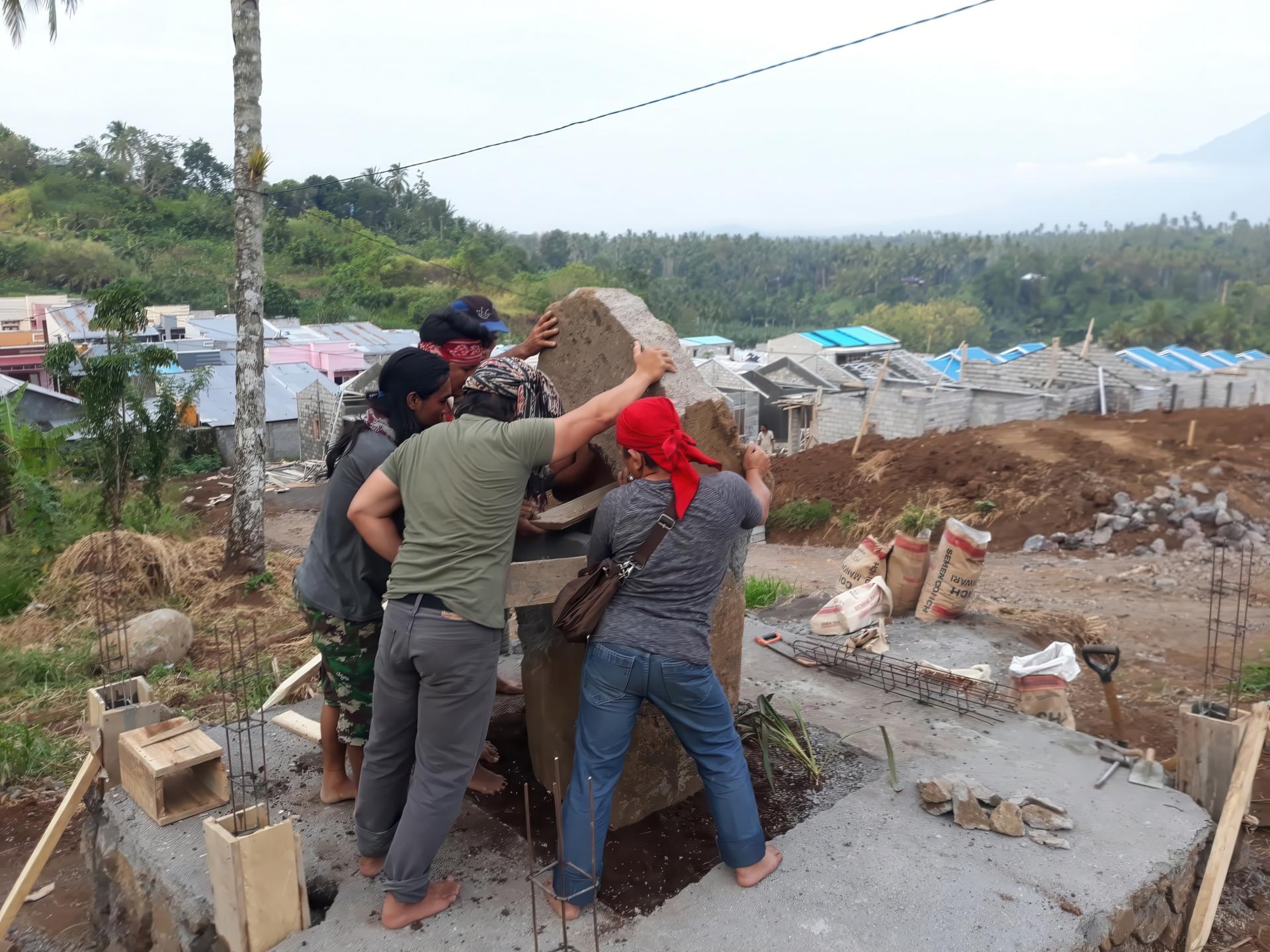
Legal analysts observing the Tomohon initiative note significant broader implications. Across Indonesia, thousands of Indigenous communities face land dispossession due to industrial expansion, urbanization, and state-backed real estate projects. In Minahasa, activists have utilized cultural reclamation efforts—such as the restoration of ancient stone sarcophagi known as waruga within encroached corporate housing developments—to assert permanent ancestral stewardship over the land.
By integrating traditional deliberation models into municipal law, Tomohon offers a potential blueprint for decentralization in Indonesia. It demonstrates that municipal authorities and Indigenous communities can forge equal governance partnerships, strengthening local democracy while preserving the intangible cultural heritage that has sustained the Minahasan Peoples for centuries. As Gerard Tiwow, a Tombulu journalist and former civil society fellow observes, Indigenous governance is not merely a relic of the past, but a living, adaptive social practice capable of guiding sustainable futures.




