

The integrity of contemporary public opinion polling relies heavily on the transparency and methodological rigor of the institutions conducting the research. As the world navigates a period of rapid technological, political, and social transformation, the Pew Research Center has released the comprehensive methodology behind its Spring 2026 Global Attitudes Survey and its domestic American Trends Panel (ATP) data, providing a blueprint for how complex international and national sentiment is captured in the digital age. This framework is not merely a technical appendix; it is a critical instrument for understanding how global populations perceive everything from artificial intelligence and democratic health to international relations and national identity.

Global Methodological Framework
The 2026 international inquiry was a massive logistical undertaking, utilizing a multifaceted approach that combined telephone, face-to-face, and online interviews. By partnering with leading research firms such as Gallup, Langer Research Associates, and the Social Research Centre, the Center ensured that data collection was tailored to the cultural and technological realities of each participating nation.
Central to this methodology is the standardization of complex socio-political variables. For example, to accurately map political ideology across vastly different electoral systems, researchers asked respondents to place themselves on a spectrum, which was then harmonized into "left," "center," and "right" categories. Education levels were similarly standardized using the United Nations’ International Standard Classification of Education (ISCED), a move that allows sociologists to compare the impact of schooling on public opinion across borders.
Economic stratification was handled via World Bank classifications, which group nations into high-income and middle-income tiers based on per capita gross national income. This distinction is vital for analyzing global trends, as it allows researchers to control for economic development when discussing polarizing topics such as the shifting global views on China or the perceived stability of democratic institutions.
The American Trends Panel: A Deep Dive into Domestic Data
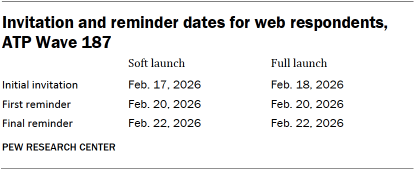
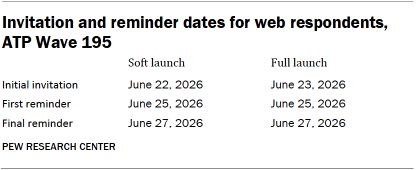
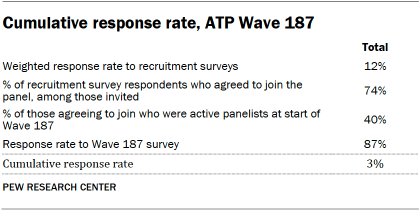
While the global survey provides a broad international canvas, the American Trends Panel (ATP) serves as the high-resolution lens for the United States. The data highlighted in the latest reports stems from Wave 187 (conducted February 17–23, 2026) and Wave 195 (conducted June 22–28, 2026). These panels represent a shift away from traditional, less reliable phone-based polling toward a more stable, longitudinal approach that tracks the same individuals over time.
Chronology of Data Collection
The 2026 data collection cycle followed a strict, iterative timeline designed to maximize response rates and minimize bias:
- February 17, 2026: Initiation of Wave 187 with a soft launch to 60 panelists, followed by postcard notifications.
- February 18, 2026: Full launch of W187 to the broader panel.
- June 22, 2026: Commencement of Wave 195 with a soft launch, signaling the start of the mid-year data gathering phase.
- June 23, 2026: Full launch of W195, utilizing both email and SMS-based invitations.
This phased rollout is critical for testing the functionality of digital survey tools across various devices—from legacy PCs to modern smartphones—ensuring that no demographic is excluded due to technical friction.
Ensuring Accuracy through Scientific Rigor
The validity of any poll is only as strong as its sample design. The ATP utilizes address-based sampling (ABS), drawing from the U.S. Postal Service’s Computerized Delivery Sequence File, which covers approximately 90% to 98% of the American population. This method has largely replaced random-digit-dialing, which has become increasingly ineffective due to the decline in landline usage and the rise of spam-call screening.
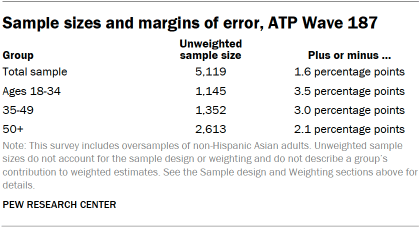
To ensure the voices of smaller demographic groups are not drowned out in national aggregates, the Center employed "oversampling." By intentionally recruiting a higher proportion of non-Hispanic Asian adults, for instance, researchers were able to generate statistically significant findings for this group, which were then weighted back to align with their actual share of the total U.S. population.
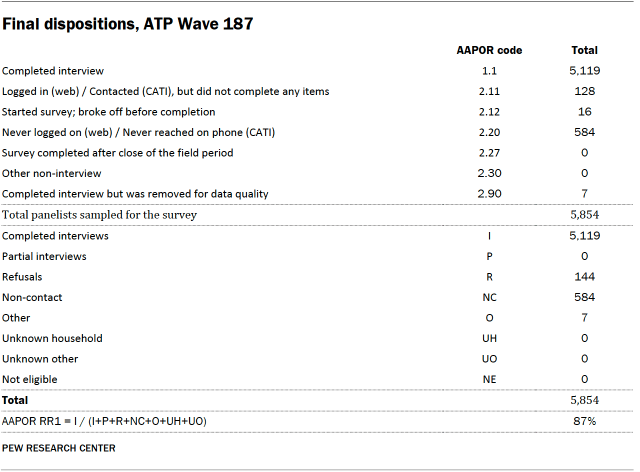
Data quality is further enforced through aggressive screening. In Wave 187, seven respondents were removed from the dataset for "satisficing"—a phenomenon where participants provide repetitive or non-thoughtful answers to speed through the survey. In Wave 195, two such respondents were removed. These rigorous quality checks underscore the Center’s commitment to maintaining a clean, high-fidelity dataset.
The Role of Incentives in Participation
In an era of survey fatigue, motivating participants is a significant hurdle. The Pew Research Center utilizes a post-paid incentive model, offering respondents between $5 and $20 for their time. The choice of rewards—ranging from checks to digital gift cards for major retailers—is designed to accommodate a diverse range of preferences. By providing higher incentives to historically hard-to-reach populations, the Center works to mitigate non-response bias, ensuring the final sample remains representative of the broader public.
Analytical Implications and Broader Impact
The methodology behind these 2026 reports has profound implications for how policymakers, journalists, and the public interpret shifts in national sentiment. When the Center reports on "satisfaction with democracy," the underlying data is not merely a collection of opinions; it is a meticulously weighted, scientifically sampled representation of a population.
The use of longitudinal panel data, in particular, allows researchers to distinguish between short-term emotional reactions to news cycles and deeper, more permanent shifts in political or social values. By tracking the same individuals across multiple waves, the Center can observe how events like legislative changes or economic shifts influence the long-term outlook of specific cohorts.
Furthermore, the integration of international data with standardized educational and economic metrics allows for cross-cultural analysis that was previously impossible. For example, by comparing how high-income versus middle-income nations view globalization, the Center provides a framework for understanding the tensions that drive modern trade policy and international migration debates.
Challenges and Considerations
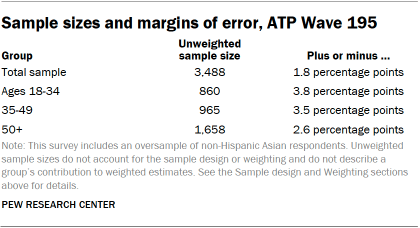
Despite the technical sophistication of these surveys, the Center acknowledges that no method is immune to error. Beyond sampling error, which is clearly documented—with a margin of error for W187 at ±1.6 percentage points and W195 at ±1.8 percentage points—researchers must account for "practical difficulties." These include the evolution of language, the nuance of survey question wording, and the rapidly changing landscape of digital communication.
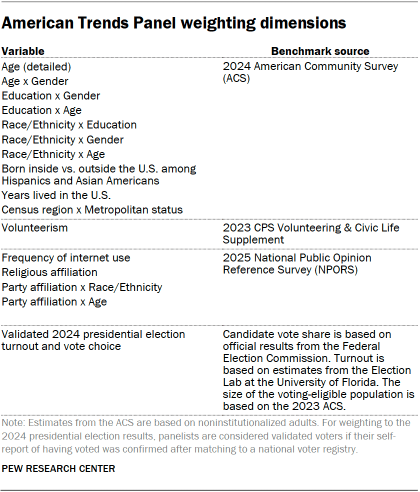
The transparency provided in these methodological reports serves as an essential defense against the erosion of trust in institutional research. By detailing every step of the process—from the initial recruitment via mail-in invitations to the final weighting of the data to match national census benchmarks—the Pew Research Center provides a clear path for independent verification.
As we look toward the remainder of the 2020s, the methodology used in these 2026 surveys will likely serve as the gold standard for public opinion research. In a polarized climate where data is frequently weaponized or misinterpreted, the Center’s commitment to detailing its sample design, its weighting processes, and its quality control measures is a reminder that the value of an opinion poll lies not in its headlines, but in the integrity of the process that produced them. Whether it is gauging the global impact of artificial intelligence or assessing the stability of American democracy, the rigor of the survey design remains the bedrock upon which our collective understanding of society is built.




