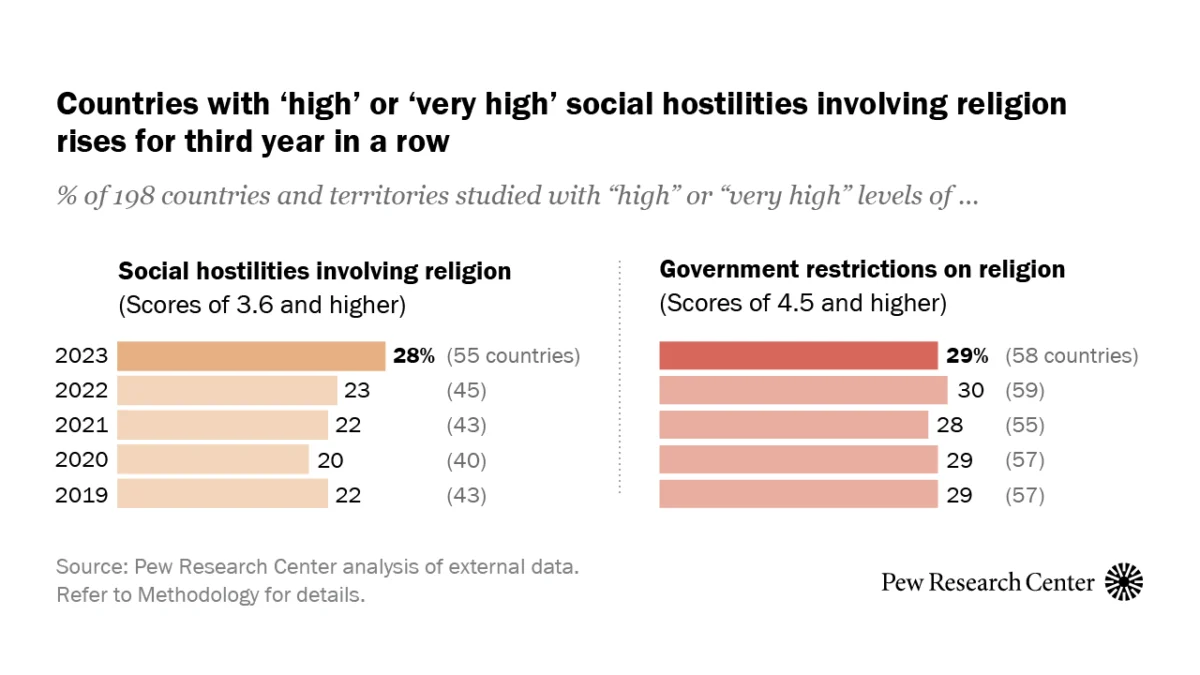
Of the 25 most populous countries in the world, India, Egypt, Pakistan, Iran, and Indonesia experienced the highest combined levels of government restrictions and social hostilities involving religion in 2023, according to the Pew Research Center’s 16th annual report on global religious restrictions. This comprehensive study, which analyzes 198 countries and territories, employs two distinct indexes: the Government Restrictions Index (GRI) and the Social Hostilities Index (SHI), each scored on a scale of 0 to 10.
The findings underscore a complex global landscape for religious freedom, where governmental actions and societal attitudes can significantly impact religious communities. The analysis is meticulously compiled by researchers who systematically review a wide array of credible sources, including reports from the U.S. State Department, the U.S. Commission on International Religious Freedom, the United Nations, and prominent non-governmental organizations such as Freedom House, Amnesty International, and Human Rights Watch. This rigorous methodology ensures a robust and data-driven assessment of religious restrictions worldwide.
The 25 countries examined in this report represent approximately three-quarters of the global population, making their scores particularly indicative of broader trends. However, the report cautions that the measured restrictions and hostilities do not necessarily affect all individuals within a country equally and may disproportionately impact religious minorities.
Top Nations Facing Government Restrictions and Social Hostilities
Among the 25 most populous nations, China, Iran, Indonesia, Egypt, and Russia stood out for the highest Government Restrictions Index (GRI) scores in 2023, all falling into the "very high" category, with scores ranging from 6.6 to 10.0. These scores reflect significant governmental actions, laws, and policies that curtail religious freedom.
In stark contrast, South Africa, the United States, Japan, the Philippines, and the United Kingdom reported the lowest levels of government restrictions among this group. These nations generally scored in the "low" category on the GRI, indicating fewer instances of government interference with religious practice.
When examining social hostilities involving religion, measured by the Social Hostilities Index (SHI), Nigeria, India, Bangladesh, Pakistan, and Egypt emerged with the highest scores. Nigeria, India, Bangladesh, and Pakistan registered "very high" SHI scores (7.2 to 10.0), indicating widespread religion-related hostilities by private individuals, groups, and organizations. Egypt also faced significant social hostilities, falling into the "high" category (3.6 to 7.1).
Conversely, China, the United States, South Africa, Japan, and Vietnam reported the lowest levels of social hostilities. China and the U.S. had "low" SHI scores (0.0 to 1.4), while South Africa, Japan, and Vietnam were in the "moderate" category (1.5 to 3.5).
Divergent Patterns: Restrictions vs. Hostilities
The report highlights instances where countries exhibit high levels of government restrictions but lower levels of social hostilities, and vice versa. China, for example, recorded a "very high" GRI score of 9.1 in 2023, yet its SHI score was a mere 0.1, placing it in the "low" category for social hostilities. This pattern, consistent with previous years, suggests a state-controlled environment for religion that does not necessarily translate into widespread societal conflict related to faith.
In another notable case, Vietnam presented a "very high" GRI score of 7.3 alongside a "moderate" SHI score of 2.6. This indicates that while the government imposes significant restrictions, societal hostilities related to religion are less pronounced.

The report also points out that no country among the 25 most populous had low levels of government restrictions coupled with very high levels of social hostilities. This suggests a correlation, though not a perfect one, between state actions and societal attitudes towards religious groups.
Fluctuations in Government Restrictions (2022-2023)
While overall global trends in government restrictions remained largely stable, minor shifts were observed in the 25 most populous countries between 2022 and 2023. Twenty-four of these nations experienced only minor changes (less than 1 point) or no change in their GRI scores.
Tanzania, for instance, saw its GRI score decrease from 5.0 to 4.2, moving it from the "high" to the "moderate" category. This shift was partly attributed to the absence of reported government harassment of Christian converts in 2023, a concern noted in the previous year’s data.
Turkey’s GRI score also saw a slight decline, from 6.7 to 6.3. This moved it from the "very high" to the "high" category. The reduction was influenced by a lack of reported arrests for "insulting religious values" on social media in 2023, a phenomenon that had occurred in the preceding year.
Germany experienced the most significant GRI change among the top 25 countries, with its score rising by a full point from 3.0 to 4.0. This increase, which kept Germany within the "moderate" category, was linked to authorities restricting Jehovah’s Witnesses from using temporary display carts for religious literature at cities and airports, as noted in the U.S. State Department’s 2023 report on International Religious Freedom.
Shifting Dynamics in Social Hostilities (2022-2023)
The Social Hostilities Index (SHI) saw more movement among the 25 most populous countries than the GRI. While 14 countries experienced only minor SHI changes, ten countries underwent modest shifts. Seven of these saw increases, while three experienced decreases. Notably, the United States maintained its SHI score without change.
Japan’s SHI score increased from 1.1 to 2.6, elevating it into the "moderate" category. This rise was associated with an reported uptick in physical harassment and threats against Jehovah’s Witnesses, including an incident where an elderly Jehovah’s Witness was injured while proselytizing.
Turkey, Tanzania, and the Democratic Republic of the Congo all transitioned from the "moderate" to the "high" SHI category. In Tanzania, tensions between Christian and Muslim communities, fueled by perceived government favoritism and a viral video accusing Christians of disrupting the Islamic call to prayer, contributed to the rise in hostilities, though these did not escalate to violence.
The Democratic Republic of the Congo’s SHI score increased due to ongoing violence by ISIS-DRC. In March 2023, the militant group targeted Christians in the village of Mukondi, resulting in at least 38 deaths, 17 injuries, and the burning of Christian homes. The group also claimed responsibility for other attacks on Christians that month, which reportedly claimed 45 lives, including a priest.
Bangladesh’s SHI score surged from 6.1 to 7.8, moving it from the "high" to the "very high" category. This increase was primarily driven by deaths linked to mob violence against minority religious groups in the Muslim-majority nation.
Conversely, Ethiopia and the Philippines experienced modest declines in their SHI scores, sufficient to move them from the "high" to the "moderate" category. France also saw a notable drop in its SHI score, from 5.9 to 4.7, though it remained within the "high" category.
Methodology and Broader Context
This research is part of the Pew-Templeton Global Religious Futures project, which aims to analyze religious change and its societal impacts globally. The project is funded by The Pew Charitable Trusts and the John Templeton Foundation. The methodology for tracking religious restrictions involves a thorough review of publicly available, widely cited information.
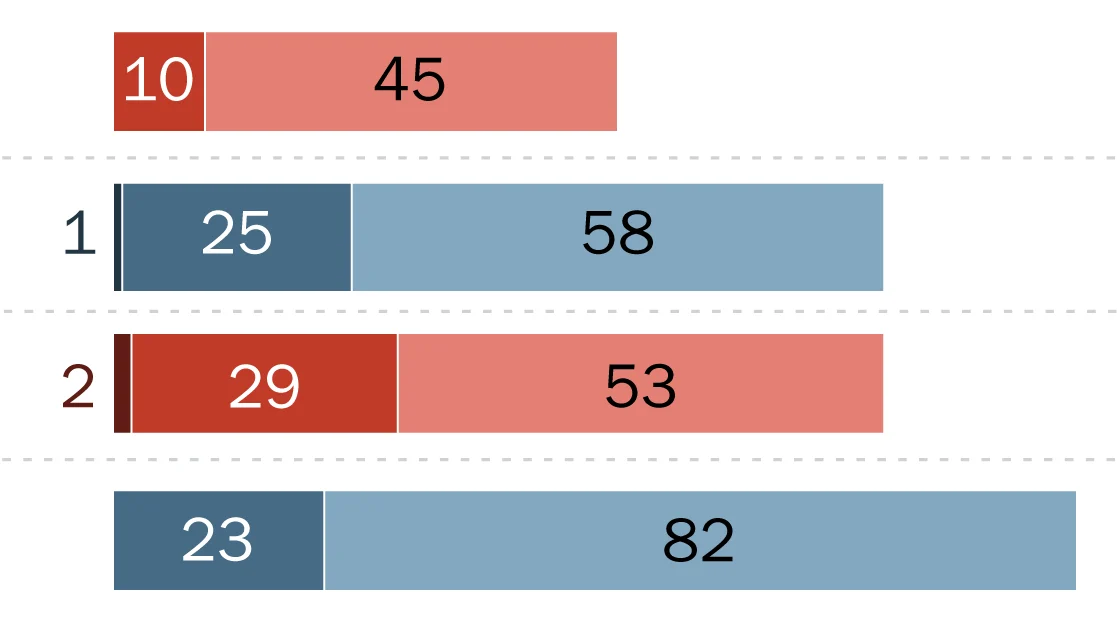
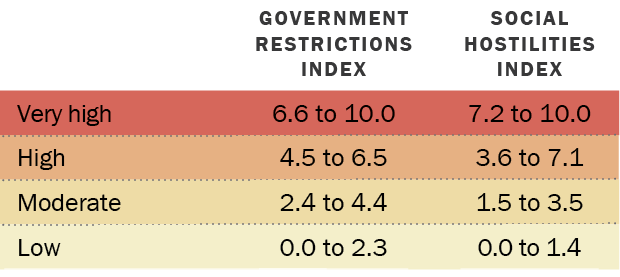
The "How the index scores are classified" chart provides a breakdown of how scores are categorized. Scores in the top 5% of the baseline year (mid-2007) are considered "very high," the next 15% are "high," the following 20% are "moderate," and the bottom 60% are "low." This categorization, established at the study’s inception, allows for consistent tracking of trends over time.
The detailed country-by-country data, available in Appendix A and Appendix B, offers specific insights into the scores for each of the 25 most populous nations on both the GRI and SHI for 2023. These appendices are crucial for understanding the nuanced situations within each country.
The findings of this report are particularly significant as they provide a data-driven snapshot of religious freedom conditions in the world’s most populous countries. The distinction between government-imposed restrictions and societal hostilities offers a more granular understanding of the challenges faced by religious communities. The year-over-year changes highlight the dynamic nature of these issues, with some nations showing improvements while others face escalating challenges. The report serves as a vital resource for policymakers, researchers, and advocacy groups seeking to understand and address global religious freedom concerns.
RECOMMENDED CITATION:
Majumdar, Samirah and Vivian Jacobs. 2026. “More Countries Had Elevated Levels of Social Hostilities Involving Religion in 2023.” Pew Research Center. doi: 10.58094/cv0d-0488.