
Under pressure to process vast quantities of information, the human cognitive system often defaults to heuristic shortcuts that can steer thinking away from intentions of open-mindedness, respect, and inclusion. This phenomenon is rooted in the architecture of the brain, where the majority of cognitive activity—frequently categorized as "System 1" thinking—operates on autopilot. These rapid, automatic processes rely heavily on internalized stereotypes, societal norms, and ingrained beliefs, which can lead to faulty judgments. By consciously adopting "reframing" techniques, individuals can reshape these mental shortcuts to be more accurate and better aligned with their objective values.
The Mechanism of Normative Bias
Human perception is rarely a neutral observation of reality. Throughout their lives, individuals unwittingly internalize societal standards regarding who is deemed "attractive," "trustworthy," "intelligent," or "leader-material." These mental associations are reinforced through a complex feedback loop involving family units, peer groups, media portrayals, educational systems, and organizational structures.
Sociological research suggests that these normative patterns create a baseline for "the ideal," which, when left unexamined, results in the systematic exclusion of those who do not conform to these dominant constructs. This is not merely a matter of personal preference; it has measurable discriminatory impacts on societal outcomes, affecting hiring practices, social cohesion, and the equitable distribution of opportunities.
The Chronology of Cognitive Development and Awareness
The awareness of these unconscious biases has gained significant momentum over the last two decades as behavioral economics and cognitive psychology moved into the mainstream.
- 2000s: Behavioral scientists began mapping the "dual-process theory," distinguishing between System 1 (automatic, intuitive) and System 2 (slow, analytical) thinking.
- 2015–2018: Organizations began integrating "Inclusion Nudges" into their corporate diversity and inclusion (D&I) strategies, moving away from mandatory training—which often triggers resistance—toward behavioral design.
- 2020–2022: The global shift to remote, video-based work during the COVID-19 pandemic introduced a new psychological variable: "Zoom dysmorphia." This term describes the heightened anxiety and negative fixation on one’s own appearance caused by constant exposure to self-view on video calls, further complicating how individuals process their own identity.
Data on Cognitive Processing and Bias
Empirical data underscores the necessity of cognitive intervention. Studies in cognitive neuroscience indicate that the human brain can process approximately 11 million bits of information per second, yet the conscious mind can only process about 40 to 50 bits. To compensate for this discrepancy, the brain relies on schemas—mental structures that organize knowledge.
Research from the Implicit Association Test (IAT), developed by researchers at Harvard, the University of Washington, and the University of Virginia, has consistently demonstrated that the vast majority of participants hold unconscious biases related to race, gender, and age, even when they consciously identify as egalitarian. The data suggests that these biases are not "flaws" in a character, but rather predictable outputs of a high-speed, pattern-matching biological machine.
Practical Interventions: The "Human" Reframe
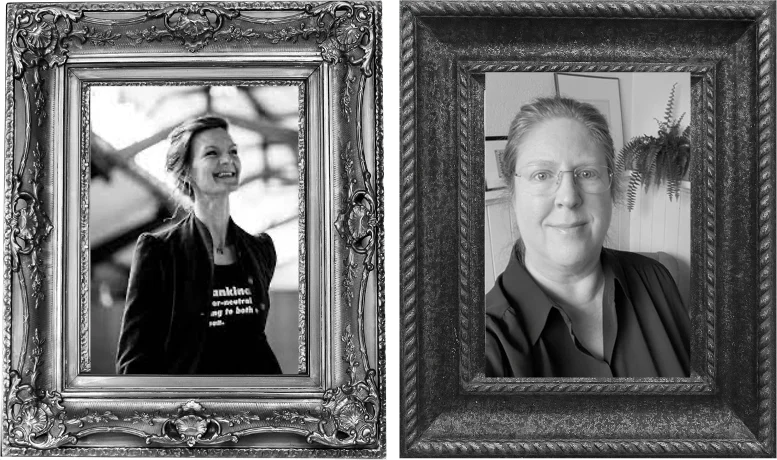
Behavioral change designers Tinna Nielsen and Lisa Kepinski have pioneered an intervention strategy they refer to as "That’s a Human." This technique is designed to interrupt the brain’s tendency to categorize individuals based on visual, socioeconomic, or cultural cues.
The strategy draws inspiration from social advocacy groups like the South African non-profit PASSOP, which challenged media narratives surrounding the 2010s migration crisis. By systematically replacing loaded descriptors such as "refugee" or "migrant" with the word "human" in public discourse, they aimed to shift the focus from a "crisis" framing to a humanitarian perspective.
For the individual, the "That’s a Human" practice involves a conscious, in-the-moment redirection. When an individual catches themselves forming a snap judgment—whether based on body shape, clothing, or perceived social status—they replace the mental label with the phrase "there is a human being."
This practice is not intended to "erase" bias, which psychologists note is an impossible goal. Instead, it serves as a "circuit breaker." By consciously verbalizing or thinking the neutral term, the individual engages System 2 thinking, creating a temporal gap between the initial stimulus (the visual observation) and the secondary response (the judgmental thought).
Expert Analysis and Organizational Implications
Experts in organizational psychology note that such reframing techniques are effective because they do not require an overhaul of one’s entire belief system, which often meets with cognitive dissonance. Instead, they leverage "choice architecture"—a method of organizing the context in which people make decisions.
"The goal of these designs is not to force a specific moral outcome, but to widen the aperture of the brain," says Dr. Aris Thorne, a behavioral strategist. "When we use language that dehumanizes or categorizes, the brain stops processing new information. When we use language that reaffirms humanity, the brain remains in a state of high-fidelity observation, allowing for more inclusive and accurate decision-making."
The broader implications for the workplace are significant. Organizations that implement "Framing Perceptions" nudges report higher levels of psychological safety. By encouraging employees to question their immediate reactions to colleagues—particularly regarding gendered caregiving roles or professional appearance—companies can reduce the "outlier effect," where those who do not conform to traditional norms feel marginalized.
Strategic Tools for Implementation
To operationalize these cognitive shifts, behavioral designers suggest several actionable frameworks:
- Ask Flip Questions: This involves mentally reversing the roles in a scenario. If an employee is being judged for a leadership style, the observer asks, "Would I be having this same reaction if this person were of a different gender or background?"
- Visual Re-anchoring: This involves consciously selecting imagery in corporate communications that represents diversity as the "norm" rather than the "exception."
- Language Auditing: Moving from deficit-based language (e.g., "The minority group is struggling") to asset-based or human-centered language (e.g., "These humans are facing systemic barriers").
Addressing the "Zoom Dysmorphia" Factor
The emergence of video-conferencing as the standard for professional interaction has necessitated specific interventions for self-perception. Research indicates that the high-resolution, front-facing view of oneself on a screen for hours a day triggers an artificial, heightened sense of self-criticism.
To mitigate this, designers recommend "cognitive off-ramps." When an individual finds themselves negatively fixated on their appearance during a call, the application of the "That’s a Human" technique—acknowledging that the image on the screen is merely a human face, not an object to be appraised—can significantly lower cortisol levels and restore professional focus.
Conclusion: The Future of Cognitive Inclusion
The quest for diversity, equity, and inclusion is often framed as a policy challenge, yet the foundational work is internal and cognitive. As the professional landscape becomes increasingly digitized and fast-paced, the reliance on automated mental shortcuts will likely intensify.
The evidence suggests that the solution lies in the adoption of systematic, repeatable "nudges." By understanding that the brain is naturally predisposed to categorization, individuals can design their own cognitive environments to prioritize human commonality over stereotypical difference. While bias cannot be permanently deleted, it can be managed, interrupted, and reframed, ultimately leading to more equitable outcomes in both personal interactions and broader societal systems. The shift from "judging" to "observing" is a critical evolution for the modern professional, marking the transition from reactive, pattern-based thinking to deliberate, inclusive engagement.




