
The striking disparity between corporate sustainability branding and localized environmental realities took center stage in New York City during United Nations Climate Week. As executives from Sigma Lithium gathered to ring the closing bell at the Nasdaq stock exchange, celebrating the company’s role as a pioneer in supplying critical minerals for the global clean energy transition, a very different narrative was unfolding thousands of miles away in the Jequitinhonha Valley of Brazil. Indigenous, Quilombola, and Afro-descendant communities living adjacent to the company’s flagship lithium mine argue that the green energy boom is being built at the direct expense of their safety, cultural heritage, and constitutional rights.
The high-profile Wall Street celebration aimed to highlight Sigma Lithium’s contributions to decarbonization, framing the extraction of critical minerals as essential for powering data centers, electric vehicles, and sustainable development. However, this corporate self-praise stands in stark contrast to an escalating series of regulatory penalties, legal battles, and community grievances in Brazil. Environmental advocates, human rights organizations, and local residents assert that the labeling of lithium as inherently "green" serves to obscure severe ecological degradation and procedural injustices on the ground.
The Chasm Between Wall Street Accolades and Local Realities
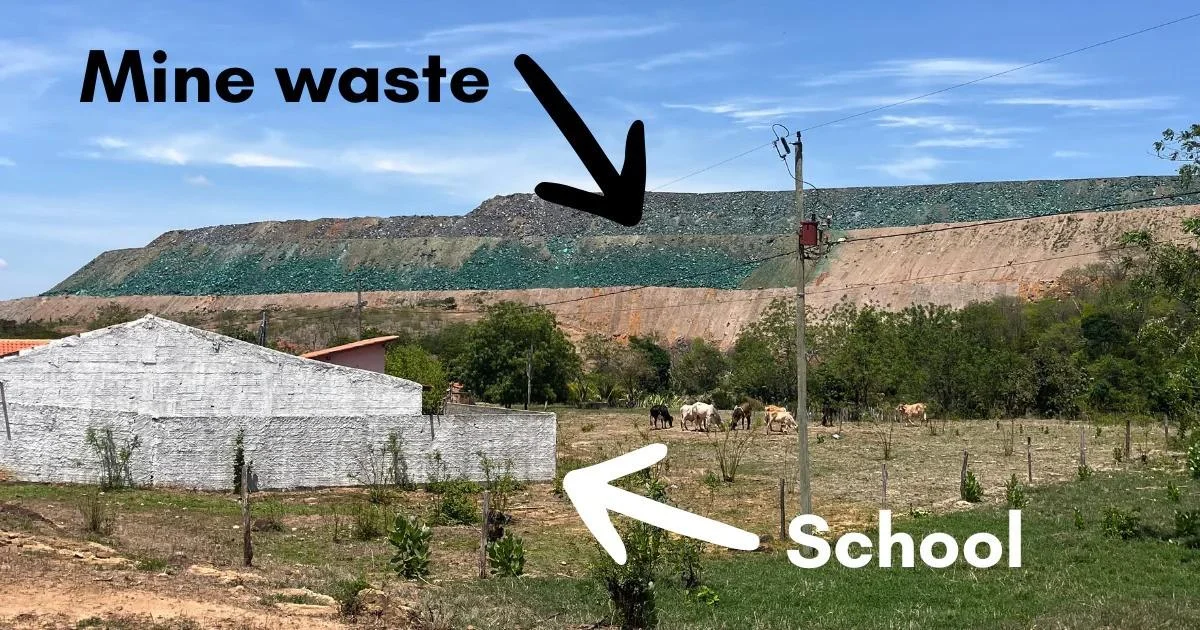
The dissonance between corporate messaging and operational impacts has sparked intense scrutiny from environmental watchdogs such as Earthworks and Cultural Survival. While Nasdaq officials praised the mining firm for its forward-thinking approach to critical mineral sourcing, communities in the Minas Gerais state describe an entirely different lived experience. According to recent field investigations, local residents contend with persistent airborne dust blowing from massive mine waste piles into their homes, structural damage to residential buildings caused by heavy industrial blasting, and environmental degradation affecting local waterways.
Critics argue that the mining sector often relies on the narrative of the Jequitinhonha Valley as an impoverished, underdeveloped region to justify aggressive industrial intervention. By painting the area as economically stagnant, proponents of large-scale mining frequently frame ecological sacrifices as an unavoidable trade-off for global progress. Indigenous and traditional leaders counter that this utilitarian calculus systematically sidelines the human populations who have inhabited and stewarded the land for generations.
Chronology of Regulatory Violations and Legal Challenges
The friction between Sigma Lithium and local regulatory bodies is not a sudden development; rather, it represents the culmination of a multi-stage breakdown in compliance, oversight, and community relations. The timeline of regulatory actions reveals mounting pressure from labor authorities, environmental agencies, and the Brazilian judiciary:
- January 2026: Labor officials intervened to shut down specific segments of Sigma Lithium’s operations, citing severe safety concerns associated with the management and placement of mine waste.
- July 2026: Environmental authorities temporarily halted parts of the mine due to adverse impacts on local vegetation and water resources, which included documented incidents of mine waste pollution.
- Early September 2026: Judicial authorities formally suspended the mine’s environmental operating licenses. The court ruling emphasized that the enterprise had failed to respect the legal rights of neighboring Afro-descendant communities, specifically violating regulations governing prior consultation regarding industrial projects on traditional territories.
- Mid-September 2026: Despite the judicial suspension of its licenses, field reports and community testimonies indicated that heavy machinery and operational activities at the site continued, drawing sharp rebukes from legal advocates and local residents.
This pattern of infractions highlights systemic challenges in enforcing environmental compliance within the rapidly expanding critical minerals sector, where global demand frequently outpaces regulatory enforcement capacity.
The Zero-Tailings Myth and Waste Management Controversies
A central pillar of Sigma Lithium’s market positioning has been its claim of operating an innovative mining model that avoids the use of traditional tailings dams, relying instead on dry-stacking and purported waste minimization strategies. The company has frequently suggested that its operations achieve a "zero-tailings" standard, presenting this technological approach as a breakthrough in environmentally conscious mining.
However, independent research released earlier in the year by Earthworks challenges the technical validity of these claims. Investigating industry assertions regarding zero-waste operations, researchers concluded that facilities functioning entirely without waste accumulation or tailings liabilities do not exist anywhere in the global mining industry. Field inspections conducted by environmental experts beneath the mine’s towering earthen structures revealed substantial waste formations that contradict corporate marketing materials. Observers note that these large structures, looming close to local infrastructure such as schools and residential properties, present ongoing environmental and physical risks that challenge the narrative of benign extraction.
Indigenous and Community Perspectives: A Crisis of Narratives
The human cost of the lithium rush was underscored by Djalma Ramalho, an Aranã Caboclo community member and Brazil Program Associate at Cultural Survival. Ramalho framed the current climate crisis not merely as a technical challenge of energy transition, but as a profound crisis of narratives and environmental justice.
"The climate crisis is also a crisis of narratives. While Sigma Lithium rings the Nasdaq bell, our communities sound the alarm," Ramalho stated. He emphasized that the romanticization of green technology often serves to mask the stark inequalities inherent in global supply chains. "They call lithium green, but that label does not make its extraction just or environmentally responsible. Regulatory action and a court ruling suspending the mine’s environmental licenses expose the gap between the company’s claims and the rights of our communities. While Sigma celebrates its profits, we bear the risks to our waters, territories, and lives."
Highlighting the deep spiritual and ecological connection to the region, Ramalho pointed out that the Jequitinhonha Valley is far from an empty frontier waiting to be exploited. "In the Jequitinhonha Valley, the river is our ancestor lying across the land. Our territory sustains our ways of life today and our collective future. No promise of clean energy can justify sacrificing Indigenous, Quilombola, and other Afro-descendant communities. A just transition begins with our rights, our voices, and our power to decide whether, how, and where we transition."
Corporate Accountability and the Demands of the Climate Movement
Jan Morrill, International Mining Senior Manager at Earthworks, echoed these sentiments, stressing that the integrity of the broader climate movement depends on genuine corporate accountability and respect for frontline communities.
"There is no sustainable future without community power, Indigenous Peoples’ leadership, and corporate accountability," Morrill said. "Sigma Lithium is an example of how a corporation can use the language of sustainability to attempt to hide the damage it does. Indigenous and traditional leaders who are speaking up to defend their communities from harm are examples for everyone in the climate movement. A strong, reliable future has to be built on respect for all people and their fundamental rights."
Drawing on firsthand observations from site visits to the Jequitinhonha Valley, Morrill detailed the visible disconnect between executive presentations and the realities faced by local households. "It’s hard to stomach company statements after visiting community members. The company says it has no dams holding mine waste. I’ve stood beneath its huge earthen structures that hold waste from the mine. It says its operations don’t affect local homes. I’ve seen the cracks in the walls and the dust that blows off the waste piles. It’s one of the clearest examples I’ve seen of why people whose lives and homes are affected need the power to decide when and how companies operate, and why governments must make sure companies follow the rules."
Broader Implications for the Global Energy Transition
The controversy surrounding Sigma Lithium encapsulates a central dilemma facing the global transition toward renewable energy. As governments and industries race to secure the raw materials necessary for electric vehicle manufacturing, grid-scale battery storage, and digital infrastructure, the demand for lithium, cobalt, nickel, and copper has reached unprecedented levels.
This surging demand creates intense economic incentives for rapid mine development, frequently testing the resilience of local legal frameworks and environmental safeguards in resource-rich nations. Analysts and legal experts point out that if the clean energy transition replicates the environmental degradation, displacement, and human rights violations historically associated with fossil fuel extraction, it risks losing the moral and social license required for long-term success.
The situation in Minas Gerais illustrates the vital necessity of Free, Prior, and Informed Consent (FPIC) as enshrined in international human rights standards. When mining operations advance in the absence of genuine community consensus and robust regulatory oversight, they generate deep social friction that can ultimately result in legal suspensions, operational delays, and reputational damage for investors.
In response to these ongoing tensions, environmental organizations and allied community groups have organized public demonstrations outside financial institutions like Nasdaq to demand greater scrutiny of companies lauded for environmental leadership. As global markets continue to weigh corporate Environmental, Social, and Governance (ESG) performance, the case of Sigma Lithium serves as a potent reminder that sustainability claims must be rigorously audited against the lived experiences of the populations most directly impacted by industrial resource extraction.




