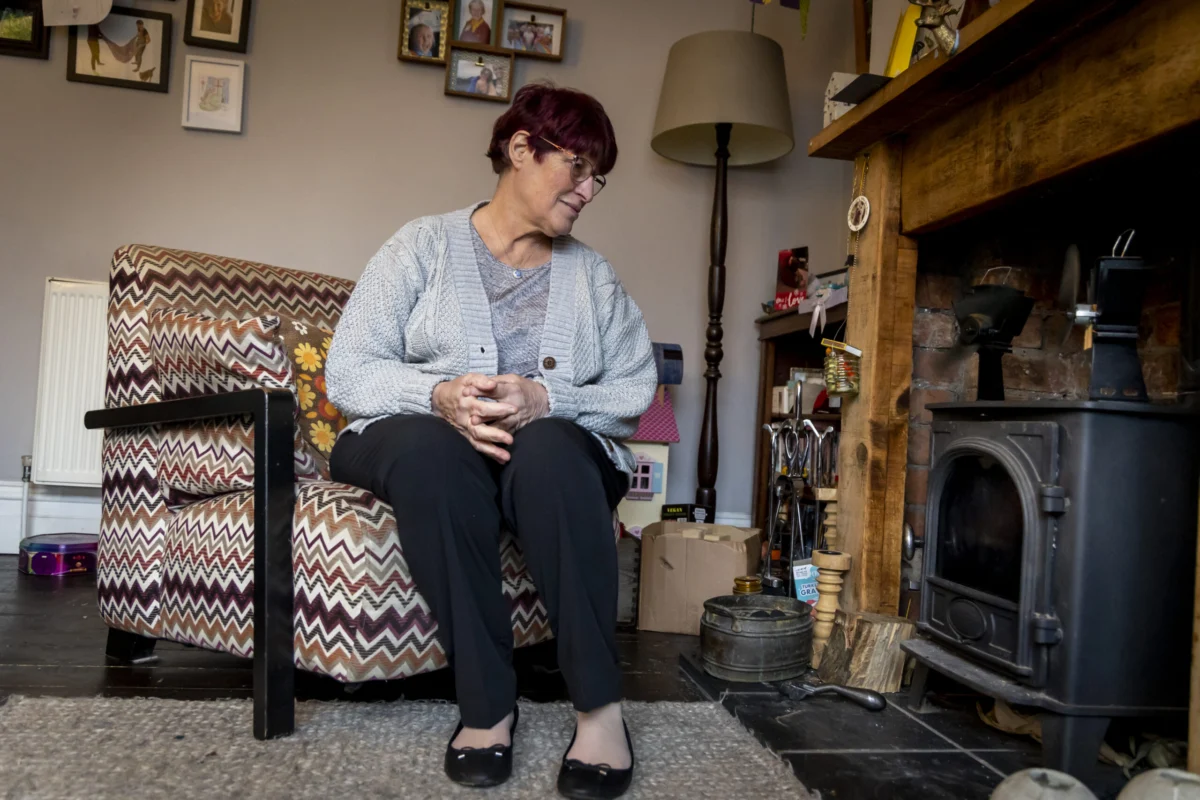
Age Action, Ireland’s leading advocacy organization for older people, has issued a stark warning regarding the deteriorating financial security of the nation’s senior citizens. Following the release of the latest data from the Central Statistics Office (CSO), the organization expressed deep concern over a significant uptick in poverty levels, particularly among those living alone. The 2025 Survey on Income and Living Conditions (SILC) highlights a widening gap between the general population and older cohorts, suggesting that the temporary relief provided by government interventions in previous years is failing to provide a sustainable safety net.
According to the CSO findings, older people living alone represent the demographic at the highest risk of income poverty in Ireland. In 2025, the poverty rate for this group climbed to 30.3%, marking a sharp increase of 4.4 percentage points from 2024. This figure is nearly two and a half times the national average for income poverty, underscoring a disproportionate economic burden on the elderly. The data suggests that despite a period of general economic growth in other sectors, the fixed incomes of the retired population are failing to keep pace with the rising costs of essential goods and services.
Understanding the Metrics: Income Poverty and Enforced Deprivation
The CSO’s SILC report utilizes several key metrics to measure the standard of living in Ireland. To understand the gravity of the 2025 figures, it is necessary to distinguish between the various classifications of poverty cited by Age Action.
Income poverty, or being "at risk of poverty," refers to individuals whose equivalised disposable income is below 60% of the national median. For a significant portion of Ireland’s older population, particularly those solely reliant on the State Pension, staying above this threshold has become increasingly difficult.
Beyond theoretical income thresholds, the report highlights the reality of "enforced deprivation." This occurs when individuals are unable to afford two or more basic necessities from a list of eleven items, such as keeping the home adequately warm, replacing worn-out furniture, or buying new clothes. The 2025 data reveals that almost one in five (18.3%) older people living alone experienced enforced deprivation. Even among couples where at least one person is aged 65 or older, the rate stood at 9.8%, indicating that even dual-income or shared-resource households are feeling the strain.
The most severe category, "consistent poverty," describes individuals who suffer from both income poverty and enforced deprivation simultaneously. In 2025, nearly one in ten (9.8%) older people living alone were classified as living in consistent poverty. This metric is viewed by sociologists and policy analysts as a definitive indicator of systemic failure, as it reflects a long-term inability to participate in the basic standard of living enjoyed by the rest of society.
A Chronology of Economic Pressure (2022–2026)
The current crisis did not emerge in a vacuum. A timeline of the last four years illustrates the trajectory of the economic pressures facing older Irish residents.
In 2022 and 2023, Ireland, like much of Europe, faced an unprecedented spike in inflation, driven largely by skyrocketing energy costs and supply chain disruptions. During this period, the government introduced a series of "one-off" cost-of-living payments, including energy credits and double pension payments.
By 2024, while headline inflation began to stabilize, the "floor" for prices in supermarkets and utility providers remained significantly higher than pre-2022 levels. The 2024 SILC data showed that while poverty rates were high, the one-off measures had prevented a total collapse of the standard of living for many.
However, the 2025 data, released in early 2026, confirms that these temporary measures were only a "sticking plaster." As the one-off payments were phased out or failed to increase in line with the cumulative inflation of the previous years, the underlying inadequacy of the State Pension was exposed.
The announcement of Budget 2026 has become a focal point for Age Action’s advocacy. Camille Loftus, Head of Advocacy and Public Affairs at Age Action, noted that the failure of the 2026 Budget to replace temporary supports with permanent, indexed increases to the State Pension has set the stage for a further decline in 2026. "While one-off cost of living measures have reduced the poverty risk for older people in recent years—by 5.9 percentage points in 2025—the failure to replace these supports with permanent and targeted measures in Budget 2026 means that older people will face a growing risk of living in poverty in 2026," Loftus stated.
The Impact of Living Alone and the "Singles Penalty"
The data emphasizes a growing disparity based on household composition. Older people living alone face unique challenges that exacerbate their risk of poverty. Unlike couples, they cannot benefit from economies of scale regarding heating, electricity, or home maintenance.

In Ireland, a significant portion of the older population lives in older, less energy-efficient housing. For a single pensioner, the cost of retrofitting a home or even maintaining a basic level of heat during the winter months can consume a disproportionate amount of their weekly income. This "singles penalty" is reflected in the 30.3% income poverty rate, which stands in stark contrast to the lower rates seen in multi-person households.
Furthermore, the social isolation often associated with living alone can lead to higher indirect costs, including a greater reliance on paid services for tasks that might otherwise be shared with a partner or family member. When these financial pressures intersect with the rising cost of private healthcare and transport in rural areas, the result is a rapid descent into deprivation.
Government Response and Political Implications
The government’s strategy has traditionally focused on a mix of universal and targeted supports. In response to previous CSO reports, the Department of Social Protection has often pointed to the "total package" of supports, including the Fuel Allowance, the Household Benefits Package, and the Free Travel Scheme.
However, opposition parties and social justice NGOs argue that these benefits have not been adjusted sufficiently to reflect the modern cost of living. Critics of Budget 2026 suggest that the government’s reliance on one-off payments is a political choice designed to provide short-term electoral "feel-good" factors rather than addressing the structural inadequacy of the Irish pension system.
Economic analysts suggest that the Irish State Pension, when measured against the "Minimum Essential Standard of Living" (MESL) researched by the Vincentian Foundation, consistently falls short for many household types. The 2025 CSO data serves as empirical evidence for these claims, suggesting that the "at risk of poverty" threshold is not just a statistical abstraction but a lived reality of skipped meals and unheated rooms.
Broader Socio-Economic Context and Future Risks
The rising poverty among the elderly has implications that extend beyond the individuals themselves. There is a well-documented link between poverty and poor health outcomes. As more older people fall into consistent poverty, the burden on the Health Service Executive (HSE) is expected to increase. Malnutrition, respiratory issues caused by cold housing, and the mental health toll of financial stress often lead to increased hospital admissions and a higher demand for long-term care services.
Furthermore, Ireland’s demographic profile is shifting. With a rapidly aging population, the number of people reliant on the State Pension will continue to grow. If the baseline for pension adequacy is not addressed now, the percentage of the total population living in poverty could rise, creating a drag on the national economy and increasing social inequality.
The 2025 SILC report also highlights a "new" class of vulnerable seniors: those who reached retirement age without owning their own homes. While previous generations of Irish seniors largely benefited from high rates of homeownership, the housing crisis of the last two decades means an increasing number of people are entering their 60s and 70s in the private rental sector. For these individuals, the State Pension is often entirely consumed by rent, making them the most precarious group within the 65+ demographic.
Analysis: The Need for Structural Reform
The findings presented by Age Action and the CSO suggest that the current model of Irish social welfare for the elderly is at a crossroads. The advocacy group argues that the government must move away from "discretionary" one-off payments and toward a "benchmarked" pension system. Benchmarking would involve tying the State Pension to a specific percentage of average earnings or a calculated minimum standard of living, ensuring that as the economy grows and prices rise, the purchasing power of seniors remains protected.
The data from 2025 indicates that without such structural reform, the gains made in reducing poverty over the last decade are at risk of being completely reversed. The 4.4 percentage point jump in poverty for those living alone is one of the most significant year-on-year increases in recent memory, serving as a "red alert" for policymakers.
As Camille Loftus and Age Action continue to lobby for changes following the Budget 2026 decisions, the focus remains on the "permanent and targeted measures" that were allegedly missing from the latest fiscal plan. The organization maintains that the dignity of older people should not depend on the annual whims of budgetary surpluses or temporary cost-of-living packages.
Conclusion
The 2025 CSO Survey on Income and Living Conditions has provided a sobering look at the financial health of Ireland’s older population. With income poverty for those living alone reaching 30.3% and consistent poverty affecting nearly one in ten, the call for a fundamental rethink of how the State supports its aging citizens has never been louder. As the nation moves through 2026, the long-term impact of current budgetary decisions will become the primary focus for advocates, economists, and the public alike. The data suggests that for a significant portion of Ireland’s elderly, the promise of a secure and comfortable retirement is increasingly out of reach, replaced by a daily struggle against the rising tide of economic deprivation.