
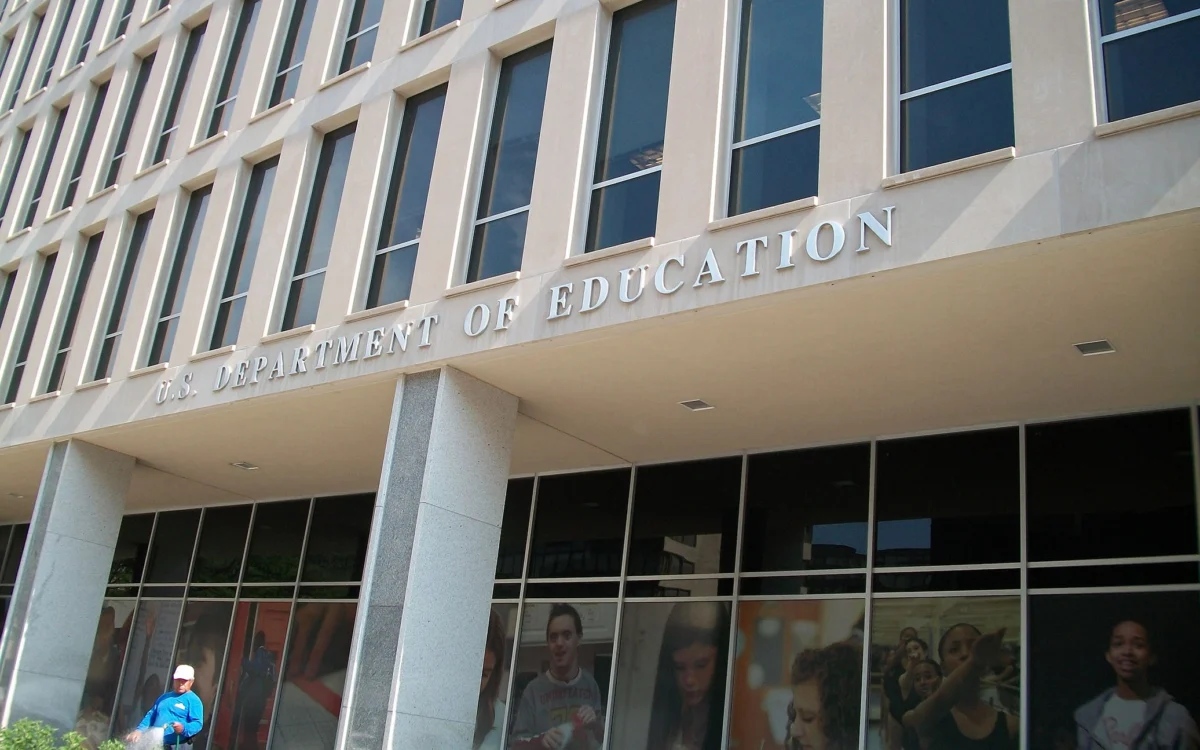
The United States Department of Education is facing heightened judicial scrutiny over the potential lapse of tens of millions of dollars destined for federal research, statistics, and specialized education initiatives. U.S. District Judge Allison D. Burroughs has intervened in an ongoing legal battle, issuing a direct mandate requiring federal education officials to provide a formal, up-to-date status report regarding the government’s unallocated educational research funds.
The judicial action comes in response to months of escalating anxiety among advocacy groups, researchers, and educational stakeholders who feared that vital resources allocated for the Institute of Education Sciences (IES)—the independent statistics, research, and evaluation arm of the Education Department—would expire unused at the conclusion of the fiscal year on September 30. While the department maintains that it intends to obligate the funds before the statutory deadline, mounting skepticism from the courts and external watchdogs has transformed routine bureaucratic processes into a high-stakes legal confrontation over the future of special education research in America.
Chronology of a Funding Crisis
The seeds of the current legal battle were planted earlier this spring when an investigative report revealed a alarming discrepancy in federal spending. According to the findings, out of a $77 million federal budget specifically designated for special education research and evaluation programs, only $11 million had been formally committed or spoken for.
The revelation sparked immediate alarm within the disability advocacy community. Recognizing the imminent threat of the funds lapsing and returning to the Treasury, a coalition of organizations—led by the National Center for Learning Disabilities (NLD) and the Massachusetts Teachers Association—filed a federal lawsuit against the U.S. Department of Education. The legal action sought to compel the agency to distribute the funds and prevent them from expiring, arguing that the delay was arbitrary, capricious, and deeply damaging to the educational infrastructure supporting students with disabilities.
As the litigation progressed, Judge Burroughs opted for a restrained judicial approach, exercising what she described as a "soft touch." Her decision was heavily influenced by formal assurances provided by the Education Department’s legal representation, who insisted that the agency fully intended to obligate the disputed funds prior to the September 30 expiration date.
However, the judge made it explicitly clear that the court’s patience is finite. In her recent ruling ordering an update by Monday, Judge Burroughs warned that if the approaching deadline suggests the defendants have misled the court or delayed action to the point where funds cannot realistically be obligated, the judiciary stands ready to reconsider the matter and potentially issue immediate injunctive relief.
Murky Status and Fragmented Data
Despite the federal agency’s assurances to the courtroom, transparency regarding the exact allocation and destination of the funds remains elusive. Independent academic experts and advocacy leaders report a profound lack of visibility concerning the true state of the budget.
Meghan Burke, a prominent professor of special education at Vanderbilt University, pointed out a notable slowdown in federal grant distribution this year. According to Burke, the National Center for Special Education Research—the specialized funding division housed within the IES—has issued only five awards so far this year, with all of those grants only commencing this month. In the context of historical funding cycles, Burke noted that this volume is substantially "lower than a typical year," raising fresh questions about the agency’s capacity to distribute remaining funds efficiently before the fast-approaching autumn deadline.
Jacqueline Rodriguez, Chief Executive Officer of the National Center for Learning Disabilities and a key figure in the ongoing litigation, echoed these concerns while acknowledging some positive movement. Rodriguez stated that while she believes it remains technically realistic for the government to meet its obligations given its stated intentions, the lack of transparent public data makes independent verification nearly impossible.
"We don’t have a current number for exactly how much special education research funding remains unspent because the government has not publicly updated those figures," Rodriguez explained. Nevertheless, she noted that the Department of Education has recently issued requests for proposals—a procedural step she attributes directly to the pressure exerted by the ongoing lawsuit.
When pressed for specific figures regarding the unallocated special education research budget, representatives for the Department of Education declined to provide concrete data. Instead, an agency spokesperson issued a general statement outlining the intended use of the remaining capital.
"IES intends to use its remaining FY25 funds to fully fund existing research grants, as well as to support other high-quality statistical and evaluation activities in service of its statutory obligations," the spokesperson said.
As of last week, federal estimates indicated that approximately $180 million in total IES funding remained unallocated and vulnerable to expiration at the end of September. The precise proportion of that $180 million pool dedicated strictly to special education research, however, has not been officially clarified by the administration.
Broader Implications for Students, Families, and Educators
The struggle over IES and special education research funds is not merely a bureaucratic disagreement over accounting timelines; educators and policy experts warn that the real-world consequences of letting these funds lapse would be profound and enduring.
Advocates emphasize that federal research grants are the primary engine driving evidence-based practices in classrooms across the nation. Without adequate funding, the educational ecosystem loses critical tools designed to track, analyze, and improve outcomes for vulnerable student populations.
"This funding supports research that gives us a much clearer picture of what students with disabilities are experiencing in schools and where they are not getting the support they need," Rodriguez noted. She added that the research infrastructure funded by these programs also yields broad benefits for general education students, while financing vital technical assistance initiatives designed to help families navigate and actively participate in the often complex special education process.
"If we don’t have that research and support, we’re making decisions without the information we need to know whether we’re actually serving students well," Rodriguez warned. At a time when local school districts are grappling with post-pandemic learning recovery, resource constraints, and persistent achievement gaps, the loss of millions in federal research dollars could significantly hobble long-term planning and systemic improvement.
A Wider Pattern of Judicial Scrutiny
The current legal confrontation over research funding does not exist in a vacuum. It forms part of a broader, mounting wave of legal challenges brought against the U.S. Department of Education regarding its management of federal grants and statutory programs intended to support educators and students with special needs.
In a separate legal proceeding, a federal judge recently ruled against the Education Department in a lawsuit brought by a coalition of states. That court found that the agency committed significant procedural and substantive errors when it abruptly canceled hundreds of millions of dollars in federal grants designated for teacher training programs. Crucially, those canceled funds included financial support necessary to prepare educators to work effectively with students with disabilities.
Stephanie Smith Lee, co-director of policy and advocacy at the National Down Syndrome Congress and a former director of the Education Department’s Office of Special Education Programs under President George W. Bush, praised that ruling as a vital step forward.
"The ruling is a victory for students, teachers and schools and common sense as our nation’s schools struggle with teacher training, hiring and retention," Smith Lee said.
Yet, legal battles continue to multiply. Another major lawsuit—also initiated by a coalition of states—challenges the department’s handling of Individuals with Disabilities Education Act (IDEA) grants earmarked specifically for special education teacher preparation. That case remains pending, with a final judicial decision yet to be rendered.
As Judge Burroughs awaits the Department of Education’s compliance report ahead of Monday’s deadline, the education community remains on high alert. With millions of dollars hanging in the balance and the September 30 expiration date looming large, the federal government’s next moves will be heavily scrutinized by the courts, advocacy organizations, and educators dedicated to safeguarding the rights and educational futures of students nationwide.




