
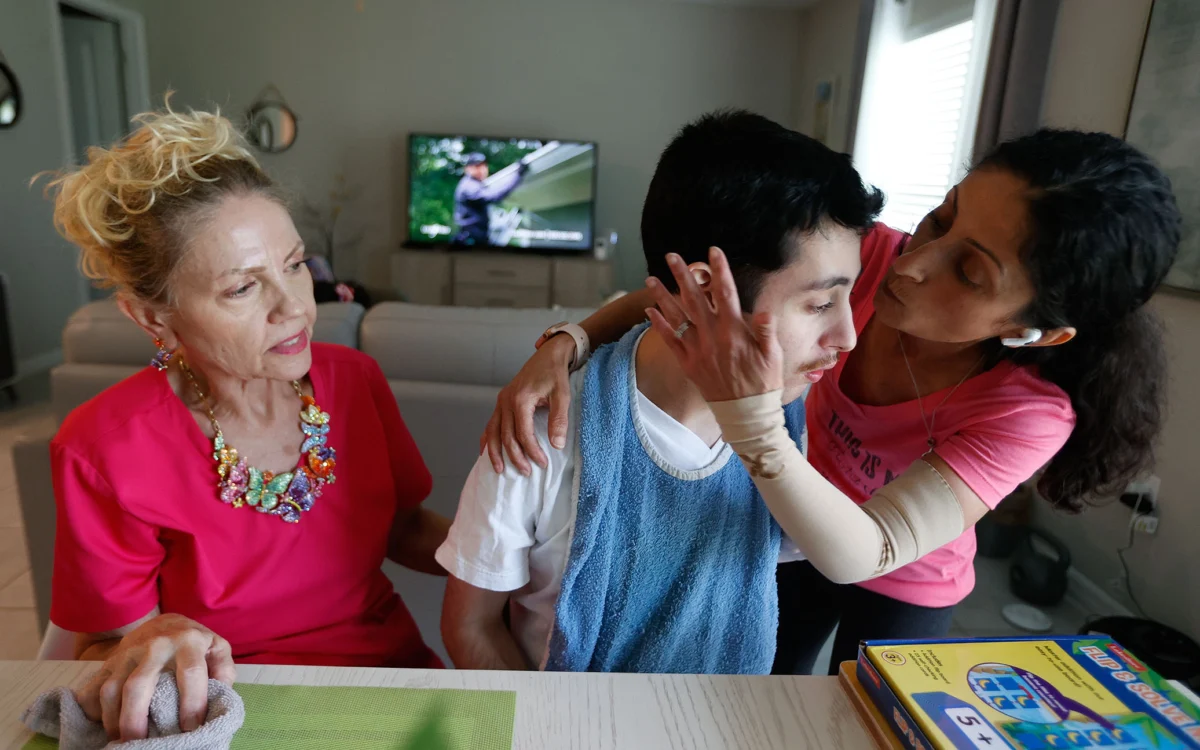
The Centers for Medicare and Medicaid Services (CMS) has released a comprehensive 33-page implementation framework detailing how states must apply complex exemptions to forthcoming Medicaid work requirements. While federal officials present the instructions as a roadmap for state compliance, disability advocates, health law experts, and care providers warn that the new directive fails to address fundamental structural flaws. Instead, critics argue the guidance narrows statutory protections passed by Congress, threatening to strip essential health coverage and community-based long-term services from hundreds of thousands of vulnerable Americans with intellectual, physical, and developmental disabilities.
The regulatory shift originates from sweeping federal legislation enacted in mid-2025. Known broadly as the One Big Beautiful Bill Act, the sweeping legislative package introduced nearly $1 trillion in federal Medicaid cuts and mandated that states implement rigorous community engagement rules. Beginning early next year, the vast majority of non-elderly, non-disabled adult Medicaid beneficiaries will face a mandatory requirement: they must prove they are actively working, participating in job training, volunteering, or enrolled in an educational institution for at least 80 hours per month to maintain their healthcare coverage.
Legislative Intent Versus Administrative Overreach
When Congress drafted the 2025 legislation, lawmakers included explicit carve-outs designed to shield vulnerable populations from losing vital healthcare access. The statutory text dictates that individuals who are categorized as medically frail, possess special medical needs, or live with significant physical, intellectual, or developmental disabilities are categorically exempt from the 80-hour monthly work mandates. Furthermore, the legislation extends these protections to parents, legal guardians, and primary family caregivers who shoulder the round-the-clock responsibility of supporting disabled family members at home.
However, a chasm has quickly emerged between congressional intent and executive branch implementation. In June, CMS published initial regulatory standards dictating that individuals with physical, intellectual, or developmental disabilities would only qualify for the medical frailty exemption if their underlying medical condition directly and significantly impaired their capacity to perform at least one designated Activity of Daily Living (ADL). Under federal guidelines, ADLs encompass fundamental, routine life tasks such as bathing, dressing, grooming, walking, toileting, eating, or transferring independently in and out of a bed or chair.
The newly released 33-page administrative guidance doubles down on this narrow interpretation, explicitly stating that a medical diagnosis alone is insufficient to secure an exemption. According to the document, an individual is considered medically frail only if their physical, mental, or behavioral condition directly impairs their functional ability to comply with the community engagement mandates.
Disability rights organizations have forcefully condemned the federal stance, arguing that executive agencies are effectively rewriting statute through administrative sub-regulatory guidance, thereby circumventing the rigorous public transparency and accountability demanded by formal federal rulemaking procedures.
Implementation Challenges and Verification Burdens
To assist state agencies with the operational rollout of the new mandates, the CMS guidance outlines several potential administrative models, including a flexible, tiered evaluation approach. Under this suggested framework, state Medicaid offices would initially evaluate beneficiaries by cross-referencing existing administrative data against a predefined list of medical conditions that automatically trigger an exemption. If initial data proves inconclusive, states could review secondary lists of conditions that strongly indicate medical frailty, pending the collection of additional documentation. Only as a last resort would complex cases trigger mandatory manual administrative reviews.
Furthermore, CMS suggests that states utilize existing administrative data—specifically looking back at the previous 12 months of medical claims records—to automatically verify a beneficiary’s medical frailty status. For individuals unable to be verified through automated data matching, states are permitted to accept a one-time self-declaration of frailty, followed by mandatory annual re-verifications utilizing reliable medical documentation.
While policy analysts acknowledge that automated data utilization could reduce bureaucratic hurdles for some beneficiaries, experts warn that relying on past medical claims is inherently flawed, particularly for individuals with lifelong disabilities. Medical claims data frequently reflect acute interventions rather than chronic functional limitations, meaning that lifelong intellectual or developmental conditions may not generate the consistent, recent claims activity required to trigger an automatic exemption.
Consequently, disability policy experts caution that the administrative burden will inevitably shift back to the individual and their families. Navigating the labyrinthine process of tracking down elusive medical records, securing physician sign-offs, and filing complex appeals places an extraordinary barrier in front of populations already facing systemic socio-economic and communication hurdles. Moreover, because the CMS tiered framework remains optional, individual states have been granted sweeping discretion to formulate their own localized exemption criteria. This regulatory fragmentation means two citizens with identical medical diagnoses living in neighboring states could experience vastly divergent administrative processes and entirely contradictory healthcare coverage outcomes.
Legal Challenges and Broad Coalition Pushback
The growing controversy surrounding the CMS rules has already precipitated significant legal battles across the federal court system. In July, a diverse coalition representing attorneys general from 25 states and the District of Columbia filed a major federal lawsuit challenging the legality of the administration’s Medicaid work requirement policies.
Demonstrating the immense cross-sector anxiety provoked by the federal directives, more than 70 national advocacy organizations, civil rights groups, and provider networks filed a joint amicus brief supporting the state-level legal challenge. Signatories to the brief included prominent organizations such as the National Health Law Program, the American Association of People with Disabilities, the Autistic Self Advocacy Network, and Easterseals. Legal representatives for these organizations argue that forcing medically fragile individuals to repeatedly prove their inability to work defies the explicit protections established by Congress.
Beyond the immediate threat to healthcare access, healthcare economists and long-term care providers emphasize that the consequences of these policy changes will ripple catastrophically throughout the American healthcare ecosystem. Industry associations warn that stripping healthcare coverage from disabled individuals will inevitably disrupt access to vital home- and community-based services (HCBS). These specialized community programs rely on steady, predictable Medicaid funding to sustain their operations. When beneficiaries are pushed off the program due to administrative non-compliance, community provider networks face devastating financial strains, threatening the survival of an already fragile infrastructure that delivers daily support to millions of Americans.
As the implementation deadline approaches, federal officials have declined to comment on the mounting criticism or the ongoing legal challenges. Meanwhile, state governments scramble to finalize their compliance plans, leaving families, advocates, and care providers bracing for widespread administrative confusion and potential coverage losses when the new rules take effect next year.




