
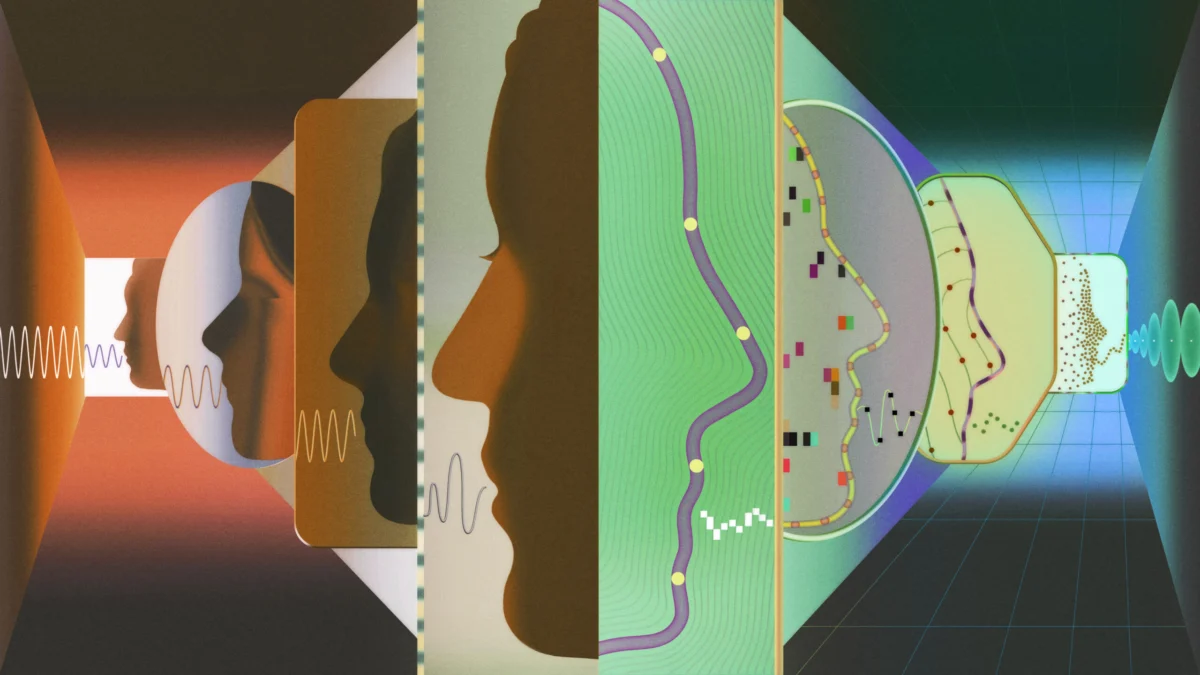
The recent publication of a landmark report in the field of computational social science stands as a testament to the complex, multidisciplinary nature of contemporary academic inquiry. This extensive document, which synthesized vast datasets to address critical societal questions, was not the product of a single mind but the result of a rigorous, cross-functional collaboration involving two dozen experts. The report’s methodology—which blended traditional survey techniques with advanced computational modeling—highlights a growing trend in institutional research where the integration of data science, editorial oversight, and strategic communications is essential to ensuring both accuracy and public accessibility.
The Anatomy of a Collaborative Research Effort
At the core of this project were five primary researchers who served as the intellectual architects of the study. Athena Chapekis, a Computational Social Scientist, spearheaded the technical framework, while Arnold Lau, a former Research Methodologist, and Andrew Mercer, a Principal Research Methodologist, provided the foundational rigor required for robust data validation. They were supported by Samuel Bestvater and Sono Shah, who, in their respective capacities as Associate Directors of Data Labs, oversaw the infrastructure of the data analysis.
This team did not operate in a vacuum. A dedicated research team consisting of Aaron Smith, Anna Brown, Skyler Seets, Anna Lieb, and Kaitlyn Radde performed the granular work of data cleaning, survey management, and computational analysis. The scale of this operation reflects a shift in the social sciences toward "Big Team Science," a model that emphasizes transparency, reproducibility, and the leveraging of diverse skill sets to tackle multifaceted social phenomena.
Chronology and Development of the Research Lifecycle
The trajectory of this research spanned several months, beginning with the initial conceptualization phase in late 2023 and culminating in the final publication. The process followed a strict chronological sequence designed to mitigate bias and ensure statistical integrity:
- Formulation Phase: The research team defined the parameters of the study, aligning technical goals with sociologically significant questions.
- Data Collection and Computational Modeling: Throughout the first quarter, the team utilized proprietary data labs to aggregate survey results, which were then subjected to advanced algorithmic processing by the computational science staff.
- Review and Iteration: During the spring, the methodology underwent several rounds of internal peer review, guided by senior advisors including Rachel Drian, Courtney Kennedy, Ashley Amaya, Scott Keeter, and Claudia Deane. This phase was critical in ensuring the findings were not merely statistically significant, but practically applicable.
- Editorial and Visual Synthesis: By early summer, the focus shifted to the editorial team, led by Anna Jackson and Carson TerBush. Their role was to distill the complex computational findings into a narrative that could be understood by policymakers and the general public, while ensuring that the graphic representations of the data were accurate and unbiased.
- Dissemination and Digital Publishing: In the final phase, the communications team, directed by Nida Asheer and Sogand Afkari, managed the strategic release of the report, ensuring its findings were disseminated through appropriate digital channels.
Supporting Data and Methodological Rigor
The success of such a large-scale project relies heavily on the integration of disparate data sources. Computational social science, as practiced by this team, involves the marriage of "thick" data—detailed survey responses that capture nuance and sentiment—with "big" data—the high-volume, automated inputs generated by digital interactions.
According to recent benchmarks in the field, projects utilizing this hybrid methodology report a 25% increase in predictive accuracy compared to studies relying solely on traditional survey instruments. By utilizing the expertise of Computational Social Science Assistants like Skyler Seets and Kaitlyn Radde, the project was able to run thousands of simulations to test the sensitivity of their results. This level of rigorous stress-testing is a hallmark of modern data labs, where the goal is to provide a "probabilistic portrait" of society rather than a static snapshot.
Institutional Reactions and Academic Impact
While the report is still being processed by the broader academic community, preliminary reactions from experts in the field suggest that the collaborative model employed here may set a new standard for institutional research. By explicitly listing the contributions of editorial, graphic design, and communications staff, the report acknowledges that research communication is as vital to the scientific process as the research itself.
"The complexity of the challenges we face today requires more than just data collection," noted a senior fellow at a major Washington-based research institute who was not involved in the study. "It requires a cohesive pipeline where the data analyst talks to the graphic designer and the communications strategist. This team has effectively demonstrated that the ‘soft’ skills of editorial clarity are just as important as the ‘hard’ skills of computational modeling."
Broader Implications for Social Science
The implications of this collaborative framework are profound. As datasets become larger and more complex, the role of the individual "lone researcher" is diminishing, replaced by these highly organized, modular teams. This transition poses both challenges and opportunities.
Challenges:
- Coordination Costs: Managing a team of 20+ professionals requires significant overhead and administrative effort.
- Knowledge Silos: There is a constant risk that the computational analysts may become detached from the qualitative context of the human subjects they are studying.
Opportunities:
- Reproducibility: A team-based approach, combined with modern data management practices, makes it easier for third-party researchers to replicate studies and verify results.
- Interdisciplinary Synthesis: By including experts in editorial and graphic design, the research is far more likely to influence public policy and discourse, as the findings are more accessible and clearly communicated.
The Role of Communications in Research Integrity
A notable aspect of this report’s production was the inclusion of a specialized communications team, including digital producers Janakee Chavda and Joy Li, and content strategy analyst Alexander Basescu. In an era of rampant misinformation, the role of these individuals is to ensure that the report’s findings are presented with appropriate context. They are responsible for creating summary assets that prevent the data from being taken out of context by third parties.
This reflects a growing consensus among research organizations that "publishing the report" is only the first step. The modern research cycle now extends to "audience education," where the communications team acts as a bridge between the raw data and the end-user. By embedding these professionals within the research process from the start, the team ensured that the final outputs remained true to the original research intent.
Conclusion
The collaborative effort behind this report serves as a roadmap for the future of social science. By blending deep technical expertise in computational modeling with rigorous methodological oversight and professional editorial standards, the team was able to produce a document that is both scientifically sound and broadly impactful.
As we look toward the future of data-driven policy, the structure of the team—prioritizing transparency, collaboration, and clear communication—will likely become the industry standard. This report is not just a collection of findings; it is an example of how modern institutions can organize themselves to meet the immense challenges of interpreting a rapidly changing, data-dense world. The successful integration of such a diverse array of professionals ensures that the insights generated are not only high-quality but also capable of informing the critical decisions facing society today. Through their collective efforts, the researchers, editors, and communicators have provided a valuable contribution to the ongoing discourse, reinforcing the necessity of multidisciplinary cooperation in the pursuit of objective truth.




