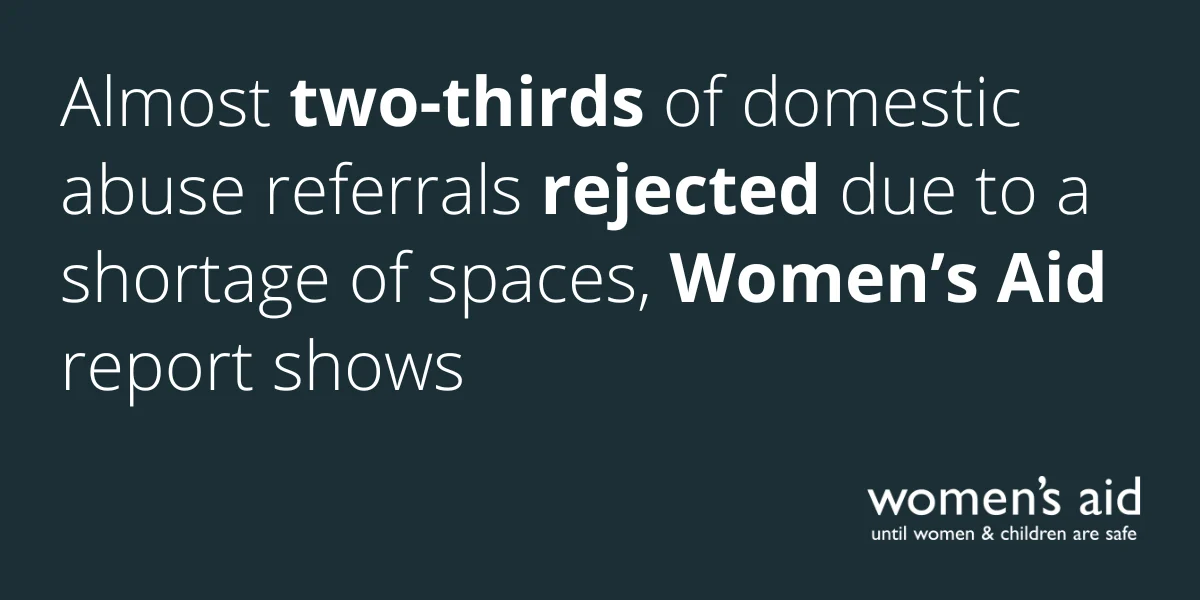
A critical new report from national domestic abuse charity Women’s Aid reveals a deepening crisis within the support sector, with an unprecedented 65.2% of refuge referrals for women and children rejected in the past year. This alarming figure, the highest proportion in five years, underscores a severe lack of safe accommodation and capacity, leaving thousands of survivors without vital, life-saving support despite government pledges to halve violence against women and girls (VAWG) in the next decade. The findings, published in Women’s Aid’s annual Domestic Abuse Report, paint a definitive national picture of overwhelming demand outpacing woefully inadequate provision, demanding immediate and systemic reform.
The Escalating Crisis: A Deep Dive into the Numbers
The 2026 Domestic Abuse Report by Women’s Aid, a definitive national audit of domestic abuse services, presents a stark reality: while 10,665 women and 11,732 children received support from refuge services last year, the sheer volume of rejections highlights a system under immense strain. The 65.2% refusal rate signifies that for every three women and children seeking refuge, two were turned away, primarily due to a critical lack of space. This represents not merely a statistic, but countless individual stories of vulnerability and heightened risk, as survivors are denied a safe exit route from abusive situations. This figure is particularly concerning given that domestic abuse remains the most prevalent form of VAWG, consistently generating high demand for specialist services. The charity notes that despite a marginal year-on-year increase in overall bed spaces, this provision remains critically insufficient to meet the escalating needs across the country.
Systemic Pressures and Funding Failures: The Root Causes
The report attributes this unprecedented rate of refusals to a confluence of systemic pressures, primarily rooted in the broader housing crisis and a protracted funding deficit within the domestic abuse sector. For decades, specialist domestic abuse services have grappled with inconsistent and insufficient funding, often stemming from poor commissioning practices by local authorities. These practices, driven by short-term contracts and a focus on cost-cutting over survivor needs, have created a precarious operational environment for many vital services.
Farah Nazeer, Chief Executive of Women’s Aid, articulated this long-standing issue, stating, "As a direct result of consistently poor commissioning decisions, the domestic abuse sector has faced a decades-long funding crisis, yet despite this, it continued to deliver lifesaving care to women and children escaping abuse." She further emphasized the urgent need for the government to address all parts of the system if the "epidemic of violence faced by women and girls" is to be tackled effectively.
A significant contributing factor to the lack of available refuge spaces is the critical shortage of affordable and appropriate "move-on accommodation." This bottleneck means that women and children who have completed their initial refuge stay often have nowhere safe to transition to, forcing them to remain in refuges for extended periods. This, in turn, prevents new survivors from accessing desperately needed spaces, creating a perpetual cycle of demand outstripping supply. The UK’s wider housing crisis, characterized by a lack of social housing, rising rents, and increasing homelessness, directly exacerbates this issue, making it incredibly challenging for survivors to rebuild their lives independently.
Moreover, the report found that an unacceptable number of services are operating on partial or unstable funding, with many relying on dwindling reserves and dedicated volunteers to sustain essential support. This precarious financial footing has direct and severe consequences for survivors, particularly those with more complex needs, such as mental health issues, disabilities, or substance abuse challenges, and those from Black and minoritised communities, whose services are often underfunded and marginalized.
A Decade of Pledges Versus Present Realities
The release of this report is particularly poignant as it follows the government’s publication of its cross-government strategy aimed at building a safer society for women and girls. Furthermore, it comes against the backdrop of Labour’s commitment to halve violence against women and girls within the next decade. These ambitious political aspirations, however, appear increasingly at odds with the grim realities on the ground, as revealed by Women’s Aid.
Timeline of Key Developments and Policy Responses:
- 2010s (Austerity Era): Significant cuts to local authority budgets began, leading to a reduction in funding for many public services, including those for domestic abuse. Charities frequently reported a "funding cliff edge" as grants dwindled.
- 2017: The Council of Europe’s Istanbul Convention, a landmark treaty on preventing and combating violence against women and domestic violence, was ratified by the UK. However, full implementation, particularly regarding adequate funding for specialist services, has been a persistent concern for advocacy groups.
- 2020 (COVID-19 Pandemic): Lockdowns led to a surge in domestic abuse incidents and calls to helplines, placing unprecedented strain on already stretched services. Many services reported depleting their reserves to meet the increased demand.
- 2021 (Domestic Abuse Act): The Domestic Abuse Act 2021 came into force, creating a statutory definition of domestic abuse, placing duties on local authorities to provide support to victims in safe accommodation, and introducing new protections. While welcomed, charities cautioned that without adequate funding, the Act’s ambitions would not be met.
- 2022 (Cross-Government VAWG Strategy): The government launched its updated "Ending Violence Against Women and Girls Strategy," outlining a comprehensive approach to tackling VAWG. It acknowledged the need for sustainable funding but has faced criticism for the pace and scale of investment.
- Present (2026 Women’s Aid Report): This report serves as a critical barometer, indicating that despite legislative and strategic advancements, the practical support infrastructure for survivors is failing, with referral rejections reaching a five-year high.
The gap between policy and practice highlights a fundamental disconnect. While the Domestic Abuse Act 2021 placed a statutory duty on local authorities to provide support for victims in safe accommodation, the report strongly suggests that the funding mechanisms and commissioning standards required to fulfil this duty are severely lacking.
The Evolving Face of Abuse: Technology’s Dark Side
The report also sheds light on the evolving nature of domestic abuse, particularly the increasing prevalence of technology-facilitated abuse. Services are adapting to support survivors experiencing new forms of harm, alongside those impacted by wider social and political developments, such as far-right riots and international humanitarian crises.
Among the most prevalent forms of technology-facilitated abuse disclosed to services were online stalking (reported by 78.1% of services) and non-consensual intimate image sharing or threats of sharing (66.4%). Alarmingly, the most common new form of technology-facilitated abuse identified by services in the past year was coerced participation in platforms like OnlyFans or other online activities. This demonstrates how abusers exploit emerging digital platforms to exert control, exploit, and further traumatize victims, requiring specialist services to continually evolve their expertise and support mechanisms. The need for digital literacy and specialist training for frontline staff is paramount to address these complex and insidious forms of abuse effectively.
Calls for Action and Broader Implications
Women’s Aid is unequivocal in its recommendations, urging the government to acknowledge the intrinsic value of specialist services and commit to long-term, sustainable investment. The charity specifically calls for the expedited review of current commissioning standards and the establishment of a new National Commissioning Statement. This statement should oversee supported housing and ensure robust oversight of commissioning decisions, prioritizing survivor needs over short-sighted cost-cutting measures. The report cautions that diverting investment towards non-specialist services often leads to survivors being pushed towards other public services, thereby creating additional pressure on healthcare, policing, and social care systems, ultimately proving to be a false economy.
Statements from Related Parties (Inferred):
A spokesperson for the Ministry of Justice, while not directly quoted in the original article, would likely acknowledge the serious findings of the Women’s Aid report. They might reiterate the government’s unwavering commitment to tackling domestic abuse and protecting survivors, highlighting existing investments and the ongoing implementation of the Domestic Abuse Act 2021. They might also refer to plans for reviewing commissioning practices and working closely with local authorities and charities to improve the support landscape.
Local authority representatives, facing severe budget constraints, would likely express sympathy for the challenges faced by domestic abuse services. They might emphasize the complexities of commissioning in a highly competitive and underfunded environment, acknowledging the struggle to balance growing demand with limited resources. They would likely point to the need for greater central government funding and a more coherent national strategy to support local provision effectively.
Other charities and advocacy groups within the VAWG sector would undoubtedly echo Women’s Aid’s findings, underscoring the consistent calls for sustainable, ringfenced funding. They would likely highlight the disproportionate impact on specific marginalized groups, such as women from Black and minoritised communities, disabled women, and LGBTQ+ survivors, who often face additional barriers to accessing culturally competent and accessible support. Police forces, often the first point of contact for domestic abuse victims, would also recognize the critical need for safe refuge spaces, as a lack of such provision can undermine their efforts to protect victims and hold perpetrators accountable.
The Human and Societal Cost of Failure
The implications of turning away nearly two-thirds of domestic abuse referrals are profound and far-reaching. For survivors, it means prolonged exposure to violence, increased risk of serious harm or even death, homelessness, mental health deterioration, and profound trauma for children witnessing abuse. Many are forced to return to dangerous homes, perpetuating cycles of violence and eroding trust in the very systems designed to protect them.
Societally, the failure to adequately support domestic abuse survivors carries significant economic and social costs. The long-term impact on physical and mental health places an immense burden on the National Health Service. Increased policing and judicial interventions are required when preventative and early intervention services are absent. There are also significant losses in productivity and broader societal well-being. Investing in specialist domestic abuse services is not merely a moral imperative but also a sound economic decision, as the costs of inaction far outweigh the costs of comprehensive support.
Furthermore, the erosion of specialist services threatens a wealth of expertise developed over decades. These services possess an unparalleled understanding of survivors’ complex needs and the nuanced pathways to recovery. Their value, as Farah Nazeer states, "must be recognised for the lifesaving work they do, and that they are fundamentally the backbone of our country’s response to ending violence against women and girls." Without investing in these specialist services and systematically dismantling the wider systemic issues, the government risks failing to deliver on its promise of halving VAWG in the next decade, leaving countless survivors without a safe exit route and perpetuating a cycle of violence that diminishes society as a whole.
The Women’s Aid report serves as an urgent wake-up call, demanding immediate and sustained action from policymakers to safeguard and strengthen the vital network of domestic abuse support services. The time for promises must transition into a period of decisive and adequately funded intervention, ensuring that no survivor is ever again turned away from the sanctuary they so desperately need.