
In the wake of unprecedented global disruption, the mandate for corporate diversity has shifted from a moral and legal obligation toward a fundamental survival strategy. While the modern business landscape has made significant strides in prioritizing demographic representation—focusing on gender, ethnicity, and age—industry analysts and organizational psychologists are increasingly pointing toward a critical, yet frequently overlooked, dimension: cognitive diversity. As global markets face recurring volatility, ranging from pandemic-era supply chain failures to rapid technological displacement, the ability to solve complex, novel problems has become the primary differentiator between organizations that stagnate and those that thrive.
The Evolution of the Diversity Mandate
For decades, the business case for diversity, equity, and inclusion (DEI) has been anchored in the demographic paradigm. The logic is sound: heterogeneous teams prevent groupthink, better reflect global consumer bases, and satisfy the requirements for corporate social responsibility. However, researchers Alison Reynolds and David Lewis, who have studied team dynamics for over twenty years, suggest that demographic diversity is only the foundation. Their research indicates that without cognitive diversity—the inclusion of differing mental frameworks, information processing styles, and expertise—even the most demographically diverse teams may fall victim to institutional conformity.
The shift toward valuing cognitive diversity represents a maturation of management theory. In the late 20th century, organizational focus was on standardization and efficiency. In the current era of "permacrisis," where the parameters of business problems are constantly shifting, efficiency is no longer enough. Resilience requires a team that can perceive the same objective data through vastly different lenses.
Defining Cognitive Diversity: A Framework for Analysis
Cognitive diversity is defined as the variation in how individuals think, process information, and approach problem-solving. According to the assessment model pioneered by psychiatrist Peter Robertson, this diversity can be categorized into two primary dimensions.
The first dimension involves knowledge and information processing. This concerns the spectrum between "consolidators"—those who prefer to leverage and implement existing, proven knowledge—and "generators"—those who instinctively seek to create new knowledge when confronted with ambiguity. A team lacking either extreme often finds itself either paralyzed by a lack of precedent or unable to execute on the wisdom already held within the organization.
The second dimension pertains to perspective and expertise facilitation. This measures whether an individual prefers to rely on their own established expertise or act as an orchestrator, drawing out and synthesizing the expertise of others. When a team achieves a high degree of variance in both dimensions, it creates a "cognitive friction" that, when managed correctly, results in more robust, battle-tested decisions.
Chronology of the Cognitive Diversity Movement
- 2000–2010: The early focus of organizational psychology shifted toward the "wisdom of crowds," establishing that large groups of diverse individuals often outperform subject matter experts in predictive tasks.
- 2015–2018: Major consultancy firms, including Deloitte and McKinsey, began publishing longitudinal studies demonstrating a direct correlation between diverse leadership teams and superior financial performance (often noting 20–30% higher EBIT margins).
- 2020–2021: The COVID-19 pandemic acted as a global stress test for organizational structures. Data from this period revealed that teams with high cognitive diversity and psychological safety adapted to remote work and supply chain pivot points significantly faster than hierarchical, monolithic teams.
- 2022–Present: The focus has shifted from the "what" of diversity to the "how" of inclusive leadership, with organizations seeking actionable frameworks to operationalize cognitive inclusion.
The Role of Psychological Safety and Inclusive Leadership
The presence of cognitive diversity alone is insufficient; it can even be detrimental if the organizational culture is combative or exclusionary. The "secret ingredient" identified by Reynolds and Lewis is psychological safety—the belief that one will not be punished or humiliated for speaking up with ideas, questions, concerns, or mistakes.
Research from Deloitte Australia underscores the bottom-line impact of this cultural foundation. Their data indicates that inclusive leadership behaviors can account for up to a 70 percentage point difference in how employees perceive their level of inclusion. For minority group members, the impact of these behaviors is even more pronounced, as inclusive leadership acts as a buffer against the stressors of systemic exclusion.
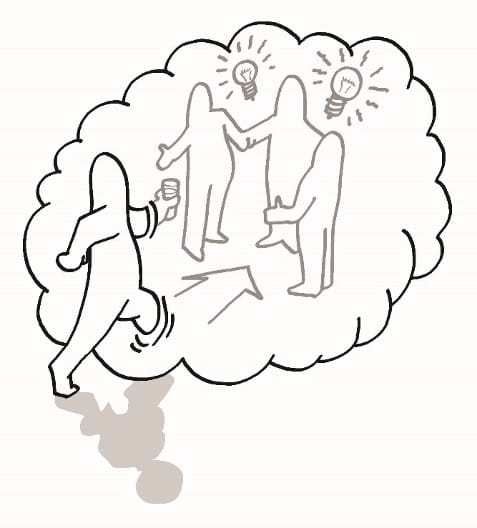
Despite this evidence, many leaders report feeling "ill-equipped" to foster this environment. In interviews conducted with executives, a recurring theme is the fear of "blame and shame"—the anxiety that facilitating difficult dialogues about identity or cognitive differences will lead to interpersonal conflict that the leader is not trained to mediate.
Quantitative Implications for Modern Business
The implications of ignoring cognitive diversity are measurable in terms of both risk and opportunity cost. Studies suggest that cognitively diverse teams solve problems faster because they move away from the "confirmation bias" cycle. When a team is composed of individuals with similar mental frameworks, they tend to reach consensus quickly but often arrive at the wrong conclusion.
Conversely, cognitively diverse teams engage in "constructive conflict." By testing assumptions from multiple angles, these teams identify potential failure points earlier in the product development or decision-making cycle. This effectively reduces the "risk premium" associated with innovation. For instance, data indicates that in environments where psychological safety is high, the rate of experimentation increases by as much as 40%, as employees feel empowered to test unconventional hypotheses without fear of failure.
Bridging the Gap: From Theory to Action
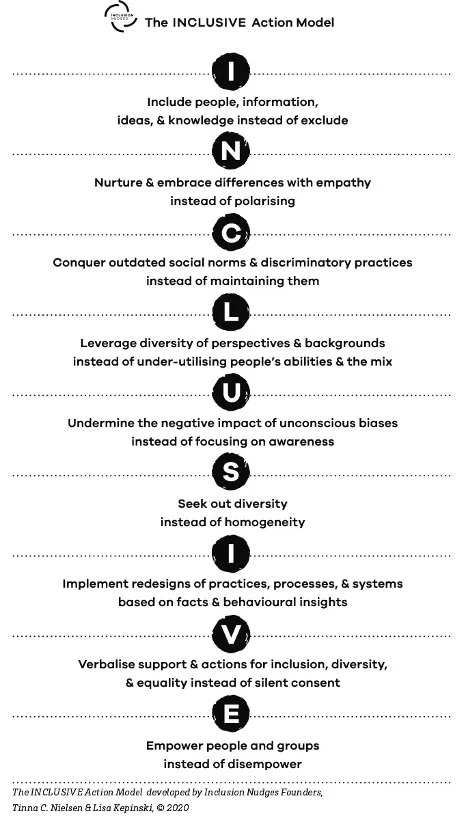
To move beyond the rhetoric of DEI and into the reality of cognitive inclusion, experts like Tinna Nielsen and Lisa Kepinski have proposed the "Inclusion Nudges" framework. This model recognizes that culture change is not achieved through mandates, but through the deliberate design of organizational "nudges"—subtle changes in the environment that make inclusive behavior the default.
For example, by changing the format of a meeting to ensure that "generators" and "consolidators" have equal space to speak, or by rotating the role of "devil’s advocate" to normalize dissent, leaders can bypass the natural tendency toward groupthink. This transition from "managing" to "designing" inclusive environments is where modern leadership is currently evolving.
The Future of Organizational Design
The evidence suggests that the next decade of organizational development will be defined by the capacity to harness diverse modes of thought. As Artificial Intelligence begins to handle routine data processing, the human value proposition will increasingly center on the ability to interpret complexity and synthesize disparate, often contradictory, perspectives.
The challenge for leadership is to balance the need for demographic representation with the equally critical need for cognitive heterogeneity. When these two forces are aligned, the organization gains the agility to navigate uncertainty. The leaders who succeed will be those who view their team not as a collection of roles to be filled, but as a diverse cognitive ecosystem that requires constant, intentional cultivation.
In conclusion, the focus on cognitive diversity is not a departure from the goals of equality and representation; it is the natural evolution of them. By fostering psychological safety and utilizing inclusive action models, organizations can move toward a more resilient future, ensuring that every voice—and every way of thinking—is not only present but effectively utilized to meet the challenges of an increasingly complex world.




