
New York City found itself at the epicenter of a growing global debate over the true cost of the green energy transition during United New York Climate Week. As corporate leaders and financial institutions gathered to promote sustainable innovation, Sigma Lithium Corporation took center stage at the Nasdaq MarketSite in Times Square, ringing the closing bell to celebrate its purported role as a pioneer in critical mineral extraction. The company’s public relations campaign framed its operations as a vital engine for powering clean energy technologies, data centers, and global decarbonization efforts.
However, thousands of miles away in the Jequitinhonha Valley of Minas Gerais, Brazil, a starkly different reality was unfolding. Indigenous, Quilombola, and other Afro-descendant communities living in the shadow of Sigma Lithium’s operations paint a picture of environmental degradation, rights violations, and regulatory defiance. The ceremonial bell-ringing in Manhattan served as a flashpoint for environmental advocates, human rights organizations, and local residents who argue that the global rush for transition minerals is reproducing historical patterns of exploitation under the guise of corporate sustainability.
The friction between corporate narratives and localized impacts highlights a central paradox of the modern energy transition: the minerals required to avert catastrophic global climate change are frequently extracted in ways that destabilize vulnerable ecosystems and marginalize traditional land stewards. As international scrutiny intensifies, the events surrounding Sigma Lithium’s Nasdaq appearance have brought systemic questions of accountability, regulatory enforcement, and environmental justice to the forefront of financial and environmental policy discussions.
The Chronology of Conflict: Regulatory Violations and Court Challenges
The tension between Sigma Lithium and local regulatory bodies is not a sudden development, but rather the culmination of a multi-year escalation involving labor violations, environmental degradation, and judicial interventions.
Earlier this year, the operational integrity of the mining site came under intense scrutiny from multiple Brazilian authorities. In January, labor officials intervened to shut down specific sections of the mine’s waste piles, citing severe safety hazards that posed immediate risks to workers and nearby residents. The intervention underscored longstanding anxieties regarding the management of mining waste and the structural stability of the facilities utilized by the corporation.
By mid-year, environmental agencies escalated their oversight following documented impacts on local water resources and native vegetation. In July, the State Foundation for Environment (FEAM) revealed that Sigma had provided inaccurate information to regulators and had initiated operations in the Jequitinhonha Valley prior to receiving the necessary legal authorizations. These findings were compounded by an environmental accident involving a mine waste spill, which heightened fears over the long-term contamination of regional watersheds, including the vital Jequitinhonha River.
The regulatory pressure reached a critical juncture earlier this month when a Brazilian court officially suspended the mine’s environmental licenses. The judicial ruling was grounded in the company’s failure to respect the legal rights of neighboring Afro-descendant communities, specifically violating the principle of free, prior, and informed consent regarding industrial activities within their ancestral territories. Despite the court-ordered suspension and the revocation of its environmental licenses, local reporting and community testimonies indicate that elements of the mining operation have continued to function, sparking allegations of regulatory non-compliance and corporate impunity.
Challenging the Myth of Zero Tailings
At the heart of Sigma Lithium’s marketing strategy is its claim to employ advanced technological methods that eliminate the need for traditional tailings dams, which have a history of catastrophic failures in Brazil. The company has frequently promoted its operations as adhering to a "zero tailings" model, asserting that it does not store wet mineral waste in conventional containment structures on-site.
This corporate assertion has been vigorously challenged by independent scientific and environmental researchers. An extensive report released earlier this year by Earthworks, an international environmental organization, investigated industry-wide claims of "zero tailings" mining and concluded that fully zero-waste extraction facilities do not currently exist at a commercial scale anywhere in the world.
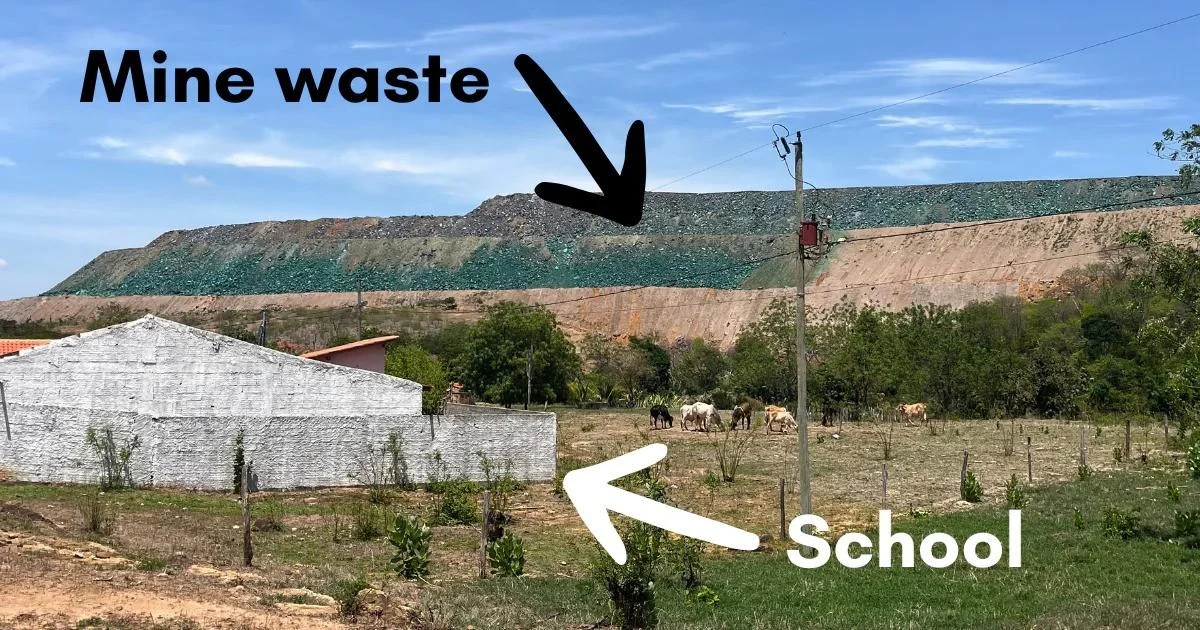
Environmental experts who have visited the Jequitinhonha Valley site report a stark contradiction between corporate press releases and on-the-ground conditions. Observers have documented massive earthen structures utilized for waste management, towering in close proximity to local infrastructure, including residential areas and a community school. Furthermore, field investigations have corroborated resident accounts of heavy machinery blasting that has caused structural cracks in nearby homes, alongside persistent dust plumes generated by waste piles that blow directly into residential settlements, impacting air quality and daily life.
Voices from the Ground: Community Resistance and Cultural Survival
For the traditional populations inhabiting the Jequitinhonha Valley, the lithium extraction boom represents an existential threat to their cultural heritage, communal lands, and physical safety.
Djalma Ramalho, an Aranã Caboclo community member and Brazil Program Associate at Cultural Survival, addressed the profound disconnect between financial markets in New York and the realities of rural Minas Gerais.
"The climate crisis is also a crisis of narratives," Ramalho stated. "While Sigma Lithium rings the Nasdaq bell, our communities sound the alarm. The lithium industry portrays the Jequitinhonha Valley as a land of hunger and backwardness to justify sacrificing an entire region and its peoples for a future that does not include us. They call lithium green, but that label does not make its extraction just or environmentally responsible."
Ramalho emphasized that the legal actions and court suspensions of the mine’s licenses validate the concerns raised by local inhabitants. "While Sigma celebrates its profits, we bear the risks to our waters, territories, and lives," he added. "In the Jequitinhonha Valley, the river is our ancestor lying across the land. Our territory sustains our ways of life today and our collective future. No promise of clean energy can justify sacrificing Indigenous, Quilombola, and other Afro-descendant communities. A just transition begins with our rights, our voices, and our power to decide whether, how, and where we transition."
Corporate Accountability and the Imperative of a Just Transition
International oversight organizations have echoed the demands of local residents, calling for heightened transparency and rigorous corporate governance within the critical minerals sector.
Jan Morrill, International Mining Senior Manager at Earthworks, underscored the necessity of prioritizing community autonomy over corporate public relations strategies.
"There is no sustainable future without community power, Indigenous Peoples’ leadership, and corporate accountability," Morrill said. "Sigma Lithium is an example of how a corporation can use the language of sustainability to attempt to hide the damage it does. Indigenous and traditional leaders who are speaking up to defend their communities from harm are examples for everyone in the climate movement. A strong, reliable future has to be built on respect for all people and their fundamental rights."
Reflecting on direct observations of the mining site, Morrill challenged the veracity of the company’s public statements. "It’s hard to stomach company statements after visiting community members. The company says it has no dams holding mine waste. I’ve stood beneath its huge earthen structures that hold waste from the mine. It says its operations don’t affect local homes. I’ve seen the cracks in the walls and the dust that blows off the waste piles. It’s one of the clearest examples I’ve seen of why people whose lives and homes are affected need the power to decide when and how companies operate, and why governments must make sure companies follow the rules."
Broader Implications for the Global Energy Transition
The controversy surrounding Sigma Lithium’s Nasdaq appearance and its operations in Brazil illuminates a broader systemic challenge confronting the global transition toward renewable energy. As governments and industries accelerate the procurement of lithium, cobalt, nickel, and other transition minerals to meet ambitious decarbonization targets, the demand for raw materials is projected to surge exponentially over the coming decades.
Without robust international frameworks, binding environmental regulations, and enforceable human rights standards, there is a distinct risk that decarbonization efforts in industrialized nations will externalize environmental and social costs onto marginalized communities in the Global South. Analysts note that instances of regulatory circumvention, contested land rights, and ecosystem disruption threaten to erode public trust in the green economy and provoke prolonged legal and social conflicts that could ultimately disrupt mineral supply chains.
The events in New York and Minas Gerais signal that affected communities and civil society organizations are increasingly mobilizing across borders to challenge corporate narratives. As demonstrations continue outside financial institutions like Nasdaq, the pressure on investors, stock exchanges, and multinational corporations to verify the ethical provenance of transition minerals is reaching unprecedented levels. Moving forward, the credibility of the green energy transition will depend heavily on the ability of global markets to reconcile corporate sustainability metrics with the lived realities and fundamental rights of frontline communities.




